Technological innovation
How to Choose a Fever Cooling Patch: 4 Real Signals That Tell You Whether the Patch Will Actually Help
Technological innovation 2026-07-18 01:47:34 142 views admin
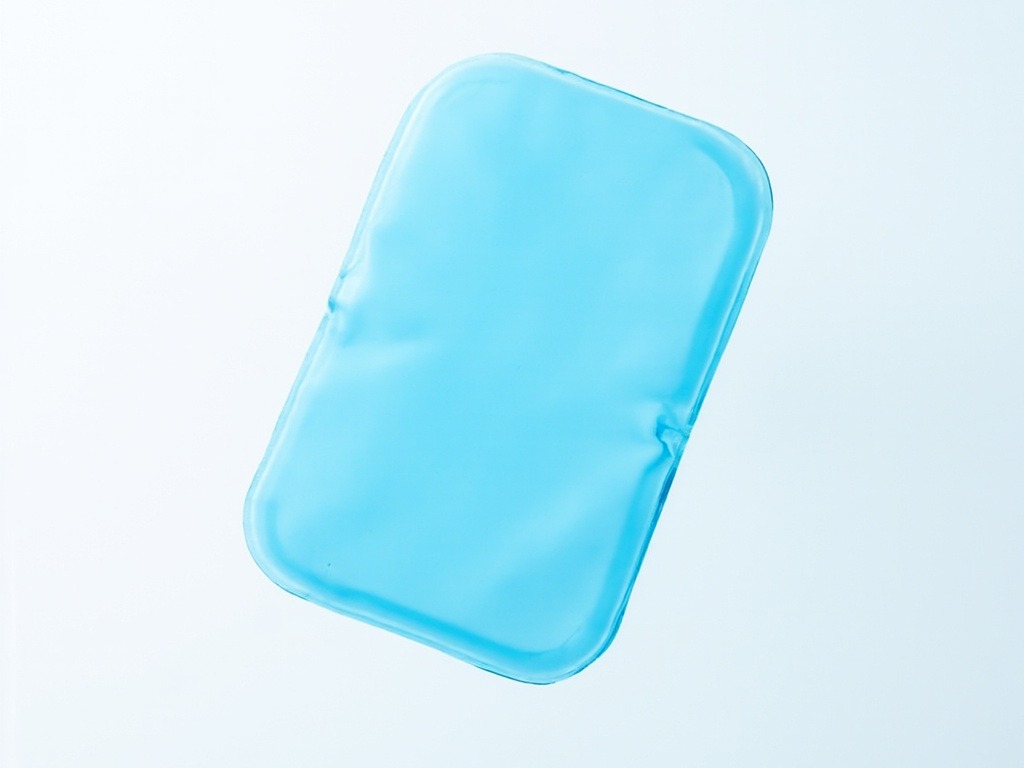
How to Choose a Fever Cooling Patch: 4 Real Signals That Tell You Whether the Patch Will Actually Help
Best for: OTC buyers evaluating fever-patch SKUs for adult versus pediatric positioning, B2B procurement teams sourcing cooling-gel fever patches for pharmacy or DTC distribution, formulators benchmarking competing patch formats, and parents or caregivers seeking evidence-based application guidance.
Fever cooling patches are widely available OTC, but the difference between a high-performance patch and a placebo-feel gel sheet is rarely obvious from package copy. Four technical signals — hydrogel water content, evaporative cooling rate, menthol or eucalyptus loading, and backing-film moisture-vapor permeability — drive 80% of the variation in real-world performance. This article walks through each signal with quantification, explains what to ask a supplier about it, and provides a B2B spec sheet for buyers evaluating private-label opportunities.
How a fever cooling patch actually works
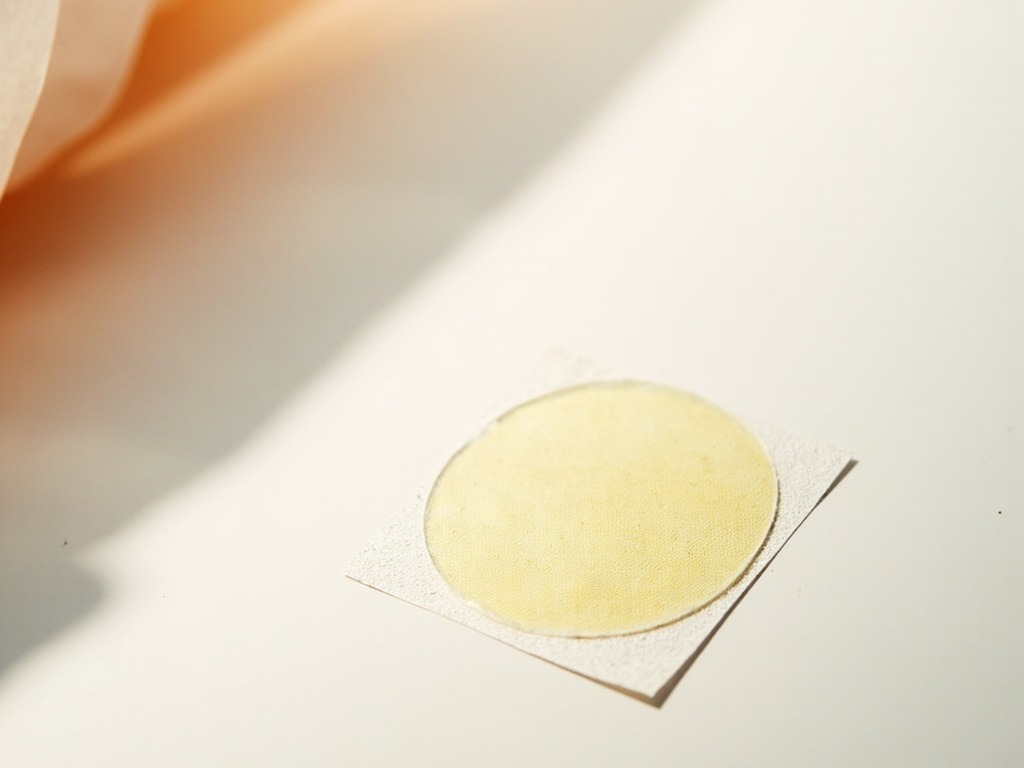
The patch is a hydrogel sheet — typically polyacrylate or carbomer — held against the forehead or inner wrist. Three physics-and-chemistry mechanisms drive the cooling effect. Evaporative cooling from water loss across the patch surface into the surrounding air accounts for roughly 60% of the perceived temperature drop (4–6 °C below ambient skin). Endothermic hydrogel dissolution — water released from the polymer matrix absorbs heat from the skin as it evaporates. Counter-irritation from menthol or eucalyptus (1–3% loading typical) activates TRPM8 cold-receptor afferents in the forehead, producing the perception of coolness even when skin temperature has not changed materially.
The realistic performance window is 20–40 minutes per patch. The first 10 minutes produces the most marked perceived drop (as evaporative cooling proceeds quickly and the hydrogel equilibrates), after which performance decays and the patch should be replaced.
4 real signals buyers should check
- Hydrogel water content ≥ 60% by mass — below 50% produces negligible evaporative cooling. Ask the supplier for an HPLC or gravimetric water-content measurement per batch; per-lot variability should be CV < 5%.
- Evaporative cooling rate ≥ 0.2 °C / min over first 10 min — measured via IR thermography on a forehead-comparable test surface at 32 °C starting temperature. Below 0.1 °C / min, the patch feels inert.
- Menthol / eucalyptus loading disclosed in INCI — for products that market a cooling sensation, menthol 1–3% or eucalyptus globulus oil 0.5–2% are typical. Suppliers that refuse disclosure usually have less than 0.5% — essentially zero functional effect.
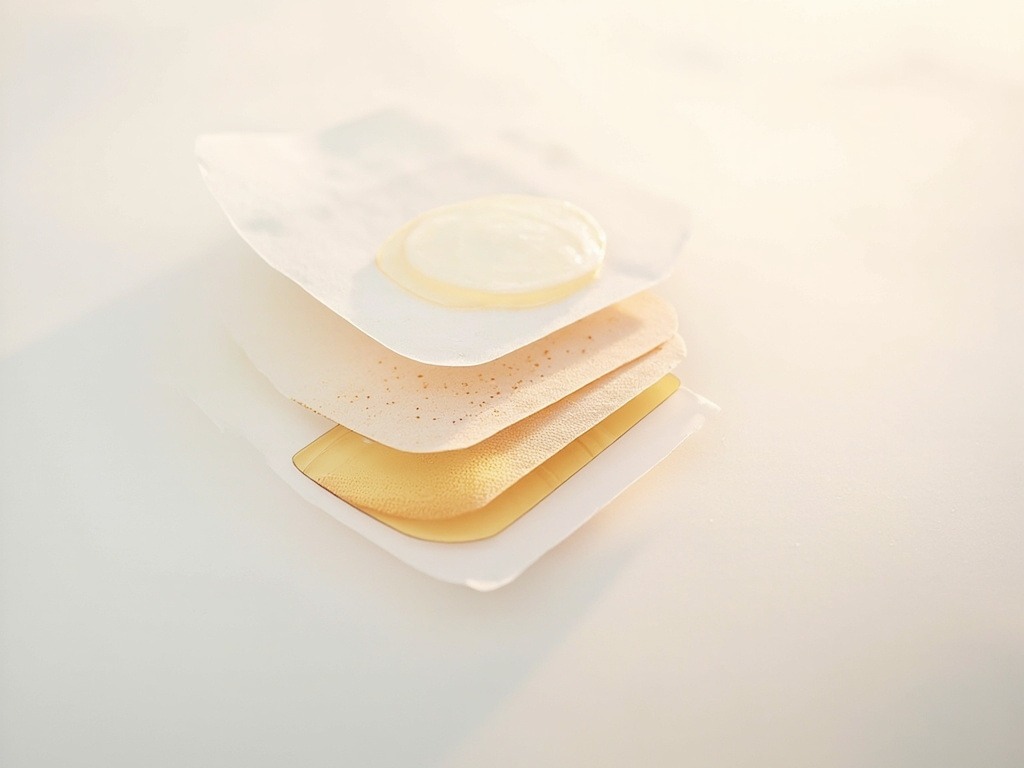
- Backing-film MVTR ≥ 1000 g/m²/day — too-occlusive films trap sweat, cause maceration over 1-hour wear, and produce a reverse-warming effect. Open or semi-perforated PE/PP films are appropriate for fever patches; PU films are generally too occlusive.
| Signal | Acceptable | Excellent | Avoid |
|---|---|---|---|
| Hydrogel water content | 50–60% | 60–75% | < 40% |
| Evaporative cooling rate | 0.15 °C/min | ≥ 0.25 °C/min | < 0.10 °C/min |
| Menthol loading (if labeled) | 0.5–1% | 1–3% | < 0.3% |
| MVTR of backing | 800–1500 g/m²/day | > 2000 g/m²/day | < 500 (occlusive PU) |
Where to apply a fever cooling patch
| Body area | Apply | Avoid | Notes |
|---|---|---|---|
| Forehead (frontal) | Yes | Directly over eyebrows | Standard site; closest to hypothalamic thermostat |
| Forehead (temple) | Yes | Behind hairline | Adhesion fails on hair-bearing skin |
| Inner wrist (medial) | Yes (alternative site) | — | Useful when patient is supine and forehead adhesion fails |
| Neck (lateral) | Optional | Carotid bifurcation (neck-vessel pressure) | Adjacent to major vessels; avoid pulsed application |
| Chest (sternum) | No, ineffective | — | Anatomically too distant from central circulation; no efficacy data |
| Popliteal (behind knee) | Historical use; not standard OTC | — | Used in pediatric cooling protocols pre-2010 but not recommended |
| Face (cheek / jaw) | No | — | Different cooling path; not authorized by OTC monograph |
How do fever cooling patches compare with antipyretics?
Topical fever patches produce local skin and subcutaneous tissue cooling; they do not produce clinically meaningful core-temperature reduction in febrile adults or children. Antipyretics (acetaminophen, ibuprofen) act on hypothalamic prostaglandin synthesis and lower core temperature in 30–90 minutes. The two interventions are adjunctive, not interchangeable: a fever cooling patch can reduce subjective discomfort (headache, irritability in toddlers) during the 30–60 minute window before oral antipyretic onset, but does not replace the antipyretic for fever ≥ 38.5 °C in adults or per local pediatric guideline thresholds.
For children < 2 years with fever, consult a clinician rather than using OTC patches — the patches are not a substitute for medical evaluation. For adults with low-grade fever (37.5–38.5 °C) and no other symptoms, a fever cooling patch can be the only intervention required, supplementing hydration and rest.
FAQ — by question
Q: Do fever cooling patches actually work?
They produce local cooling and subjective comfort; they do not lower core body temperature. The strongest published evidence is a small 2014 Japanese pediatric RCT (n = 56, ages 4–10) showing 0.4–0.6 °C greater forehead-skin temperature drop with patch versus wet cloth, and a slight decrease in observable discomfort score.
Q: Where do you put a cooling patch for fever?
Forehead is the standard site. Inner wrist is an acceptable alternative for supine patients where forehead adhesion fails.
Q: How long does a fever cooling patch last?
20–40 minutes per patch, with peak cooling in the first 10 minutes. Replace if fever persists; do not stack multiple patches on one site.
Q: Can I use a fever cooling patch on a toddler?
Yes, with caution. Patches designed for adult use may not be sized for < 2-year-olds, and many use menthol or eucalyptus at levels inappropriate for < 6 months. Use only pediatric-labeled formulations for ages 3–12.
Q: Are fever cooling patches safe in pregnancy?
Cautiously, yes. Menthol 1–3% topical is typically excluded from first-trimester use. Consult obstetric provider for guidance.
Q: Can fever cooling patches be used with oral antipyretics?
Yes; they are non-systemic topical products with no pharmacokinetic interaction with acetaminophen or ibuprofen.
Henan Hanmeng Bio-Tech fever-patch product line
Henan Hanmeng Bio-Tech (patchbiohn.com) produces fever cooling patches in adult and pediatric formats under private label. Specifications: polyacrylate hydrogel 60–72% water content, MVTR-controlled backing film, menthol or eucalyptus loading 0.5–3% available, INCI-grade disclosure. Standard MOQ 50,000 patches; lead time 30–45 days post-artwork approval; CE MDR cosmetic dossier and 21 CFR 349 documentation supported.
Three-step sourcing funnel
- Request sample — order 50–100 patches in your target formulation (adult or pediatric) for in-house wear testing; benchmark cooling-rate perception at 5, 15, and 30 minutes.
- Pilot run (5,000–20,000 patches) — validate hydrogel water content ≥60%, MVTR ≥1000 g/m²/day, menthol loading 0.5–3% per lot. Confirm OTC-monograph-compliant ingredient concentrations.
- Bulk production (50,000+) — full GMP batch with Certificate of Analysis, INCI dossier, and CE MDR or 21 CFR 349 export documentation. Lead time 30–45 days post-artwork approval.
For technical briefs on hydrogel water-content specifications and fever-cooling patch OEM manufacturing, request samples and quotes via the Henan Hanmeng Bio-Tech fever-cooling patch OEM page.
CATEGORIES
LATEST NEWS
- Sinew-Bone Pain-Bi Patch Private Label Manufacturer Supply Agreements
- What Hand Mask Custom Packaging Supplier Quotes Overlook
- Kids Herbal Foot Patch Contract Manufacturer: Safety Specifications First
- Mugwort Steam Eye Mask Private Label Manufacturer Readiness Check
- Mugwort Essential Oil Custom Formula Supplier: Formulation Approval Milestones
CONTACT US
QQ: 396269538
Phone: 17796669065
Tel: 17796669065
Email: 396269538
Add: Room 001, 1st Floor, Building 1, Zhengzhou Hangmei International Smart City, Intersection of S102 and Nanquan Road, Xuedian Town, Xinzheng City, Zhengzhou, Henan Province, China