Industry news
Kids Herbal Foot Patch Contract Manufacturer: Safety Specifications First
Industry news 2026-10-19 15:51:16 13 views admin
1. Why Does an Approved Sample Change During Mass Production?
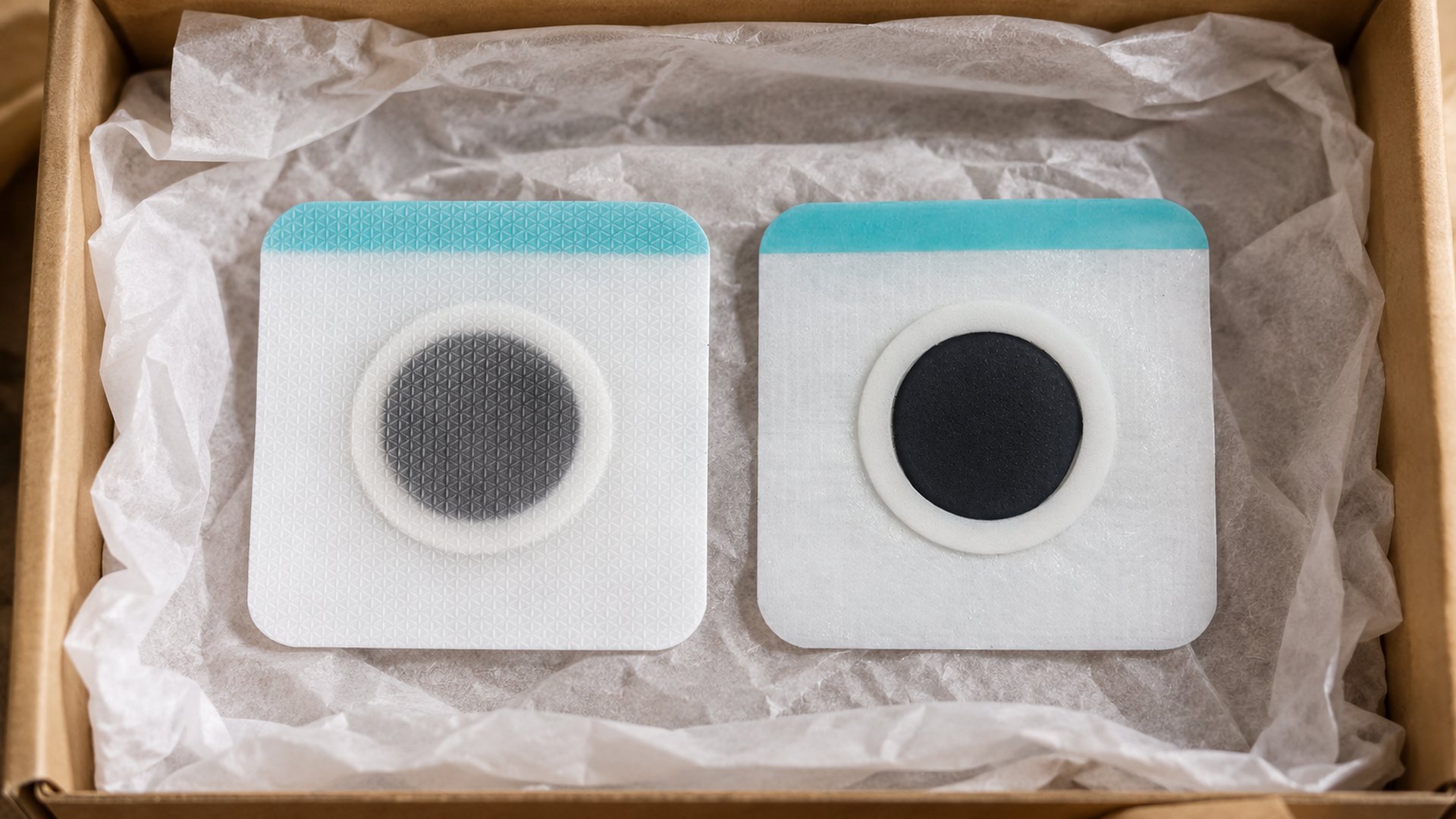
An approved Kids Herbal Foot Patch sample is only useful when the factory can reproduce it. A buyer may approve a neatly cut patch with even herbal filling, consistent color, and a well-sealed pouch. The first production lot can still look different.
The usual problem is an incomplete specification. A sample may have been assembled using carefully selected materials and manual adjustments, while mass production introduces automatic filling, continuous cutting, and high-speed sealing.
For a kids herbal foot patch contract manufacturer, five characteristics deserve particular attention:
1. Patch dimensions and cutting accuracy.
2. Total patch weight.
3. Fabric and filling color.
4. Herbal filling quantity and distribution.
5. Individual pouch seal width.
These characteristics affect product consistency, appearance, and packaging reliability. They should be documented before production rather than judged from memory afterward.
There are two ways to approve a sample.
Visual approval confirms that the product looks acceptable. It is fast but leaves room for interpretation.
Specification-based approval combines a signed physical sample with measurable acceptance limits. It requires more preparation but gives both parties a common reference when production begins.
For a children's product, the second approach is preferable. Material suitability, intended age group, skin-contact assessment, and applicable regulatory requirements also need independent review. Dimensional consistency alone cannot establish child suitability.
2. Which Five Specifications Should Be Locked Before Production?
Start with a measurable specification sheet. Each requirement should identify a nominal value, an acceptance limit, and the inspection method.
The following figures are illustrative engineering targets for a hypothetical Kids Herbal Foot Patch. They are not universal manufacturing standards or evidence that a particular formulation is suitable for children.
| Control point | Example specification | Inspection method |
|---|---|---|
| Patch dimensions | 70 × 50 mm, ±1.0 mm | Caliper measurement |
| Total patch weight | 5.0 g, ±0.25 g | Calibrated digital scale |
| Fabric color | Approved master sample, ΔE00 ≤ 2.0 | Color measurement under controlled conditions |
| Herbal filling quantity | 3.0 g, ±0.15 g | Filling-weight verification |
| Pouch seal width | 6.0 mm minimum | Seal-width measurement |
1. Lock the dimensions.
Specify both length and width, including how rounded corners or irregular edges are measured. A nominal 70 × 50 mm patch should not become a noticeably narrower product because cutting equipment was adjusted for material utilization.
2. Lock the total weight.
Total weight includes the relevant finished-patch components. A 5.0 g target with a ±0.25 g tolerance creates an objective acceptance range. Specify whether the measurement includes any release liner.
3. Lock the color.
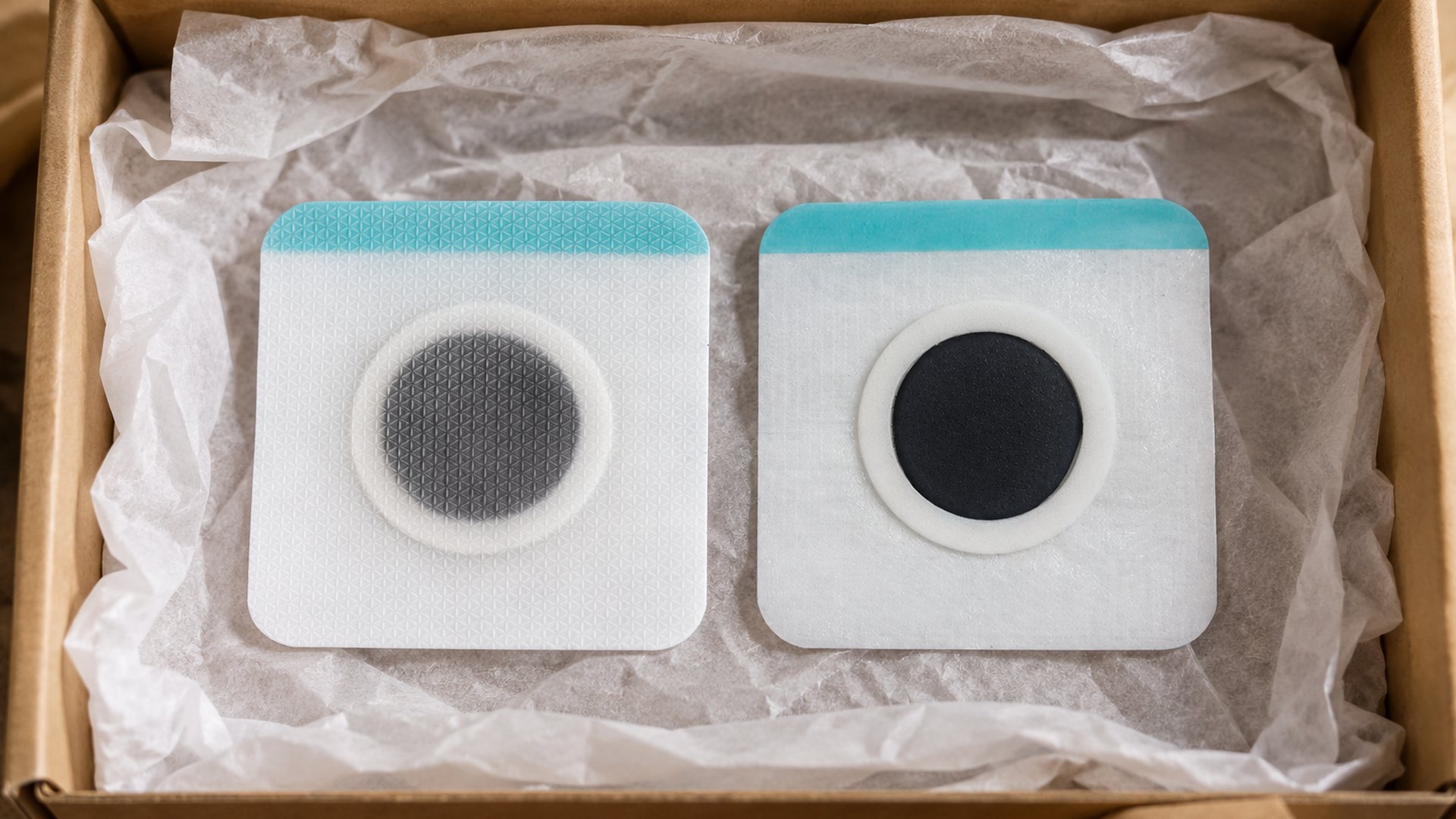
Color can vary between fabric lots and filling materials. A color difference target such as ΔE00 ≤ 2.0 is useful only when the measurement instrument, lighting conditions, reference sample, and measurement surface are defined.
4. Lock the filling quantity.
The herbal filling must have its own target. A correct total patch weight can conceal an incorrect filling quantity if backing or adhesive weight changes.
5. Lock the pouch seal width.
A 6.0 mm minimum seal width is an example specification, not proof of seal integrity. The factory must also validate the sealing process and confirm that the pouch meets its protective requirements.
Decision: Approve the specification sheet and the physical sample together. Neither should replace the other.
3. What Evidence Should the Buyer Keep?
A signed sample is useful, but it cannot document every manufacturing detail. Buyers should request a compact approval file that can be retrieved when the first mass-production lot is inspected.
The file should contain:
1. A dated photograph of the complete patch beside a measurement scale.
2. Close-up photographs of the fabric surface, edges, and filling distribution.
3. Recorded dimensions from the approved sample.
4. Total weight and filling-weight measurements.
5. A controlled color reference or instrument reading.
6. Photographs of the sealed pouch, including the seal area.
7. The approved specification revision and material identification.
Photographs should use consistent lighting and camera distance. A photograph taken under warm office lighting should not be treated as a reliable color standard for comparison with a factory image taken under cool industrial lighting.
A physical retained sample remains necessary because photographs cannot reliably establish texture, thickness, adhesion, or filling distribution.
The buyer should also distinguish between two retention approaches.
Factory-only retention is convenient but leaves the buyer dependent on the manufacturer's records.
Dual retention gives the buyer and manufacturer matching approved samples, with the same revision identification. This provides stronger protection against disputes about what was approved.
For a Kids Herbal Foot Patch, dual retention is the better choice.
The record should identify who approved the sample and whether approval covers appearance only or the complete manufacturing specification.
Any subsequent material or process change must be assessed through documented change control. A verbal agreement to use an apparently equivalent fabric is insufficient.
4. What Should Be Rechecked at 10% Production?
The first meaningful production checkpoint should occur before the factory has completed most of the order.
A practical arrangement is to perform a documented review when approximately 10% of the planned production quantity has been completed.
This checkpoint is particularly valuable because automatic equipment may behave differently after continuous operation than during initial setup.
The inspection should use samples collected across the running process rather than selecting only the neatest finished patches.
Recheck all five locked characteristics:
- Measure patch length and width against the approved tolerance.
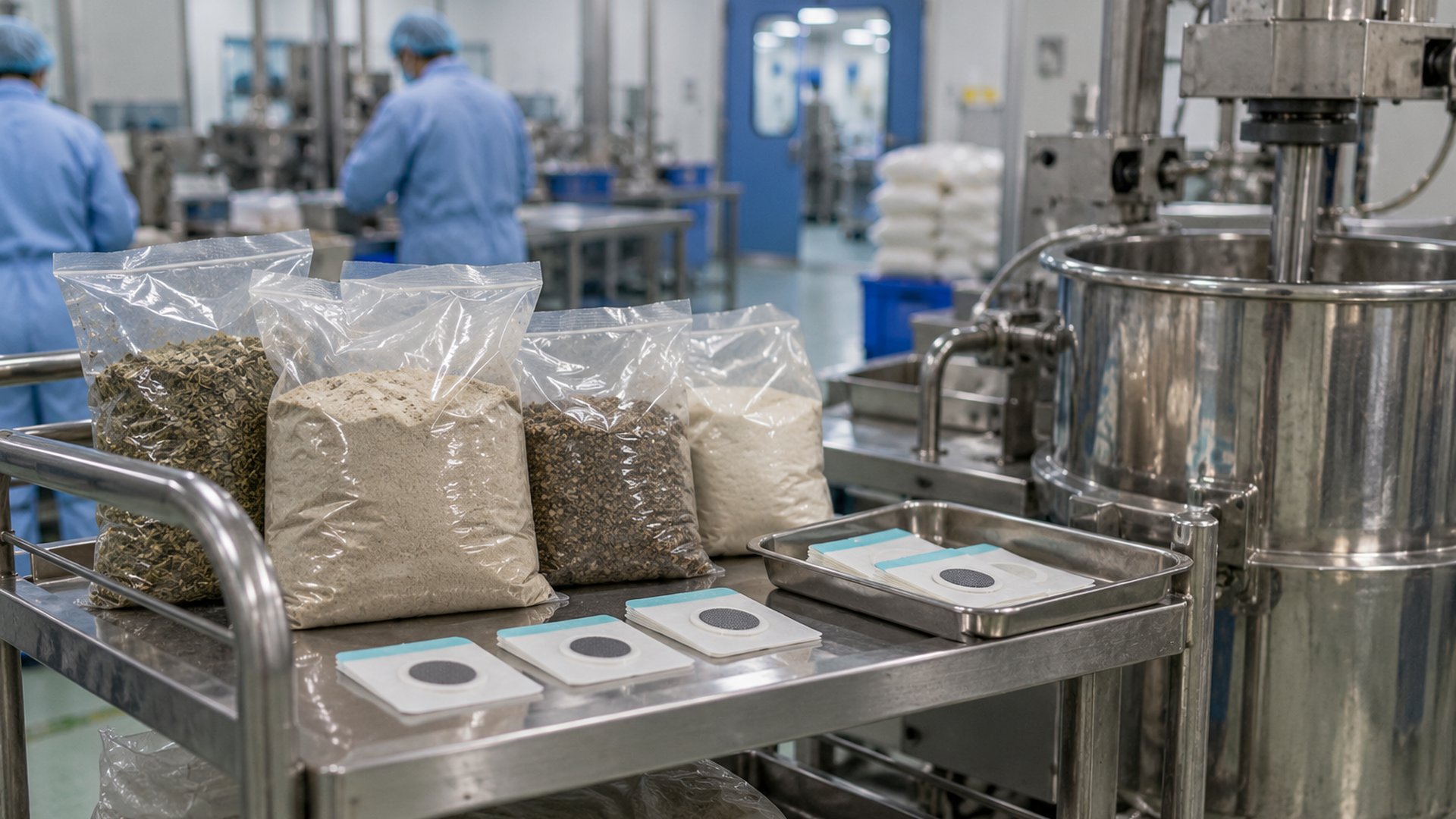
- Weigh finished patches and compare the results with the target range.
- Compare fabric and filling color against the controlled reference.
- Verify filling quantity and distribution.
- Measure pouch seal width and perform the validated seal-integrity checks.
Do not rely exclusively on average values. A batch can have an acceptable average filling weight while individual patches fall outside the permitted range.
The buyer should require the inspection record to identify the production stage, sampling method, measurement results, and any deviations.
If results are outside specification, the manufacturer should hold the affected output, investigate the cause, define the potentially affected quantity, and document corrective action before continuing.
A small adjustment to the filling equipment may appear harmless. However, changing the filling target without authorization would alter the approved product specification.
The distinction matters: correcting a process to meet the approved specification is acceptable; changing the specification requires approval.
For products intended for children, any unexpected material, adhesive, or skin-contact issue should trigger an appropriate safety and regulatory review, even when dimensional measurements remain acceptable.
5. Which Production-Control Option Should the Buyer Choose?
There are three practical levels of control when working with a kids herbal foot patch contract manufacturer.
Option A: Approve the appearance only.
The buyer signs off on photographs or a physical sample, and the factory follows its normal internal standards.
This involves the least administrative work, but it gives the buyer limited use when a later batch differs in measurable ways.
It is unsuitable when product consistency and child-focused material requirements need clear verification.
Option B: Lock the five specifications.
The buyer approves the physical sample, measurable tolerances, material references, and inspection methods.
The manufacturer checks those characteristics during production and provides the corresponding records.
This is a sensible baseline for a repeatable private-label product.
Option C: Lock the specifications and require an early production hold point.
This adds the 10% production review, documented acceptance, and authorization to continue.
It provides stronger control for an initial order, particularly where filling equipment, cutting settings, or packaging processes have not yet been demonstrated at the intended production scale.
The additional inspection work should be agreed before manufacturing begins. The purchase order should state who performs the inspection, what constitutes acceptance, and what happens when results fail.
For a first Kids Herbal Foot Patch order, Option C is generally the more defensible approach.
Once the factory has demonstrated repeatable performance, later orders may use Option B with an appropriate ongoing monitoring plan.
Neither approach replaces required safety assessments, product testing, or regulatory review for the intended market.
Before releasing the order, the buyer should confirm that the specification revision, retained sample, material documentation, and inspection plan all refer to the same approved product.
That final cross-check prevents a common manufacturing problem: the sample room, purchasing department, and production line working from different versions of the specification.
A successful transfer from sample to mass production depends on one principle: every characteristic that matters must have a reference, an acceptance limit, and a documented method of verification.
CATEGORIES
LATEST NEWS
- Sinew-Bone Pain-Bi Patch Private Label Manufacturer Supply Agreements
- What Hand Mask Custom Packaging Supplier Quotes Overlook
- Kids Herbal Foot Patch Contract Manufacturer: Safety Specifications First
- Mugwort Steam Eye Mask Private Label Manufacturer Readiness Check
- Mugwort Essential Oil Custom Formula Supplier: Formulation Approval Milestones
CONTACT US
QQ: 396269538
Phone: 17796669065
Tel: 17796669065
Email: 396269538
Add: Room 001, 1st Floor, Building 1, Zhengzhou Hangmei International Smart City, Intersection of S102 and Nanquan Road, Xuedian Town, Xinzheng City, Zhengzhou, Henan Province, China