Industry news
Mugwort Essential Oil Custom Formula Supplier: Formulation Approval Milestones
Industry news 2026-10-16 08:20:35 19 views admin
1. Which Mugwort Essential Oil Extensions Should a Brand Launch First?
A buyer planning a Mugwort Essential Oil range usually starts with four possible extensions: bottle size, scent, formulation strength, and packaging. The mistake is treating all four as equally easy to manufacture and equally valuable to the customer.
For a new brand, the first extension should normally be bottle size. A 10 mL and a 30 mL version of the same approved formula create different purchase options without requiring a second liquid formulation. However, they may require different filling settings, labels, and bottle components.
Scent comes next, but only when customer demand justifies it. A different scent is not simply another label. It introduces a separate formula specification, ingredient documentation, and manufacturing controls.
Strength variations require even more discipline. A 1% versus 2% mugwort-derived ingredient concentration, for example, changes the formulation and may affect stability, compatibility, and the intended product classification. Those percentages are illustrative formulation concepts, not recommended concentrations or verified safety limits.
Packaging extensions should generally come last. A gift carton or retail sleeve may create another selling occasion, but it rarely justifies a new production configuration before the original product has demonstrated demand.
Our recommended extension sequence is:
1. One approved formula in one standard bottle.
2. A second bottle size using the same formula.
3. One differentiated scent or formulation, supported by demand.
4. A channel-specific packaging format.
A mugwort essential oil custom formula supplier should challenge buyers who want every extension immediately. More options are useful only when each serves a distinct purchasing reason.
2. Which Extensions Can Share Tooling and Which Require Separate Production?
Shared tooling is where multi-SKU planning can create genuine savings, but buyers often misunderstand what can actually be shared.
Two Mugwort Essential Oil products using the same bottle, closure, label dimensions, and filling specification may share much of the packaging setup. Different artwork alone does not necessarily require different bottle tooling.
Changing the bottle capacity can require another filling setup, label position, or carton dimension. Changing the formula creates additional cleaning, handling, and documentation requirements even when the container remains identical.
Consider the following hypothetical manufacturing cost comparison. The figures are budgeting examples, not supplier quotations.
| Extension type | Potential shared setup saving per SKU | Main limitation |
|---|---|---|
| Same bottle, different label artwork | $120–$250 | Separate printed label inventory |
| Same formula, different bottle size | $80–$180 | Filling and packing adjustments |
| Different scent, same bottle | $50–$120 | Separate formula handling |
| Different formula and bottle | $0–$60 | Limited shared production setup |
These estimates refer to possible one-time setup savings, not savings on every finished bottle.
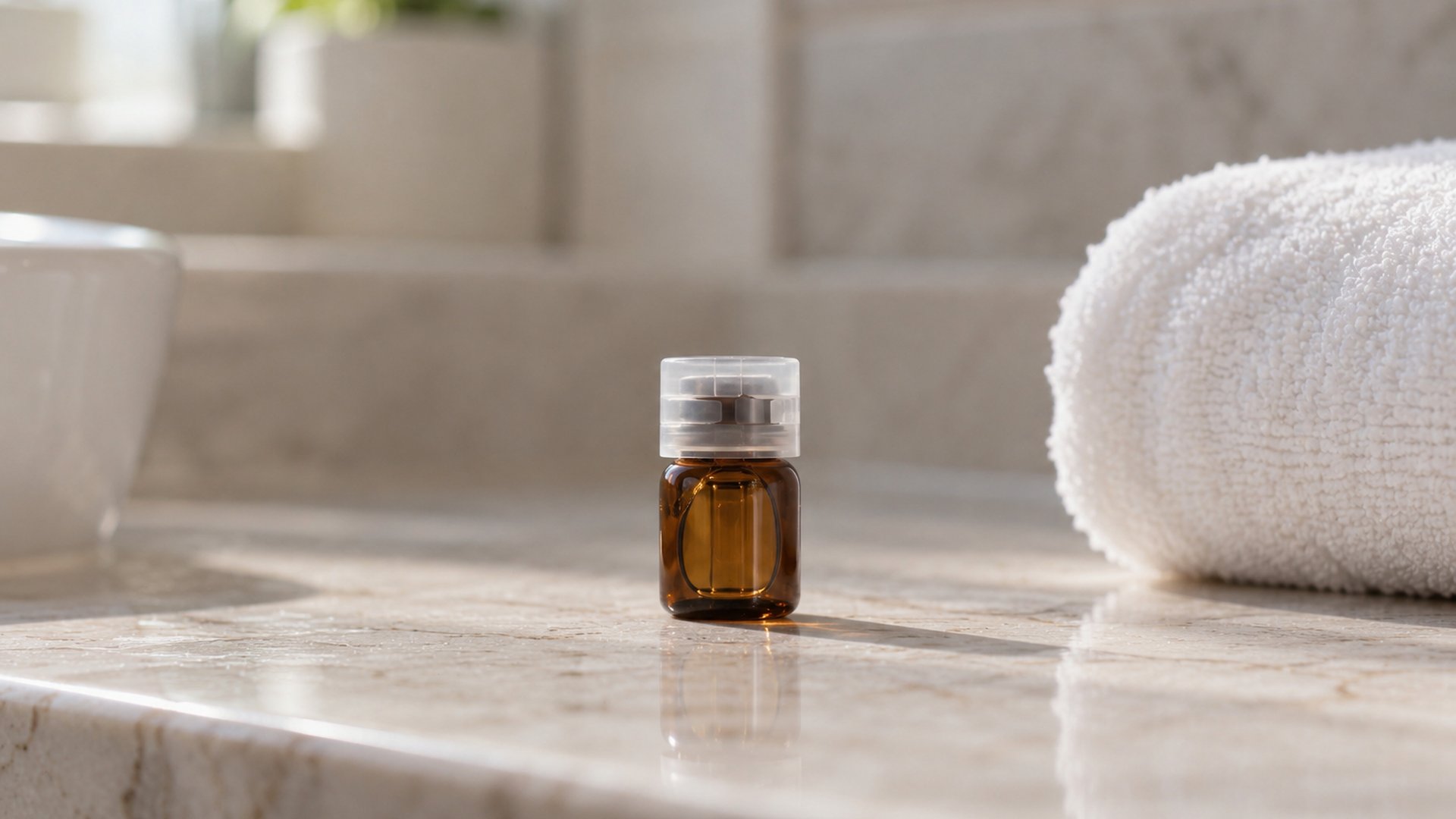
For example, sharing a $200 setup cost across a 4,000-unit run reduces the allocated cost by $0.05 per unit. Across only 1,000 units, the same saving is worth $0.20 per unit.
That difference matters when evaluating small extensions.
Buyers should ask their mugwort essential oil custom formula supplier to separate three cost categories: reusable tooling, changeover labor, and SKU-specific consumables.
A common bottle mold does not eliminate cleaning between formulations. Shared filling equipment does not mean different liquids can be processed without an approved changeover procedure.
Likewise, common carton dimensions do not automatically mean printed packaging can be combined into one minimum production run.
The practical rule: Share physical components wherever specifications genuinely match, but account separately for every formulation and production changeover.
3. At What SKU Count Do Warehouse Costs Start Hurting?
There is no universal SKU limit. Warehouse costs begin to increase when each additional product requires separate storage locations, inventory tracking, replenishment decisions, and picking instructions.
For a small Mugwort Essential Oil brand, three SKUs may be manageable. Eight SKUs can create disproportionate complexity if sales volume has not increased.
Take a hypothetical warehouse charging $12 per active SKU location each month, excluding ordinary storage volume and order-picking charges.
At three SKUs, the location charge is $36 monthly. At eight, it becomes $96. The additional $60 may seem insignificant, but the real cost comes from fragmented inventory.
Suppose a brand sells 1,200 bottles monthly across three products. Each SKU averages 400 units.
If the same total demand is divided across eight SKUs, average sales fall to 150 units per SKU. Actual demand will not be distributed evenly, so slower variants may remain in storage while popular variants require replenishment.
That creates two operational problems: working capital becomes trapped in weak-selling products, and replenishment decisions become less reliable.
A buyer should calculate SKU productivity before authorizing another extension.
For illustration, a brand could establish an internal rule that each new SKU must demonstrate a credible route to 200 monthly units within its evaluation period.
That threshold is a management assumption, not an industry standard.
Another useful measure is inventory coverage. If a slow variant holds 900 units but sells only 100 monthly, it represents nine months of stock before accounting for changes in demand.
For essential oil products, excessive holding periods also make shelf-life management and stock rotation more important.
A supplier may manufacture the extension successfully while the brand struggles to sell it. Manufacturing feasibility and commercial viability are separate decisions.
4. What Minimum Run Should Be Assigned to Each Extension?
The minimum run should be established per distinct manufacturing configuration, not merely against the total purchase order.
A buyer ordering 12,000 bottles across four variants should not assume the factory can produce 3,000 units of every variant at the same price as one continuous 12,000-unit run.
Each formula change, bottle adjustment, and packaging change may introduce separate setup costs or component minimums.
For preliminary planning, consider an illustrative production structure:

- Core formula, standard bottle: 4,000 units.
- Same formula, second bottle size: 3,000 units.
- New scent, standard bottle: 2,500 units.
- Special packaging edition: 2,500 units.
These are example allocations, not confirmed factory minimums. Actual minimum runs depend on equipment capacity, ingredient requirements, container sourcing, and packaging suppliers.
The important question is whether every extension generates enough sales to absorb its minimum production quantity.
A 2,500-unit scent variant selling 125 units monthly represents 20 months of theoretical stock coverage. That is a weak launch candidate unless demand is expected to increase materially and product shelf-life supports the plan.
By contrast, a second bottle size selling 500 units monthly would clear the same quantity in five months.
A mugwort essential oil custom formula supplier should quote each extension independently and then show the savings available through shared components.
Buyers should not accept a blended unit price without understanding which variant creates the additional production cost.
5. What Rule Should Govern Every New SKU?
Every extension needs one measurable commercial purpose and one documented manufacturing boundary.
For a size extension, the commercial purpose may be reaching customers who prefer a lower initial purchase price. The manufacturing boundary is the approved container, fill volume, and packaging specification.
For a scent extension, the purpose should be serving a demonstrably different preference. Its boundary includes the approved formula, ingredient records, and relevant stability and compatibility assessments.
For a formulation-strength extension, the buyer must justify the difference without relying on unsupported performance claims. Product classification, intended use, labeling, and applicable safety requirements must be reviewed before release.
For a packaging extension, the buyer should identify the channel or purchase occasion it serves. If the only difference is appearance, existing packaging may be sufficient.
We recommend applying four approval questions before creating a new Mugwort Essential Oil SKU:
1. Does it serve a purchasing need the existing range cannot meet?
2. Can its projected sales absorb the minimum production run?
3. Which tooling, components, and manufacturing processes can genuinely be shared?
4. Will the additional gross profit exceed its setup, inventory, and warehouse costs?
If the answer to any question remains unsupported, hold the extension.
A disciplined launch might begin with two SKUs, evaluate sales distribution, and add a third only after the data identifies a clear opportunity.
The role of a mugwort essential oil custom formula supplier is not to encourage the largest possible catalog. It is to help the buyer distinguish economical extensions from unnecessary manufacturing complexity.
A successful product line is not measured by the number of variants on the website. It is measured by how efficiently each variant converts production capacity and inventory into repeatable sales.

CATEGORIES
LATEST NEWS
- Sinew-Bone Pain-Bi Patch Private Label Manufacturer Supply Agreements
- What Hand Mask Custom Packaging Supplier Quotes Overlook
- Kids Herbal Foot Patch Contract Manufacturer: Safety Specifications First
- Mugwort Steam Eye Mask Private Label Manufacturer Readiness Check
- Mugwort Essential Oil Custom Formula Supplier: Formulation Approval Milestones
CONTACT US
QQ: 396269538
Phone: 17796669065
Tel: 17796669065
Email: 396269538
Add: Room 001, 1st Floor, Building 1, Zhengzhou Hangmei International Smart City, Intersection of S102 and Nanquan Road, Xuedian Town, Xinzheng City, Zhengzhou, Henan Province, China