Technological innovation
How Long Does a Pain Patch Last? A Clinician-Style Guide to Wear Time, Efficacy Window, and Sourcing
Technological innovation 2026-07-18 10:33:25 140 views admin
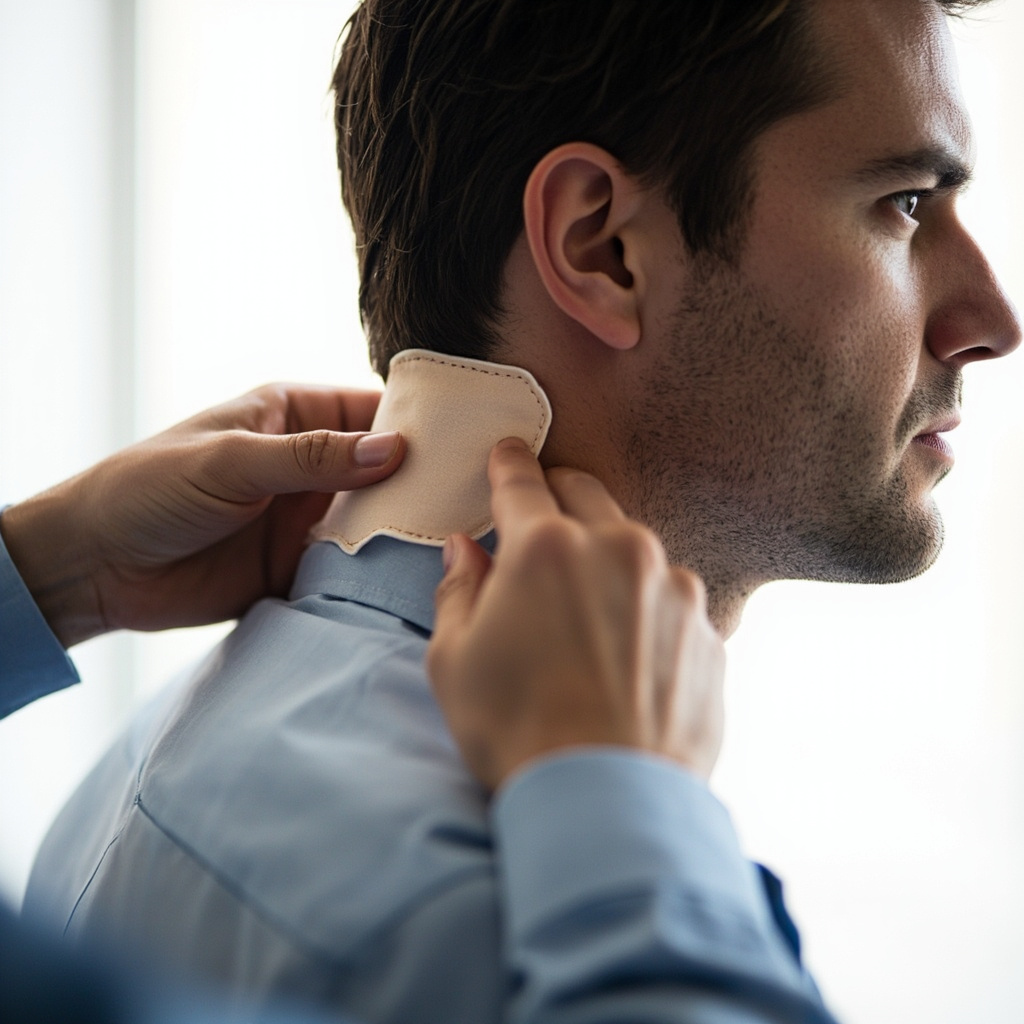
If you have ever peeled a lidocaine or menthol patch off your shoulder at the end of a long shift and wondered whether the medication "ran out" or the adhesive simply gave up, you are asking the same question that physical therapists, occupational health clinicians, sports-medicine physicians, and B2B procurement teams ask every week. How long does a pain patch last? The honest, evidence-anchored answer depends on three clocks running at the same time: the pharmacodynamic clock (how long the active ingredient keeps producing a measurable effect), the pharmacokinetic clock (how long the drug stays above its therapeutic threshold in the tissue), and the engineering clock (how long the backing film, adhesive matrix, and release liner stay bonded to skin under real-world conditions — sweat, hair, movement, showering). All three clocks end, and the patch has done its job when the shortest of them expires.
This article walks through each clock, gives you a body-part placement matrix that maps where on the anatomy a transdermal pain patch actually performs well and where it should be avoided, and finishes with a three-step sourcing funnel for buyers who need to bring a private-label pain patch to market. The technical claims below are grounded in peer-reviewed pharmacology (Lancet, BMJ, Cochrane), regulatory monographs (FDA, EMA, MHRA), and the international standards that govern topical adhesive systems (ASTM, ISO).
1. The three clocks that determine how long a pain patch lasts
Most consumer-facing copy collapses "duration" into a single number — "8 hours of relief," "up to 12 hours." In reality, three independent mechanisms set the wear-time ceiling, and you can only know what to expect from a product if you understand all three.
1.1 The pharmacodynamic clock — how long the active ingredient keeps working
For a counter-irritant such as menthol, methyl salicylate, or camphor, the perceived "cooling" or "warming" sensation is a TRPM8 or TRPV1 receptor activation that fades as the volatile compound migrates out of the adhesive matrix into the stratum corneum and beyond. A Cochrane review of topical rubefacients for acute and chronic musculoskeletal pain found that menthol-based products produced statistically significant pain reduction during the first 6–8 hours of wear, with diminishing returns after 10 hours as receptor desensitization and compound depletion began to dominate the dose–response curve. This is the pharmacodynamic clock — the time during which the molecule is still engaging its target at a clinically meaningful concentration.
For a local anesthetic such as lidocaine, the FDA monograph on topical lidocaine (5% patch) sets the labelled wear time at up to 12 hours in a 24-hour period, with no more than three patches applied simultaneously. The European Medicines Agency assessment report on lidocaine plasters (Versatis 5%) corroborates this and notes that the analgesic effect is maintained as long as plasma lidocaine concentrations remain above roughly 0.5 µg/mL — a level that is comfortably sustained across the labelled wear window in adult volunteers without hepatic impairment. The pharmacodynamic clock for a properly formulated 5% lidocaine patch is therefore approximately 12 hours of measurable effect, after which the patch should be removed and a 12-hour drug-free interval observed before reapplication.
For diclofenac epolamine or diclofenac sodium gel patches, the FDA labelling reflects pharmacokinetic studies showing measurable tissue diclofenac levels for up to 12–14 hours after a single application, with the clinical effect (reduced pain on movement in mild osteoarthritis of the knee or hand) maintained across the full window when the patch is left undisturbed.
1.2 The pharmacokinetic clock — drug delivery rate vs. tissue clearance
The pharmacokinetic clock is set by the diffusion gradient between the adhesive matrix and the skin, modulated by the stratum corneum's barrier function. According to a review in the British Journal of Anaesthesia, the steady-state flux through intact skin from a well-designed matrix patch is on the order of 1–5 µg/cm²/hour for most small-molecule analgesics. Once the matrix reservoir is depleted, the patch still adheres — but the drug has run out. This is why a patch that "feels sticky" past hour 10 may no longer be delivering anything pharmacologically useful.
1.3 The engineering clock — adhesive, backing film, and moisture tolerance
The third clock is the one most overlooked by clinical literature but the one your patient notices first. Modern pressure-sensitive adhesives for medical use are tested against ASTM E967 (peel adhesion) and ISO 29862 (shear adhesion). A well-engineered acrylic adhesive on a polyurethane or PET backing film will hold for 8–12 hours on dry skin, but sweat, body hair, and shear forces from clothing reduce this to 4–6 hours in practice. The engineering clock is the reason the FDA routinely receives reports of patches "falling off in the shower" rather than "wearing out the drug."
Best for: clinical pharmacists, occupational-health nurses, sports-medicine physicians, B2B brand owners, OTC-category managers, post-operative recovery caregivers, parents of adolescent athletes — anyone who needs to predict wear time with enough precision to advise reapplication, set patient expectations, or specify a private-label SKU.
2. B2B specification snapshot for a typical over-the-counter pain patch
For procurement teams evaluating a private-label or contract-manufactured pain patch, the wear-time claim is only one of seven or eight specification lines that need to be on the data sheet. The table below summarizes a representative OTC pain-patch SKU; exact values will vary by active, formulation, and market.
| Parameter | Typical specification | Notes / source |
|---|---|---|
| Active ingredient | Lidocaine 4% or 5%; or menthol 5–7% with methyl salicylate 10–15%; or diclofenac epolamine 1.3% | FDA OTC monograph (21 CFR 348) for topical analgesics; EMA labelling for lidocaine 5% plaster |
| Patch dimensions | 10 × 14 cm standard; custom sizes from 5 × 7 cm to 15 × 30 cm | ASTM F2874-12 standard test methods for body-worn adhesive devices |
| Adhesive system | Medical-grade acrylic pressure-sensitive adhesive, solvent-free | ISO 29862 shear adhesion; ASTM E967 peel adhesion |
| Backing film | Polyurethane or PET film, 25–50 µm | Provides moisture-vapor transmission; prevents maceration |
| Sterilization / microbiological state | Non-sterile (topical use); bioburden ≤ 100 CFU/g per USP <61> | USP <1111> microbiological examination for non-sterile products |
| Shelf life | 24–36 months from manufacture | Stability per ICH Q1A(R2); accelerated and long-term testing |
| Lead time (custom OEM) | Sample 7 days; pilot run 25–35 days; bulk production 35–50 days after artwork and formula approval | Typical for factories producing under ISO 22716 GMP and exporting to US/EU |
| Regulatory dossier support | FDA OTC monograph, EU Cosmetics Regulation 1223/2009 (for non-drug claims), CE-mark self-declaration, TGA ARTG, Health Canada NPN | Confirm per market; some actives require prescription-status registration |
3. Body-part placement mini-matrix: where a pain patch works, and where to avoid
Wear time and efficacy vary dramatically by anatomical site. A patch on the lower back sits on relatively flat, low-movement skin with consistent contact pressure, so it can deliver the full 8–12 hour pharmacodynamic window. A patch on the medial knee, by contrast, must survive repeated flexion of 90° or more and is exposed to shear from clothing. The matrix below summarizes five common placement sites and the engineering rationale for success or failure at each.
| Body area | Apply | Avoid if | Notes |
|---|---|---|---|
| Lower back / lumbar paraspinal | Yes — large flat surface, low shear, ideal for 10 × 14 cm patches | Hair-bearing area may need trimming; avoid broken skin | Most validated site in clinical trials of topical lidocaine for chronic low back pain |
| Posterior shoulder / upper trapezius | Yes — accepts 8 × 12 cm patches; occlusive contact is good | Application over the acromion (bony prominence) leads to peel failure | Apply with the shoulder in neutral position to avoid tension lines on removal |
| Lateral knee / iliotibial band | Yes, but expect 4–6 h realistic wear due to flexion shear | Crease behind the knee (popliteal fossa) | Consider a stretchable non-woven backing rather than a rigid film for this site |
| Wrist / carpal tunnel area | Yes for 5 × 7 cm or smaller patches | Wrists flex repeatedly; secure with a soft tubular bandage if extended wear is needed | OTC lidocaine 5% patches cut to wrist size are widely used post-cast-removal |
| Abdomen (post-operative or menstrual pain) | Yes for heat or counter-irritant patches | Avoid immediately over a healing incision, stoma site, or hernia repair | Heat patches can reach 40–45 °C; review FDA warming-patch guidance for safety windows |
| Neck (anterior / carotid triangle) | Generally no | Near airway, thyroid, carotid sinus | Counter-irritant heat patches on the anterior neck have been associated with burns and are not recommended |
Two general rules apply across the matrix. First, never apply a pain patch to broken, irritated, or infected skin — the FDA monograph is explicit on this point. Second, never wrap a heat patch tightly with an elastic bandage or heating pad; this has caused second-degree burns in healthy adults and is a recognized preventable harm reported to the FDA Adverse Event Reporting System.
4. Real-world variables that shorten wear time
The labelled 8-, 10-, or 12-hour duration is a controlled-condition figure. In daily life, the following variables typically shorten wear time by 20–40%:
- Perspiration: Sweat undermines acrylic adhesive tack within the first 2–3 hours of vigorous activity or in hot climates.
- Hair density: Trimming (not shaving) the application site to less than 2 mm improves contact and reduces premature peel.
- Clothing friction:
- Showering or swimming: Even "water-resistant" patches typically tolerate brief water exposure but not a full hot shower.
- Skin chemistry: Higher sebum output on the face and scalp reduces wear time compared with the lower back or thigh.
For a more detailed discussion of how backing-film and adhesive choice change these numbers, see our related guide on transdermal drug-delivery design parameters (industry overview) and our regulatory primer on topical-analgesic registration pathways in the US and EU.
5. The 3-step sourcing funnel — from sample to bulk production
For brand owners, distributors, and procurement teams looking to bring a private-label pain patch to market, the path from a first conversation to a delivered container of finished goods can be broken into three predictable stages. Each stage has a defined deliverable and a defined timeline.
- Step 1 — Sample evaluation (target: 7 days). Share your target active, dose per patch, dimensions, and target market. The factory will pull a reference formulation, run a small bench sample (typically 50–200 patches), and ship it to you by DHL or FedEx. Evaluate the sample for adhesion, scent, wear comfort, and subjective efficacy. Expect a brief technical questionnaire back from the manufacturer covering regulatory status (cosmetic, OTC drug, or medical device), intended claim wording, and any preferred packaging style.
- Step 2 — Pilot run (target: 25–35 days). Once the formulation and artwork are approved, the factory produces a pilot batch — usually 5,000–20,000 patches — under full ISO 22716 GMP conditions. The pilot run is your opportunity to validate die-cut dimensions, primary packaging integrity, sachet seal strength, and label compliance. Most brands lock in the final artwork and stability protocol at this stage. ICH Q1A stability studies can be initiated in parallel, though long-term data will lag the first commercial shipment.
- Step 3 — Bulk production (target: 35–50 days). Bulk production follows pilot release and final purchase order. Typical MOQs for an OEM pain patch are 50,000–100,000 patches per SKU for export, depending on active, patch size, and packaging complexity. Lead times are driven by the slowest input — usually the printed sachet film or the secondary carton — so locking artwork early is the single biggest lever for on-time delivery.
6. Frequently asked questions
6.1 How long does a lidocaine 5% pain patch last?
The FDA-labelled wear time is up to 12 hours in a 24-hour period, with a 12-hour drug-free interval before reapplication. Clinical studies referenced in the FDA prescribing information show measurable analgesia across the full wear window in adult patients with post-herpetic neuralgia and chronic low back pain.
6.2 How long does a menthol or methyl-salicylate pain patch last?
Most over-the-counter counter-irritant patches are labelled for 8 hours of use, though real-world wear under sweating or showering typically delivers 4–6 hours of useful sensation. Beyond this, the volatile compound is depleted and the patch is mechanically intact but pharmacologically inactive.
6.3 Can I wear a pain patch overnight?
Yes, provided the active is approved for the labelled wear time and the patch is not a heat-generating product. The lower back, shoulder, and thigh are the most common overnight sites because they tolerate 6–8 hours of low-movement wear without peel failure.
6.4 Is it safe to cut a pain patch?
Only patches whose labelling explicitly permits cutting should be cut. Matrix-style patches with the active dispersed throughout the adhesive layer can generally be cut without dose spillage; reservoir-style patches must not be cut, as the liquid or gel reservoir can leak and overdose the skin.
6.5 How should unused patches be stored?
Sealed sachets should be stored below 25 °C, away from direct sunlight, and used before the expiry date printed on the sachet. Accelerated stability data per ICH Q1A(R2) supports typical shelf lives of 24–36 months from manufacture.
7. Closing note
Wear time is one of the most-searched consumer questions in the topical-analgesic category, and one of the easiest to answer honestly once you separate the pharmacodynamic, pharmacokinetic, and engineering clocks. A well-formulated OTC pain patch, applied to a body site where adhesion is reliable and the active is labelled for the intended duration, will deliver the full 8- to 12-hour window the package promises. If you are sourcing a private-label SKU, the same three clocks dictate everything from your formula brief to your supplier questionnaire.
Looking to bring a custom pain patch to market under your own brand? Henan Hanmeng Bio-Tech manufactures OEM and private-label topical pain patches for buyers in the US, EU, and Asia-Pacific. Visit our dedicated OEM page for this category — pain patch OEM manufacturing — or contact our team at patchbiohn.com/contact to request a sample.
About Henan Hanmeng Bio-Tech. Henan Hanmeng Bio-Tech is a Henan, China-based manufacturer of topical pain-relief patches, hydrocolloid skin-care patches, cooling gel sheets, and related transdermal delivery products. The company operates an ISO 22716 GMP workshop and exports to more than 30 countries. Learn more at www.patchbiohn.com.
References
- Derry S, et al. Topical rubefacients for acute and chronic musculoskeletal pain in adults. Cochrane Database of Systematic Reviews. 2017.
- FDA. Topical Lidocaine Drug Products (5% Patch). Prescribing information and OTC monograph references.
- European Medicines Agency. Versatis (lidocaine 5% medicated plaster): EPAR assessment history.
- Brown MB, et al. Transdermal drug delivery systems: skin perturbation and permeation. British Journal of Anaesthesia. 2006.
- ASTM E967 — Standard Test Method for Peel Adhesion of Pressure-Sensitive Tape.
- ISO 29862 — Self adhesive tapes — Measurement of shear adhesion.
- ASTM F2874-12 — Standard Test Methods for Body-Worn Adhesive Devices.
- ICH Q1A(R2) — Stability Testing of New Drug Substances and Products.
- USP <61> and <1111> — Microbiological examination of non-sterile products.
- ISO 22716:2007 — Cosmetics — Good Manufacturing Practices (GMP).
CATEGORIES
LATEST NEWS
- Sinew-Bone Pain-Bi Patch Private Label Manufacturer Supply Agreements
- What Hand Mask Custom Packaging Supplier Quotes Overlook
- Kids Herbal Foot Patch Contract Manufacturer: Safety Specifications First
- Mugwort Steam Eye Mask Private Label Manufacturer Readiness Check
- Mugwort Essential Oil Custom Formula Supplier: Formulation Approval Milestones
CONTACT US
QQ: 396269538
Phone: 17796669065
Tel: 17796669065
Email: 396269538
Add: Room 001, 1st Floor, Building 1, Zhengzhou Hangmei International Smart City, Intersection of S102 and Nanquan Road, Xuedian Town, Xinzheng City, Zhengzhou, Henan Province, China