Industry news
Winter Warm Abdominal Patch OEM Manufacturer Seasonal Production Strategy
Industry news 2026-10-15 08:25:29 17 views admin
A $0.03 Saving Can Be the Wrong Place to Cut
A Winter Warm Abdominal Patch quoted at $0.52 per unit may look expensive beside a revised specification at $0.47. On a hypothetical 18,000-unit purchase order, that five-cent difference represents $900. Procurement sees a saving. I see four questions: which material changed, what testing must be repeated, whether the minimum order changes, and what happens if customers complain.
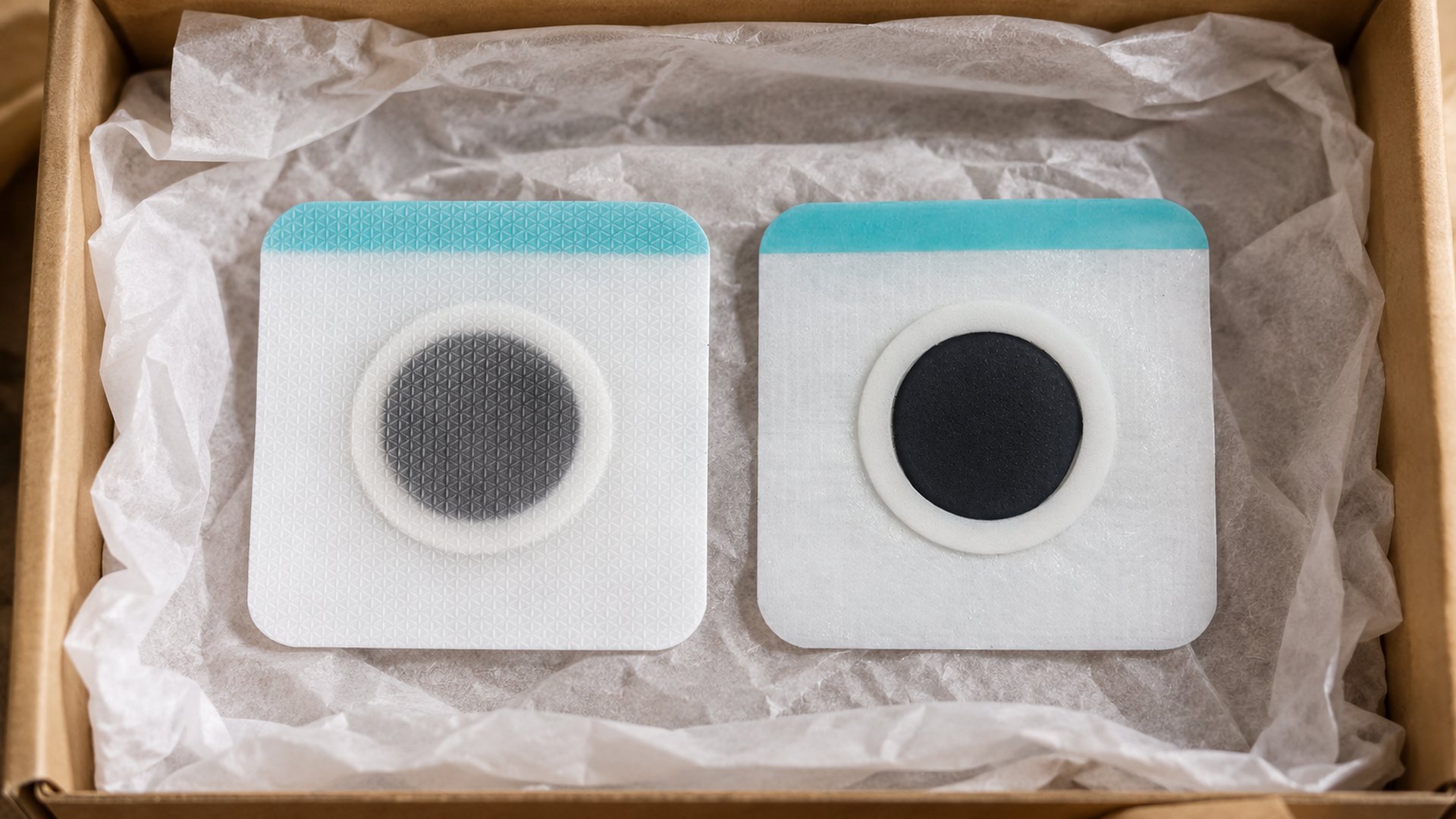
A winter warm abdominal patch OEM manufacturer should not treat every substitution as equivalent. The filling determines the intended warming characteristics. The backing influences comfort and moisture management. The adhesive controls attachment to the intended surface. The carton mainly protects and presents the product.
That distinction determines where cost reduction is sensible.
For a product positioned around abdominal wellness and warming comfort, reducing packaging expense is usually easier to defend than changing the components responsible for its core experience.
The figures below are hypothetical quotation comparisons, not verified supplier prices or guaranteed savings. They assume the same finished-product quantity and an otherwise unchanged specification.
The Substitution Ladder: Start With the Least Disruptive Component
I would review substitutions in this order: carton, backing, filling, then adhesive. That is not a ranking of potential savings. It is a ranking of how directly each change can affect the finished product.
The carton is generally the first candidate. A different paperboard grade or simplified construction may reduce cost without changing the patch itself, provided compression resistance, labeling, and distribution requirements remain acceptable.
Backing substitutions deserve more caution. Two fabrics can look identical in a photograph but differ in softness, breathability, dimensional stability, and behavior during application.
Filling changes are more consequential. Where the Winter Warm Abdominal Patch uses a heat-generating system, a change to the functional mixture can alter temperature development and duration. Where the product instead uses a non-heating herbal construction, the relevant checks concern formulation consistency, moisture behavior, and material compatibility.
Adhesive changes belong near the bottom of the cost-cutting list because attachment failures are immediately visible to customers.
An illustrative comparison makes the trade-offs clearer:
| Proposed substitution | Unit saving | Saving at 18,000 units | Validation concern |
|---|---|---|---|
| Simplified carton construction | $0.012 | $216 | Compression and packing |
| Alternative backing fabric | $0.018 | $324 | Comfort and compatibility |
| Revised filling specification | $0.025 | $450 | Functional consistency |
| Lower-cost adhesive | $0.015 | $270 | Attachment and skin contact |
These savings should not automatically be added together. One substitution can change processing conditions or require adjustments elsewhere.
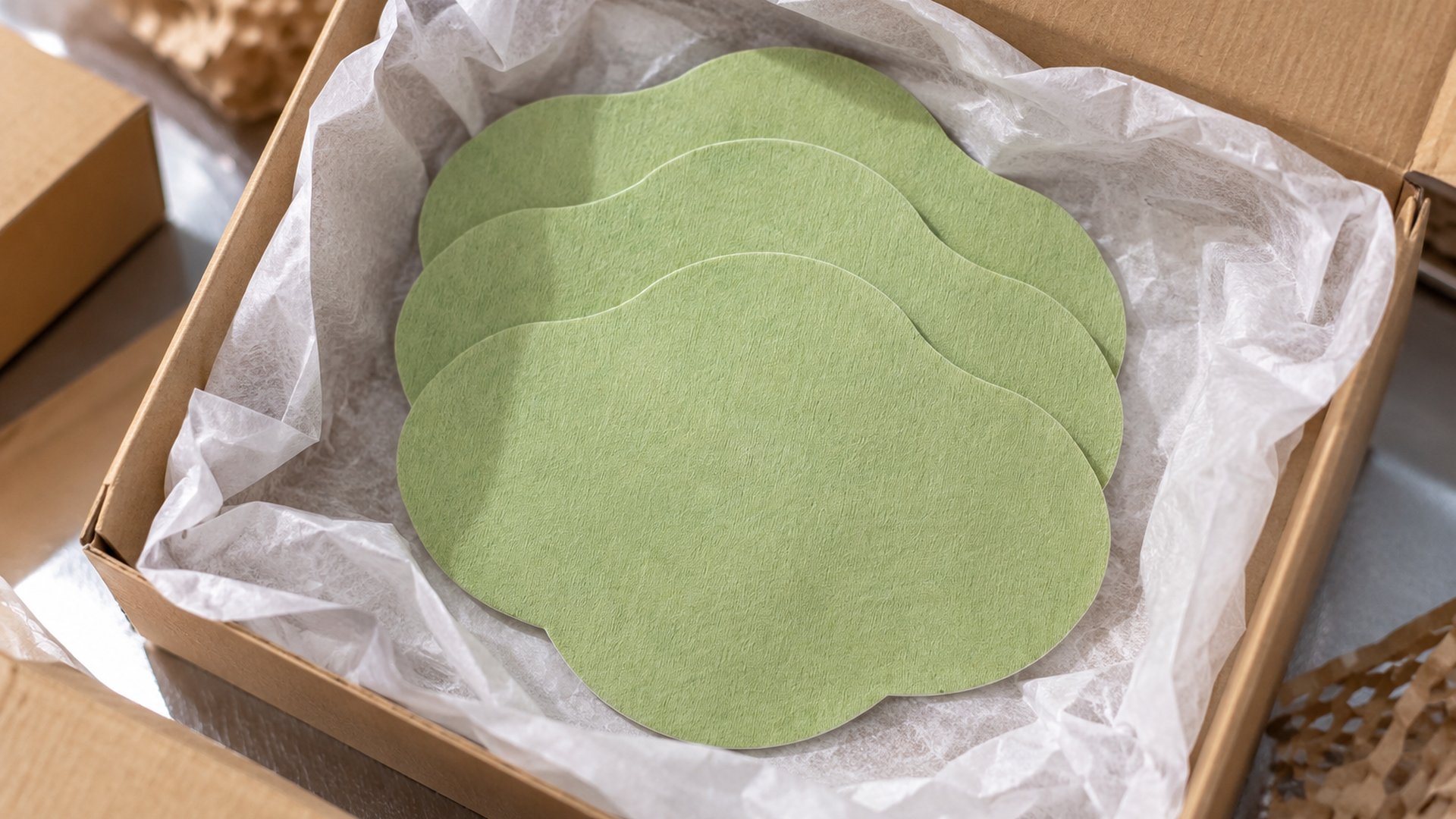
Notice that the filling offers the largest modeled saving, but it also carries a greater technical burden. The cheapest component change is not necessarily the cheapest approved product change.
Two Swaps That Commonly Turn Into Complaints
If a new buyer asks where material savings backfire, I point to the adhesive and the functional filling.
The adhesive swap: A lower-priced adhesive may perform adequately on a clean laboratory surface yet behave differently under ordinary movement, perspiration, or changing temperatures. Complaints may involve lifting edges, residue, uncomfortable removal, or inconsistent attachment.
That does not mean every alternative adhesive is unsuitable. It means a quotation comparison is incomplete without relevant compatibility and use-condition testing.
The filling swap: Reducing or changing a functional filling can affect consistency across the batch. For a warming construction, changes may influence the heating profile. For a non-heating construction, different material characteristics may affect uniformity or stability.
The product's intended design determines the appropriate tests. A manufacturer should never assume that a lower-cost filling is interchangeable merely because its appearance is similar.
Consider a hypothetical complaint-risk model. Suppose the approved construction has a documented complaint rate of 0.8% for a defined category. An unvalidated material change is projected to raise that rate to 2.4%.
Across 18,000 units, that difference represents 288 additional potential complaints if the assumptions prove accurate.
It is a scenario for financial planning, not an observed result or a prediction that any particular material will produce those rates.
The purchasing lesson is that a $270 adhesive saving can disappear quickly when investigation, replacement handling, and customer service are considered.
For a winter warm abdominal patch OEM manufacturer, maintaining the approved functional and skin-contact characteristics should take priority over achieving the lowest possible material quotation.
Retesting Can Consume the Entire Saving
A material substitution is not approved simply because the new component arrives with a supplier certificate.
The factory must establish whether the replacement remains suitable for the finished product and its manufacturing process.
For a carton change, this may involve dimensional checks, compression assessment, print verification, and transport-pack compatibility.
For a backing change, evaluation may include dimensional stability, material compatibility, and finished-product handling.
For an adhesive change, the test plan may need attachment, removal, aging, and appropriate skin-contact assessments.
A filling change can require more extensive work, especially when it affects a functional warming system. Relevant performance, stability, and safety assessments must follow the actual product design and applicable requirements.
Here is where buyers miscalculate: they compare the material saving but leave validation expenditure outside the spreadsheet.
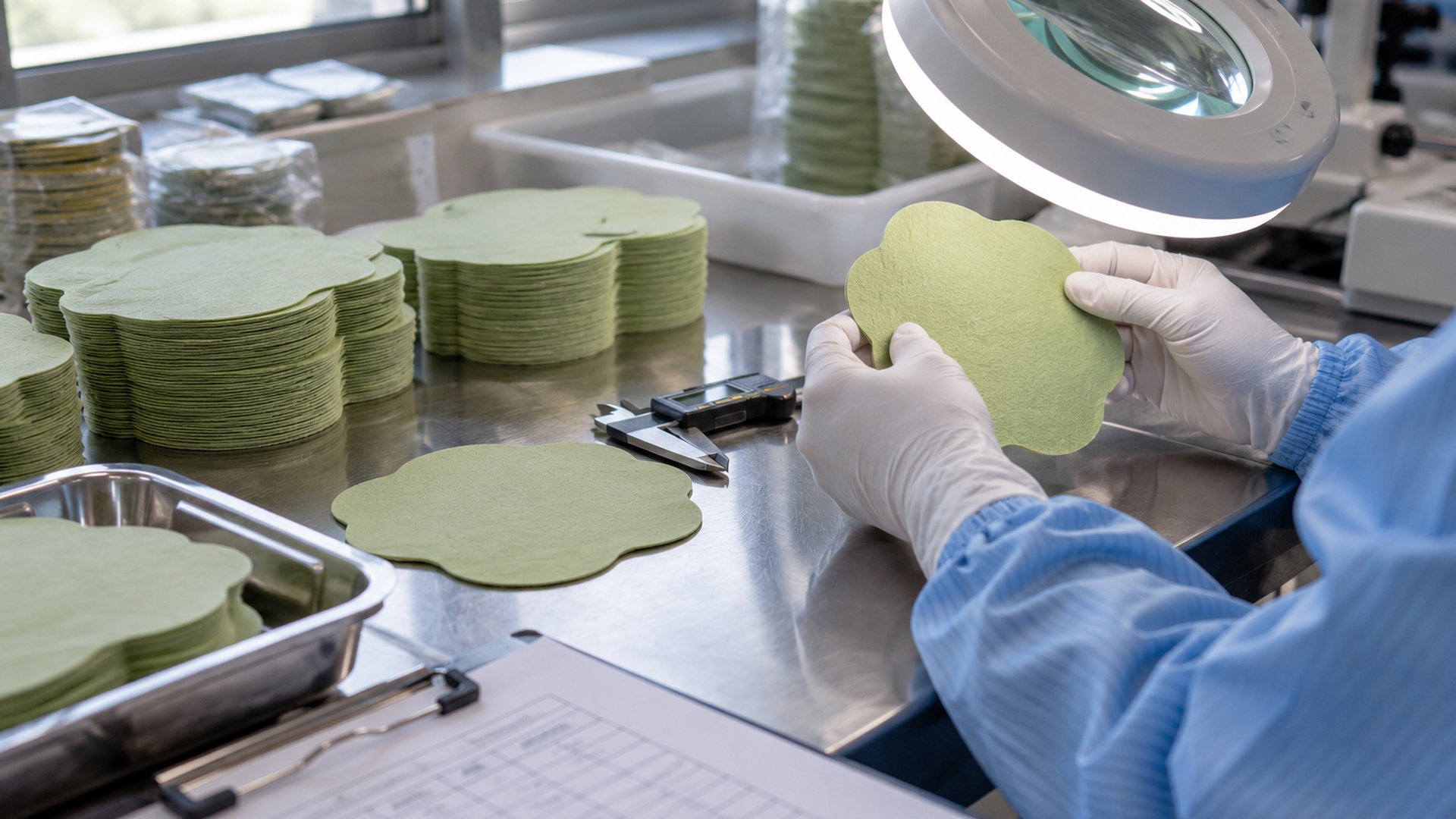
Assume an alternative backing saves $0.018 per unit, or $324 across the proposed order. If the necessary additional testing and process checks cost an illustrative $480, the change produces a net first-order cost increase of $156.
That does not automatically make the substitution a bad decision. It may pay back across later orders.
But procurement should calculate the break-even volume rather than describe the first order as cheaper.
The minimum order can also change. An alternative backing supplier might require 25,000 units of material allocation even though the buyer intends to purchase only 18,000 finished patches.
That difference creates an inventory obligation.
The buyer needs to know who owns the unused material, whether it can be used for later production, and what happens if the revised construction fails approval.
Never approve a substitution without understanding both the retest requirement and the material purchasing commitment.
Put Every Material Swap Into the Purchase Order
A purchase order that says "equivalent materials permitted" gives away too much control.
I would require a separate substitution schedule identifying the original component, proposed replacement, supplier specification, unit-price adjustment, testing requirement, and minimum purchasing quantity.
The buyer should approve the revised specification before the manufacturer releases the substituted material into production.
The agreement should also state that an unapproved substitution is not automatically acceptable merely because the finished product passes a visual inspection.
For example, the PO could specify an approved carton revision at a $0.012 unit reduction, subject to successful packing and compression checks. That is a measurable commercial commitment.
For a backing substitution, the PO should identify the material grade and require written approval of the evaluation results before the new construction replaces the reference specification.
Any additional validation charges should be quoted separately. The same applies to unused material purchased solely for the proposed change.
I would also insist that the factory retain the original approved specification as the comparison baseline. Otherwise, repeat orders can drift through several small substitutions until the product no longer matches the original approval.
A useful decision rule is to approve a change only when the expected saving across the committed volume exceeds the justified testing and implementation costs, without compromising required product performance or compliance.
For Winter Warm Abdominal Patch production, my first target would usually be a packaging simplification. I would consider backing alternatives after appropriate evaluation. I would approach filling and adhesive changes only with a clear technical reason and an agreed validation plan.
The job of procurement is not to eliminate every available cent of material cost. It is to purchase a consistent, commercially viable product.
A good winter warm abdominal patch OEM manufacturer should be able to show the cost reduction, the technical consequences, and the approval requirements on the same quotation.
If those three items cannot be reconciled, the original material is probably the better purchase.
CATEGORIES
LATEST NEWS
- Sinew-Bone Pain-Bi Patch Private Label Manufacturer Supply Agreements
- What Hand Mask Custom Packaging Supplier Quotes Overlook
- Kids Herbal Foot Patch Contract Manufacturer: Safety Specifications First
- Mugwort Steam Eye Mask Private Label Manufacturer Readiness Check
- Mugwort Essential Oil Custom Formula Supplier: Formulation Approval Milestones
CONTACT US
QQ: 396269538
Phone: 17796669065
Tel: 17796669065
Email: 396269538
Add: Room 001, 1st Floor, Building 1, Zhengzhou Hangmei International Smart City, Intersection of S102 and Nanquan Road, Xuedian Town, Xinzheng City, Zhengzhou, Henan Province, China