Industry news
Horse Oil Crack Care Patch Private Label Manufacturer: Material Decisions
Industry news 2026-10-14 08:36:55 22 views admin
Don't Rush the PO: The MOQ Is Only the First Cost
Don't rush the purchase order just because a Horse Oil Crack Care Patch quotation shows an attractive unit price. The expensive mistakes usually appear after purchasing agrees to a quantity without understanding what the factory must commit to produce it.
A buyer might request 8,000 patches, expecting the manufacturer to accept the quantity because the product looks simple. But the factory may need to reserve a full material batch, prepare the coating equipment, and allocate packaging components that cannot be economically purchased in such small quantities.
That is why MOQ exists. It reflects manufacturing constraints, not simply a supplier's desire to sell more.
For a horse oil crack care patch private label manufacturer, the relevant minimum may apply separately to the formulation, backing material, individual packaging, and finished SKU.
An illustrative factory quotation might specify 12,000 patches per formulation and 6,000 pieces per packaging version, provided both versions use the same approved product construction.
That is very different from a blanket minimum of 12,000 pieces per order.
The buyer should ask which minimum controls production before accepting the quotation. Otherwise, an apparently small packaging change can trigger another manufacturing commitment.
Splitting the First Order Without Destroying the Unit Price
The first purchasing mistake is dividing one production requirement into several unrelated manufacturing jobs.
Suppose a buyer wants to launch Horse Oil Crack Care Patch through an online store and a regional distributor. The two channels require different carton artwork, but the patch itself is identical.
One approach is to place two separate manufacturing orders of 6,000 patches each. That may create additional setup and administration costs.
A better option is to negotiate one production batch of 12,000 patches, with the finished goods divided into two approved packaging configurations.
The distinction is important. The manufacturer runs one formula and one patch construction while managing two packaging allocations.
The arrangement works only if the packaging components, labeling requirements, and production controls permit it.
The buyer should not assume that different formulas, different materials, or different regulated product specifications can be combined under one minimum.
For an illustrative price discussion, consider these volume breakpoints:
| Production quantity | Illustrative unit price | Purchasing consideration |
|---|---|---|
| 6,000 patches | $0.46 | Higher setup allocation |
| 12,000 patches | $0.39 | More efficient single batch |
| 24,000 patches | $0.35 | Lower unit cost, higher inventory exposure |
These figures are hypothetical pricing examples, not current factory quotations.
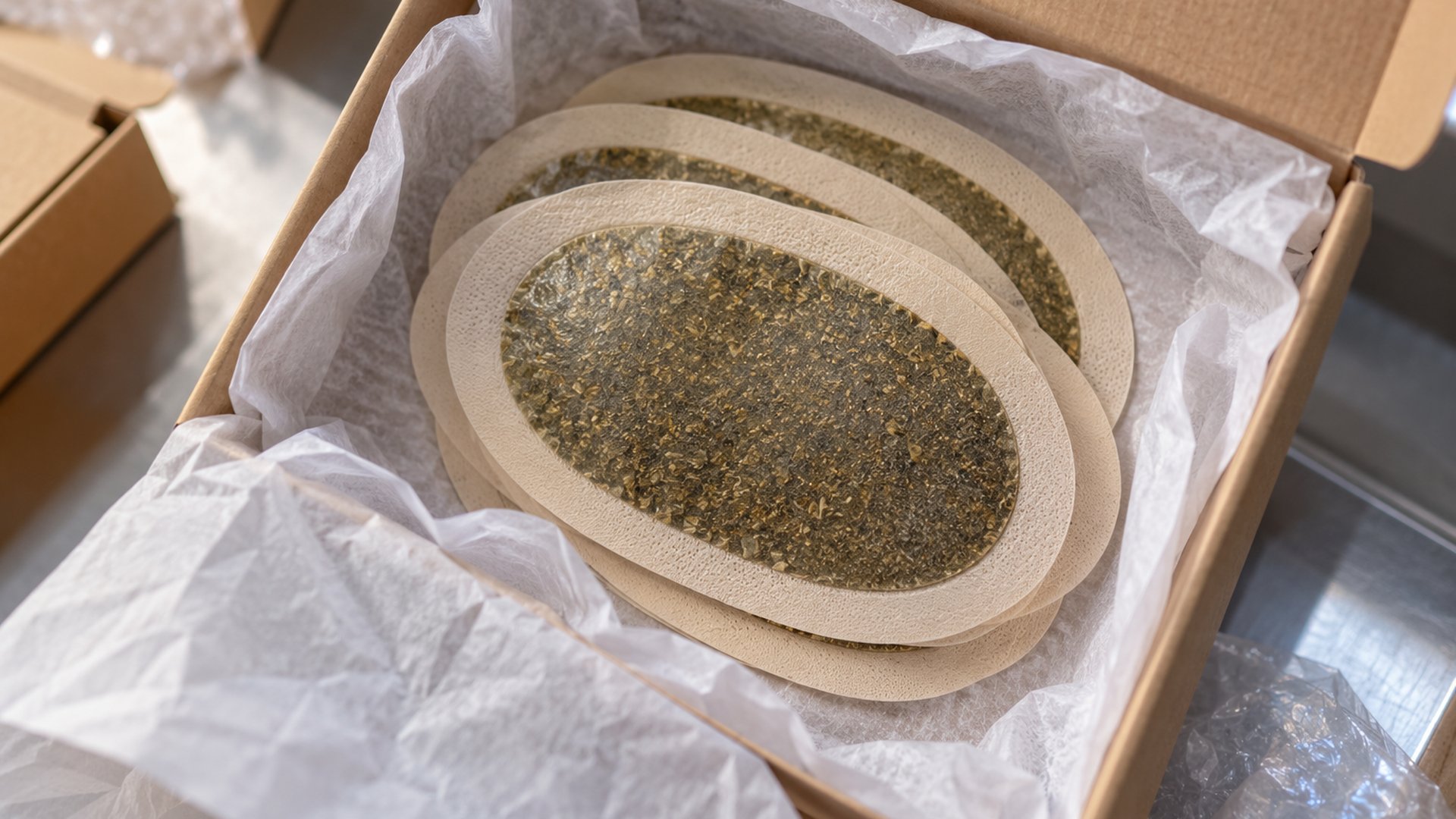
At 12,000 units, the modeled product cost is $4,680. At 24,000 units, it becomes $8,400.
The larger order saves $0.04 per patch but requires another $3,720 in product expenditure.
That difference matters more than the percentage discount when the buyer has not yet established repeat demand.
The sensible first-order strategy is to combine compatible packaging allocations while keeping the underlying production specification unchanged.
Buffer Stock: Hold the Right Material, Not Everything
The second mistake is asking the factory to manufacture excess finished goods simply because purchasing wants protection against stockouts.
Finished Horse Oil Crack Care Patch inventory carries storage, shelf-life, packaging, and working-capital considerations. Holding too much stock can become expensive if the brand changes its packaging or discovers that demand is lower than forecast.
I would separate buffer planning into three categories.
The first is finished-product safety stock. For a new brand with uncertain sales, an illustrative planning allowance might be two to three weeks of expected demand, provided the product's shelf life and storage conditions support it.
The second is shared packaging material. Where several sales channels use the same inner pouch, the buyer may negotiate a reserve of unprinted or otherwise common packaging components rather than holding fully packed products.
The third is specialized material. A proprietary backing or customized component may have a supplier purchasing minimum that exceeds the immediate production requirement.
In that case, the factory and buyer should agree in writing on ownership, storage conditions, inventory reporting, permitted use, and the deadline for consuming reserved materials.
For example, a buyer expecting weekly sales of 900 patches could plan a three-week finished-goods buffer of 2,700 patches.
That quantity is a planning illustration, not a sales forecast.
The buffer should be reviewed against actual sales and replenishment reliability rather than treated as a permanent target.
A factory-held reserve also needs clear commercial terms. Who pays for the stock? Who bears the risk of obsolescence? What happens if the buyer changes the artwork?
If those questions are unanswered, the apparent convenience of factory storage can become a dispute later.
The Volume Breakpoint Is Not Always Worth Reaching
The third mistake is increasing the first order solely to qualify for a lower unit price.
Buyers often see a quotation with a price reduction at the next quantity tier and assume that ordering more is financially smarter.
Sometimes it is. Frequently, it is not.
Using the illustrative prices above, moving from 12,000 to 24,000 patches reduces the unit price from $0.39 to $0.35.
But the buyer must finance, store, and eventually sell twice as many units.
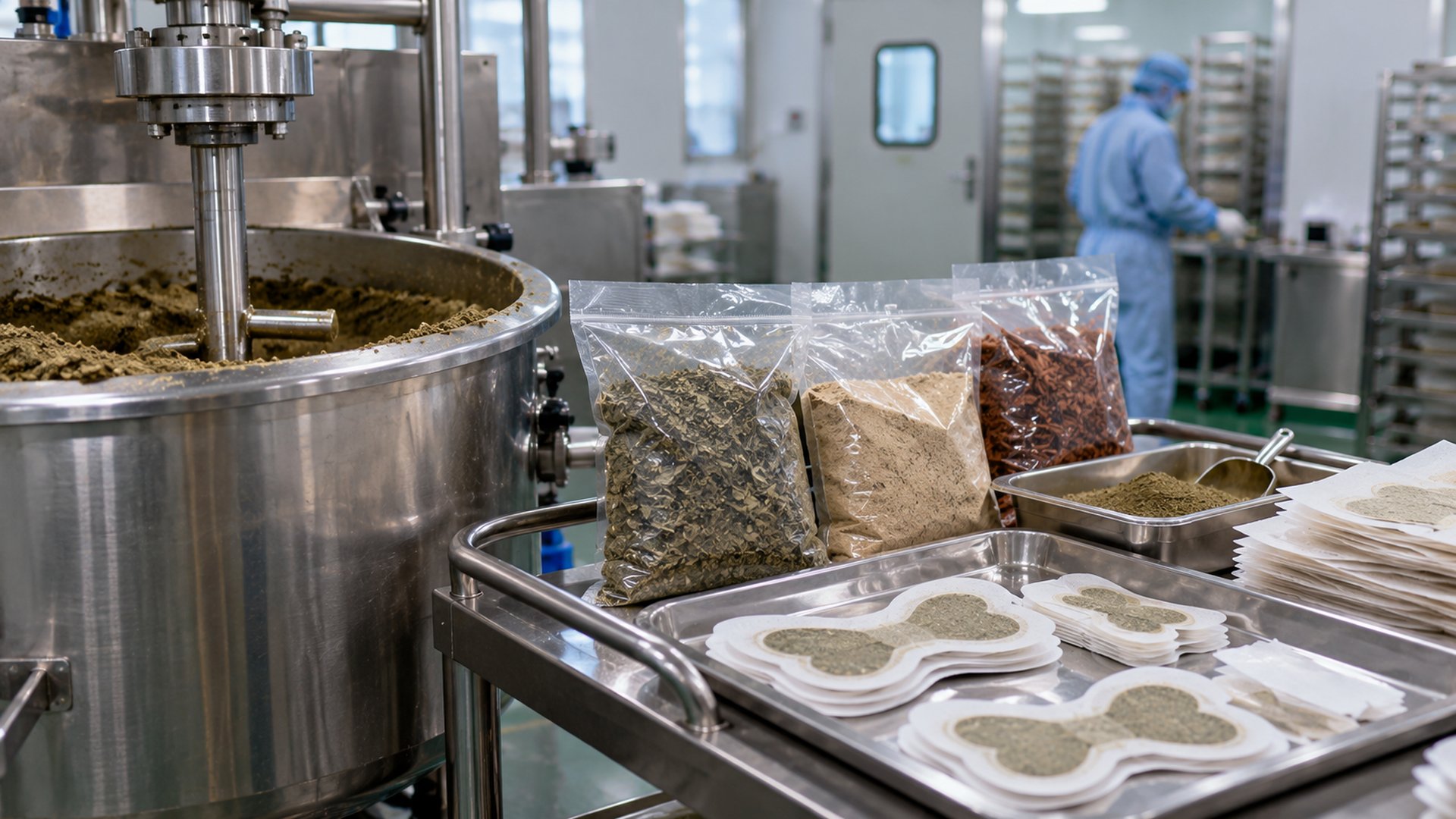
The decision should depend on actual sell-through, not enthusiasm about the discount.
Before stepping up, I would want evidence from at least one completed selling cycle showing reasonably stable weekly demand.
The buyer should also know whether the current packaging, product positioning, and distribution channels are likely to remain unchanged.
A larger order becomes easier to justify when repeat demand is established and the additional quantity can be sold within an acceptable inventory period.
For example, at sustained sales of 1,200 patches per week, 12,000 patches represent approximately ten weeks of gross demand before accounting for buffer requirements.
At only 400 patches per week, the same quantity represents roughly thirty weeks.
Those two demand scenarios should lead to different purchasing decisions.
For a new product, I would rather see a buyer pay slightly more per patch and preserve the ability to adjust the next order than lock capital into inventory that may need repackaging.
The appropriate breakpoint is the one supported by demand and cash flow, not necessarily the lowest number printed on the quotation.
Make the First Order a Controlled Commitment
The fourth mistake is treating the initial MOQ negotiation as a one-time price argument.
A better purchase order defines how the relationship can scale.
For Horse Oil Crack Care Patch, I would request separate confirmation of the minimum per formula, minimum per packaging configuration, allowable split quantities, and the unit-price breakpoints for future production.
If the factory agrees to hold shared materials, the agreement should specify the reserved quantity, ownership, storage responsibility, and release conditions.
The buyer should also confirm whether future orders can use the same approved construction without triggering a new material minimum.
That does not guarantee a permanent price. Material costs and production conditions can change.
It does, however, establish which variables are expected to remain consistent.
The product itself must also be appropriately specified and assessed for its intended skin-contact application. Commercial quantity planning does not replace formulation compatibility, product safety, or applicable labeling requirements.
For a horse oil crack care patch private label manufacturer, a practical first-order arrangement might therefore consist of one approved formulation, one consolidated production batch, limited packaging splits, and a modest finished-goods buffer.
The buyer can then evaluate actual sales before moving to the next volume tier.
My purchasing rule is straightforward: negotiate flexibility before chasing the lowest unit price.
A smaller, well-structured order gives a new brand room to learn. An oversized order may produce a better factory price while creating a much worse inventory position.
The manufacturer should explain the real production minimum. The buyer should decide how much demand is sufficiently certain to justify committing capital.
That is how MOQ becomes a manageable operating decision instead of an expensive surprise.

CATEGORIES
LATEST NEWS
- Sinew-Bone Pain-Bi Patch Private Label Manufacturer Supply Agreements
- What Hand Mask Custom Packaging Supplier Quotes Overlook
- Kids Herbal Foot Patch Contract Manufacturer: Safety Specifications First
- Mugwort Steam Eye Mask Private Label Manufacturer Readiness Check
- Mugwort Essential Oil Custom Formula Supplier: Formulation Approval Milestones
CONTACT US
QQ: 396269538
Phone: 17796669065
Tel: 17796669065
Email: 396269538
Add: Room 001, 1st Floor, Building 1, Zhengzhou Hangmei International Smart City, Intersection of S102 and Nanquan Road, Xuedian Town, Xinzheng City, Zhengzhou, Henan Province, China