Industry news
How a Breast Care Patch Low MOQ Manufacturer Handles Custom Orders
Industry news 2026-10-13 08:39:07 42 views admin
The Cheapest Breast Care Patch Quote Can Become the Most Expensive Order
A supplier offering a lower unit price is not necessarily offering a lower-risk order. In Breast Care Patch manufacturing, the real commercial test comes when something goes wrong after delivery. A missing carton, an incorrect package specification, or a questionable product batch can turn a small purchasing advantage into weeks of disputed responsibility.
My position is simple: buyers should negotiate the claims procedure before negotiating the final few cents off the unit price.
This matters particularly when working with a breast care patch low MOQ manufacturer. Smaller initial orders often have limited room for replacement production, while a brand owner may need to protect a retail launch or existing distribution commitment.
The contract should answer three questions before goods leave the factory: what qualifies as a valid claim, what evidence proves responsibility, and what remedy applies.
Without those answers, both sides are left arguing from memory. The buyer remembers what was promised. The factory remembers what was inspected. Neither recollection is a reliable commercial record.
A properly documented order makes disagreements easier to investigate and much less expensive to resolve.
Three Claim Types That Deserve Different Treatment
Not every complaint about a Breast Care Patch should trigger a factory refund. Equally, a manufacturer should not reject a legitimate defect simply because the shipment passed its internal inspection.
The first common category is quantity or shipping discrepancy. The buyer receives fewer cartons than expected, finds an incorrect unit count, or discovers damaged outer packaging.
The evidence should include receiving photographs, carton labels, delivery records, and the original packing list. Responsibility depends on where the discrepancy occurred and which party controlled the goods at that point.
The second category is product nonconformity. Examples include inconsistent herbal filling, damaged backing material, incorrect patch specifications, or defective individual packaging.
These claims require the affected lot number, clear photographs, representative samples where available, and comparison against the approved product specification.
The third category is artwork or labeling error. Incorrect brand information, mismatched product variants, or missing required labeling can make otherwise acceptable goods unsuitable for the intended market.
Here, the approved artwork revision and signed production proof matter more than opinions about appearance.
The factory should be responsible for deviations from approved manufacturing instructions within its control. The buyer should remain responsible for buyer-approved content unless the contract assigns that duty differently.
A customer complaint alone does not establish a manufacturing defect. But neither does an internal inspection report automatically disprove one.
The Evidence Must Exist Before the Carton Is Sealed
The biggest mistake in claims management is trying to reconstruct production history after a complaint arrives.
By then, the packing operator may have moved to another job, the packaging materials may have changed, and the original cartons may no longer be available.
For Breast Care Patch orders, I would require a defined documentation set before shipment authorization.
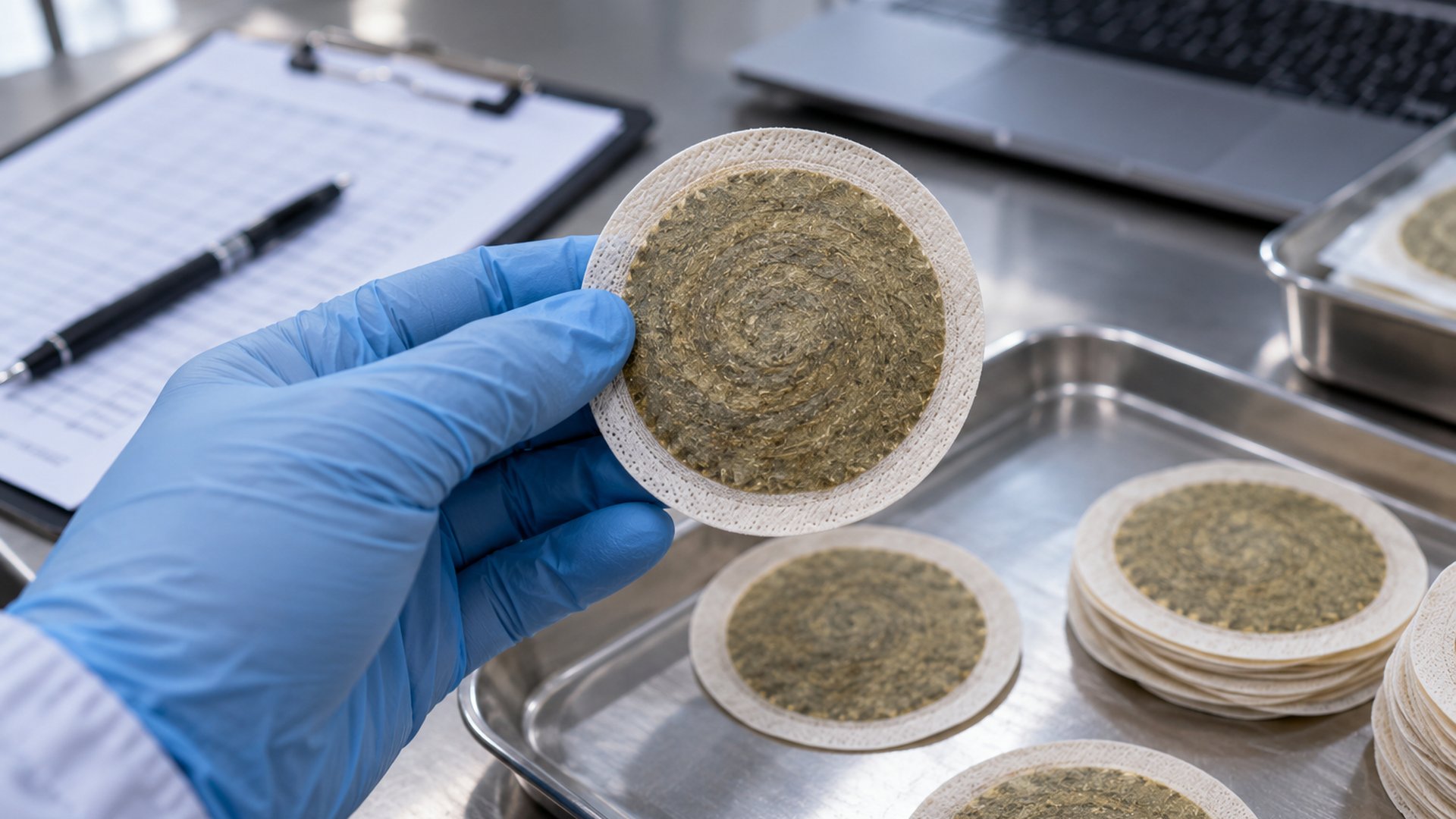
That set should contain the approved product specification, artwork approval, production lot identification, relevant material traceability records, final inspection results, and packing records.
Photographs should show representative finished products, sealed individual packs, carton interiors, carton labels, and the condition of completed master cartons.
A photograph without a traceable lot reference is useful but incomplete. A lot number without supporting production records is equally weak.
The buyer should also retain receiving records and photograph visible transport damage before repacking or distributing affected goods.
For a proposed commercial agreement, the evidence requirements could be organized as follows:
| Claim category | Essential evidence | Initial reporting window |
|---|---|---|
| Quantity or visible shipping discrepancy | Carton photos, packing list, receiving record | Within 7 calendar days of receipt |
| Visible product or packaging defect | Lot number, photos, affected samples | Within 15 calendar days of receipt |
| Latent manufacturing defect | Lot number, samples, inspection and storage history | Promptly after discovery, within the agreed warranty period |
These are illustrative contractual windows, not universal legal deadlines. Mandatory consumer rights, product-safety obligations, and applicable law may require different treatment.
A reasonable agreement should not allow an arbitrary short reporting window to eliminate responsibility for a genuine latent defect.
The Claims Clause Matters More Than a Verbal Promise
I would reject a purchasing agreement that says only, "The supplier will compensate the buyer for quality problems."
Compensate how? Replace the defective units? Issue a credit? Pay for disposal? Cover freight? Who determines whether the complaint is valid?
Ambiguity usually benefits neither party.
A workable clause should require written notice identifying the affected product, lot, quantity, defect description, and supporting evidence.
The manufacturer should acknowledge the claim within two business days and provide an initial investigation response within five business days after receiving sufficient information.
These are proposed service commitments, not guaranteed investigation completion times.
For a confirmed manufacturing nonconformity attributable to the supplier, the parties could agree to replacement of affected units or a credit equal to their invoiced value.
Replacement should include responsibility for reasonable, agreed transportation costs when the supplier caused the problem.

Credit may be preferable when the buyer no longer needs replacement stock or the affected quantity is too small to justify another production run.
The contract should also address independent inspection when responsibility is disputed. An agreed third-party laboratory or inspection company can provide evidence without automatically deciding every contractual issue.
Most importantly, the remedy should reflect the nature and extent of the defect.
A small number of defective individual packs does not automatically justify reimbursement for an entire shipment. Conversely, a systemic defect affecting multiple cartons should not be dismissed as isolated simply because the initial complaint involved only a few units.
Any limitation of liability must also respect applicable law and must not obstruct mandatory safety reporting, recall obligations, or other non-waivable responsibilities.
The First Order Establishes the Rules for Every Repeat Order
A first Breast Care Patch order is not only a production trial. It is also the first test of how the buyer and manufacturer handle records, accountability, and disagreement.
This is where I would spend more negotiating effort.
Before production approval, both sides should sign off on the product specification, artwork revision, packing requirements, inspection criteria, claim procedure, and remedy options.
The buyer should designate one person authorized to approve deviations. The factory should designate one person responsible for recording changes and maintaining the approved document versions.
Otherwise, an informal message requesting a packaging adjustment can become a dispute about which version was actually authorized.
For a breast care patch low MOQ manufacturer, disciplined documentation is especially valuable because a smaller order may not justify maintaining large quantities of replacement stock.
The factory should retain appropriate reference samples and batch records according to the product's regulatory classification, quality system, and contractual requirements.
The buyer should keep a matching approved sample and receiving record.
If a complaint arises, the investigation should compare those references rather than rely on photographs alone.
There is also a distinction between a manufacturing defect and an unsupported product expectation. Breast Care Patch products should be described using compliant wellness positioning, with claims appropriate to the intended market and supported by applicable evidence.
A manufacturer should not be asked to compensate for sales expectations or unauthorized promotional claims unrelated to the agreed product specification.
The commercial rule is straightforward: the party responsible for a verified failure should bear the agreed consequences, while both parties must preserve the evidence needed to establish responsibility.
That is why I would choose a slightly higher quotation with a clear claims procedure over a cheaper quotation that leaves returns and compensation undefined.
A purchase price is visible before production. The cost of an unresolved dispute becomes visible only after something goes wrong.
For a first OEM order, written accountability is worth more than another round of price bargaining.

CATEGORIES
LATEST NEWS
- Sinew-Bone Pain-Bi Patch Private Label Manufacturer Supply Agreements
- What Hand Mask Custom Packaging Supplier Quotes Overlook
- Kids Herbal Foot Patch Contract Manufacturer: Safety Specifications First
- Mugwort Steam Eye Mask Private Label Manufacturer Readiness Check
- Mugwort Essential Oil Custom Formula Supplier: Formulation Approval Milestones
CONTACT US
QQ: 396269538
Phone: 17796669065
Tel: 17796669065
Email: 396269538
Add: Room 001, 1st Floor, Building 1, Zhengzhou Hangmei International Smart City, Intersection of S102 and Nanquan Road, Xuedian Town, Xinzheng City, Zhengzhou, Henan Province, China