Industry news
Chicken Gizzard Digestive Care Patch OEM Manufacturer Batch Traceability
Industry news 2026-10-13 08:27:34 39 views admin
The Batch Looked Ready Until We Opened the Cartons
We had a Chicken Gizzard Digestive Care Patch RFQ on the desk, and the buyer's inspection requirement sounded straightforward: check the finished patches, confirm the quantity, and release the shipment. The problem appeared when we translated those words into an actual inspection plan. What counted as a defective patch? How many samples should the inspector open? Would a leaking pouch carry the same weight as a slightly crooked print?
Those questions cannot wait until finished cartons are stacked in the warehouse.
On the factory floor, a patch can look acceptable immediately after cutting and still develop problems during pouch sealing, handling, or packing. The herbal filling may shift, a seal may contain trapped material, or a carton may carry the wrong batch identification.
To be honest, visual inspection alone does not settle those issues.
For a chicken gizzard digestive care patch OEM manufacturer, we would define the defect categories, sampling rules, and acceptance limits before approving production.
The following order scenario illustrates a proposed QC workflow, not an undocumented claim about a completed customer shipment. Its inspection figures are examples that must be confirmed against the applicable sampling standard and product requirements.
Five Defects We Would Put on the Inspection Sheet
The first change was to replace the buyer's general instruction, "check product quality," with five observable defect categories.
1. Uneven herbal filling. A Chicken Gizzard Digestive Care Patch should have a defined filling-weight specification and acceptable distribution. Excessive concentration on one side, visible empty areas, or material escaping from the intended filling zone would require investigation.
2. Incorrect patch weight. We proposed an illustrative nominal finished-patch weight of 8.0 g with an initial engineering tolerance of ±0.4 g. That equals a 7.6–8.4 g screening range. The actual target must come from the approved formulation and validated process capability.
3. Damaged backing or liner. Torn fabric, exposed adhesive where it should be protected, folded release liners, and contamination can affect handling and intended skin contact.
4. Incomplete pouch seals. Open channels, wrinkles crossing the seal, trapped herbal particles, or visible separation are particularly important because they may compromise package integrity.
5. Incorrect identification or pack contents. A pouch or carton carrying the wrong lot code, quantity, product variant, or approved artwork can create traceability problems even when every patch inside looks acceptable.
We did not classify every defect equally. A minor cosmetic irregularity is different from a compromised seal or incorrect lot identity.
Critical defects would require a separately defined, stringent disposition process rather than being casually accepted through an ordinary cosmetic-defect allowance.
We Converted AQL Into Actual Sample Counts
The buyer asked whether inspecting a few cartons would be enough.
Look, the answer depends on the lot size, inspection level, and acceptance-quality limits agreed in advance.
AQL is a statistical sampling framework. It does not mean that the stated percentage of defects is permitted in every shipment. It determines acceptance and rejection numbers for a particular sampling plan.
For illustration, consider a finished lot containing 12,000 patches, inspected using ISO 2859-1 / ANSI/ASQ Z1.4-style normal single sampling at General Inspection Level II.
That lot-size range corresponds to code letter M and a sample of 315 units under the standard plan.
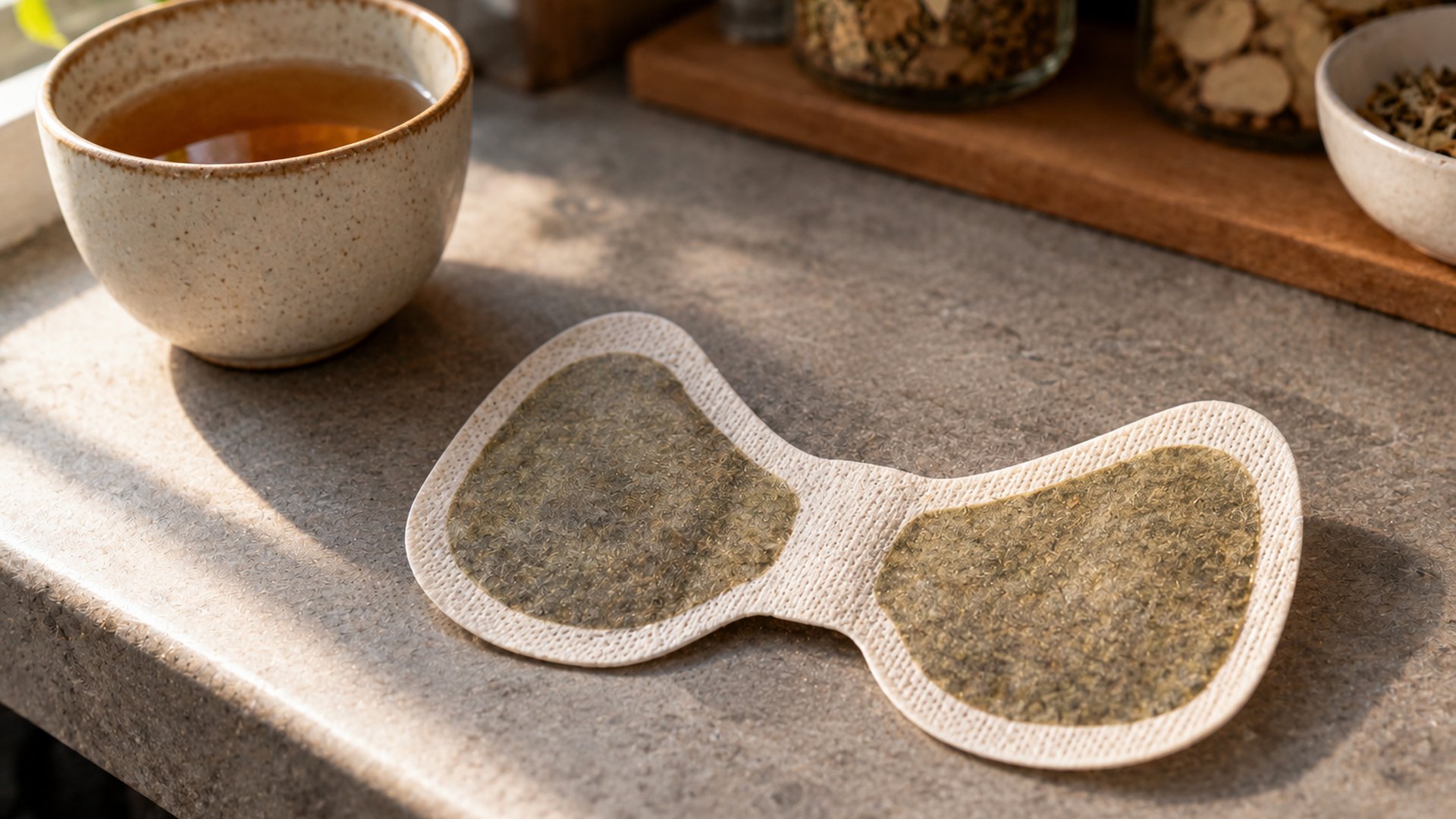
The illustrative inspection rules would be:
| Defect classification | AQL | Sample size | Accept / Reject |
|---|---|---|---|
| Critical | 0 acceptance policy | 315 | 0 / 1 |
| Major | 1.0 | 315 | 7 / 8 |
| Minor | 2.5 | 315 | 14 / 15 |
The critical-defect row represents a proposed zero-acceptance rule, not a claim that ordinary AQL sampling proves the absence of critical defects.
The other acceptance numbers apply to the stated normal single-sampling assumptions and must be verified against the controlled standard edition used for the inspection.
We would classify an open pouch seal as major unless the product's risk assessment required a more stringent classification. Incorrect traceability information could be critical depending on the regulatory and distribution consequences.
A slight printing misalignment that does not affect readability or required information might be minor.
The inspector would select samples randomly across the lot, rather than taking everything from the easiest carton to reach.
If a sample failed the agreed acceptance criteria, the affected lot would be held for investigation and disposition. Rework and reinspection would follow an approved procedure, not an automatic second chance to obtain a passing sample.
Packing Inspection Catches Problems the Production Line Misses
The production operator can inspect the patch before pouching, but cannot confirm every packaging-related characteristic at that stage.
That was the next issue we raised.
At the packing station, we would check the finished pouch rather than relying only on in-process patch inspection. The inspector would verify seal appearance, package integrity, count, lot identification, and consistency with the approved packing specification.
For an initial destructive seal-integrity evaluation, we proposed testing approximately 0.5% of pouches, subject to a minimum sampling requirement established by packaging validation and risk assessment.
For a 12,000-unit lot, that would mean 60 pouch tests.
This is an illustrative inspection rate, not a universal regulatory requirement. The actual method and frequency should be justified by package design, process validation, and the consequences of seal failure.
A visual check may reveal obvious channels or trapped particles, but it cannot establish every aspect of seal integrity. Appropriate physical integrity or strength testing may be necessary.
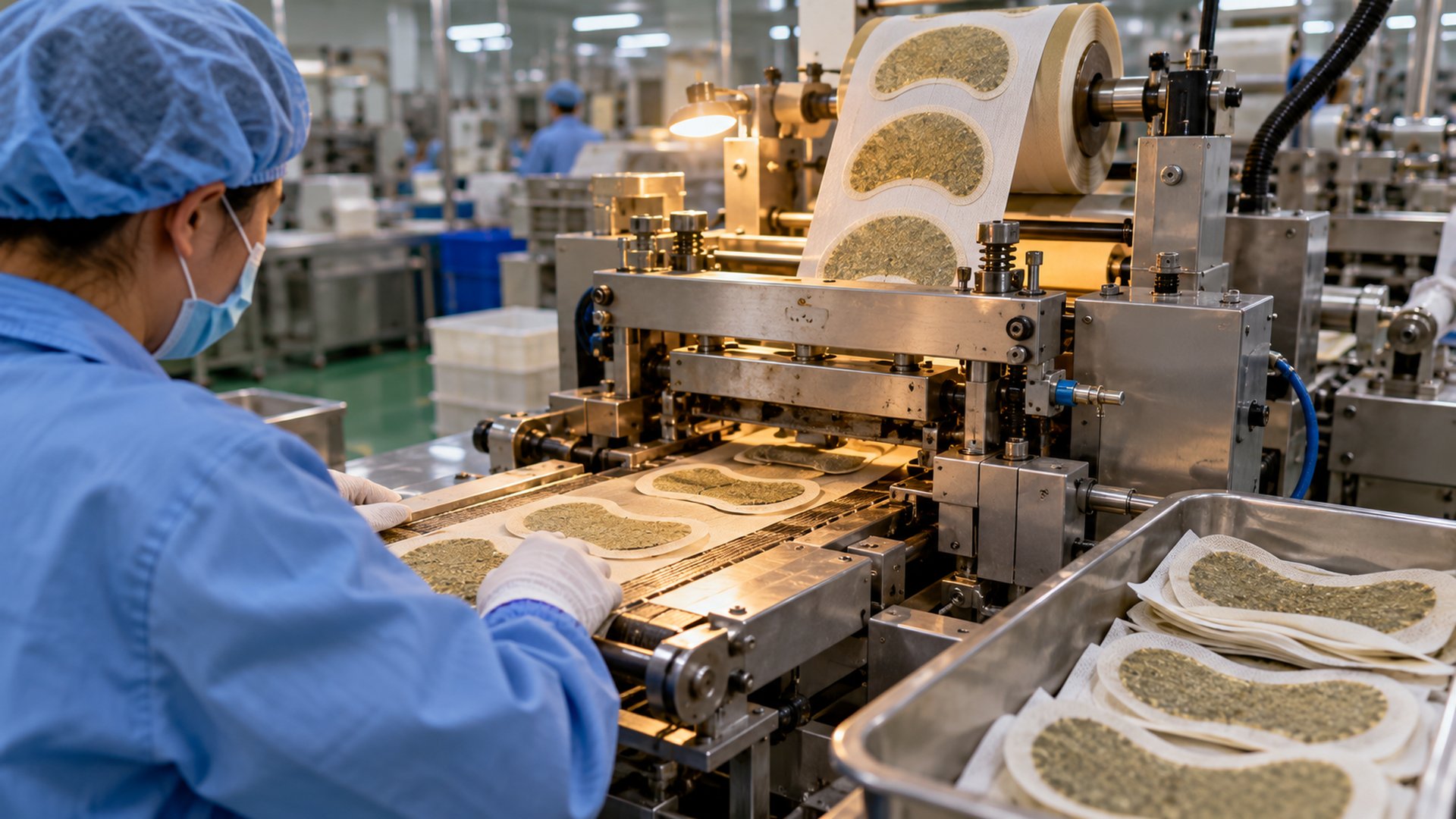
We would also compare actual carton contents against the approved packing list.
One carton with the correct exterior label but the wrong internal count creates a different problem from an individual patch with a cosmetic defect.
Both need records, but their corrective actions will differ.
Finally, the finished lot number must connect the packaged goods to production and material records. Without that link, a later complaint becomes much harder to investigate.
The One-Page Checklist We Would Send With the PO
Before releasing the purchase order, we would attach a one-page inspection sheet containing the product specification, sampling method, defect definitions, and disposition authority.
The working checklist would read as follows:
- Product identity: Confirm Chicken Gizzard Digestive Care Patch, approved specification revision, and lot number.
- Sampling plan: Record lot size, inspection level, sample code, sample count, and applicable AQL limits.
- Appearance: Check herbal filling distribution, backing condition, liner placement, and visible contamination.
- Weight: Measure finished-patch weight against the approved nominal value and tolerance.
- Pouch integrity: Inspect seal condition and perform the defined integrity test at the approved sampling frequency.
- Identification: Verify pouch and carton codes, artwork, quantity, and traceability.
- Disposition: Record defect counts by classification, acceptance decision, corrective action, and inspector approval.
The checklist would also identify which characteristics require routine in-process controls or validated testing rather than relying entirely on final random inspection.
That distinction matters. Sampling cannot guarantee that every unit in a lot is defect-free.
For a Chicken Gizzard Digestive Care Patch, quality control must also cover formulation consistency, suitable materials, intended skin-contact requirements, and any applicable product-specific regulatory controls.
Those activities cannot be replaced by a passing AQL report.
The practical outcome of our proposed order review was a clearer inspection agreement: five defined defect categories, an explicit sampling plan, separate packaging checks, and documented release authority.
For a chicken gizzard digestive care patch OEM manufacturer, the important decision is not simply how many finished patches to inspect.
It is whether the buyer and factory agree on what constitutes failure before production begins.
A shipment should leave the factory because the documented requirements have been met, not because the cartons look tidy from the outside.

CATEGORIES
LATEST NEWS
- Sinew-Bone Pain-Bi Patch Private Label Manufacturer Supply Agreements
- What Hand Mask Custom Packaging Supplier Quotes Overlook
- Kids Herbal Foot Patch Contract Manufacturer: Safety Specifications First
- Mugwort Steam Eye Mask Private Label Manufacturer Readiness Check
- Mugwort Essential Oil Custom Formula Supplier: Formulation Approval Milestones
CONTACT US
QQ: 396269538
Phone: 17796669065
Tel: 17796669065
Email: 396269538
Add: Room 001, 1st Floor, Building 1, Zhengzhou Hangmei International Smart City, Intersection of S102 and Nanquan Road, Xuedian Town, Xinzheng City, Zhengzhou, Henan Province, China