Industry news
Behind the Scenes at a Neck Shoulder Black Plaster Custom Formula Supplier
Industry news 2026-10-12 08:48:17 31 views admin
The Adhesive Looked Fine Until We Tested the Finished Plaster
We got an RFQ for Neck-Shoulder Black Herbal Plaster with a familiar requirement: strong adhesion, comfortable removal, and reliable performance during everyday movement. The buyer had already settled on the general herbal formulation and fabric appearance. They expected the adhesive layer to be a straightforward material choice.
Then we examined the intended application conditions.
The neck and shoulder area presents several challenges. The surface curves, clothing rubs against the edges, and ordinary movement repeatedly bends the backing. Perspiration can also change how an adhesive behaves. A plaster that sticks firmly to a flat testing plate may lift at the edges once the wearer turns their head or moves their shoulders.
The first adhesive candidate had promising initial tack. Press it onto a smooth surface and it stayed there. But that observation did not tell us how the complete construction would behave after extended contact, moisture exposure, or removal.
To be honest, this is where many adhesive discussions become misleading. Someone says the glue is strong, and everyone assumes the technical problem has been solved.
We changed the RFQ from a request for stronger adhesive into a request for measurable adhesive performance.
For a neck shoulder black plaster custom formula supplier, that distinction matters. Adhesive chemistry, coating thickness, backing flexibility, and herbal-layer compatibility all influence the finished product.
The development scenario below illustrates the decisions we would document on a factory floor. Its numerical targets are proposed engineering values, not verified results from a completed customer order.
Why the Adhesive Layer Determines the Real Wearing Experience
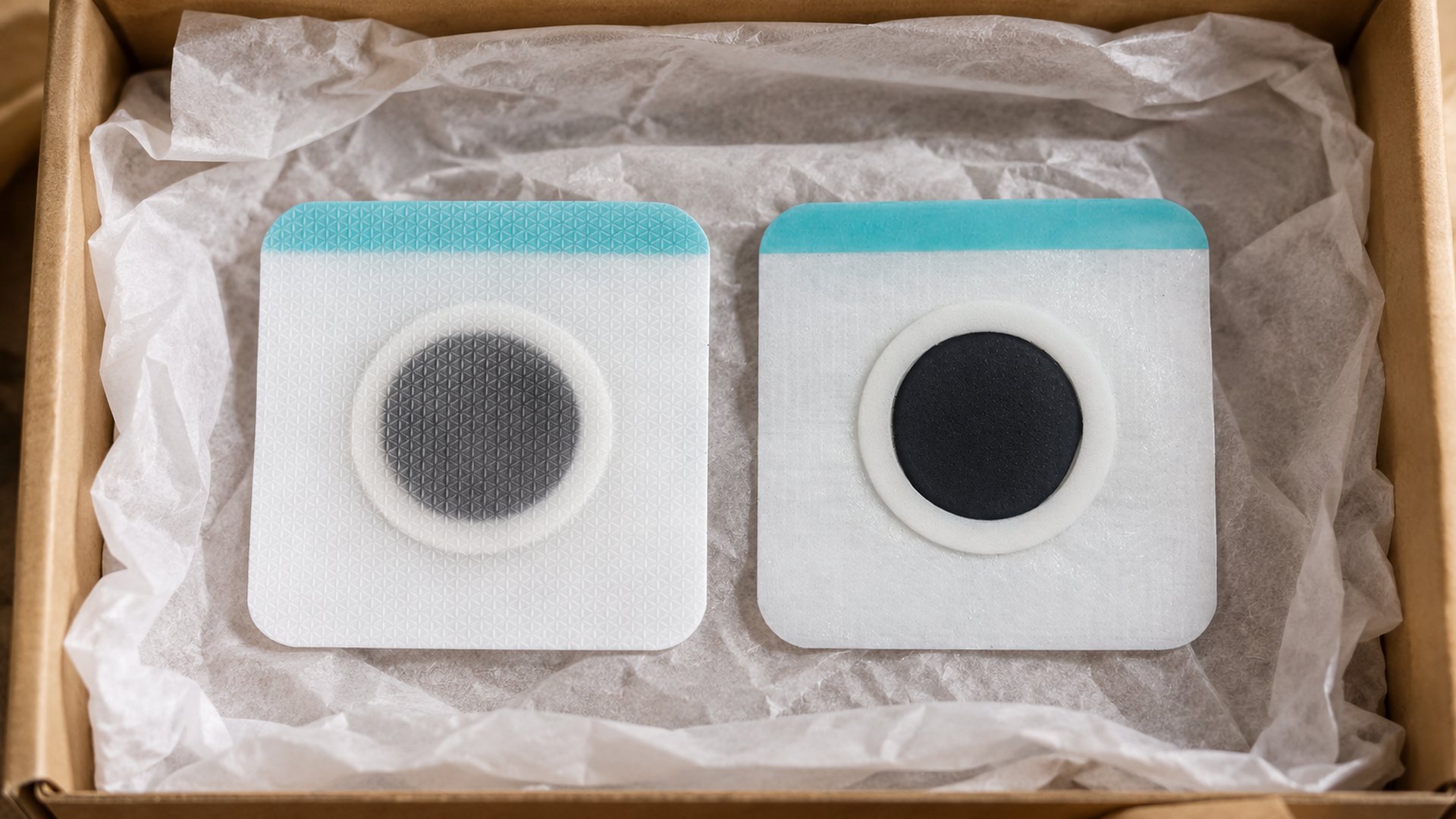
A Neck-Shoulder Black Herbal Plaster is a layered product. The backing provides mechanical support, the herbal filling forms the main product structure, and the adhesive secures the construction during its intended use.
If the adhesive layer is too weak for the application conditions, the edges may lift. If it produces excessive removal force, taking the plaster off may become uncomfortable. An adhesive can also leave residue, transfer to the skin, or interact poorly with the backing.
We therefore looked beyond initial stickiness.
One issue was the difference between tack and peel force. Tack describes how readily an adhesive establishes contact. Peel force describes the force required to separate an adhered strip under defined conditions.
A material can have strong initial tack without delivering consistent adhesion after moisture exposure. Another material may show impressive peel values on a laboratory substrate but behave differently on skin.
Backing flexibility complicates the picture further.
A stiff fabric can pull against the adhesive when the shoulder moves. A flexible backing may follow the surface more easily, reducing mechanical stress at the edges. Changing the adhesive alone cannot always correct a backing-related problem.
We also had to consider the herbal filling. Depending on the construction, oils or other formulation components may migrate into adjacent layers and influence adhesive performance.
That possibility requires compatibility testing rather than assumptions based on an adhesive supplier's standard technical sheet.
The practical question became: which complete laminate provides acceptable adhesion, removal characteristics, and manufacturing consistency under the intended conditions?
Three Adhesive Families Went Onto the Comparison Sheet
Instead of immediately approving the strongest sample, we compared three adhesive families commonly considered for pressure-sensitive constructions.
Acrylic pressure-sensitive adhesives offered a useful starting point. Depending on their formulation, they can provide controlled adhesion, stable coating behavior, and compatibility with established converting processes. Their performance still depends on coating thickness, backing material, and surface preparation.
Silicone adhesives deserved consideration where lower-trauma removal was an important design objective. Certain silicone systems are engineered for gentler skin contact, although that does not mean every silicone adhesive is suitable for every user or application. Cost, coating compatibility, and holding performance also require evaluation.
Rubber-based pressure-sensitive adhesives offered another route where initial tack was a priority. However, heat, moisture, aging, and formulation compatibility can influence their behavior. A rubber-based system should not be selected solely because it feels more aggressive during a fingertip test.
We built the comparison around the same backing and herbal-layer specification wherever technically feasible.
That detail was important. If we changed the backing, adhesive chemistry, and coating weight simultaneously, any improvement would be difficult to attribute to one variable.
The buyer initially favored a high-tack construction. We explained that higher adhesion was not automatically the right outcome.
Look, a plaster that stays attached during movement but is unpleasant to remove may create a different product problem.
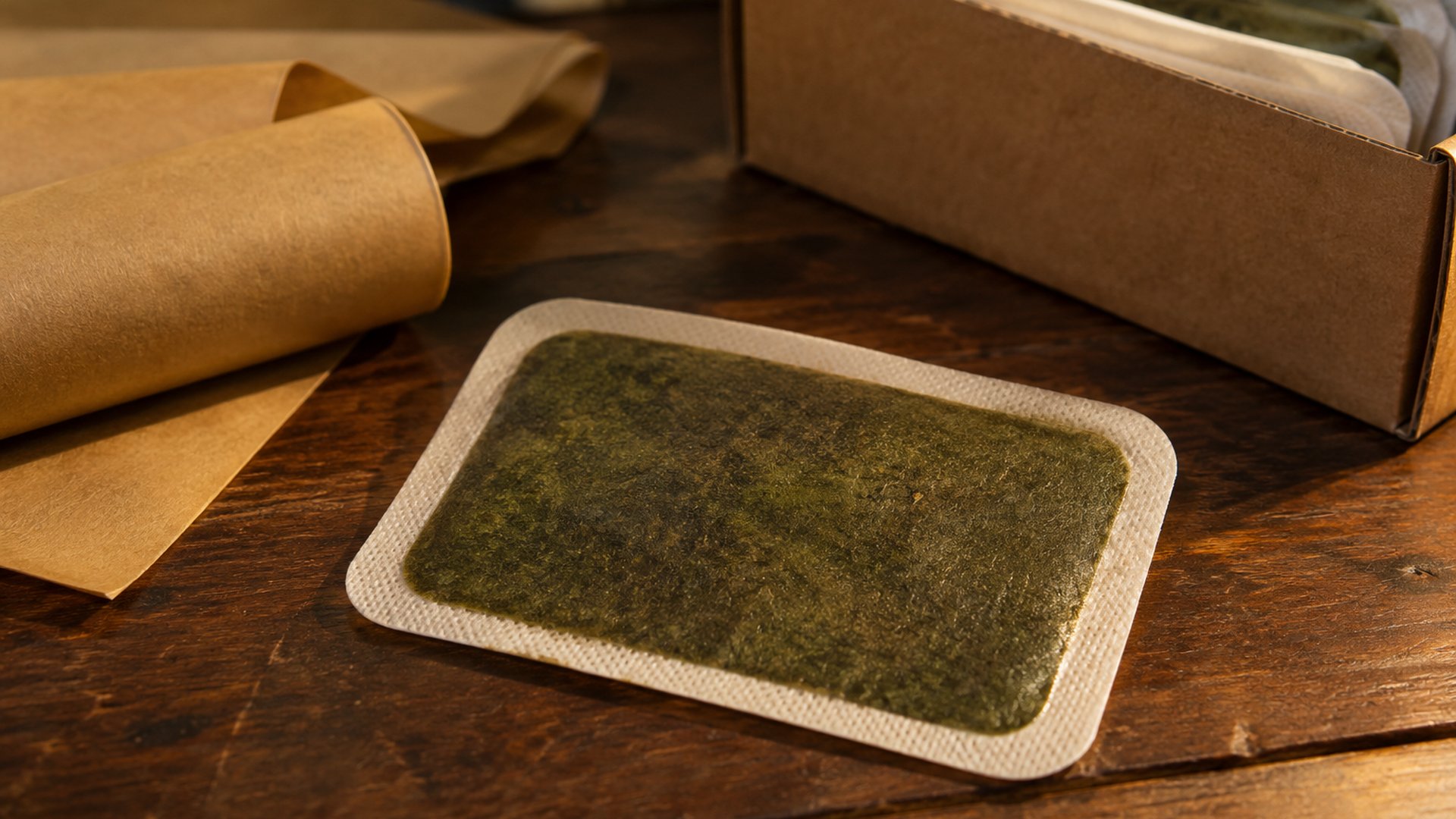
The better approach was to establish an acceptable performance window, then identify the adhesive family capable of meeting it consistently.
No adhesive family could be declared suitable without evaluating the complete product and its intended skin-contact conditions.
The Three Numbers We Wanted Written Into the Purchase Order
The original purchasing description used two phrases: "strong adhesion" and "comfortable wear."
Neither phrase was measurable.
We proposed three technical parameters that could be incorporated into a development specification and eventually into the purchase order.
The first was 180-degree peel force, expressed in grams-force per 2.5 cm strip.
For initial laboratory screening, we considered an illustrative range of 100–250 gf/2.5 cm on a defined test substrate. This was not a validated skin-contact acceptance limit. It was a preliminary comparison window requiring adjustment after testing.
The test method would need to identify the substrate, strip width, application pressure, dwell time, peel speed, temperature, and humidity.
Without those details, a reported peel value has limited purchasing value.
The second parameter was dry adhesive thickness, expressed in mils.
We proposed comparing 1.5, 2.0, and 2.5 mil coatings, approximately 38, 51, and 64 micrometers respectively.
| Development parameter | Preliminary comparison | What purchasing should verify |
|---|---|---|
| 180-degree peel force | 100–250 gf/2.5 cm | Defined substrate, method, and tolerance |
| Dry adhesive thickness | 1.5–2.5 mil | Coating uniformity and measurement method |
| Moisture performance | Up to 48-hour laboratory challenge | Edge lift, retained adhesion, and material changes |
The third parameter was adhesion retention under controlled moisture exposure.
We proposed a laboratory challenge lasting up to 48 hours, with observations recorded at intermediate intervals.
This was an accelerated comparison exercise, not a recommendation for 48-hour continuous skin wear. The actual permitted contact duration would require separate product-specific justification.
We also made clear that thicker adhesive does not necessarily mean stronger or more comfortable adhesion. Chemistry and construction can matter more than coating thickness alone.
These numbers gave engineering a starting point, but the final specification would have to reflect measured performance.
Damp Conditions and Washing Exposed Another Weak Point
The next question from purchasing was whether the plaster could survive washing.
We asked what washing meant.
A brief accidental splash is different from a shower. Both are different from deliberately washing the product repeatedly while it remains attached.
Those conditions impose different mechanical and moisture stresses.
For the bench comparison, we proposed a controlled wash-cycle test using separate specimens from each adhesive construction.
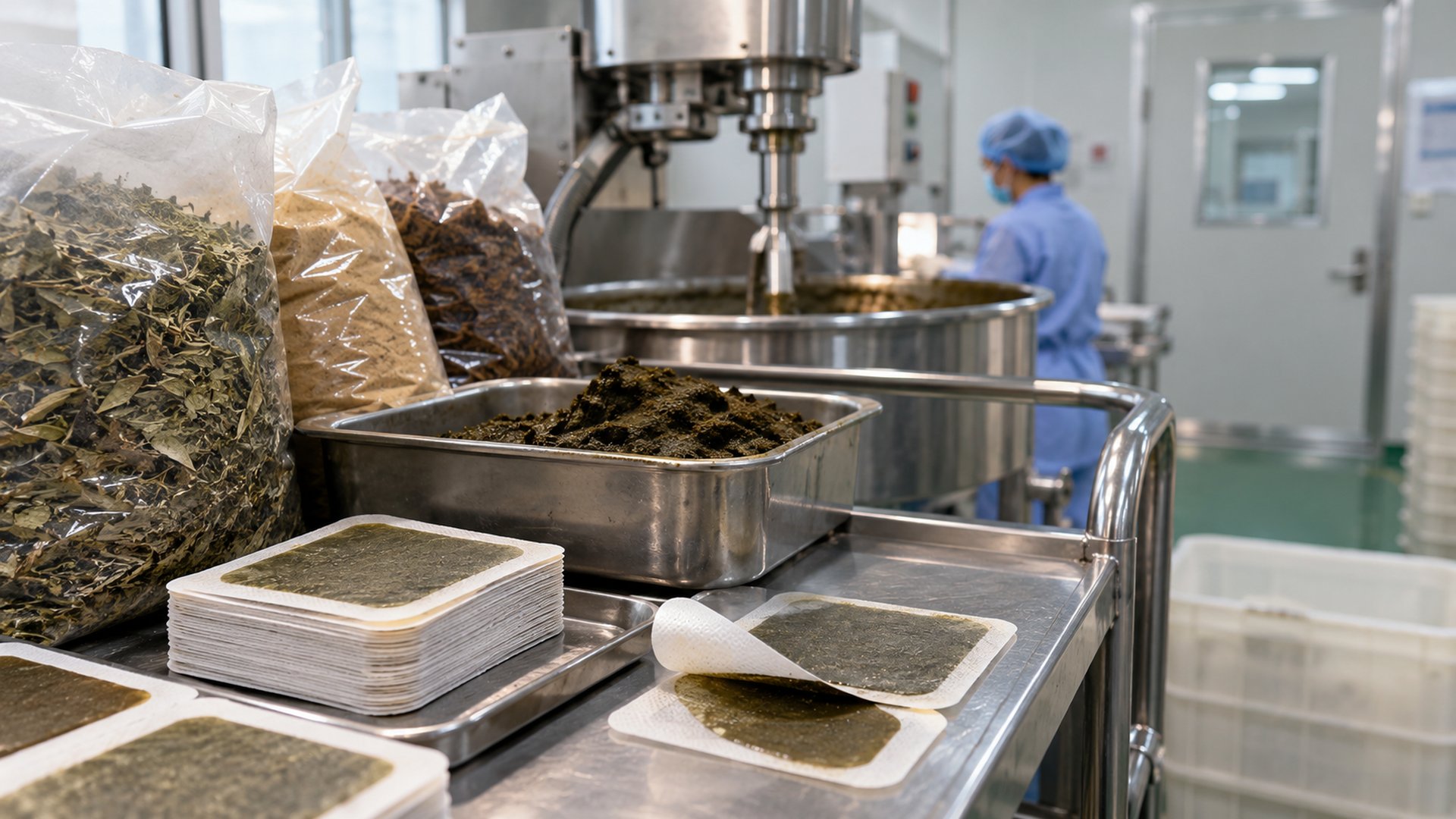
One cycle would consist of a defined water exposure followed by a standardized drying period. We would inspect specimens after one, two, and three cycles.
The observations would include visible edge lifting, backing deformation, adhesive transfer, and retained adhesion.
A specimen remaining attached after three laboratory cycles would not, by itself, justify a waterproof claim or instructions for showering while wearing the product.
We also proposed testing adhesion after application to a controlled damp substrate.
This matters because moisture present before application can interfere with initial adhesive contact. Moisture introduced after adhesion has formed may produce a different result.
Those two conditions should not be combined into one vague "water resistance" test.
During the technical review, we also considered whether the herbal formulation might influence the adhesive after prolonged storage.
A product can perform adequately immediately after manufacture yet behave differently after components have remained in contact.
That is why the development plan needed both initial material testing and appropriate compatibility and stability assessment.
The buyer's original request for stronger glue had now become a more precise question: which construction maintains acceptable adhesion under the relevant conditions without creating unacceptable removal characteristics?
The Bench Test We Would Require Before Mass Production
We ended the engineering discussion with a proposed bench-testing protocol rather than an immediate adhesive approval.
Each candidate construction would use a controlled backing specification, defined adhesive coating, and consistent herbal-layer configuration.
The first test would measure initial 180-degree peel force under standardized conditions.
The second would repeat adhesion measurements following defined moisture exposure.
The third would examine specimens after the wash-cycle challenge, recording both quantitative readings and visible failure modes.
For preliminary screening, we proposed testing at least five specimens per construction and condition. That sample count would help reveal obvious variability, but it would not automatically constitute a statistically validated production acceptance plan.
We would record individual results rather than reporting only an average.
If one specimen showed adhesive transfer while the others appeared acceptable, that result would still require investigation.
We would also examine the edges under magnification and inspect the release liner for coating defects or irregular adhesive distribution.
On the production floor, these small observations matter. A coating that varies across the web can produce different removal characteristics even when the nominal thickness looks correct on the supplier's certificate.
The bench test would be followed by appropriate finished-product assessment for intended skin contact. Laboratory peel force cannot establish irritation or sensitization performance.
Any human-use evaluation would need a suitable protocol, appropriate oversight, and consideration of the formulation and applicable regulatory requirements.
Before mass production, purchasing would need an approved reference construction and written acceptance criteria covering adhesive identity, coating thickness, peel-test method, moisture performance, and visible defects.
That documentation would also support incoming material checks and investigation of future batch differences.
The lesson from this Neck-Shoulder Black Herbal Plaster development scenario was not that acrylic, silicone, or rubber-based adhesive always wins.
It was that adhesive selection cannot be reduced to a request for maximum stickiness.
A workable specification connects the intended wearing conditions to measurable laboratory performance, manufacturing capability, and product-specific skin-contact assessment.
For a neck shoulder black plaster custom formula supplier, that is the difference between supplying a sticky sample and developing a construction that can be evaluated, reproduced, and controlled in production.
CATEGORIES
LATEST NEWS
- Sinew-Bone Pain-Bi Patch Private Label Manufacturer Supply Agreements
- What Hand Mask Custom Packaging Supplier Quotes Overlook
- Kids Herbal Foot Patch Contract Manufacturer: Safety Specifications First
- Mugwort Steam Eye Mask Private Label Manufacturer Readiness Check
- Mugwort Essential Oil Custom Formula Supplier: Formulation Approval Milestones
CONTACT US
QQ: 396269538
Phone: 17796669065
Tel: 17796669065
Email: 396269538
Add: Room 001, 1st Floor, Building 1, Zhengzhou Hangmei International Smart City, Intersection of S102 and Nanquan Road, Xuedian Town, Xinzheng City, Zhengzhou, Henan Province, China