Industry news
Warming Uterine Patch Custom Formula Supplier: Cost Drivers Buyers Miss
Industry news 2026-10-05 10:07:45 40 views admin
Warming Uterine Patch OEM Case Study
Project Background: A Formula Customization Request With a Tight Launch Window
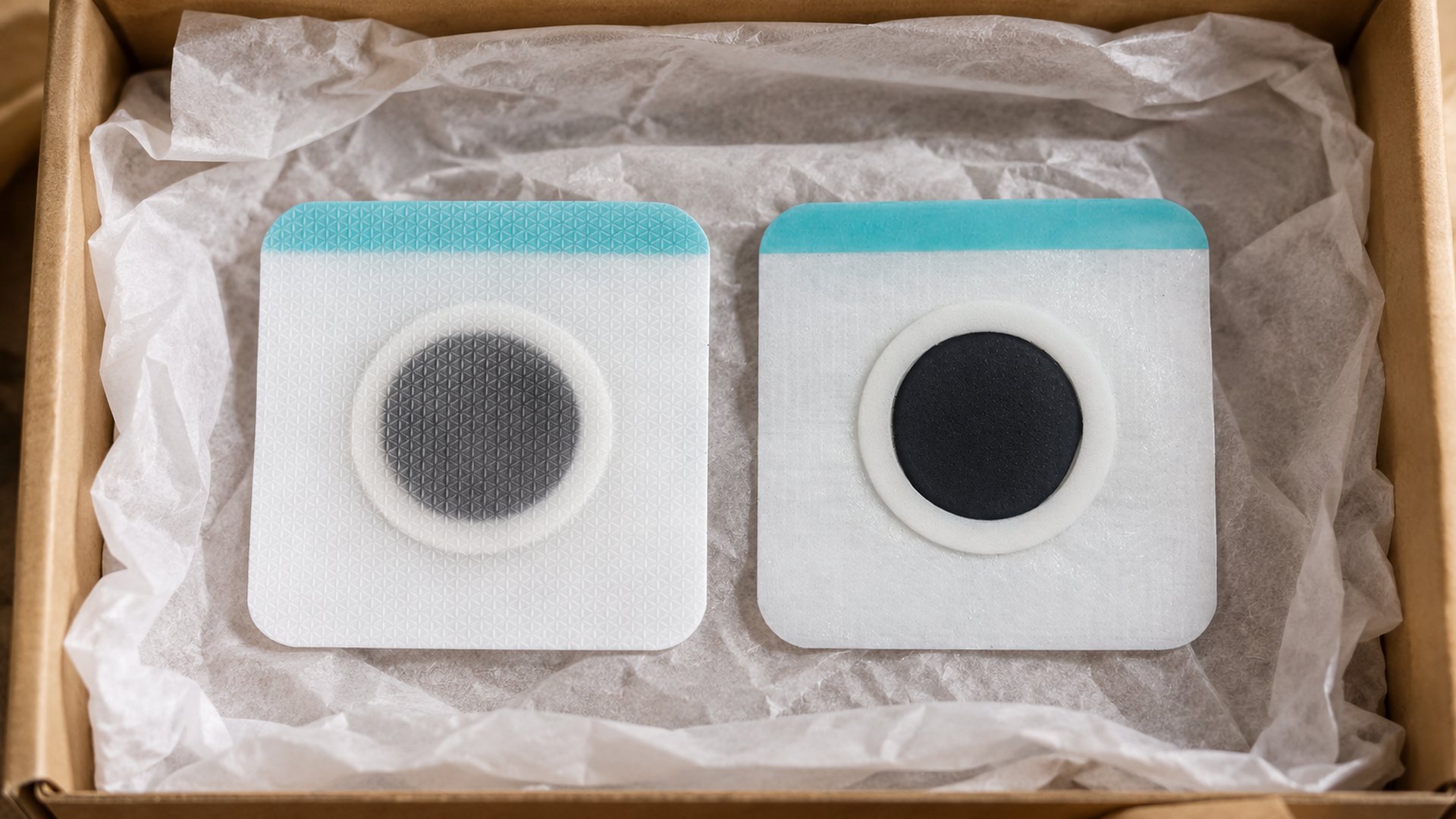
The project came from a brand-side purchasing team preparing a Warming Uterine Patch for a new retail channel. The buyer was not looking for a standard stock product; they wanted a customized formula, a specific patch size, private-label packaging, and a production schedule that could support a planned launch. For this type of project, the real work starts before the purchase order: formula confirmation, substrate selection, packaging specifications, and production capacity all have to line up.
The buyer initially expected the formula to be the main discussion. In practice, the first round of sampling showed that the material system and patch construction affected the finished product just as much. We therefore treated the project as a complete specification review rather than simply changing the ingredient list.
Core Requirements: Formula, Materials, and Packaging Had to Match
The buyer's brief covered four areas: a warming-use positioning for daily care, a customized herbal material blend, a fabric-backed patch construction, and branded retail packaging. The requested production volume was within the normal OEM range, where a starting MOQ of around 30,000 pieces is commonly used for customized patch projects.
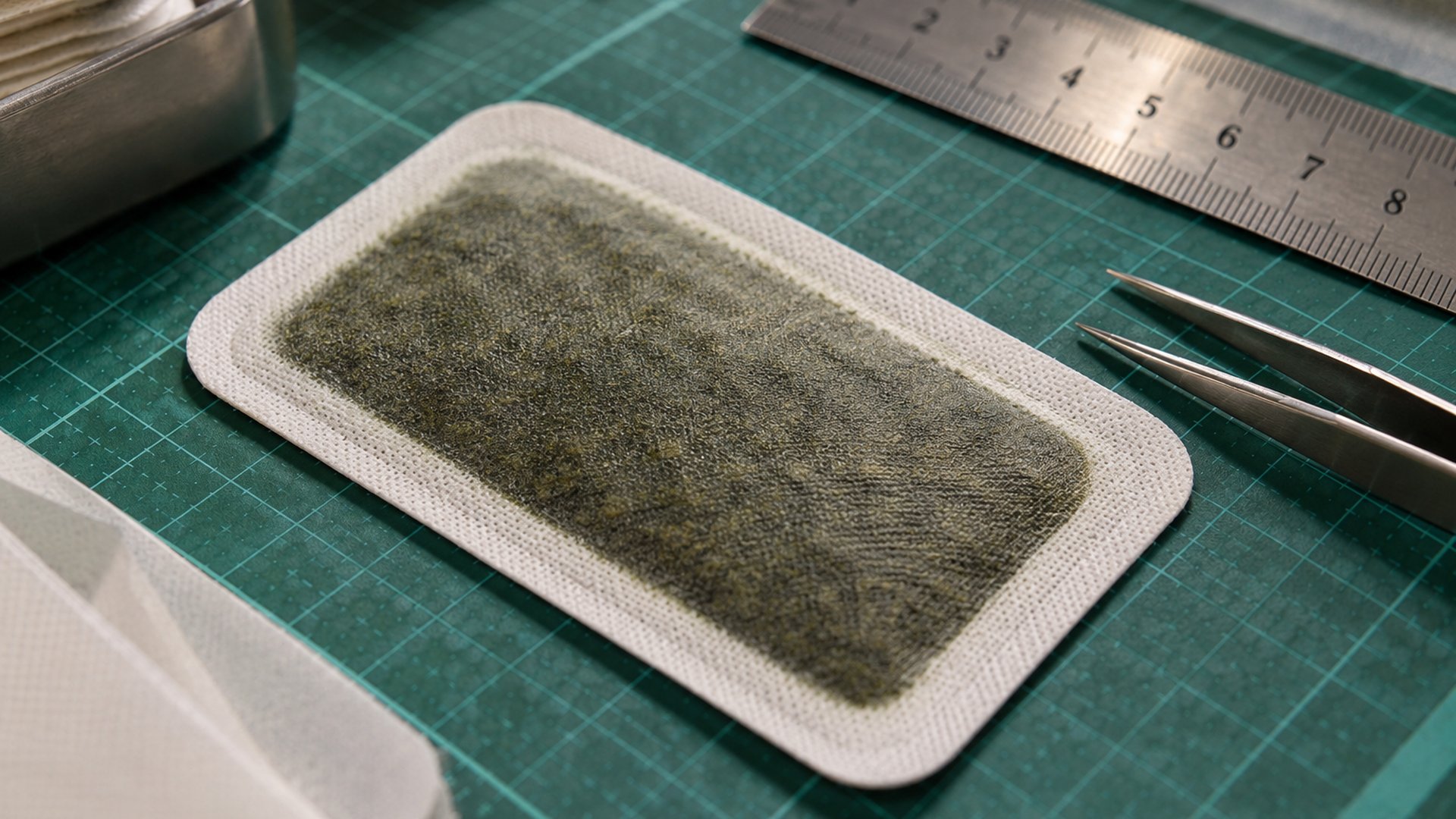
The first technical question was not "Which ingredient is strongest?" It was "What combination can be produced consistently at the required thickness and filling level?" A formula that looks acceptable on paper can behave differently after filling, sealing, storage, and packaging. We therefore reviewed the material ratio, filling weight, fabric permeability, adhesive area, pouch structure, and packaging dimensions together.
| Project item | Working range or checkpoint |
|---|---|
| Customized MOQ | Around 30,000 pieces |
| Sampling | Typically 7–14 days |
| Sample fee | Often around RMB 800, depending on customization |
| Mass-production lead time | Commonly 25–30 days after approval |
| Packaging | Custom pouch and outer-box specifications |
| Main checks | Material consistency, dimensions, sealing, appearance |
These figures are planning references rather than a fixed quotation. Actual timing and cost depend on formula complexity, packaging artwork, material availability, and the final specification.
Our Solution: Lock the Construction Before Chasing Unit Price
Our first decision was to keep the formula discussion separate from the packaging discussion. We prepared the sample around the requested material system, then checked whether the filling amount, fabric structure, adhesive coverage, and finished thickness worked together. This prevented the common situation where a buyer approves a formula first and discovers during production that the physical construction needs to be changed.
The second decision was to compare fabric options before opening the production schedule. Different non-woven or fabric-backed materials can change flexibility, surface feel, permeability, and processing behavior. A cheaper material can therefore create extra adjustment work later. We recommended selecting the substrate according to the finished-use requirement first, then calculating the unit cost.
The third decision was to freeze the packaging dimensions only after the physical sample was confirmed. This matters because a pouch that fits a laboratory sample may not fit the final production piece after the actual filling weight, edge tolerance, and sealing allowance are fixed. For OEM projects, packaging drawings should follow the approved physical sample rather than the other way around.
Key Decisions: Where the Project Could Have Gone Wrong
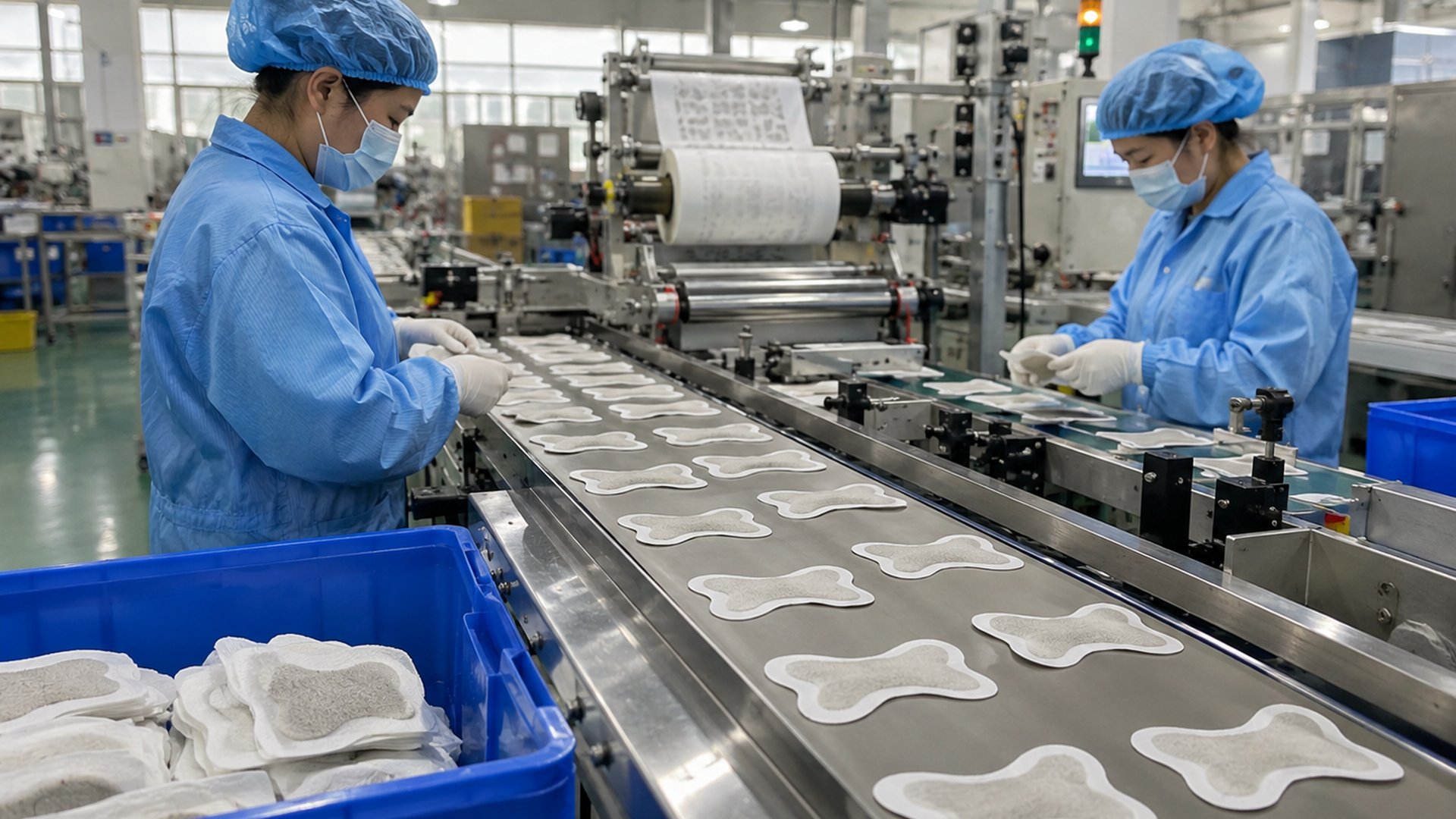
The first potential mistake was treating formula cost as the entire product cost. In reality, the formula is only one part of the calculation. Fabric, adhesive, pouch film, printing, outer packaging, filling process, inspection, production setup, and packing labor all affect the final OEM quotation.
The second was trying to reduce the unit price before the sample was stable. We pushed back on that approach because a small reduction in material cost is not useful if it causes repeated sampling, packaging changes, or production delays. For a 30,000-piece project, even a small per-piece difference becomes meaningful, but so does the cost of reworking an unstable specification.
The third was setting the delivery date before confirming every production input. A typical customized project may allow 7–14 days for sampling and around 25–30 days for mass production after approval, but these periods should not be treated as interchangeable. Artwork approval, raw-material readiness, packaging production, and final inspection all sit inside the actual project schedule.
Results and Numbers: What the Buyer Should Measure
The useful result of this project was not simply receiving a sample that looked acceptable. The project moved toward a controlled specification: formula, filling level, fabric, adhesive structure, pouch size, outer packaging, and inspection checkpoints were documented before the production run.
For buyers evaluating a warming uterine patch custom formula supplier, the practical lesson is to compare suppliers on the same specification. Ask each factory to quote against the same formula scope, patch dimensions, material type, packaging quantity, MOQ, sampling period, and production lead time. Otherwise, a lower quotation may simply be based on a different construction.
The project also reinforced a basic purchasing rule: sample cost and unit cost should be judged together with revision risk. A sampling fee around RMB 800 can be reasonable when it leads to a clearly defined production specification and can often be credited toward a subsequent production order, depending on the supplier's policy. The important point is to confirm that condition before sampling begins.
Reusable Lesson: Freeze the Specification Before You Chase the Quote
The biggest lesson from this project is simple: a Warming Uterine Patch should be priced only after the physical specification is clear. Formula, fabric, adhesive, filling, pouch, box, MOQ, and production schedule should be treated as one project rather than separate purchasing items.
For future projects, we would use the same sequence: define the intended daily-care positioning, confirm the formula scope, test the physical construction, approve the sample, freeze the packaging drawing, then request the final production quotation. That approach gives both sides a cleaner basis for an OEM/ODM order and makes the 30,000-piece starting point, 7–14-day sampling window, and 25–30-day production schedule much easier to manage.
Add the buyer’s actual project turning point
CATEGORIES
LATEST NEWS
- Sinew-Bone Pain-Bi Patch Private Label Manufacturer Supply Agreements
- What Hand Mask Custom Packaging Supplier Quotes Overlook
- Kids Herbal Foot Patch Contract Manufacturer: Safety Specifications First
- Mugwort Steam Eye Mask Private Label Manufacturer Readiness Check
- Mugwort Essential Oil Custom Formula Supplier: Formulation Approval Milestones
CONTACT US
QQ: 396269538
Phone: 17796669065
Tel: 17796669065
Email: 396269538
Add: Room 001, 1st Floor, Building 1, Zhengzhou Hangmei International Smart City, Intersection of S102 and Nanquan Road, Xuedian Town, Xinzheng City, Zhengzhou, Henan Province, China