Industry news
Steam Eye Mask OEM Manufacturing: Materials, Customization and Packaging
Industry news 2026-09-02 09:45:08 126 views admin
Short answer: A steam eye mask is typically made from soft nonwoven layers, ear loops, a controlled self-heating insert and a high-barrier individual pouch. In an OEM project, brands can usually customize the mask shape, fabric feel, fragrance, temperature profile, heating duration, pouch and retail packaging. The most important development work is not the artwork; it is controlling heat output, material comfort, seal integrity and batch consistency.
What is a steam eye mask?
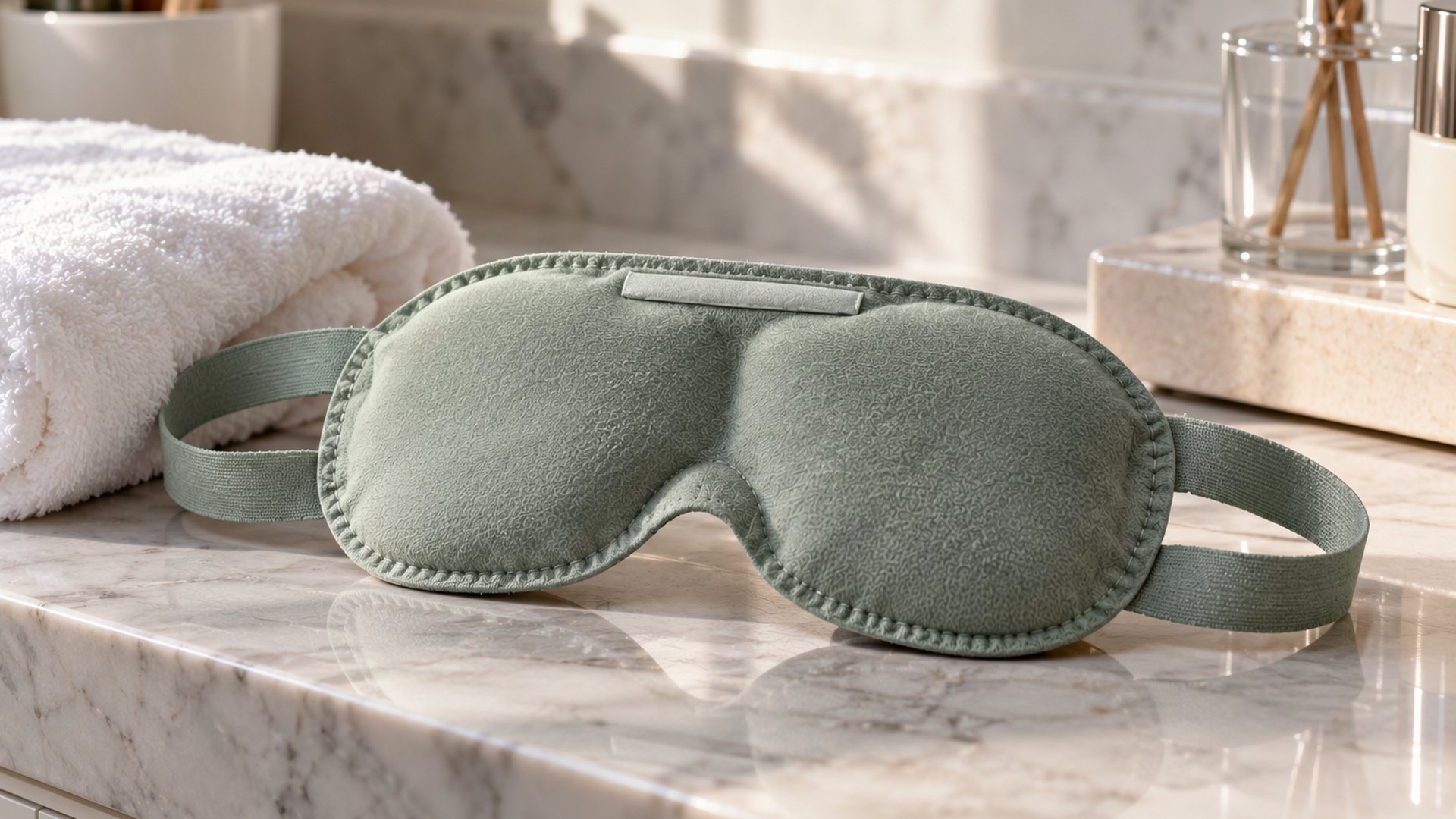
A steam eye mask is a disposable warming eye-area product designed to produce gentle heat after its pouch is opened. Oxygen in the air activates the heating insert, and the mask is held in place with elastic or nonwoven ear loops.
The consumer sees a simple folded mask, but the finished product is a coordinated material and packaging system. The heating composition, breathable layers, mask geometry and pouch barrier all influence how quickly the product warms, how long it stays warm and how comfortable it feels.
For buyers comparing a steam eye mask OEM manufacturer, the first question should therefore be whether the supplier can control the whole product structure—not only print a custom pouch.
What materials are used in a steam eye mask?
Outer nonwoven fabric
The outer layer gives the mask its hand feel and appearance. Spunbond, spunlace and composite nonwoven materials may be considered depending on softness, strength, breathability and converting performance. The side touching the face should feel smooth and should not have hard seams or rough cut edges.
Inner heating insert
A common self-heating system uses iron powder together with water, activated carbon, salt and absorbent or mineral components. Once air reaches the insert, oxidation releases heat. The exact composition and loading determine the temperature curve, so the formula must be matched with air permeability and pouch performance.
Brands should avoid treating the heating mixture as a generic commodity. Small differences in raw material particle size, moisture, fill weight or mixing uniformity can change activation speed and heat distribution.
Breathable control layer
The air-permeable layer controls how much oxygen reaches the heating insert. If the structure allows air in too quickly, the mask may heat rapidly and finish early. If airflow is too restricted, activation can be slow or uneven. This is why temperature control depends on both the formula and the fabric construction.
Ear loops and seams
Ear loops may be made from elastic material or a soft nonwoven extension. Length, stretch and attachment strength affect fit. Welding and sealing parameters also matter: a strong seam that feels sharp can be uncomfortable, while a soft seam that is too weak may separate during use.
Individual foil pouch
The pouch protects the oxygen-sensitive heating insert before use. A laminate with appropriate oxygen and moisture barrier is normally required. Seal width, seal temperature and leak resistance must be controlled because a small channel leak can activate the mask before the consumer opens it.
More information about backing, adhesive, hydrogel and packaging structures is available in our guide to health patch materials.
How is a steam eye mask manufactured?
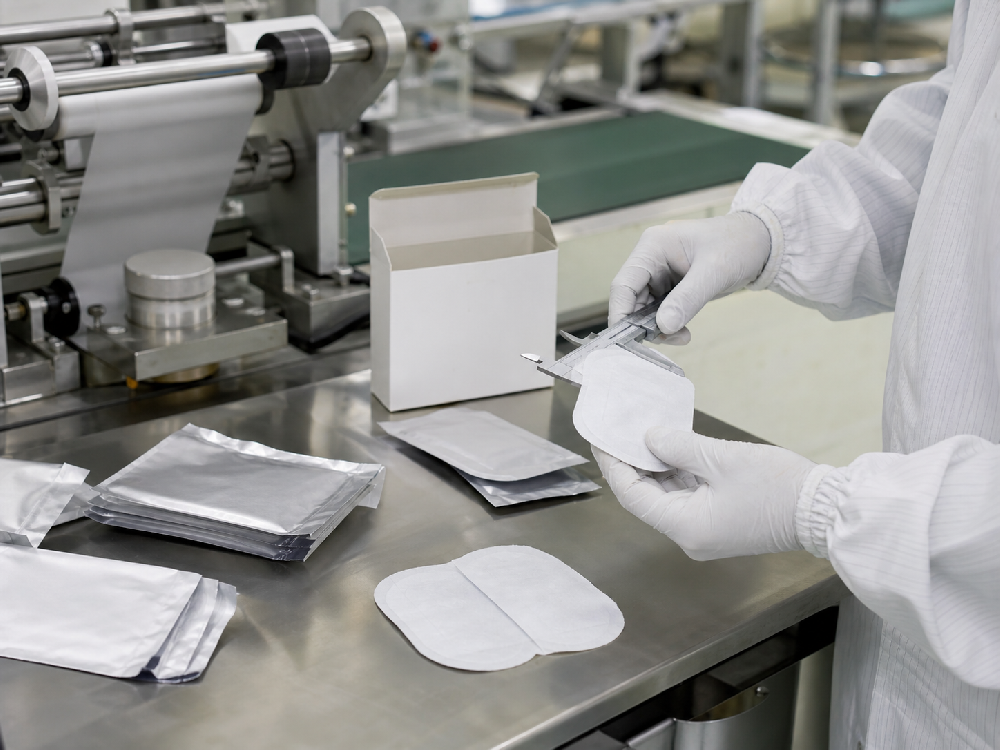
Production details vary by equipment and product design, but a typical process includes the following stages:
Incoming material inspection: nonwoven rolls, heating ingredients, pouches and packaging materials are checked against approved specifications.
Heating composition preparation: ingredients are weighed and mixed under controlled conditions to achieve uniform moisture and distribution.
Insert forming and dosing: the heating material is placed into a defined pocket or carrier at a controlled weight.
Layering and converting: the insert is positioned between nonwoven layers, then cut or welded into the mask shape.
Ear-loop attachment: ear loops are welded or integrated, followed by strength and dimensional checks.
Individual pouch sealing: the mask is packed quickly in a high-barrier pouch to limit early air exposure.
Inspection and packing: seal appearance, weight, dimensions, print, quantity and carton markings are verified.
Our overview of how health patches are manufactured explains the broader development and production workflow used for adhesive and wellness products.
How are temperature and heating time controlled?
There is no single component that controls the temperature. The finished profile is produced by several variables working together:
Heating ingredient ratio and raw-material specification
Moisture content and mixing uniformity
Fill weight and distribution across the insert
Air permeability of the surrounding layers
Mask size, fold pattern and contact with the face
Pouch barrier and time between opening and use
Storage temperature and product age
For development samples, buyers should request a temperature curve rather than only a peak-temperature number. A useful evaluation records activation time, average operating range, heating duration and temperature variation between different points on the mask.
The finished product should also be evaluated after stability storage. A fresh sample can behave differently from a product that has been stored for several months.
What can be customized in a private label steam eye mask?
A private-label project can be simple or highly customized. The main options usually include:
| Component | Typical customization |
|---|---|
| Mask | Shape, size, fold, color and nonwoven feel |
| Ear loops | Length, stretch, attachment method and comfort |
| Heating profile | Target range and approximate duration, subject to testing |
| Fragrance | Unscented or an approved fragrance option |
| Individual pouch | Material, dimensions and printed artwork |
| Retail packaging | Carton style, count per box and display format |
| Shipping carton | Pack quantity, markings and logistics requirements |
New brands often reduce risk by starting with an established mask construction and customizing the pouch and retail box. A fully custom heating profile or fabric structure normally requires more sampling, validation and a larger commercial commitment. See our private label health patch guide for a wider overview of project planning.
What determines MOQ?
Steam eye mask MOQ is affected by the heating-material production batch, printed pouch minimum, retail-box printing, mask dimensions and degree of formula customization. A standard mask with neutral or digitally printed packaging may have a different minimum from a custom fragrance, custom fabric and gravure-printed pouch project.
When requesting a quotation, ask the manufacturer to separate the product MOQ from the packaging MOQ. Packaging suppliers may require more printed pouches than the first production run consumes, and the buyer should understand how any remaining materials will be stored and used.
What determines lead time?
Lead time begins with a complete specification, not with a vague inquiry. Sampling can include material selection, fragrance confirmation, temperature testing, pouch sizing and artwork review. After approval, the schedule depends on raw-material availability, printing, production capacity, inspection and shipping arrangements.
To avoid delays, confirm the target market, mask specification, units per box and artwork requirements before approving final samples. Late changes to pouch dimensions or required label text can restart packaging work.
Which quality checks matter?
A practical steam eye mask quality plan may include:
Appearance, dimensions and net weight
Heating-insert fill-weight consistency
Activation time and temperature curve
Heat distribution across the left and right sides
Ear-loop tensile strength and fit
Nonwoven seam and edge inspection
Pouch seal strength and leak testing
Printing accuracy and batch identification
Accelerated and real-time stability evaluation
Finished-carton quantity and shipping checks
Raw-material documents are useful, but they do not replace finished-product testing. Buyers should agree on the sample method, acceptance criteria and records before mass production.
How should claims and labeling be handled?
Steam eye masks are commonly positioned around warmth, relaxation and comfort. Brands should avoid unsupported statements that the product treats dry-eye disease, migraine, insomnia or another medical condition. Product classification, permitted claims and required warnings depend on the destination market and the actual construction.
Packaging review should cover the product name, materials or ingredients where required, directions, warnings, storage conditions, responsible company information, lot identification and shelf life. Regulatory review should be completed before bulk printing.
Questions to ask a steam eye mask manufacturer
Which parts of the product are manufactured in-house?
Can you provide temperature-curve data for the proposed construction?
How are heating-material moisture and fill weight controlled?
What pouch barrier and seal tests are performed?
Can I approve a production-representative sample before the order?
What are the separate MOQs for masks, printed pouches and boxes?
How are retained materials and repeat-order specifications managed?
Which documents are available for my target market?
Working with Hanmeng Bio-Tech
Hanmeng Bio-Tech supports OEM and private-label health patch development, including material selection, sample coordination, packaging and production planning. For a steam eye mask inquiry, provide the destination market, desired temperature experience, mask dimensions, fragrance preference, units per box, packaging concept and expected order quantity.
These details allow the development team to propose a realistic construction and sampling plan. Contact our OEM team to discuss a steam eye mask or other wellness patch project.
Frequently asked questions
What makes a steam eye mask warm?
A controlled oxidation reaction in the heating insert releases heat after the pouch is opened and air reaches the material.
Can a steam eye mask be made without fragrance?
Yes. Unscented versions are common, and fragrance can also be evaluated as a separate customization option.
Can the temperature be customized?
The target temperature profile can be adjusted through the heating composition, fill weight and air-permeable structure, but the final result must be confirmed through finished-product testing.
Why does each mask need an individual pouch?
The high-barrier pouch limits oxygen and moisture exposure so the self-heating insert remains inactive during storage.
What should a buyer test before mass production?
Buyers should review fit, comfort, activation time, temperature curve, heating duration, pouch seals, packaging and stability data for the final construction.
Conclusion
A successful steam eye mask OEM project depends on the interaction between the heating composition, nonwoven layers, ear loops and barrier pouch. Brands that define the target market and performance requirements early can compare samples more accurately, control packaging revisions and reduce production risk.
The best starting point is a clear product brief followed by representative samples and documented acceptance criteria—not a price comparison based on different specifications.

CATEGORIES
LATEST NEWS
- Sinew-Bone Pain-Bi Patch Private Label Manufacturer Supply Agreements
- What Hand Mask Custom Packaging Supplier Quotes Overlook
- Kids Herbal Foot Patch Contract Manufacturer: Safety Specifications First
- Mugwort Steam Eye Mask Private Label Manufacturer Readiness Check
- Mugwort Essential Oil Custom Formula Supplier: Formulation Approval Milestones
CONTACT US
QQ: 396269538
Phone: 17796669065
Tel: 17796669065
Email: 396269538
Add: Room 001, 1st Floor, Building 1, Zhengzhou Hangmei International Smart City, Intersection of S102 and Nanquan Road, Xuedian Town, Xinzheng City, Zhengzhou, Henan Province, China