Industry news
Choosing a Steam Eye Mask Contract Manufacturer for Scale
Industry news 2026-09-08 11:19:58 118 views admin
Most Buyers Start With the Wrong Question
The biggest mistake buyers make when choosing a steam eye mask contract manufacturer is asking for the lowest unit price before understanding how the Steam Eye Mask will actually be built. A few cents saved on paper can disappear quickly when the heating profile, fragrance level, ear-loop fit, pouch barrier, or carton specification needs to be changed after sampling. For a product that combines heat-generating materials, nonwoven fabrics, individual packaging, and consumer-facing presentation, the specification matters more than the first quotation.
Our position is simple: qualify the manufacturing system first and negotiate price second. Before comparing quotations, define the target market, mask dimensions, warming experience, fragrance option, fabric feel, individual pouch structure, retail packaging, and expected order volume. Once those variables are reasonably fixed, quotations from different suppliers become much more meaningful.
The Heating System Deserves More Attention Than the Box
Buyers often spend considerable time discussing carton colors, finishes, inserts, and display formats while treating the heating component as a standard item. That priority is backwards. The warming experience is the core of a Steam Eye Mask, and seemingly small formulation or material differences can affect how the product feels during use.
During sampling, evaluate how quickly the mask begins warming, whether the warming sensation feels reasonably consistent across the intended use period, and whether the mask remains comfortable around the eyes. Testing should be performed on multiple samples rather than judging the project from one piece. A responsible steam eye mask contract manufacturer should also be able to explain the basic construction, available material options, and quality-control points without hiding everything behind vague phrases such as “standard formula.”
For private-label projects, establish the functional specification before investing heavily in printed packaging. Packaging is relatively easy to revise. Discovering that the physical product does not match the intended consumer experience after thousands of cartons have been printed is much more expensive.
Customization Is Valuable Only When It Can Be Repeated
OEM buyers naturally want differentiation. Different fragrances, nonwoven materials, mask shapes, ear-loop structures, pouch designs, carton quantities, and gift-box formats can all help create a recognizable product. But customization has little commercial value if the factory cannot reproduce it consistently from batch to batch.
This is where experienced buyers should ask harder questions. How are incoming materials checked? Which specifications are recorded for production? How are samples approved before mass production? Are packaging components checked against approved artwork? What happens when a customized material changes between sampling and production? These questions reveal far more about manufacturing discipline than a polished product catalog.
The objective is not maximum customization. It is controlled customization. A commercially sensible Steam Eye Mask should be distinctive enough for the brand while remaining practical to manufacture, inspect, pack, reorder, and scale.
MOQ Should Be Viewed as a Supply-Chain Number
Another common misconception is that the manufacturer with the lowest MOQ automatically presents the lowest risk. In reality, MOQ is usually connected to material purchasing, printed pouch quantities, carton production, production-line setup, fragrance customization, and packing configuration. A very low advertised MOQ may apply only to an existing specification with limited customization.
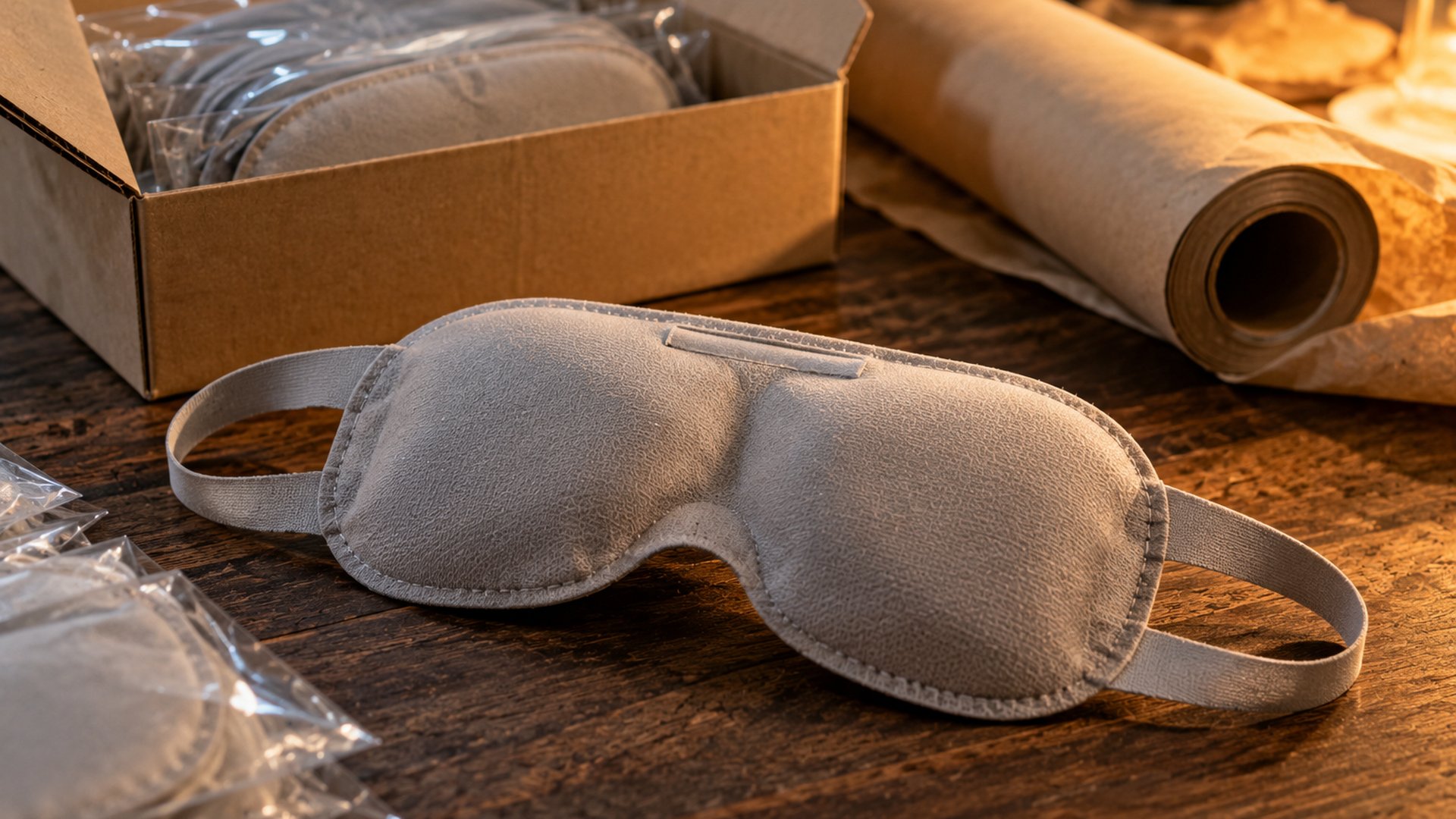
For many OEM projects, trial quantities can fall roughly in the several-thousand to tens-of-thousands-of-pieces range depending on how much customization is required. Fully customized printed materials may push practical quantities higher because packaging suppliers have their own minimum runs. Sampling may take roughly one to three weeks, while mass-production lead times commonly extend several additional weeks depending on materials, packaging complexity, order size, factory scheduling, and final approval.
Instead of asking only, “What is your MOQ?”, ask for the MOQ at each customization level. That gives procurement teams a much clearer picture of the real entry cost.
| Project Level | Typical Customization | Purchasing Consideration |
|---|---|---|
| Existing specification | Standard mask and available packaging | Lower development burden |
| Light private label | Logo, artwork, carton and existing mask specification | Practical for market testing |
| Semi-custom | Fragrance, fabric or packaging adjustments | More sampling and material coordination |
| Full OEM | Customized construction plus branded packaging | Higher development commitment |
| Large-volume program | Stable approved specification with repeat orders | Focus shifts toward consistency and supply planning |
The Cheapest Quote Can Be the Most Expensive Project
Price comparison is necessary, but buyers frequently compare quotations that do not represent the same product. One supplier may quote an existing mask with basic packaging while another includes customized fabric, individual printed pouches, upgraded cartons, testing requirements, or different packing quantities. The unit prices look comparable in a spreadsheet even though the specifications are not.
A better RFQ locks down the comparison basis. Specify the mask size, material, warming requirements, fragrance preference, pouch structure, units per retail box, carton requirements, artwork expectations, estimated order quantity, destination market, and any documentation your channel requires. Then ask suppliers to identify exclusions separately.
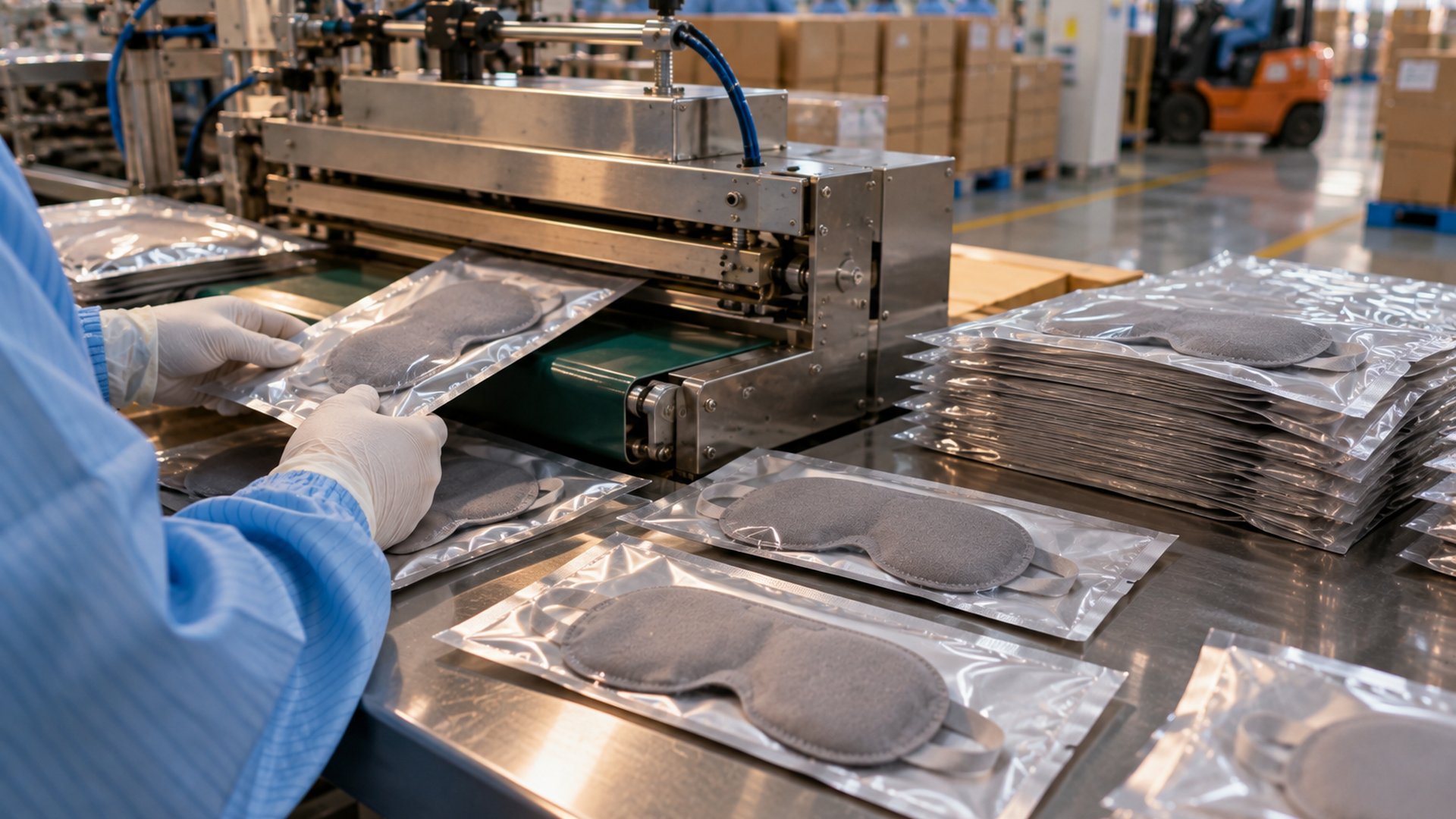
This approach may produce a slightly higher initial quotation, but it reduces surprises later. Procurement should optimize total project cost, not chase the smallest number in the unit-price column.
“We Already Have a Standard Steam Eye Mask” Is Not Enough
The common counterargument is straightforward: Steam Eye Masks are mature products, so why spend time on detailed development? Just select an existing model, print a logo, and launch.
That approach can work for a basic market test, but it should be a deliberate decision rather than an assumption. Even standard products can differ in fabric texture, fit, fragrance intensity, warming sensation, pouch quality, folding method, and retail presentation. These differences influence whether the finished product matches a brand's positioning and target price.
Standardization is useful when speed and lower development complexity are the priorities. Customization becomes more appropriate when the brand has validated demand and needs stronger differentiation. The mistake is treating both strategies as interchangeable. Buyers should decide which model they are pursuing before requesting quotations.
Scale Should Be Designed Before the First Purchase Order
A supplier that can produce a small trial batch is not automatically the right supplier for repeat business. If the product performs well, purchasing requirements change quickly. Material availability, production scheduling, packaging replenishment, batch consistency, inspection procedures, export documentation, and communication discipline become increasingly important.
Ask the steam eye mask contract manufacturer how repeat orders are controlled against the approved sample and specification. Confirm which materials are standard inventory items and which require advance purchasing. Discuss how packaging revisions are handled and whether approved artwork and specifications are formally recorded. If your sales channel could require multiple carton configurations or future fragrance variants, raise that issue before the first production run.
Scalability is less about quoting an impressive capacity figure and more about demonstrating a repeatable process. A brand needs the second and fifth orders to resemble the approved first order.
Make the Manufacturer Prove the Process
The practical judgment is clear: do not choose a steam eye mask contract manufacturer primarily because the quotation is cheap, the catalog is large, or the salesperson promises extensive customization. Choose the factory that can turn your requirements into a controlled specification and explain how that specification will be reproduced during mass production.
Start with samples. Compare the physical construction and warming experience. Review packaging materials and customization boundaries. Request realistic MOQ tiers and production lead times based on your actual specification. Confirm quality-control checkpoints and the documentation relevant to your destination market. Only then should price become the deciding variable between qualified suppliers.
For brands, distributors, importers, and e-commerce sellers developing a Steam Eye Mask line, a useful OEM/ODM RFQ should include target quantity, destination market, preferred materials, fragrance requirements, packaging format, and desired launch schedule. Send those details first, and ask the manufacturer to build the quotation around the product you actually intend to sell.


CATEGORIES
LATEST NEWS
- Sinew-Bone Pain-Bi Patch Private Label Manufacturer Supply Agreements
- What Hand Mask Custom Packaging Supplier Quotes Overlook
- Kids Herbal Foot Patch Contract Manufacturer: Safety Specifications First
- Mugwort Steam Eye Mask Private Label Manufacturer Readiness Check
- Mugwort Essential Oil Custom Formula Supplier: Formulation Approval Milestones
CONTACT US
QQ: 396269538
Phone: 17796669065
Tel: 17796669065
Email: 396269538
Add: Room 001, 1st Floor, Building 1, Zhengzhou Hangmei International Smart City, Intersection of S102 and Nanquan Road, Xuedian Town, Xinzheng City, Zhengzhou, Henan Province, China