Industry news
Reducing Mugwort Essential Oil Patch Production Lead Time
Industry news 2026-09-09 09:02:35 99 views admin
Buyers usually pay for this in the first 90 days. The expensive mistake is often made before production starts: the PO is released while the Mugwort Essential Oil Patch specification, packaging files, or sample standard is still moving.
That is why we tell buyers not to rush the PO just to secure an earlier production slot. A fast deposit does not automatically create a fast shipment. If the factory is waiting for artwork approval, a revised patch size, final essential oil requirements, or packaging materials, the schedule is not truly locked. When buyers ask about mugwort essential oil patch production lead time, the useful question is not simply, "How many days?" It is, "From which confirmed milestone does the clock start?"
The Most Common Pitfall: Starting the Clock Too Early
The most common lead-time problem is counting production days from the PO date instead of from specification freeze. A buyer may place an order on Monday and expect a quoted 20–30 day production window to start immediately. But if the pouch artwork is approved five days later and the final sample is signed off three days after that, those eight days were never actual mass-production days.
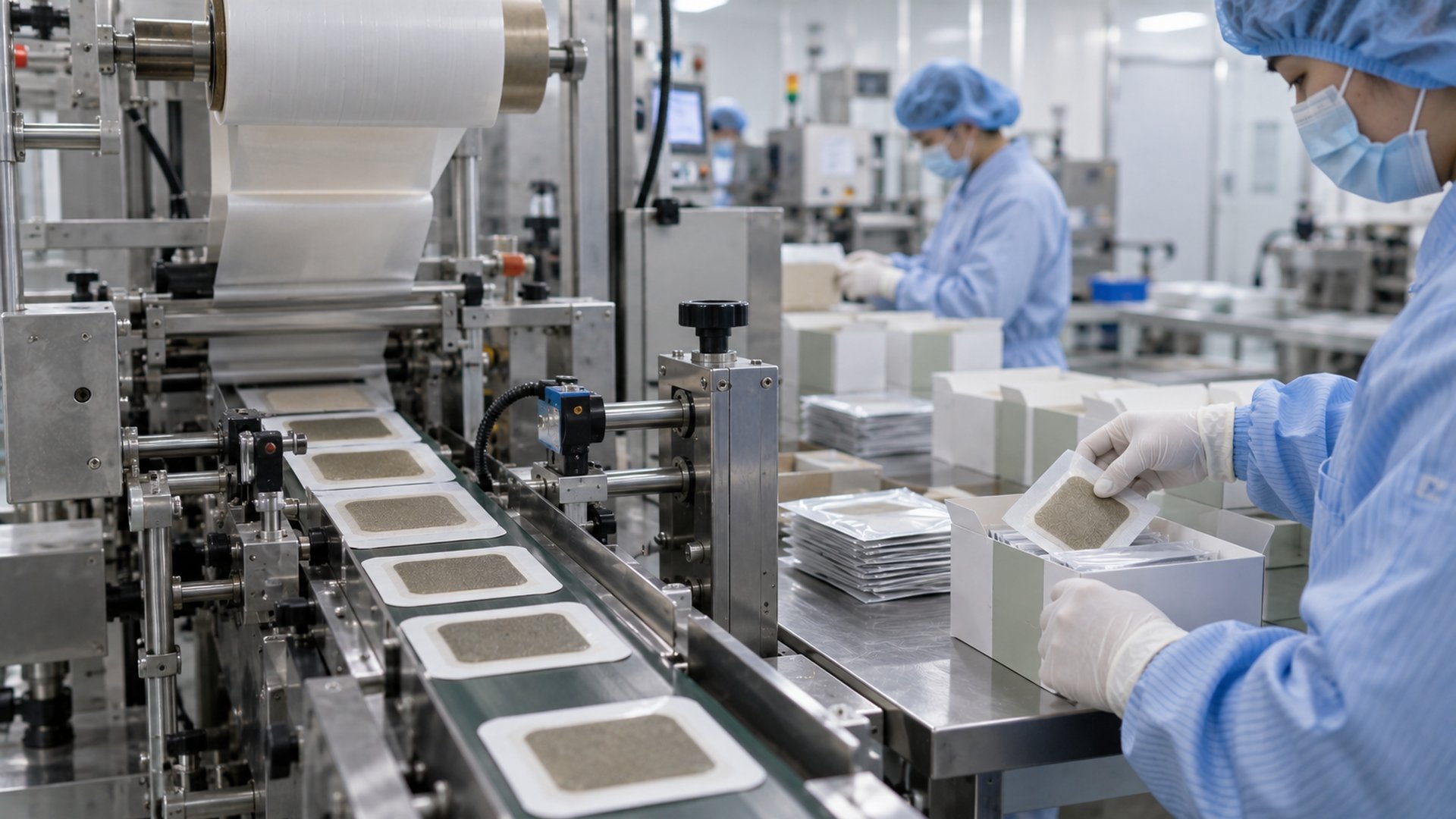
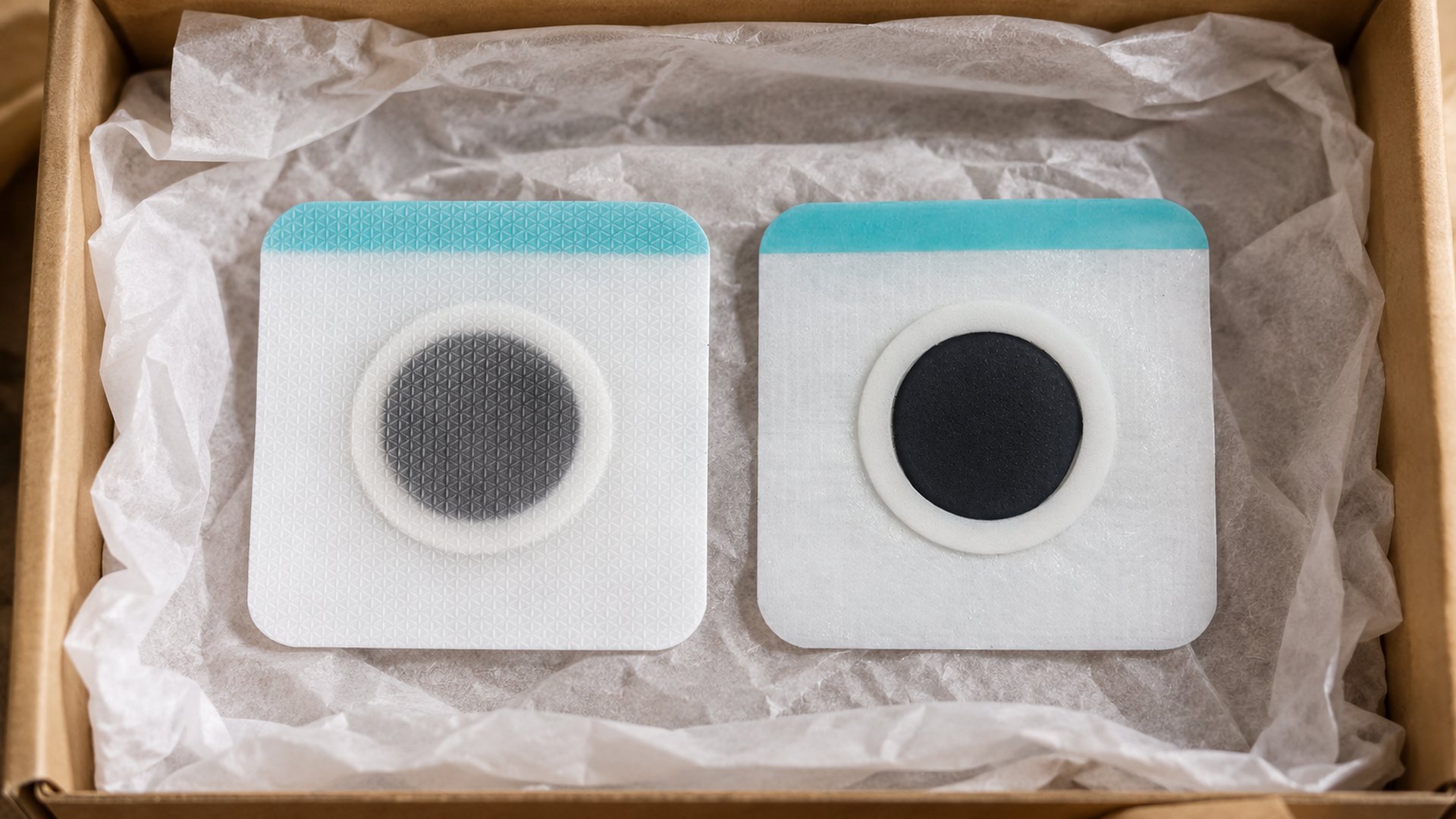
For a Mugwort Essential Oil Patch, several items can hold the schedule: patch dimensions, backing material, adhesive or base formulation, mugwort and essential oil requirements, pouch structure, pieces per box, carton configuration, labeling content, and market-specific documentation. Custom printed packaging is particularly important because the packaging supplier has its own production schedule.
This is where buyers start paying. Rush artwork revisions may create design charges. Late pouch changes can lead to new printing plates or wasted packaging materials. A size change after materials have been ordered can leave unusable backing stock. Expedited freight may then be used to recover time lost before production even began.
How to Spot a Lead-Time Quote That Is Not Ready Yet
A lead-time quote should have a clear starting condition. If someone says "20 days" but cannot tell you whether that means 20 days after deposit, sample approval, artwork approval, packaging arrival, or material readiness, the number is incomplete.
Look at what is still open. If you are still choosing between two Mugwort Essential Oil Patch sizes, the material requirement is not frozen. If the retail box is still being redesigned, printed packaging cannot be finalized. If the formulation sample is still under evaluation, the production standard has not been established.
Sampling itself commonly requires several working days per round depending on formulation, material availability, patch construction, and customization. A second or third sample round adds calendar time even when nobody has made a mistake. For a customized project, buyers should therefore separate the schedule into sampling, approval, packaging procurement, mass production, quality inspection, and shipment preparation instead of treating everything as one lead-time number.
A practical schedule discussion should look more like this:
| Stage | What Must Be Confirmed | Typical Delay Trigger |
|---|---|---|
| Specification | Size, material, formulation direction | Buyer changes size or construction |
| Sampling | Approved reference sample | Multiple formulation revisions |
| Artwork | Pouch, box, instructions | Claims or layout changed late |
| Materials | Film, backing, cartons | Custom material not in stock |
| Production | Frozen manufacturing specification | PO differs from approved sample |
| Release | Inspection and packing | Packaging or quantity discrepancy |
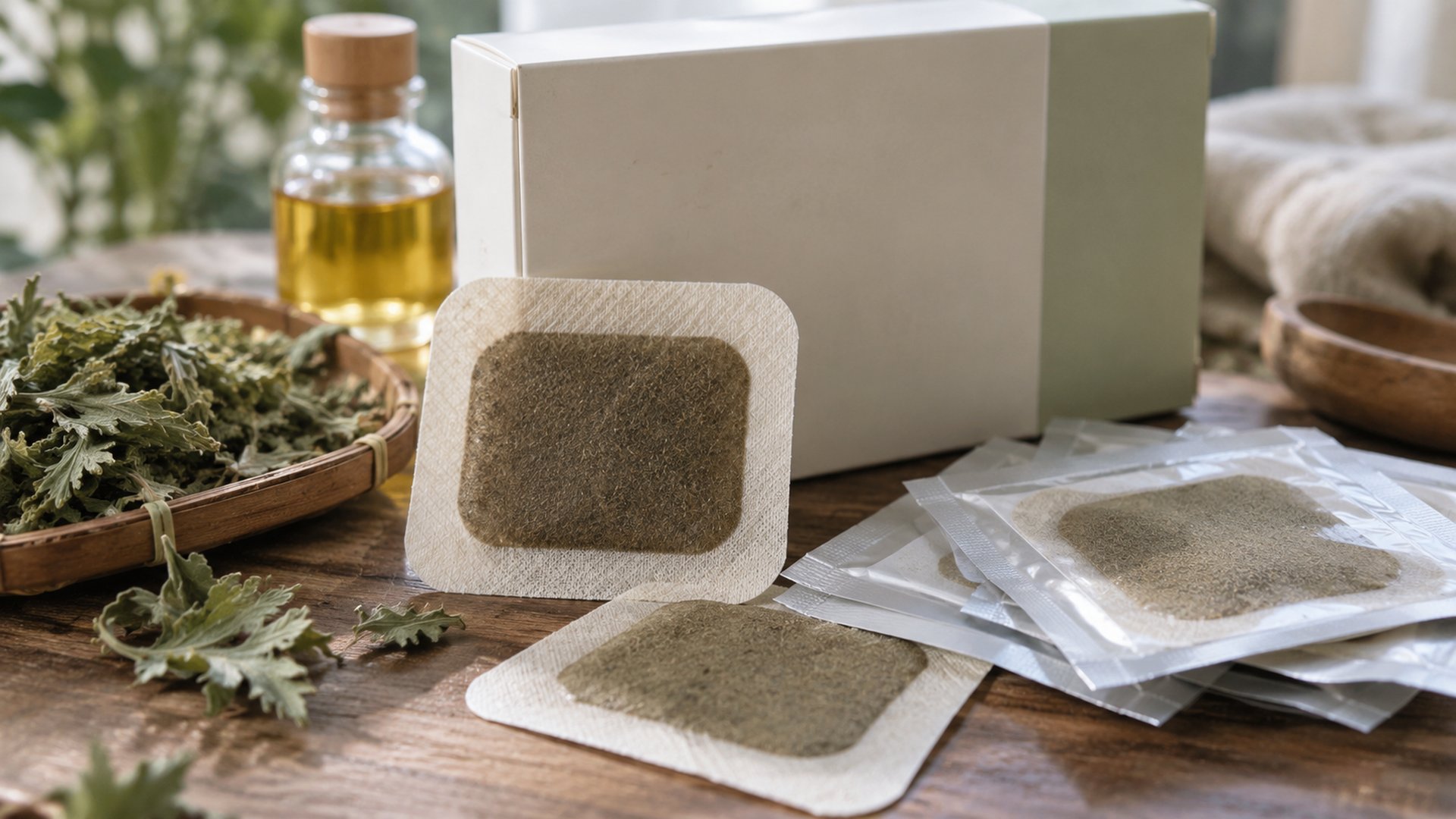
These are planning ranges and checkpoints, not guaranteed dates. Actual mugwort essential oil patch production lead time depends on order volume, customization, material availability, factory capacity, packaging complexity, and required documentation.
Packaging Changes Are Where Small Delays Become Expensive
Buyers often spend most of their technical attention on the patch and treat the package as something that can be finished later. In OEM/ODM production, that approach regularly causes trouble.
Imagine the patch sample has already been approved, but the buyer decides to change the retail box from 10 pieces to 12 pieces. That sounds like a packaging decision. In practice, the box dimensions may need adjustment, the insert quantity changes, carton packing may change, and the purchasing team may need to recalculate packaging quantities. If printed pouches or boxes have already entered production, there may also be obsolete material.
Claims are another source of delay. Packaging copy should be reviewed before printing, especially when a product is positioned for general wellness or comfort applications. Do not approve artwork with aggressive medical promises and assume the wording can be fixed after printing. For a Mugwort Essential Oil Patch intended for wellness positioning, use compliant, supportable language appropriate to the target market and product classification.
The cheapest packaging correction is the one made in the PDF before printing. The expensive correction happens after thousands of pouches are already on the factory floor.
Guard Against Changes in the Specification and PO
A useful PO should do more than state product name, quantity, and price. It should point to the exact version of the specification being purchased.
For example, "Mugwort Essential Oil Patch, 30,000 pieces" leaves too much open. The commercial documents should identify the agreed patch dimensions, material construction, packaging configuration, approved artwork version, quantity tolerance where applicable, carton requirements, and approved sample or specification reference.
The same rule applies to MOQ. For customized patch production, an MOQ around 30,000 patches may be commercially realistic for some factory programs, but buyers should confirm whether that MOQ applies to the total order or to each size, formulation, artwork, or SKU. Three SKUs of 10,000 pieces each do not necessarily create the same manufacturing economics as one 30,000-piece SKU.
The PO should also state how post-approval changes are handled. If the buyer changes artwork after printed material has been ordered, who pays for obsolete packaging? If a new sample is requested after specification freeze, does the lead time restart? If dimensions change, does the quotation need to be recalculated? Agreeing on these points before payment prevents arguments when the schedule is already under pressure.
Do Not Pay Expedited Freight to Fix an Approval Problem
Another common pattern is trying to recover a pre-production delay by speeding up logistics. The project loses ten days during artwork revisions, but the original delivery date remains unchanged. The buyer then asks for expedited material purchasing, overtime production, or air freight.
Sometimes acceleration is possible. It should not be the default production plan.
Before paying for a rush solution, identify where the delay actually occurred. If production is genuinely late after every approved input was delivered on schedule, that is a manufacturing issue to discuss with the supplier. If production could not begin because the buyer was still revising specifications, packaging, or approval samples, faster shipping only transfers the cost of an earlier decision to the logistics budget.
For importers, this distinction matters because factory lead time and door-to-door delivery time are different clocks. Mass production may finish on schedule while ocean freight, customs clearance, warehouse appointments, or FBA receiving adds additional time. Build the launch calendar backward from the required inventory date rather than asking the factory to absorb every downstream deadline.
Self-Check Before You Release the PO
Before releasing a customized Mugwort Essential Oil Patch order, run one final check. If several items below are still unanswered, the project is probably not ready for a firm production countdown.
- Is the patch size frozen?
- Is the backing and patch construction confirmed?
- Has the formulation direction been approved?
- Is there a clearly identified approved sample?
- Are pouch dimensions and material confirmed?
- Is the number of patches per retail box final?
- Are artwork files approved for printing?
- Has packaging language been reviewed for the intended market?
- Is the MOQ confirmed per order, SKU, size, and artwork?
- Are carton quantity and shipping marks finalized?
- Does the PO reference the correct specification and artwork versions?
- Is the quoted lead time measured from a clearly defined milestone?
- Have sampling and packaging procurement been separated from mass-production time?
- Is there a written process for buyer-requested changes after approval?
- Does the launch schedule include inspection, freight, customs, and warehouse receiving time?
Mugwort essential oil patch production lead time becomes much easier to control once every party is counting from the same starting point. Do not rush the PO because the launch date feels close. Freeze the product, freeze the packaging, document the approved version, and then lock the production schedule. That usually costs less than trying to buy back lost days after materials are already in motion.
CATEGORIES
LATEST NEWS
- Sinew-Bone Pain-Bi Patch Private Label Manufacturer Supply Agreements
- What Hand Mask Custom Packaging Supplier Quotes Overlook
- Kids Herbal Foot Patch Contract Manufacturer: Safety Specifications First
- Mugwort Steam Eye Mask Private Label Manufacturer Readiness Check
- Mugwort Essential Oil Custom Formula Supplier: Formulation Approval Milestones
CONTACT US
QQ: 396269538
Phone: 17796669065
Tel: 17796669065
Email: 396269538
Add: Room 001, 1st Floor, Building 1, Zhengzhou Hangmei International Smart City, Intersection of S102 and Nanquan Road, Xuedian Town, Xinzheng City, Zhengzhou, Henan Province, China