Industry news
Inside a Herbal Eye Comfort Patch Contract Manufacturer
Industry news 2026-09-10 09:02:25 94 views admin
Case Background: A Private-Label Buyer Preparing a New Eye-Care SKU
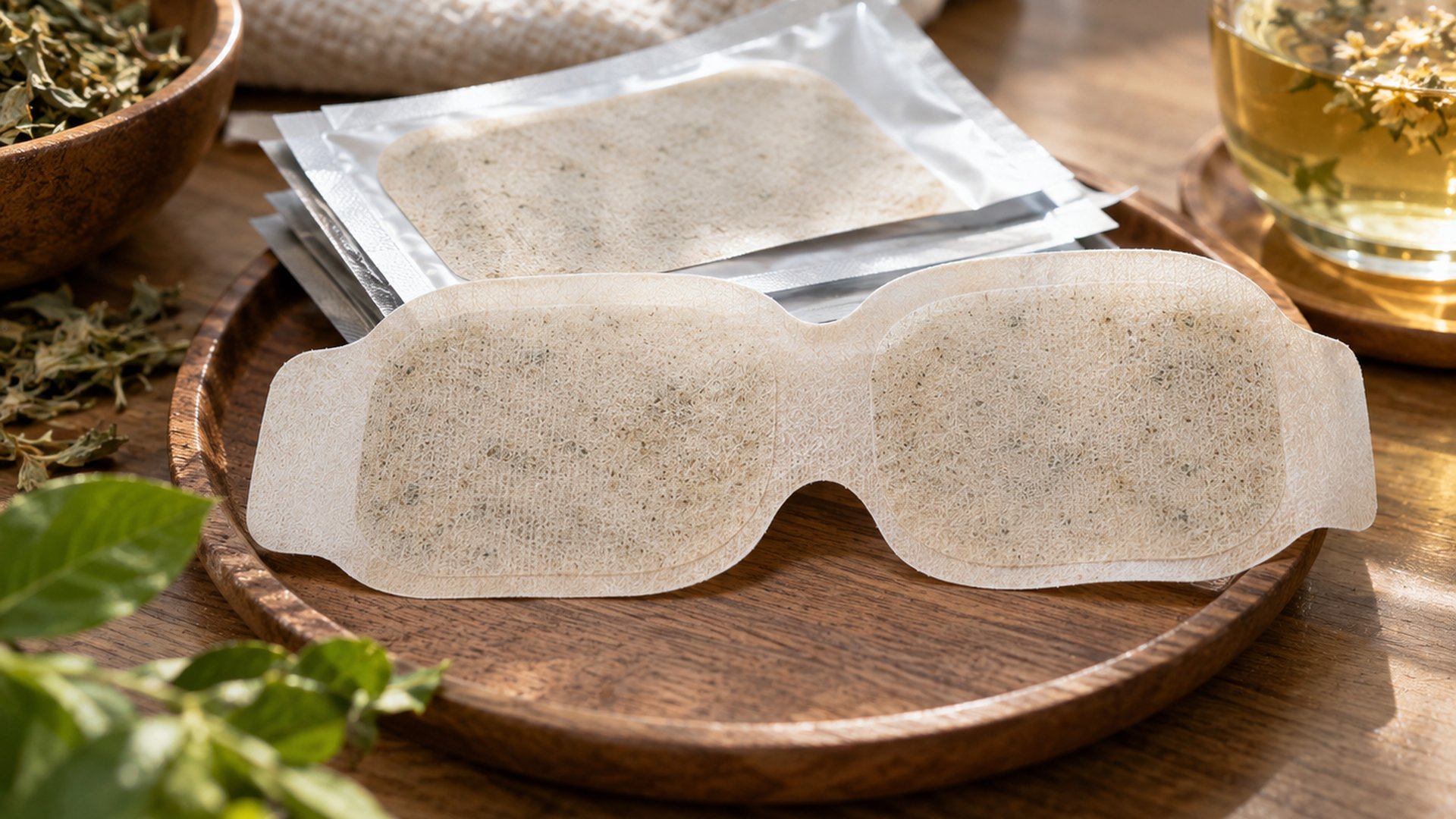
The project started with an RFQ from an overseas wellness-products buyer preparing a private-label Herbal Eye Comfort Patch for its existing e-commerce and distributor channels. The buyer was not looking for a medical-positioned product. The intended use was daily eye comfort after screen time, work, reading, and travel, so the wording, materials, packaging, and product presentation all needed to stay within a neutral wellness position.
The initial volume was planned around the factory's standard MOQ of 30,000 patches. Instead of requesting an immediate production quote, the buyer supplied a reference sample, target patch dimensions, preferred herbal profile, packaging concept, and destination-market requirements. That made the project suitable for a contract manufacturing workflow rather than a simple stock-product purchase. The main objective was to establish one commercially workable specification that could move from sampling into repeat production without redesigning the product after the first shipment.
Core Requirements: The RFQ Was More Than a Unit-Price Request
The buyer's RFQ focused on five practical requirements. The Herbal Eye Comfort Patch needed a soft material suitable for its intended skin-contact area, a comfortable patch shape, a mild herbal sensory profile, individually sealed packaging, and an outer carton suitable for private-label retail. The buyer also wanted enough manufacturing flexibility to adjust the product after evaluating the first samples.
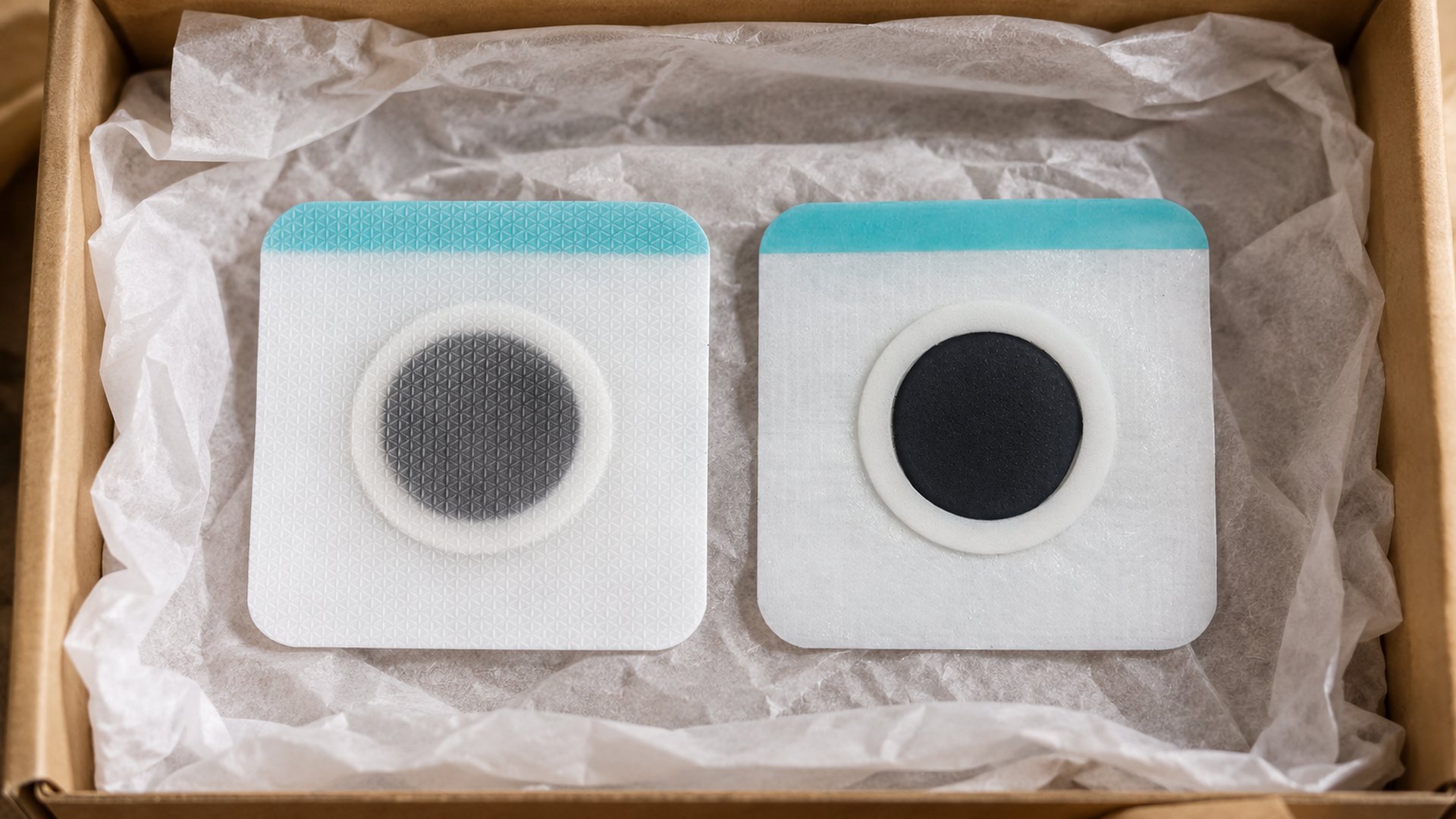
For a herbal eye comfort patch contract manufacturer, these details matter because two visually similar patches can have very different manufacturing specifications. Backing material, substrate system, coating weight, patch dimensions, release liner, pouch structure, and packaging count all influence production cost and user experience.
We therefore converted the RFQ into a manufacturing specification before final pricing. Instead of quoting an undefined "eye patch," the project was broken into product structure, material selection, sensory requirements, primary packaging, secondary packaging, artwork requirements, inspection points, and shipment configuration. This reduced the number of variables that could change after the buyer approved the sample.
| Project Item | Buyer Requirement | Manufacturing Approach |
|---|---|---|
| Product | Herbal Eye Comfort Patch | Private-label OEM/ODM specification |
| Initial volume | Commercial trial order | MOQ from 30,000 patches |
| Positioning | Daily eye comfort | Neutral wellness language |
| Material | Soft skin-contact construction | Selected from available substrate options |
| Packaging | Individual pouch + retail carton | Custom artwork and pack count |
| Development | Sample before mass production | Specification locked after approval |
| Market | Overseas distribution | Packaging reviewed for destination requirements |
Our Solution: Lock the Patch Before Designing the Box
One important change was the sequence of development. The buyer originally wanted to finalize the retail box while the Herbal Eye Comfort Patch samples were still being evaluated. We recommended delaying final packaging dimensions until the patch construction and individual pouch size were confirmed.
The reason was operational rather than aesthetic. A small change in patch dimensions can affect the release liner and pouch dimensions. A pouch change can then affect how many units fit inside a carton, carton depth, insert layout, master-carton configuration, and freight efficiency. Finalizing printed packaging too early would have created unnecessary revision risk.
The project therefore moved through three controlled stages: product sample, primary packaging confirmation, and retail packaging confirmation. During sampling, the buyer compared the patch material, flexibility, adhesion behavior, dimensions, and overall sensory profile. Once those points were accepted, we locked the individual pouch specification. Only then was the final carton structure prepared for production.
This sequence added work at the beginning but removed uncertainty before mass production.
Key Decision One: Comfort Positioning Changed the Material Discussion
The buyer's reference product used relatively aggressive wording and a heavier product presentation. That did not match the planned positioning of this project. Because the new Herbal Eye Comfort Patch was intended for eye comfort rather than claims such as improving vision or treating an eye condition, both the physical product and the packaging needed to communicate a different use case.
Material selection was therefore discussed around softness, flexibility, patch integrity, handling during packing, and suitability for intended skin contact. Our manufacturing platform supports seven substrate categories, but offering seven options did not mean the buyer needed seven samples. We narrowed the first sampling round to the options that best matched the requested format.
This is a useful distinction in ODM development. More available materials create manufacturing flexibility, but more samples do not automatically produce a better decision. A focused sample set makes it easier for the buyer to compare meaningful variables without changing the backing, formulation concept, size, and packaging simultaneously.
Key Decision Two: One SKU Was Better Than Launching Several Variants
During development, the buyer considered creating multiple versions with different herbal profiles and packaging. From a sales perspective, that would have created a broader product family. From a production perspective, however, every additional SKU would have divided the opening volume and introduced another artwork file, material combination, packaging inventory requirement, and production changeover.
For the first commercial run, the project was therefore consolidated into one core Herbal Eye Comfort Patch specification.
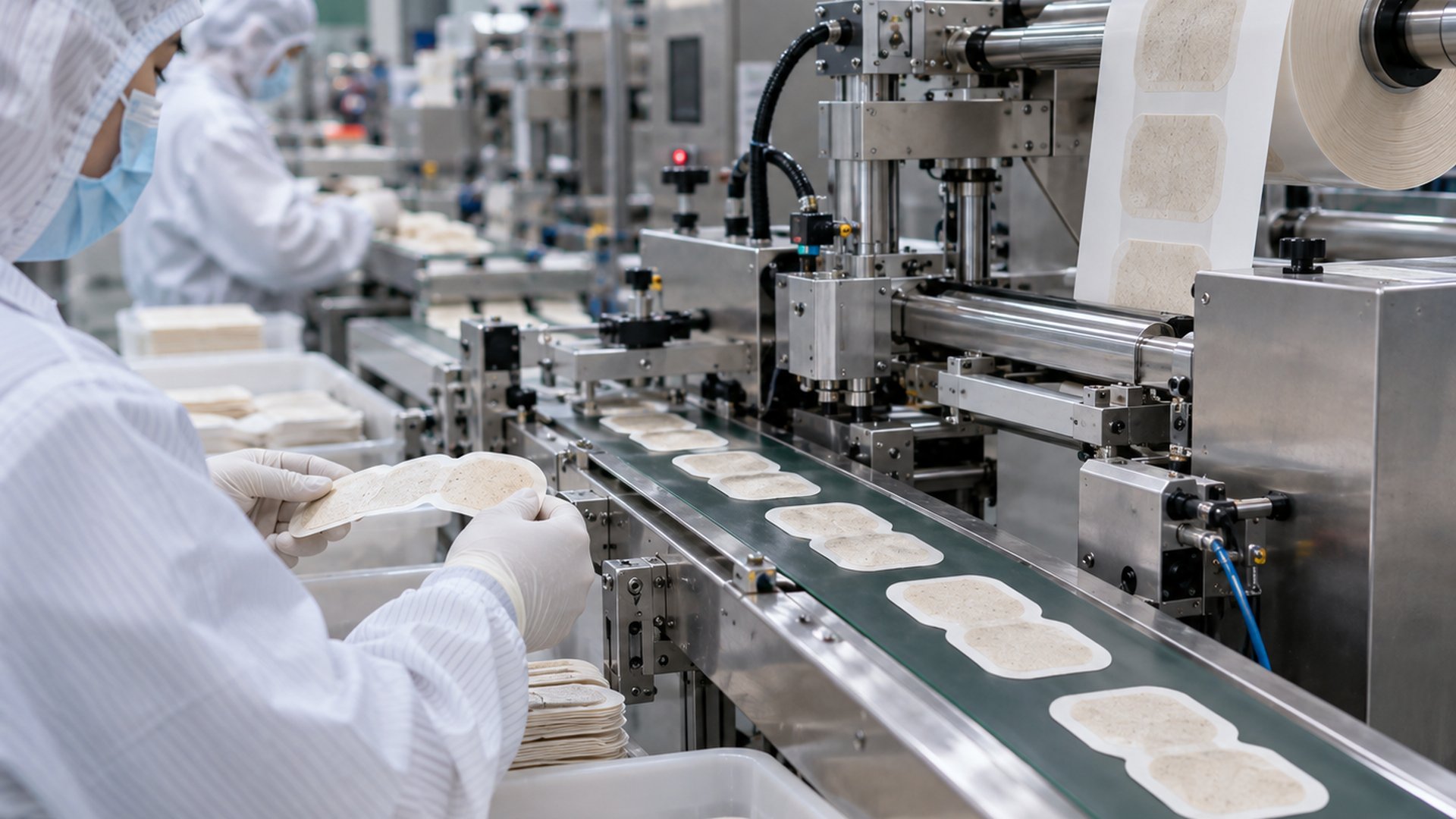
This decision was especially relevant at a 30,000-patch MOQ. Concentrating the opening quantity in one SKU simplified material purchasing, artwork control, production scheduling, inspection, packing, and inventory management. It also gave the buyer a cleaner way to evaluate actual channel response before committing capital to additional variants.
New variants could still be developed later. The difference was that future SKU decisions would be based on sales feedback from a stable base product rather than assumptions made before the first shipment.
Key Decision Three: Packaging Claims Were Reviewed Before Printing
Packaging review became the third major decision point. The buyer wanted the front panel to explain clearly why consumers would use the product, but eye-related wording can quickly move from general wellness language toward medical claims.
The copy was therefore kept around concepts such as "eye comfort," daily care, relaxation after screen-intensive routines, and convenient use. Claims about improving vision, correcting eye conditions, or treating eye disease were excluded. The same principle applied to visual presentation: the package could communicate a clean eye-care routine without presenting the Herbal Eye Comfort Patch as a treatment for a diagnosed condition.
For export projects, this review should happen before artwork approval, not after cartons have been printed. Manufacturer certifications and quality systems can support a project, but they do not automatically make every claim acceptable in every destination market. ISO 13485, FDA DMF, CE, and NMPA-related manufacturing credentials therefore need to be considered separately from the buyer's final product classification, labeling obligations, and market-specific compliance responsibilities.
Results: A 30,000-Patch Starting Point With a Repeatable Specification
The main result of the project was not an unusually low unit price or an unrealistic development speed. It was a specification that could be reproduced.
The first commercial quantity was structured around the 30,000-patch MOQ, with one approved patch construction, one primary pouch specification, and one retail packaging system. Sampling was completed before the mass-production specification was released. For projects of this type, sampling commonly takes several working days depending on material and customization requirements, while commercial production lead time is typically measured in several weeks after specifications, artwork, materials, and order details are confirmed.
The manufacturing side also had room for scale. With annual patch production capacity of approximately 240 million pieces, the same specification could move beyond the initial quantity without requiring the buyer to rebuild the product from the beginning. The useful outcome was therefore a controlled path from trial volume to potential repeat orders rather than a one-off batch that could not be reproduced consistently.
Reusable Lesson: Reduce Variables Before You Increase Volume
The clearest lesson from this Herbal Eye Comfort Patch project was that a good RFQ should reduce uncertainty before it asks for the lowest possible price.
For buyers evaluating a herbal eye comfort patch contract manufacturer, the most useful starting information is straightforward: target market, intended wellness positioning, reference sample or desired structure, approximate patch dimensions, opening quantity, packaging format, and target launch window. With those inputs, the manufacturer can narrow material options and build a specification that can actually be quoted.
The second lesson is to avoid changing too many variables in one sampling round. If the buyer changes substrate, herbal profile, dimensions, adhesion, pouch, and pack count simultaneously, it becomes difficult to identify which change produced the preferred result. Controlled revisions make sample feedback more useful.
Finally, packaging should follow the confirmed product rather than lead it. Once the Herbal Eye Comfort Patch structure, pouch, and commercial positioning are stable, private-label artwork and shipment configuration become much easier to manage. For an OEM/ODM project, that sequence is what turns an initial RFQ into a specification that can survive mass production, export packing, shipment, and repeat ordering.
CATEGORIES
LATEST NEWS
- Sinew-Bone Pain-Bi Patch Private Label Manufacturer Supply Agreements
- What Hand Mask Custom Packaging Supplier Quotes Overlook
- Kids Herbal Foot Patch Contract Manufacturer: Safety Specifications First
- Mugwort Steam Eye Mask Private Label Manufacturer Readiness Check
- Mugwort Essential Oil Custom Formula Supplier: Formulation Approval Milestones
CONTACT US
QQ: 396269538
Phone: 17796669065
Tel: 17796669065
Email: 396269538
Add: Room 001, 1st Floor, Building 1, Zhengzhou Hangmei International Smart City, Intersection of S102 and Nanquan Road, Xuedian Town, Xinzheng City, Zhengzhou, Henan Province, China