Industry news
Before Hiring a Sleep Patch Private Label Manufacturer
Industry news 2026-09-15 10:26:47 78 views admin
RFQ and specification review usually take 1–3 business days, sampling about 7–14 days, approval another 2–5 days, mass production roughly 15–30 days, followed by 2–5 days for final QC and shipment preparation. Here is how a typical Nighttime Wellness Patch project moves through a sleep patch private label manufacturer from inquiry to dispatch.
RFQ and Specification Review: 1–3 Business Days
The project starts with an RFQ, but a useful RFQ needs more than quantity and a request for the lowest unit price. Send the target patch dimensions, substrate preference, formula direction, units per pouch or retail box, packaging requirements, target market, number of SKUs, expected order quantity, and any reference samples you want the manufacturer to evaluate.
For a Nighttime Wellness Patch, define the positioning around nighttime relaxation and routine wellness rather than disease-treatment claims. At this stage, the manufacturer should identify which requirements can use existing production specifications and which require custom development.
Allow roughly 1–3 business days for specification review and an initial quotation on a conventional project. A common customized MOQ planning point is around 30,000 pieces, although the actual minimum depends on formula, materials, printed packaging, and SKU structure. Confirm whether MOQ applies per formula, per artwork, or across the total order.
Formula and Physical Sampling: 7–14 Days
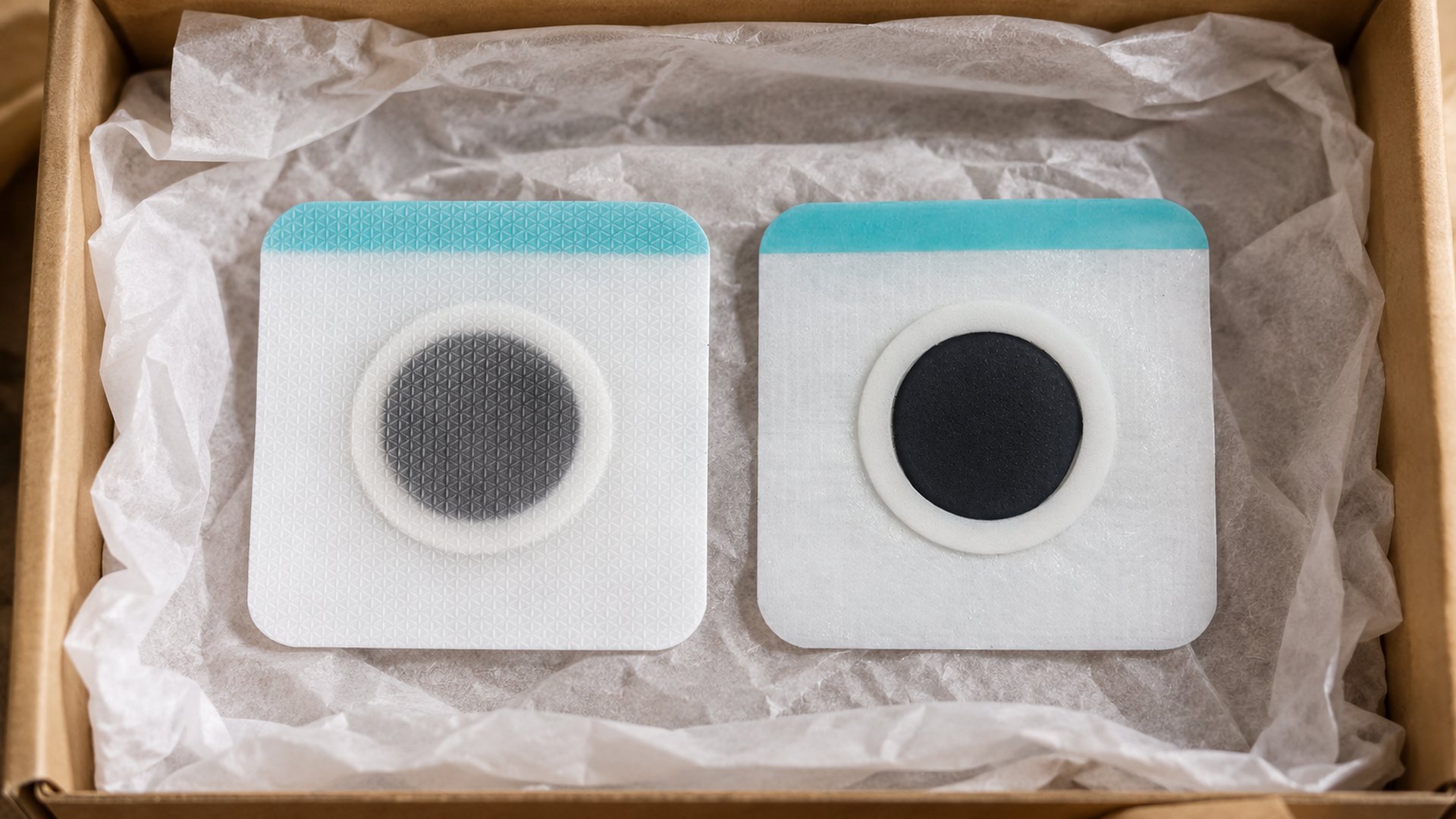
Once the commercial direction is workable, sampling begins. This is where the Nighttime Wellness Patch becomes a physical specification rather than a concept in an RFQ. The factory prepares the agreed formula, substrate, adhesive system, patch dimensions, backing layer, and other physical details for evaluation.
A 7–14 day sampling window is realistic for many conventional OEM projects. Using an established formula and standard materials can shorten development, while custom formulas, unusual substrates, several variants, or repeated adjustments can extend it.
Do not evaluate the formula alone. Check patch dimensions, material feel, adhesion, removal, flexibility, aroma when applicable, liner separation, and how the patch behaves after being stored in its individual pouch. If you request several variants, label them clearly and record exactly what differs between samples. That record becomes important when one version is selected for production.
Sample and Artwork Approval: 2–5 Days
After receiving samples, allow roughly 2–5 business days internally for evaluation and approval rather than approving the project during a quick video call. The buyer should create a signed specification covering formula version, dimensions, substrate, adhesive characteristics, pouch structure, pack count, and any other measurable characteristics agreed with the sleep patch private label manufacturer.
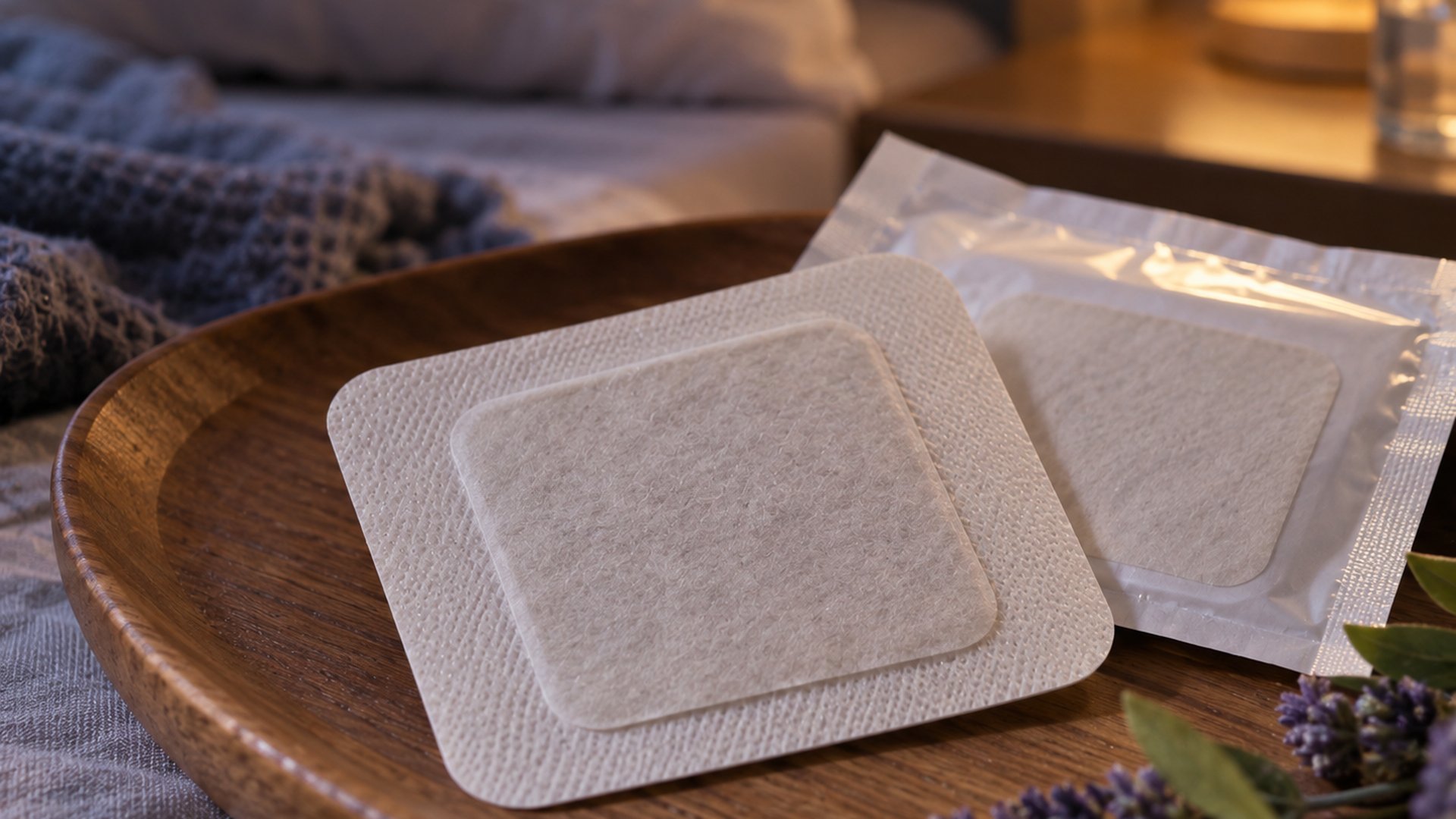
Packaging should now move from concept to production artwork. Confirm the individual pouch before finalizing the retail box because changes to pouch dimensions or material can affect carton dimensions and packing efficiency.
This is also the right stage to review ingredient wording, intended-use language, instructions, warnings, and market-specific labeling. Claims should remain consistent with the product's actual positioning and destination-market requirements. Do not print large quantities of packaging while the formula or specification is still changing.
Material and Packaging Preparation: 7–15 Days
Once the sample and artwork are signed off, the factory can prepare raw materials and printed packaging for production. A practical planning range is roughly 7–15 days, although this stage often overlaps with production scheduling and varies considerably according to material availability and printing complexity.
Printed individual pouches and retail cartons are frequent schedule bottlenecks. A patch itself may use standard production materials, while a custom foil pouch or specialty box requires a separate supplier, printing setup, proof confirmation, and delivery to the assembly line.
This is why changing artwork after approval can be expensive. Even a small revision can hold an otherwise production-ready order while new packaging is prepared. Freeze the SKU list, artwork revision, pack count, barcode placement where applicable, and carton specification before materials are released.
Mass Production: About 15–30 Days
For a conventional customized order, 15–30 days is a reasonable mass-production planning range after the required specifications and materials are confirmed. Actual lead time depends on order volume, customization level, packaging complexity, material availability, factory schedule, and the number of SKUs.
Production should follow the approved sample rather than a general description such as “same as last time.” Formula version, coating or forming parameters, patch dimensions, substrate, adhesive specification, liner, individual pouch, retail packaging, and batch identification should connect back to the approved production file.
Multiple SKUs require extra attention. Splitting 30,000 pieces among different formulas, fragrances, package designs, or patch sizes creates more material changes and packaging transitions than producing 30,000 identical pieces. Buyers should therefore ask for the production schedule by SKU rather than looking only at the total quantity.
In-Process and Final QC: 2–5 Days
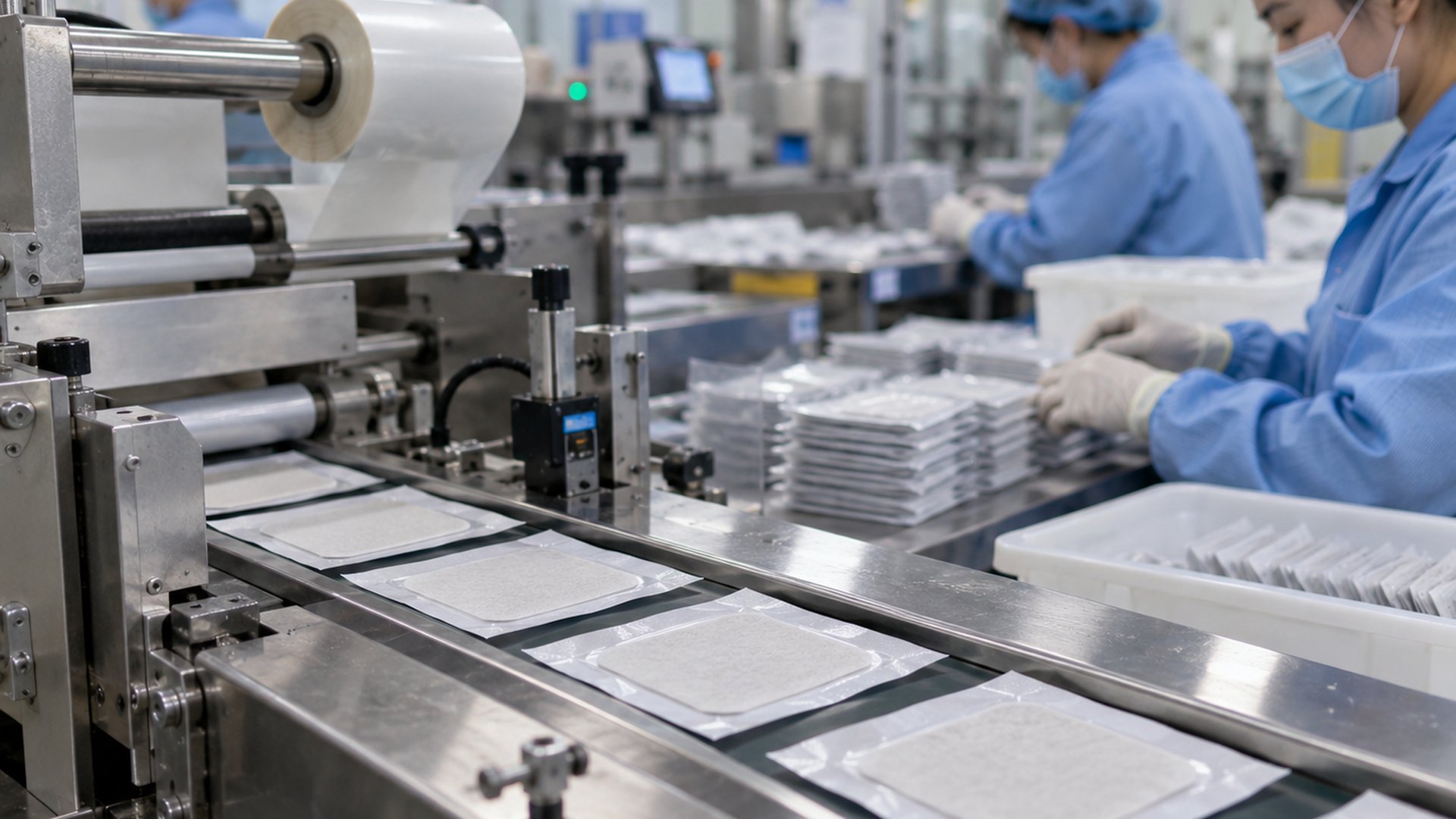
Quality control should not begin after the last carton is sealed. Incoming materials, patch production, pouch sealing, packaging, and finished goods should be checked at the relevant production stages according to the agreed specification and applicable quality procedures.
For the finished Nighttime Wellness Patch, inspection points can include dimensions, appearance, patch integrity, adhesion-related characteristics, pouch seal condition, pack quantity, printed packaging, batch identification, and consistency with the approved specification. The exact inspection items depend on the product design and applicable requirements.
Allow roughly 2–5 days for final inspection, documentation, and release on a normal project. Buyers using third-party inspection should schedule it before the planned dispatch date. Do not arrange a freight pickup so tightly that the QC team effectively has to choose between proper inspection and meeting the truck.
Shipment Preparation and Dispatch: 2–5 Days
After QC release, the factory completes retail packing, master-carton checks, carton marking where required, quantity reconciliation, and shipment documentation. Roughly 2–5 days is a sensible working range for normal shipment preparation, although freight booking and export arrangements can add time outside the manufacturing schedule.
Before dispatch, confirm final carton dimensions, gross and net weights, units per carton, carton count, batch information, and the agreed shipping terms. For e-commerce fulfillment projects, verify any additional labeling or carton requirements before the goods leave the factory rather than correcting them at the destination warehouse.
International transit time is separate from the OEM production lead time. Air, express, rail, and sea freight have very different schedules, so procurement teams should calculate the launch date backward from the required warehouse arrival date rather than from the factory completion date.
Build Buffer Into the Full Project Schedule
A straightforward private-label project using an established specification can move faster, while a deeply customized Nighttime Wellness Patch with a new formula, several sampling rounds, multiple SKUs, and custom packaging can take substantially longer. The most common schedule mistake is adding every factory estimate together without allowing time for buyer approvals and revisions.
The practical sequence is RFQ review, sampling, signed approval, material preparation, mass production, QC, and shipment release. Keep decision points visible and assign responsibility for each one. A sleep patch private label manufacturer can control its manufacturing schedule, but it cannot recover days lost while formula feedback, artwork approval, or packaging decisions remain unresolved.
For a first order, protect the 7–14 day sampling stage and leave contingency between final QC and the freight booking. Cutting those buffers may make the spreadsheet look faster, but a well-controlled launch schedule is usually more valuable than promising an arrival date before the Nighttime Wellness Patch specification has even been approved.
CATEGORIES
LATEST NEWS
- Sinew-Bone Pain-Bi Patch Private Label Manufacturer Supply Agreements
- What Hand Mask Custom Packaging Supplier Quotes Overlook
- Kids Herbal Foot Patch Contract Manufacturer: Safety Specifications First
- Mugwort Steam Eye Mask Private Label Manufacturer Readiness Check
- Mugwort Essential Oil Custom Formula Supplier: Formulation Approval Milestones
CONTACT US
QQ: 396269538
Phone: 17796669065
Tel: 17796669065
Email: 396269538
Add: Room 001, 1st Floor, Building 1, Zhengzhou Hangmei International Smart City, Intersection of S102 and Nanquan Road, Xuedian Town, Xinzheng City, Zhengzhou, Henan Province, China