Industry news
Scaling With a Mugwort Warming Patch Private Label Manufacturer
Industry news 2026-09-16 09:03:39 77 views admin
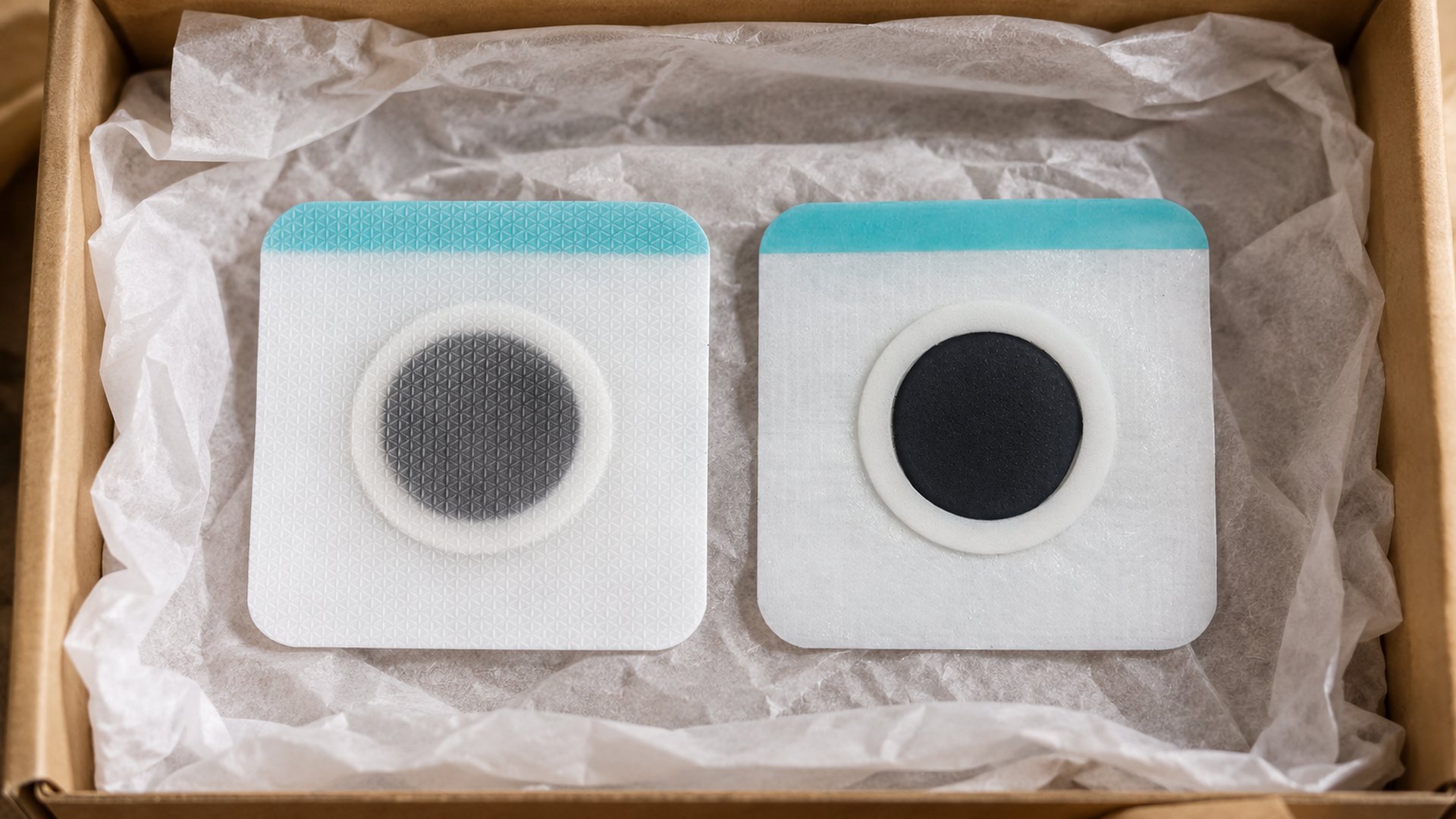
Last month an RFQ came in for Mugwort Warming Patch. The buyer wanted private-label production, individual pouches, retail boxes, and several formula variations for an abdominal wellness and warming comfort line. The quantity was around the range where we normally start discussing customized production—roughly 30,000 pieces—but the RFQ had one problem: almost every specification was still open. They wanted a price before deciding the patch size, mugwort formula direction, substrate, adhesive feel, pouch material, or number of pieces per box. I told them we could give a reference range, but a production quotation at that point would be guesswork. As the mugwort warming patch private label manufacturer, we needed to turn their marketing idea into something the coating, cutting, sealing, and packing teams could actually reproduce.
The RFQ Looked Simple Until We Opened the Specification
The buyer initially sent a reference photo and asked for “something close, but more premium.” Look, that phrase comes up constantly in OEM work, but it tells the production floor almost nothing. We asked them to break the request down into measurable decisions: patch dimensions, backing material, formula direction, individual pouch size, retail pack count, and whether they wanted one formula or several SKUs.
The SKU question changed the project immediately. They were considering three versions with slightly different herbal profiles and packaging. At around 30,000 pieces, splitting one order into three small runs affects material preparation, printing quantities, line changes, batch control, and packing efficiency. We suggested starting with one main Mugwort Warming Patch specification and developing the other concepts after the first version was stable. That gave us one specification to cost and one physical target for sampling.
Sampling Took About 10 Days, and We Changed More Than Expected
Our first sampling round fell inside a normal 7–14 day development window. We prepared the agreed patch size and tested the selected substrate, adhesive system, herbal formulation direction, liner, and pouch combination. The buyer's main requirement was straightforward: a Mugwort Warming Patch positioned for warming comfort and everyday abdominal wellness, without turning the packaging into a medical-claim product.
The first samples looked fine on the table. Once we handled them repeatedly, however, we found details worth changing before approval. One substrate felt stiffer than the buyer expected, while another gave the patch better flexibility. We also adjusted the relationship between the patch dimensions and the release liner because the first version left too little convenient handling area around the edge.
To be honest, this is exactly why I dislike rushing samples. A patch that photographs well for an approval message can still be annoying to manufacture, pack, peel, or handle consistently. We would rather find that during a ten-day sampling cycle than after tens of thousands of pieces are running down the line.
Then the Packaging Put the Schedule Sideways
The real snag was not the patch. It was the pouch and box.
The buyer's designer had already created artwork around an estimated pouch size. After we finalized the physical patch, the actual sealed pouch dimensions did not match the original assumption. The difference looked small on a specification sheet, but once multiple pouches were stacked inside the planned retail carton, the fit became tight. The buyer also wanted the box to stay compact for cross-border shipping.
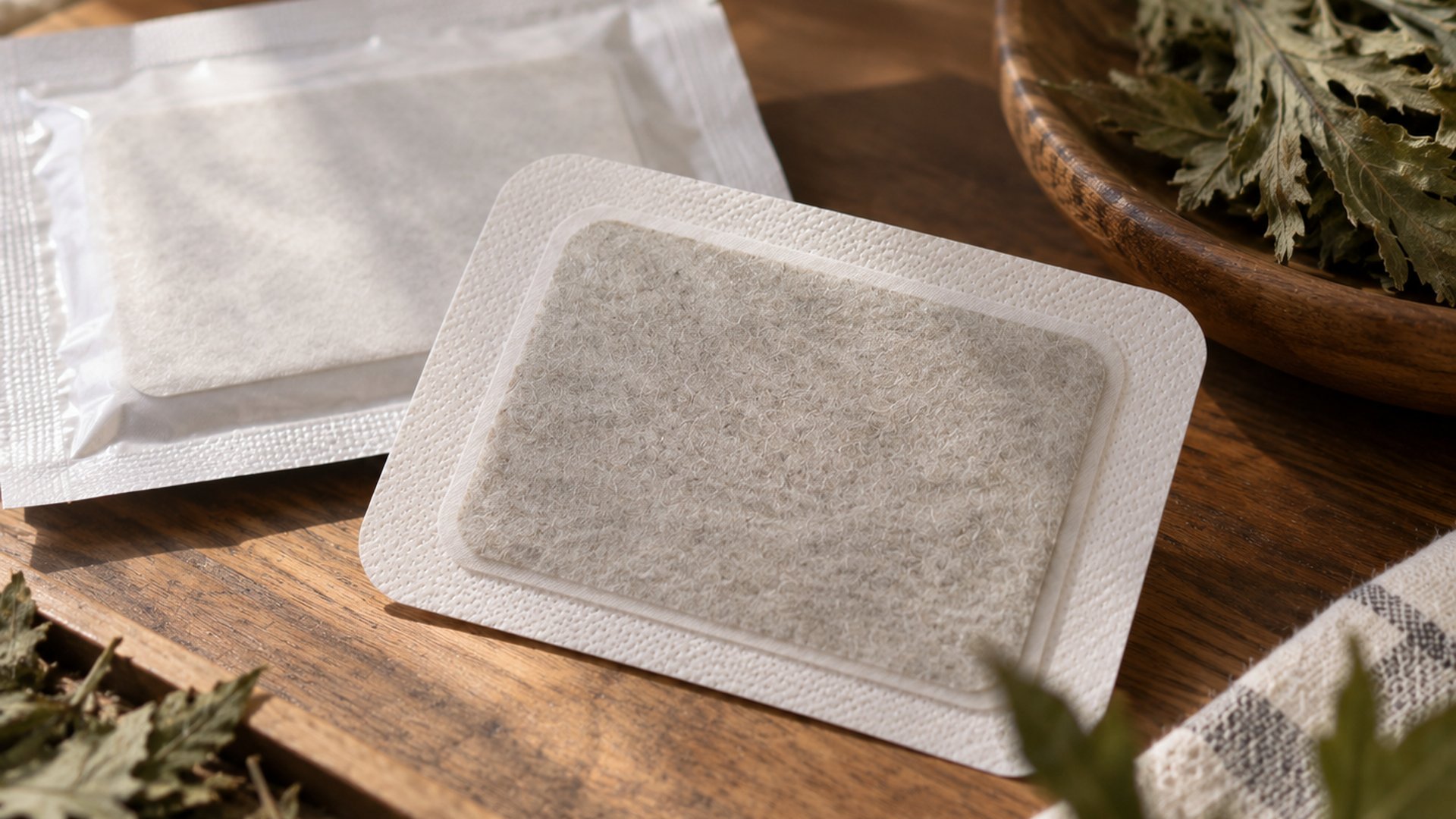
We stopped the packaging release rather than forcing the existing dimensions into production. That cost several days, but printing the wrong packaging would have cost considerably more. We made physical packing samples using the intended number of pouches, checked the stack thickness, and sent the confirmed dimensions back for artwork adjustment.
This is one of those factory-floor lessons that sounds obvious afterward: never finalize the retail box before the actual patch and individual pouch structure are locked.
We Fixed the Product First and Let the Artwork Follow
Once everyone agreed that the product specification had priority, the project became easier. We froze the Mugwort Warming Patch dimensions, substrate, formula version, liner, individual pouch structure, and units per retail pack. Only then did we release the final packaging dimensions.
We also created a clearer signed-sample record. Instead of relying on messages such as “use sample two,” we recorded which formula version was approved, which material was used, the patch dimensions, the pouch construction, and the approved packaging revision. One retained sample stayed with production and another served as the buyer's comparison reference.
That documentation matters when a mugwort warming patch private label manufacturer moves from a handful of development samples to mass production. The coating team, converting line, pouch-sealing station, QC staff, and packing team all need to be working from the same version. A verbal approval is fast; a controlled specification is repeatable.
Mass Production Was Easier Because We Had Already Had the Argument
After materials and printed packaging were ready, we moved into the production schedule. For this type of customized patch project, I normally tell buyers to plan roughly 15–30 days for mass production, depending on quantity, customization, material availability, packaging complexity, and current line scheduling.
By this point, the difficult decisions were already finished. Production could focus on following the approved specification rather than waiting for the buyer to decide between materials while the line was being prepared.
During the run, our attention shifted to consistency: material condition, patch appearance and dimensions, converting quality, pouch sealing, packaging count, batch identification, and agreement with the signed specification. We also checked the finished retail configuration rather than inspecting only loose patches. For private-label work, the product leaving our factory is the complete packed unit, so the pouch and box cannot be treated as somebody else's problem.
QC Found a Small Packing Issue Before Shipment
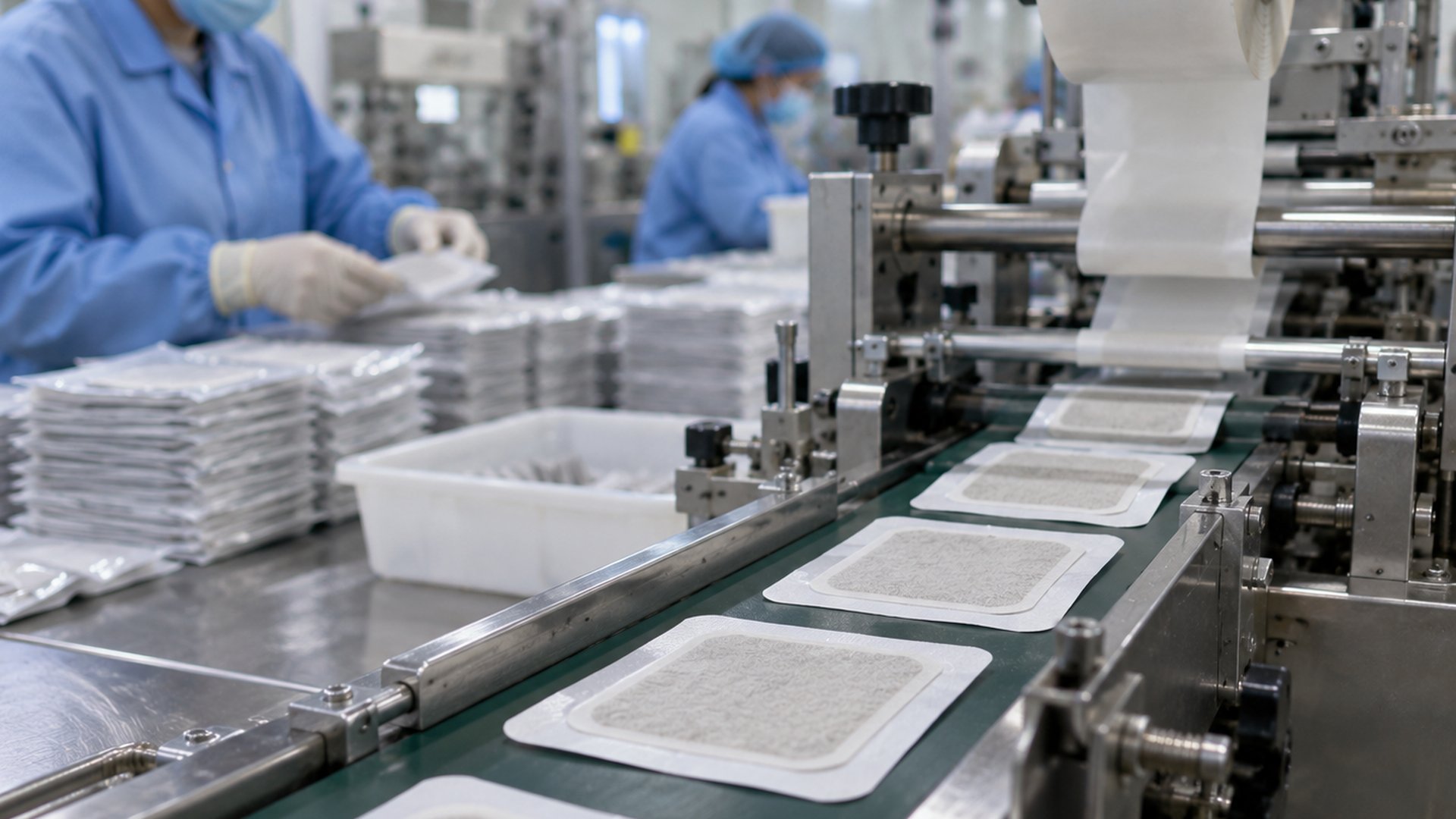
Near final packing, we found something minor but worth correcting. A portion of the retail boxes did not sit as cleanly as we wanted after the pouches were inserted. Nothing was wrong with the Mugwort Warming Patch itself; the issue came from how the individual pouches were being oriented and stacked during manual packing.
We changed the packing sequence and showed the operators one fixed orientation rather than allowing each person to arrange the pouches differently. That small process change made the finished cartons more consistent.
Final QC then covered the agreed physical specifications, pouch condition and sealing, retail pack quantity, packaging appearance, batch information, and carton quantities. A normal final inspection and release stage can take around 2–5 days depending on the project and documentation requirements. I prefer keeping those days in the schedule instead of booking freight against the exact minute the production line is expected to stop.
Shipment Was the Quiet Part, Which Is How It Should Be
Once QC released the goods, the warehouse team reconciled finished quantities, completed master-carton packing, checked carton information, and prepared the shipment data. The buyer received the final carton dimensions, weights, carton count, and packing information needed for freight coordination.
Shipment preparation itself is usually straightforward when everything upstream has been controlled. Most last-minute warehouse problems I see are actually decisions that should have been made weeks earlier: an unconfirmed label, a changed pack count, a barcode added after printing, or a carton specification that was never checked against the physical product.
This order avoided that ending. The delay happened earlier, during packaging development, where a delay is much cheaper to manage. Once the goods reached final QC and the warehouse, there were no major specification questions left to solve.
What I Would Do Differently on the Next Order
If the same RFQ landed on my desk tomorrow, I would change one thing: I would ask for the buyer's target retail configuration before discussing detailed packaging design. Patch size, individual pouch, units per box, target carton dimensions, SKU count, and expected order quantity need to be considered together.
I would also push harder to keep the first order to one primary specification. Every additional formula, pouch design, size, or retail box creates another branch in purchasing, production, QC, and inventory. Variety can make sense after a brand understands which version it wants to scale, but it can make a first OEM run unnecessarily difficult.
The practical sequence we learned again on this project was simple: define the Mugwort Warming Patch, sample it for roughly 7–14 days, approve a physical reference, build the packaging around that approved product, then release mass production with roughly 15–30 days as a realistic planning range. The production line was never the complicated part. The complicated part was getting everyone to agree on exactly what the line was supposed to make.
CATEGORIES
LATEST NEWS
- Sinew-Bone Pain-Bi Patch Private Label Manufacturer Supply Agreements
- What Hand Mask Custom Packaging Supplier Quotes Overlook
- Kids Herbal Foot Patch Contract Manufacturer: Safety Specifications First
- Mugwort Steam Eye Mask Private Label Manufacturer Readiness Check
- Mugwort Essential Oil Custom Formula Supplier: Formulation Approval Milestones
CONTACT US
QQ: 396269538
Phone: 17796669065
Tel: 17796669065
Email: 396269538
Add: Room 001, 1st Floor, Building 1, Zhengzhou Hangmei International Smart City, Intersection of S102 and Nanquan Road, Xuedian Town, Xinzheng City, Zhengzhou, Henan Province, China