Industry news
From Brief to Batch: Abdominal Wellness Patch Sample Development
Industry news 2026-09-17 09:03:38 65 views admin
Stop Treating the First Sample as the Finished Product
Most buyers approach abdominal wellness patch sample development in the wrong order: they ask the factory to make a sample before they have defined what the sample is supposed to prove. That creates attractive prototypes, not useful production references.
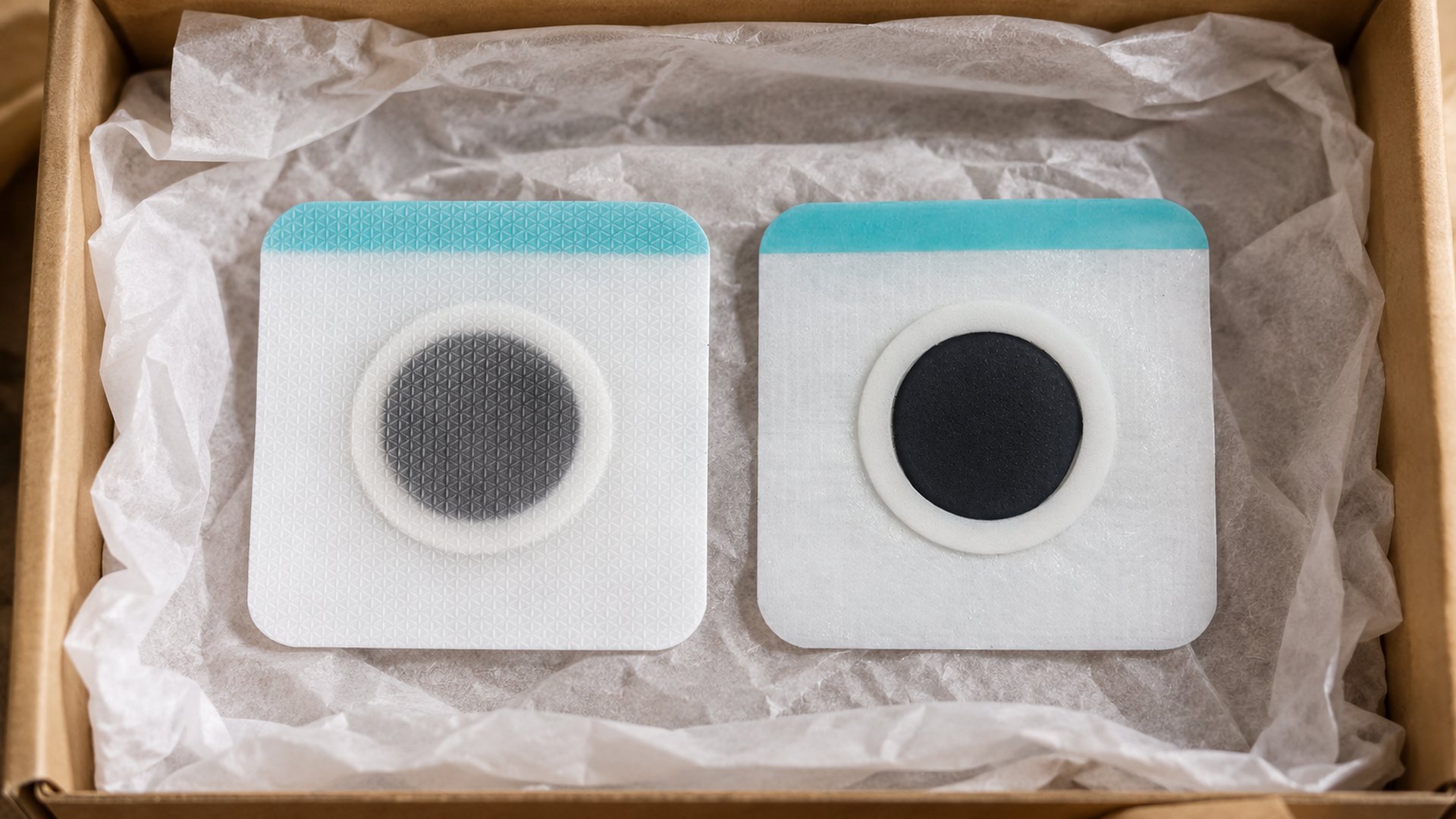
For an Abdominal Wellness Patch, I would lock five things before asking the sampling room to start: patch dimensions, substrate or backing material, formulation direction, adhesive feel, and individual packaging format. Intended positioning matters too. If the product is being developed for abdominal wellness, daily care, or warming comfort, that positioning should be clear before formula and packaging decisions are finalized.
A normal customized sampling cycle may take roughly 7–14 days, depending on how much formulation, material, size, and packaging work is involved. Trying to compress that by leaving specifications vague usually saves days at the beginning and costs them again during revisions.
A Softer Patch Is Not Automatically a Better Sample
Buyers often judge the first Abdominal Wellness Patch by touching it for ten seconds. If the material feels soft and the patch looks clean, they assume development is nearly finished. I disagree. Skin-contact feel is only one checkpoint.
During abdominal wellness patch sample development, I want the buyer to evaluate the whole construction: backing flexibility, edge finish, adhesive distribution, liner removal, patch dimensions, surface consistency, and how the product behaves during its intended wear period. A backing material that feels premium on a desk may fold too easily during application. A stronger adhesive may look impressive during a quick peel test but feel excessive for the intended product positioning.
That is why changing one component should trigger another sample review. Material, adhesive, dimensions, and formulation interact. Approving each component separately can leave you with a final construction nobody actually evaluated as a complete product.
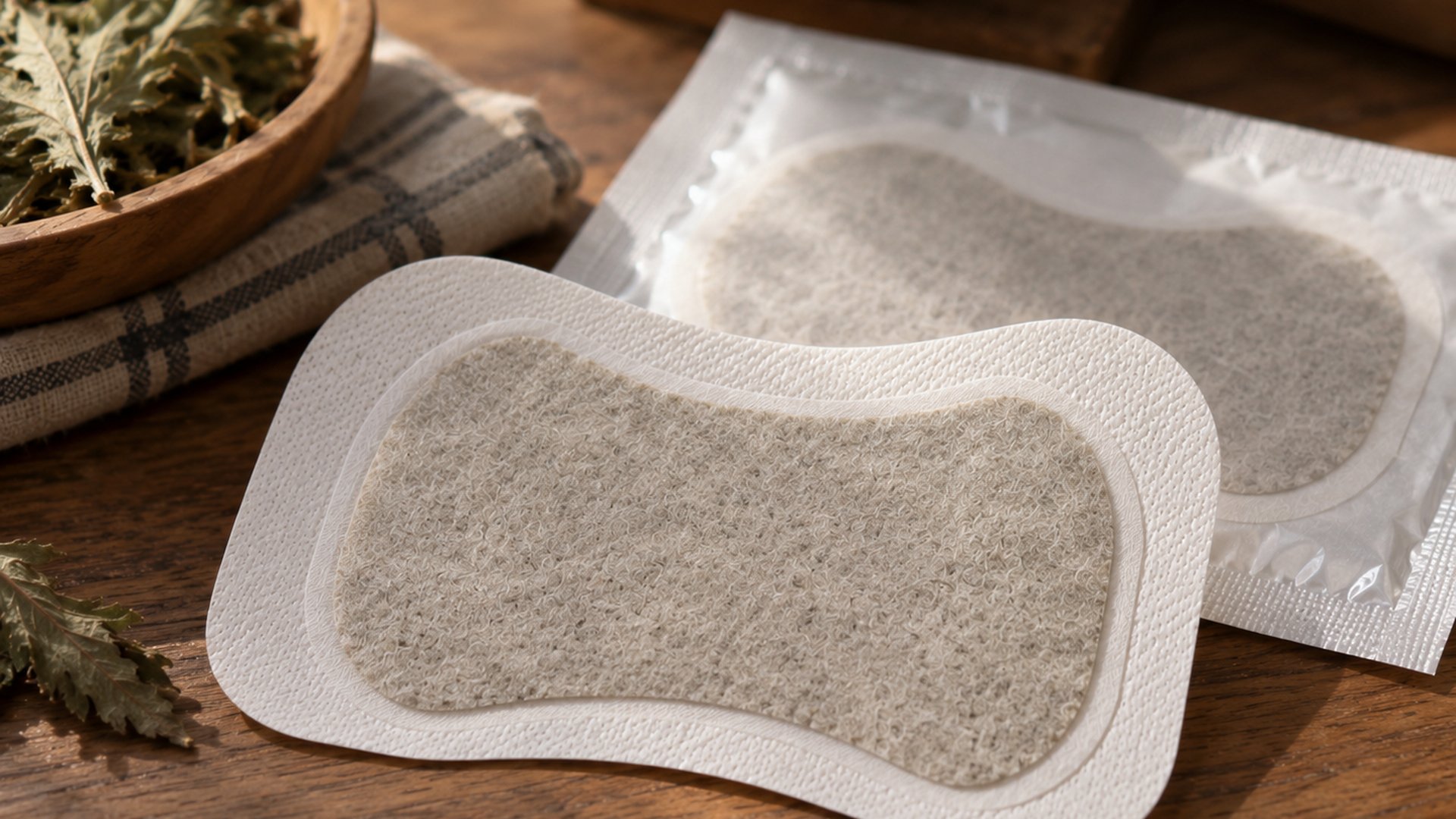
Formula Complexity Is Usually Overpriced by Buyers
Another mistake is assuming that more ingredients automatically create a more valuable private-label product. In manufacturing, every additional formula requirement has consequences: sourcing, documentation, mixing control, sample stability, production consistency, and sometimes packaging compatibility.
For a first Abdominal Wellness Patch SKU, I would rather see a clearly defined formula direction with a manageable ingredient system than a long ingredient list created mainly for the package panel. The commercial objective should guide the formulation. If the positioning is abdominal wellness or warming comfort, build around that neutral wellness concept and avoid turning development into a collection of unsupported claims.
This matters financially as well. When a project moves toward a typical customized production MOQ—often around 30,000 patches depending on specification—the cost of unnecessary complexity is multiplied across the batch. Spend where the consumer can actually experience the difference: material, construction, consistent manufacturing, and appropriate packaging.
Packaging Must Enter Development Before Sample Approval
I would not sign off on an Abdominal Wellness Patch without discussing the individual pouch and retail pack. Buyers regularly treat packaging as the graphic designer's job after product development. From the factory side, that separation makes little sense.
The finished patch dimensions and thickness affect pouch dimensions. The pouch affects the number of units that fit comfortably inside the carton. Carton dimensions influence master-carton configuration, shipping volume, and e-commerce fulfillment calculations. If the brand plans 5-, 10-, or 20-piece retail packs, we need to know that before the final production specification is frozen.
For sample approval, I prefer one reference specification covering the patch, liner, pouch, pack count, and carton concept. Artwork can still change later, but the physical packaging structure should already make sense. Otherwise, a buyer can approve a perfectly acceptable patch and still discover that the planned retail package does not work efficiently.
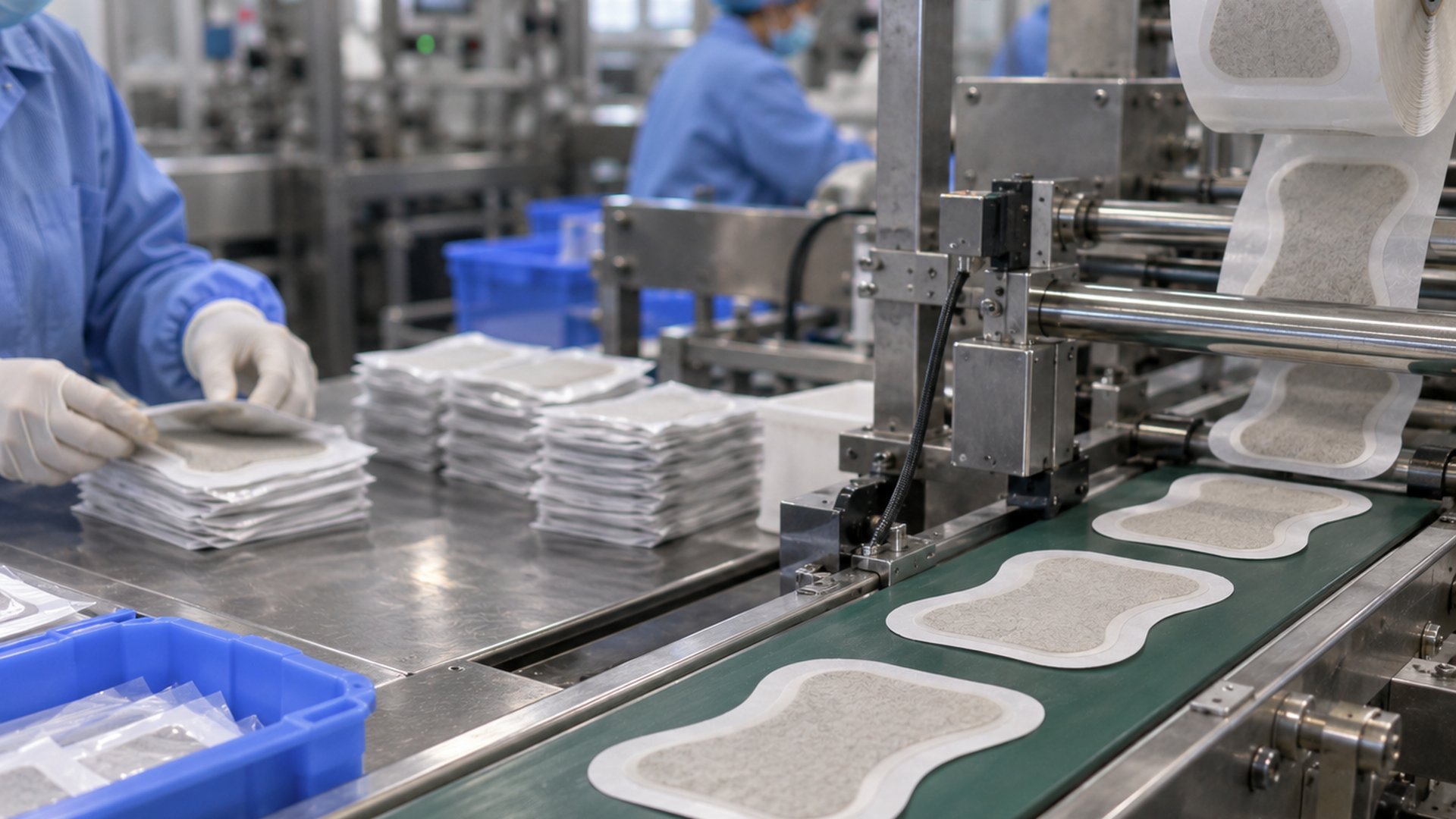
“Just Copy This Sample” Is Not a Complete Development Brief
The common counterargument is simple: the buyer already has a reference product, so why spend time writing specifications? Send it to the factory, match it, change the packaging, and move forward.
A reference sample is useful, but it cannot tell the factory which characteristics are intentional. Perhaps the buyer likes its dimensions but dislikes the backing. Maybe the adhesive is acceptable but the formula direction needs changing. Perhaps the retail format is good while the individual pouch is unnecessarily large.
I ask buyers to mark reference products component by component: keep, change, or open for recommendation. That small exercise makes abdominal wellness patch sample development much faster because our sampling team knows what it is trying to reproduce and what it is expected to redesign. It also gives both sides something more precise than “make it similar.”
Approve a Manufacturing Reference, Not a Pretty Prototype
My judgment is straightforward: do not approve an Abdominal Wellness Patch sample because it looks ready for a sales photo. Approve it only when it is detailed enough to become the reference for mass production.
Before approval, freeze the formula version, patch size, material structure, adhesive specification, liner, individual pouch, pack quantity, and other agreed physical parameters. Keep an approved reference sample where practical and make sure the written specification matches it. If another revision changes a meaningful parameter, update the approval instead of relying on an old sample.
For a customized project, plan roughly 7–14 days for initial sampling and revisions rather than assuming the first prototype will be final. Once the specification is stable, then discuss a production MOQ such as 30,000 pieces, final packaging quantities, QC requirements, and delivery scheduling. The cheapest stage to correct a specification is sample development. The most expensive time to discover the same mistake is after the production line has already made thousands of patches.
CATEGORIES
LATEST NEWS
- Sinew-Bone Pain-Bi Patch Private Label Manufacturer Supply Agreements
- What Hand Mask Custom Packaging Supplier Quotes Overlook
- Kids Herbal Foot Patch Contract Manufacturer: Safety Specifications First
- Mugwort Steam Eye Mask Private Label Manufacturer Readiness Check
- Mugwort Essential Oil Custom Formula Supplier: Formulation Approval Milestones
CONTACT US
QQ: 396269538
Phone: 17796669065
Tel: 17796669065
Email: 396269538
Add: Room 001, 1st Floor, Building 1, Zhengzhou Hangmei International Smart City, Intersection of S102 and Nanquan Road, Xuedian Town, Xinzheng City, Zhengzhou, Henan Province, China