Industry news
Behind Pediatric Digestive Comfort Patch Custom Packaging Supplier Projects
Industry news 2026-09-29 16:46:22 37 views admin
The Cheapest Packaging Quote Is Usually the Wrong Starting Point
If you are choosing a pediatric digestive comfort patch custom packaging supplier mainly by the lowest unit price, I think you are starting the project from the wrong end.
For a Pediatric Digestive Comfort Patch, packaging is part of the manufacturing specification. The individual pouch has to fit the finished patch without unnecessary folding or pressure. The retail carton has to match the pouch dimensions and pack count. Artwork versions have to stay separated during production. The master carton has to make sense for storage and shipment. For a pediatric-positioned wellness product, the intended age range, directions, warnings, materials, intended skin-contact conditions, and destination-market labeling also need to be settled before printed packaging is released.
A supplier can cut a few cents from a quote by simplifying materials or quoting packaging before the structure is confirmed. That saving becomes irrelevant if the buyer later changes the pouch, reprints cartons, or delays production because the physical product and artwork were developed separately. I would rather see a slightly slower quotation built from a complete specification.
Packaging Cost Starts With the Patch, Not the Carton
The first number I want is not the carton price. I want the finished Pediatric Digestive Comfort Patch dimensions.
Once the patch size, shape, backing material, adhesive configuration, and finished thickness are reasonably stable, we can make a sample pouch around the actual product. Then we can determine how many sealed pouches will fit comfortably into one retail carton. Only after that should the carton dimensions be locked. Our preferred sequence is simple: patch → individual pouch → retail carton → master carton.
This matters more than buyers sometimes expect. Imagine a project using 10 patches per retail box. At an MOQ of around 30,000 patches, that represents roughly 3,000 retail packs before normal production allowances are considered. A carton that is only slightly too tight does not create one packing problem; it can repeat that problem across thousands of boxes.
The same logic applies to custom pouch materials. Buyers often begin with appearance: matte finish, metallic film, kraft-style graphics, soft colors, or a particular opening direction. Those choices can be discussed, but first we need practical dimensions, sealing area, material structure, print requirements, and the way operators will load the patch. A packaging drawing that looks attractive on a screen is not yet a production-ready package.
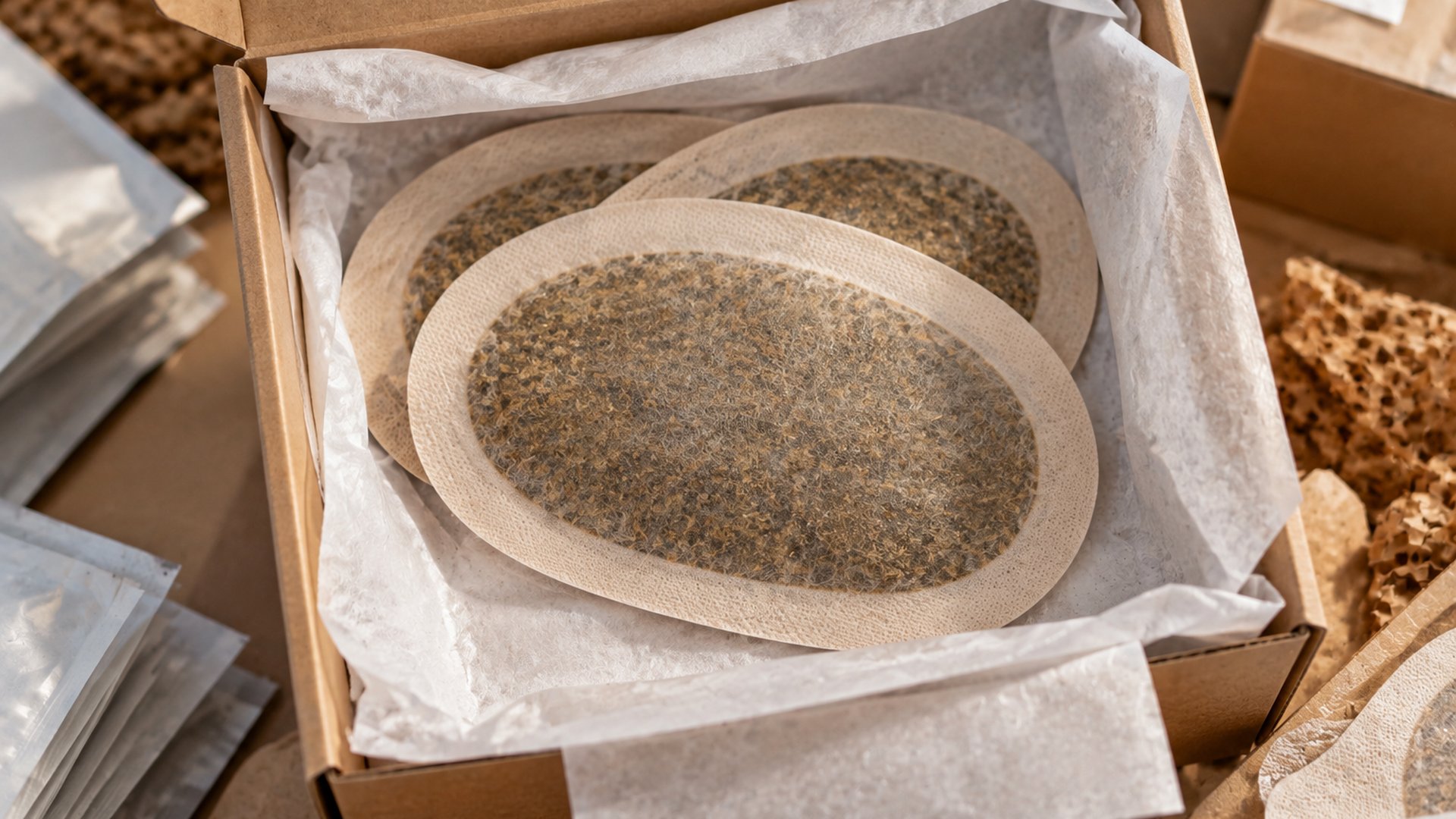
That is why I judge a custom packaging supplier partly by the questions asked before pricing. If nobody asks for patch dimensions, pack count, destination market, artwork versions, or pouch structure, I would question how firm the quoted price really is.
Pediatric Positioning Makes Specification Control More Important
There is another reason I would not buy this project on price alone: “pediatric” cannot be treated as a decoration added to ordinary packaging.
Before sampling, the buyer should define the intended age range and intended use clearly. The product specification should identify the materials, application area, intended wear conditions, patch dimensions, packaging format, and relevant skin-contact considerations. The label and instructions then need to be reviewed against the classification and requirements of the destination market. A factory should not assume that putting child-friendly graphics on a carton automatically makes a product suitable for children.
For the physical product, we normally use the 7–14 day sampling stage to remove uncertainty before bulk packaging is ordered. That period can cover the patch structure, dimensions, backing, adhesive configuration, formulation format, pouch fit, and other agreed variables. I prefer changing one or two meaningful variables per round rather than rebuilding everything at once. It makes buyer feedback much easier to interpret.
The final approved sample should then connect directly to the manufacturing specification. The factory floor needs measurable references rather than comments such as “same as the last sample.” Patch dimensions, appearance, backing, pouch dimensions, pack count, sealing requirements, artwork version, and carton configuration should all point to one approved project record.
That discipline may not produce the lowest initial quotation, but it produces a quote that is much easier for purchasing teams to compare.
“But My Market Is Price Sensitive” Is Not a Good Reason
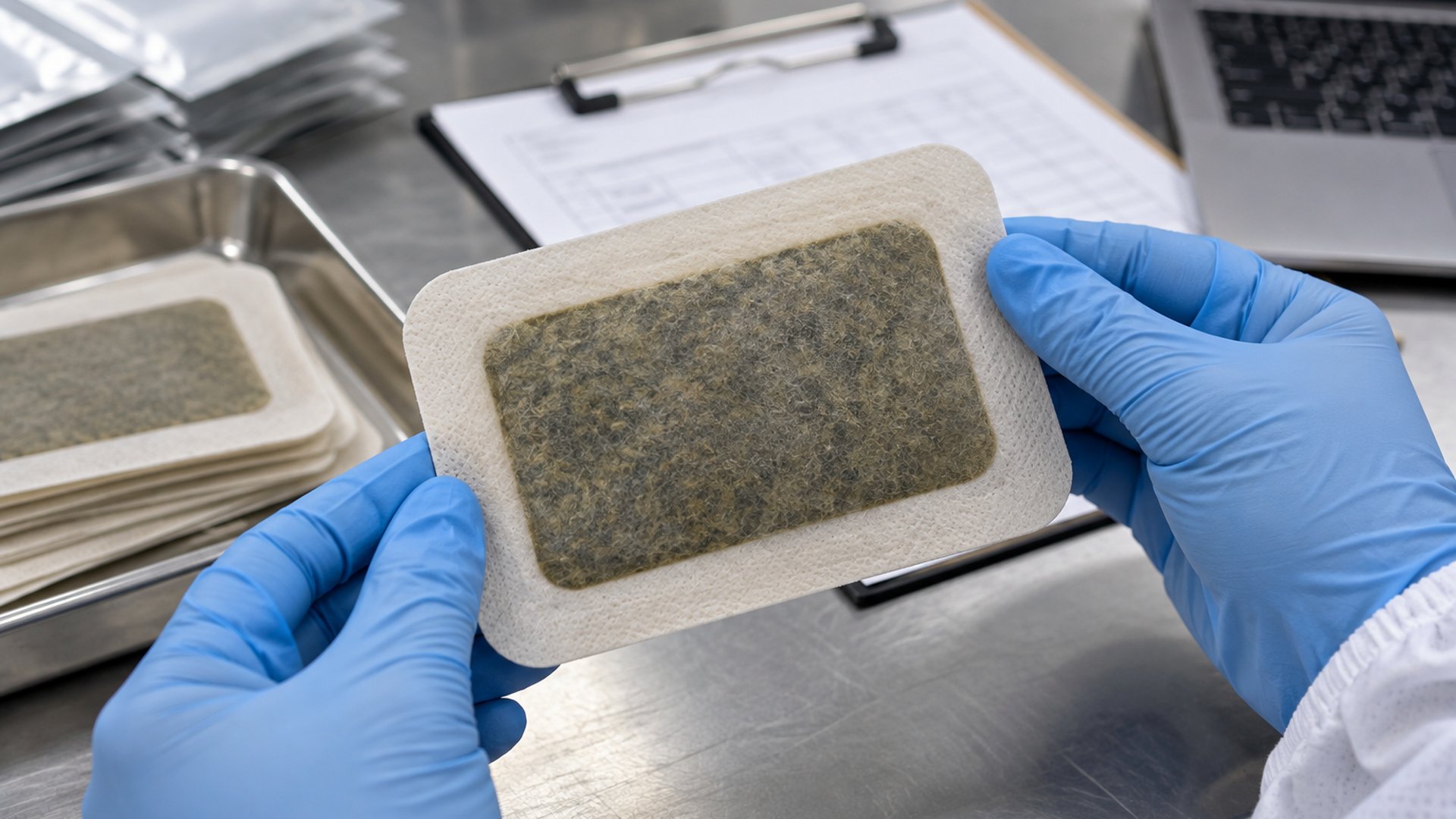
The most common counterargument is straightforward: buyers have target costs, competitors are aggressive, and packaging cannot become too expensive. I agree with the first half. Cost matters. I disagree with the conclusion that the lowest packaging quote therefore deserves the order.
The better approach is to remove cost deliberately. If the quotation is above target, ask what is driving it. Is it the pouch material? Too many printed versions? A low quantity per artwork? An unusual carton structure? Extra inserts? Too many SKUs in the first production run? Once those cost drivers are visible, the buyer and factory can simplify the project without losing control of the specification.
SKU reduction is often one of the cleanest moves. Three fragrances, two pack counts, and several market-specific cartons can turn one nominal order into many small packaging jobs. Printed material quantities become fragmented, changeovers increase, and inventory becomes harder to manage. For an opening run, one stable Pediatric Digestive Comfort Patch specification with fewer packaging variants is often easier to manufacture and easier for the buyer to evaluate after launch.
MOQ also needs to be discussed in the same conversation. A practical starting level may be around 30,000 patches, but buyers should ask whether that quantity applies to the entire project, each SKU, or each printed packaging version. Those are very different commercial situations.
My Call: Freeze the Packaging System Before Negotiating the Last Cent
My recommendation is to compare suppliers only after each one is quoting substantially the same project. Give them the finished patch specification, intended age range, destination market, pouch requirements, pieces per box, artwork count, order quantity, and expected delivery window. Then ask exactly what the quotation includes.
For a Pediatric Digestive Comfort Patch project, I would also require a physical packaging mock-up before bulk printed materials are released. Put the actual patch into the proposed pouch. Seal it. Stack the required number of pouches. Load them into the carton. Close the box normally. Then check the master-carton arrangement. A ten-minute physical packing test can reveal problems that a quotation spreadsheet never will.
Only after those points are stable would I negotiate the final unit cost with a pediatric digestive comfort patch custom packaging supplier. Price still matters, and factories should be expected to explain it clearly. But the number becomes useful only when everyone is pricing the same patch, the same pouch, the same carton, the same pack count, and the same production scope.
That is the purchasing decision I would make: lock the product, test the packaging, reduce unnecessary variants, confirm how the MOQ is calculated, and then compare complete quotations. Saving money through a simpler specification is sensible. Saving money by leaving the specification unclear usually just moves the cost to a later stage of the project.

CATEGORIES
LATEST NEWS
- Sinew-Bone Pain-Bi Patch Private Label Manufacturer Supply Agreements
- What Hand Mask Custom Packaging Supplier Quotes Overlook
- Kids Herbal Foot Patch Contract Manufacturer: Safety Specifications First
- Mugwort Steam Eye Mask Private Label Manufacturer Readiness Check
- Mugwort Essential Oil Custom Formula Supplier: Formulation Approval Milestones
CONTACT US
QQ: 396269538
Phone: 17796669065
Tel: 17796669065
Email: 396269538
Add: Room 001, 1st Floor, Building 1, Zhengzhou Hangmei International Smart City, Intersection of S102 and Nanquan Road, Xuedian Town, Xinzheng City, Zhengzhou, Henan Province, China