Industry news
When Mugwort Patch Contract Manufacturer Quotes Diverge
Industry news 2026-09-22 11:10:20 55 views admin
The Buyer Had Three Quotes and No Clear Answer
A European wellness brand came to us last spring saying its Mugwort Essential Oil Patch project was stuck between three supplier quotations. The purchasing manager had expected to select a manufacturer that week. Instead, she was staring at three different prices for what appeared to be the same product.
The brand was preparing a private-label patch for abdominal wellness and everyday warming comfort. Its initial purchasing plan was built around a 30,000-patch MOQ, with individual pouches and a custom retail carton. The sales team had already approved the general product concept, but the purchasing manager was reluctant to release a deposit.
One supplier had quoted a lower unit price but excluded the retail cartons. Another had included packaging but proposed a different backing material. The third had supplied an attractive sample without confirming whether the quoted formulation matched it.
The buyer's immediate problem was no longer finding a low price. She needed to establish what each supplier was actually offering before committing the brand's launch budget.
The Cheapest Sample Was Not the Quoted Product
The purchasing manager sent the samples and quotation details to the development team for review. Once the products were placed side by side, several differences became obvious.
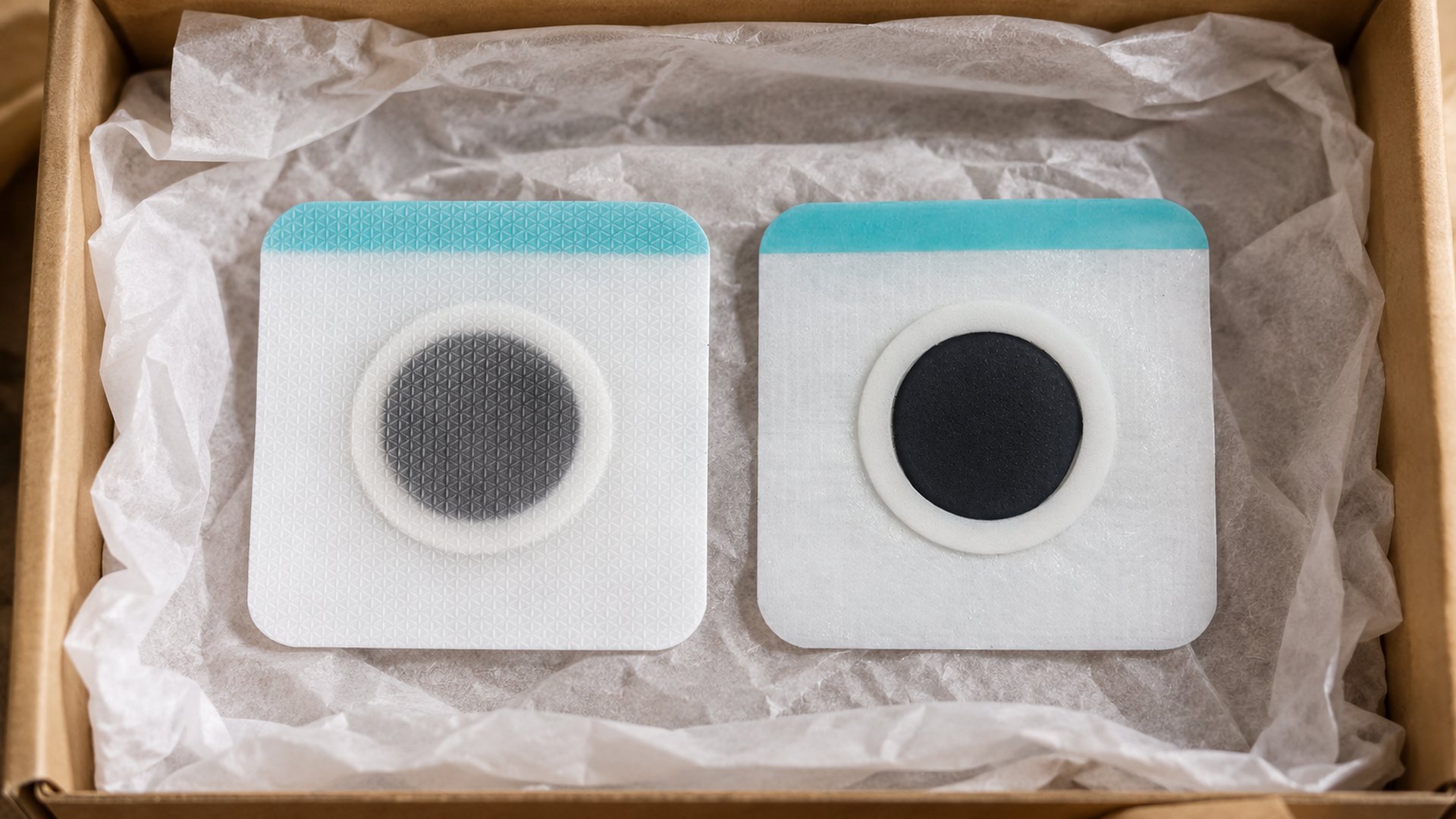
The samples varied in thickness, flexibility, adhesive construction, and aroma intensity. Their individual pouches also differed in material and dimensions. None of those details had been consistently documented in the original purchasing brief.
The lowest quotation covered a standard backing material and a basic individual pouch. The sample the brand preferred used a softer backing and a different packaging configuration. The quoted unit price therefore did not describe the product the brand intended to sell.
The manufacturer also found that the proposed retail carton had been designed around estimated pouch dimensions. If the buyer approved printing before confirming the finished patch and pouch, the carton might need to be redesigned.
There was another unresolved issue: the brand wanted two aroma variations within its initial order. Separate formulations could affect material procurement, sampling, production setup, and packaging requirements.
The purchasing manager had been comparing finished-unit prices while the underlying specifications were still changing.
The Factory Asked the Buyer to Choose One Reference Sample
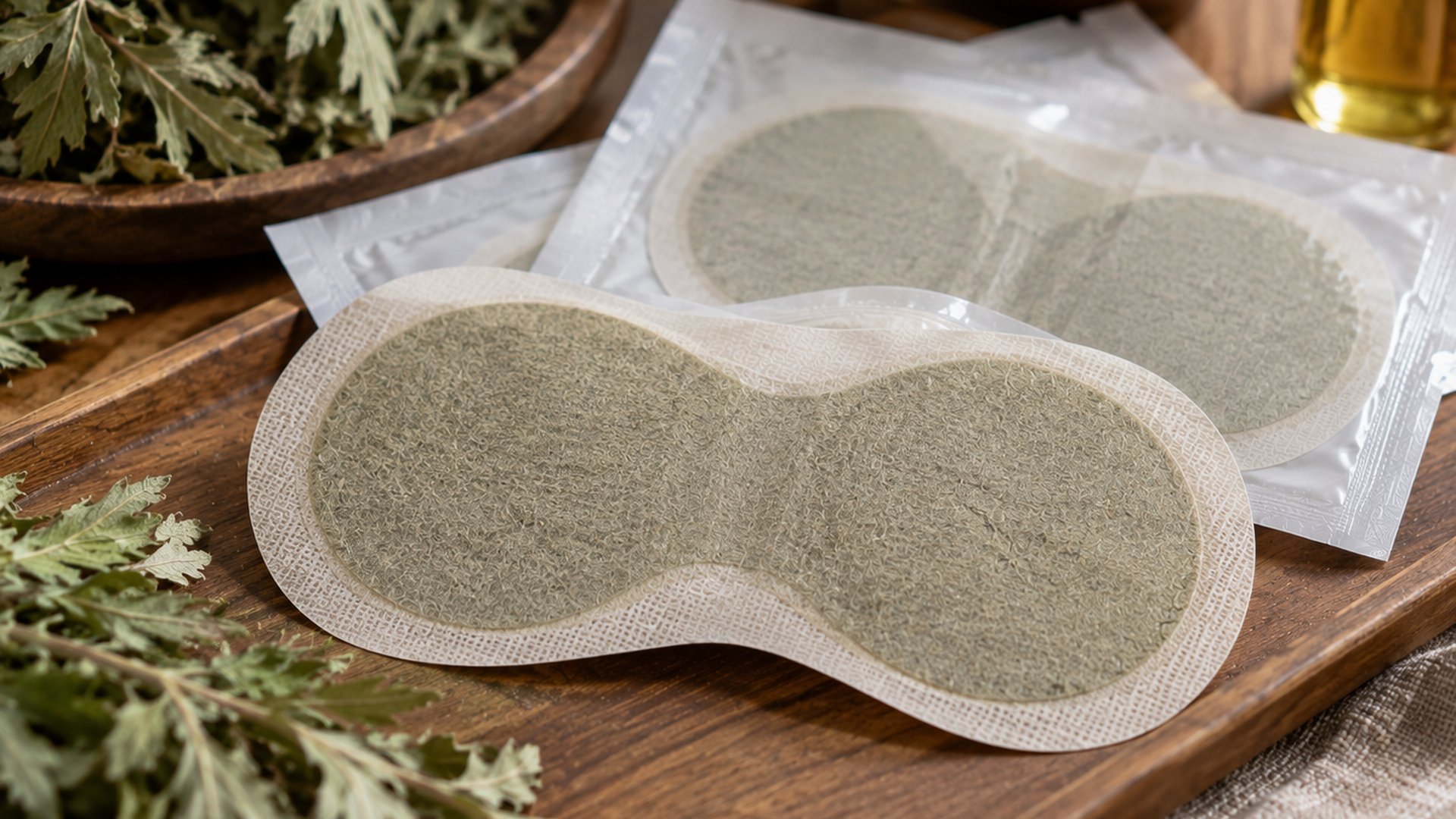
Rather than issue another quotation immediately, the manufacturer proposed establishing one approved Mugwort Essential Oil Patch configuration.
The buyer first confirmed the intended application, target market, patch dimensions, preferred backing material, and retail pack quantity. The development team then prepared a technical brief covering the essential oil formulation, adhesive system, material construction, individual pouch, and intended skin-contact conditions.
The brand agreed to prioritize one aroma for its initial production plan. The second variation could be developed separately once the first configuration had been approved.
The manufacturer prepared samples against the agreed brief. A typical custom sampling period is approximately 7–14 days after the technical requirements are confirmed, although formulation revisions, material availability, and additional testing can extend that schedule.
During the review, the purchasing manager recorded specific observations about flexibility, aroma intensity, appearance, and adhesive behavior. The team also considered formulation compatibility and the documentation required for the intended product and destination market.
The revised sample was evaluated against those agreed characteristics. Once the buyer approved the physical product, the manufacturer could use it as the reference for packaging development and production planning.
The Packaging Decision Changed the Cost Discussion
With the patch specification settled, the manufacturer returned to the individual pouch.
The packaging team confirmed the pouch structure and dimensions using the approved patch rather than the designer's earlier estimate. The retail carton was then adjusted to accommodate the finished pouches and the planned number of patches per pack.
This sequence resolved a cost question that had been obscured in the original quotations. The buyer could now distinguish the cost of the patch itself from individual packaging, retail cartons, artwork preparation, and any additional testing or documentation requirements.
The manufacturer also reviewed the proposed labeling with the buyer. The brand wanted to communicate the patch's herbal character and warming comfort, but the final wording needed to remain consistent with its intended use, available substantiation, and applicable market requirements.
The purchasing manager requested a revised quotation based on the approved product and packaging configuration. Instead of asking suppliers to match an isolated unit price, she could now compare equivalent specifications and identify which charges were included.
That made the quotation discussion less about bargaining over an undefined product and more about the actual cost of manufacturing the brand's chosen configuration.
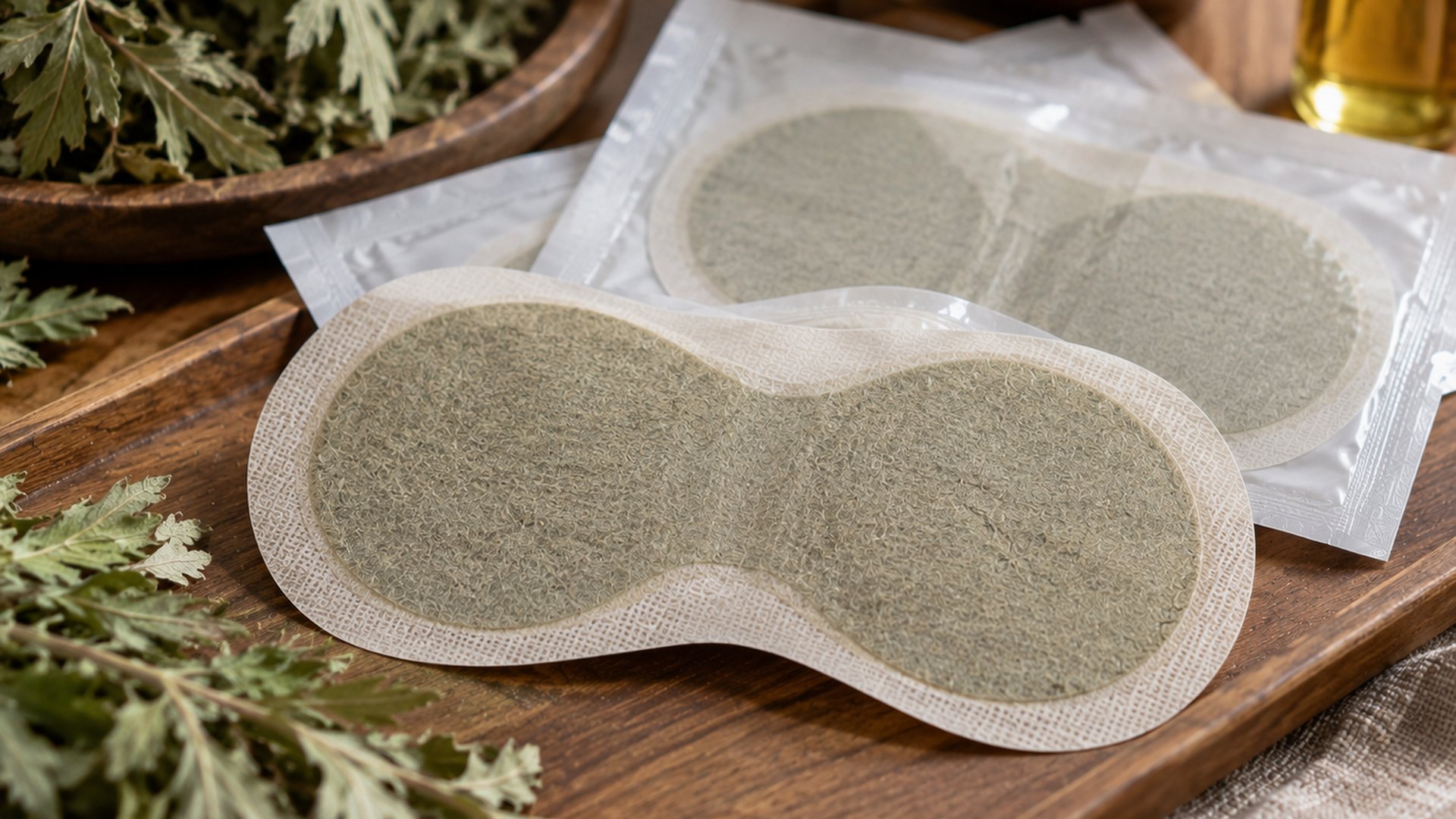
The Purchase Plan Finally Had a Defined Scope
The sourcing work produced a clearer initial purchasing plan: one approved Mugwort Essential Oil Patch formulation, one backing and adhesive configuration, one individual pouch specification, and one retail packaging design.
The manufacturer could prepare production documentation around that configuration, including agreed dimensions, material requirements, appearance standards, packaging checks, and batch traceability.
The buyer also had a more realistic basis for discussing the 30,000-patch MOQ. That quantity was a planning starting point for the selected configuration, subject to final material and packaging requirements. Additional aroma variations or separate retail designs would need their own commercial and production assessment.
The project details establish the specification and purchasing decisions, but they do not provide a verified final order value, shipment date, or retail sales result. Those figures should not be inferred from the sourcing process.
The practical outcome was that the purchasing manager could evaluate the proposed order against a defined product rather than several unrelated samples. The brand's launch planning could proceed using documented requirements and a quotation tied to the approved configuration.
What the Buyer Would Do Differently Next Time
The purchasing manager began the project believing that three quotations would provide enough information to choose a supplier. The experience showed her that quotations are only comparable when they describe the same finished product.
A different backing material can change both the feel and cost of a patch. A revised essential oil formulation may require additional development work. A different individual pouch can affect the retail carton, material consumption, and packing arrangements.
For a buyer working with a mugwort patch contract manufacturer, those details belong in the purchasing brief before the final price negotiation.
The brand's revised approach was to approve one reproducible product specification, confirm the physical sample, settle the pouch and retail packaging, and then request an itemized quotation covering the complete scope of supply.
That sequence also gives the buyer a reference for quality checks and future repeat orders. If the brand later introduces another aroma or packaging format, the new variation can be evaluated against an established baseline.
The lesson from this sourcing journey is simple: when manufacturer quotations diverge, check whether the products behind them are genuinely equivalent before treating the price difference as a saving.
CATEGORIES
LATEST NEWS
- Sinew-Bone Pain-Bi Patch Private Label Manufacturer Supply Agreements
- What Hand Mask Custom Packaging Supplier Quotes Overlook
- Kids Herbal Foot Patch Contract Manufacturer: Safety Specifications First
- Mugwort Steam Eye Mask Private Label Manufacturer Readiness Check
- Mugwort Essential Oil Custom Formula Supplier: Formulation Approval Milestones
CONTACT US
QQ: 396269538
Phone: 17796669065
Tel: 17796669065
Email: 396269538
Add: Room 001, 1st Floor, Building 1, Zhengzhou Hangmei International Smart City, Intersection of S102 and Nanquan Road, Xuedian Town, Xinzheng City, Zhengzhou, Henan Province, China