Industry news
Herbal Eye Comfort Patch OEM Pricing Beyond Unit Cost
Industry news 2026-09-21 14:09:51 67 views admin
Where the Money Goes: Start With the 30,000-Patch MOQ
At a 30,000-patch MOQ, every RMB 0.10 added to the unit price increases the purchase cost by RMB 3,000. A seemingly minor RMB 0.30 upgrade in materials or packaging adds RMB 9,000 to the initial order. That is the first calculation a buyer should make before approving a Herbal Eye Comfort Patch specification.
The purchase budget is usually divided among the patch substrate, herbal formulation, adhesive system, converting, individual packaging, retail packaging, and quality-control requirements. The exact allocation depends on the finished product specification and the manufacturer's quotation.
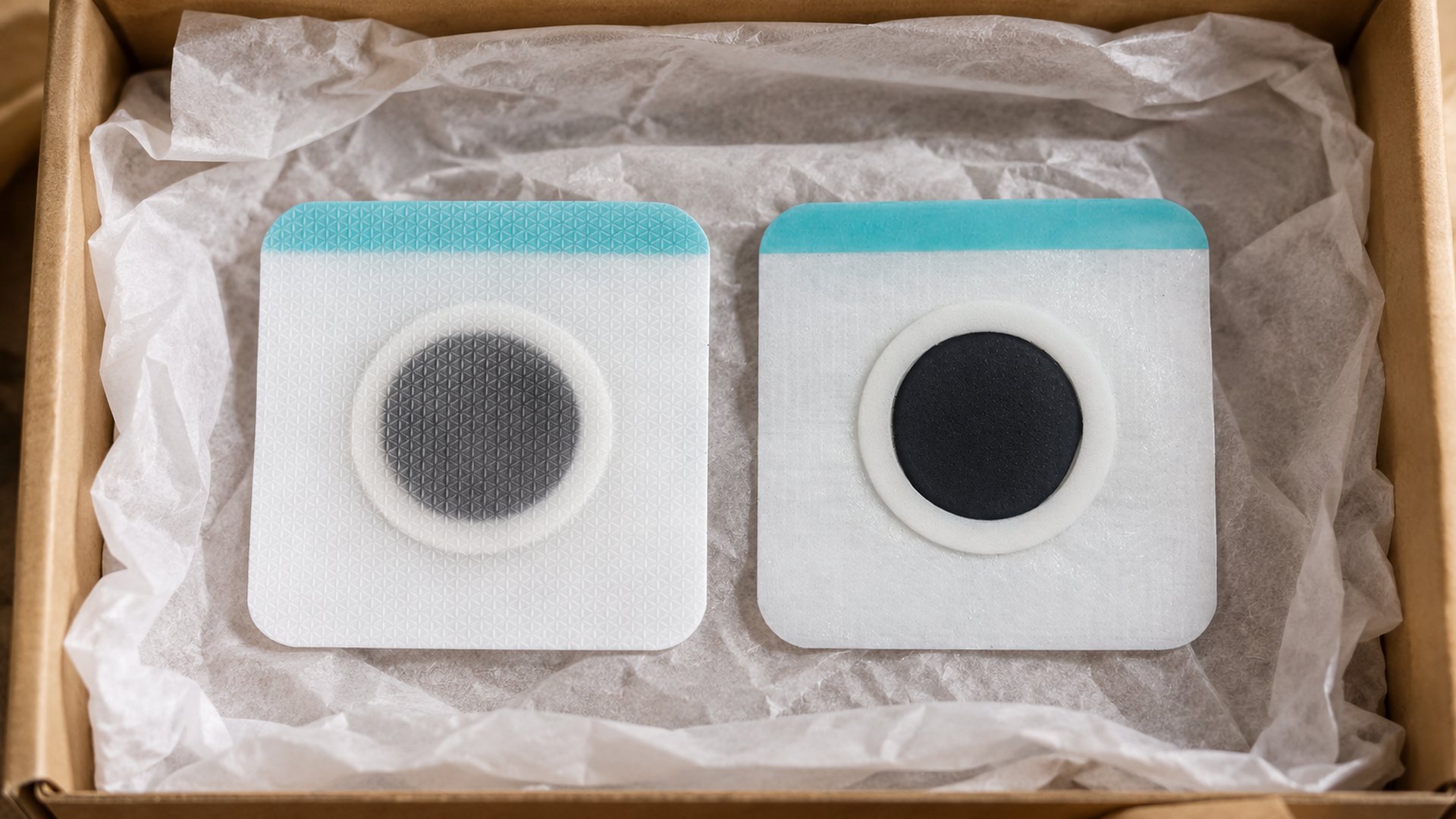
For a product intended for eye comfort routines, material selection deserves particular attention. The patch must be designed for its intended skin-contact conditions, with suitable dimensions, adhesive characteristics, and documented formulation requirements. The buyer should also confirm the intended placement and avoid assuming that a patch designed for surrounding skin is suitable for direct contact with the eyes.
Custom retail packaging can add substantial cost without changing the underlying patch. Before approving decorative finishes or multiple carton designs, confirm that the product construction, individual pouch, and required documentation are included in the quoted price.
MOQ Versus Unit Price: A Lower Quote Can Require More Cash
Herbal eye comfort patch OEM pricing changes with production quantity because material procurement, equipment setup, packaging preparation, and other production costs may be allocated across different numbers of finished units.
Suppose a buyer receives two illustrative quotations: RMB 0.90 per patch at 30,000 units and RMB 0.84 per patch at 60,000 units. The first order requires RMB 27,000 for the quoted units, while the second requires RMB 50,400.
The larger order saves RMB 0.06 per patch but requires an additional RMB 23,400 in initial purchasing expenditure. These figures are hypothetical calculations, not actual factory quotations, and exclude other charges.
That additional inventory must be stored, financed, and eventually sold. For a new brand without established demand, the lower unit price may not compensate for the larger cash commitment.
The buyer should also confirm whether the MOQ applies to the total order or separately to each patch size, formulation, and packaging design. Dividing 30,000 patches among several SKUs may introduce separate material minimums and setup costs.
Compare order quantities using the same approved specification. Otherwise, a lower quotation may simply reflect a different product or a different scope of supply.
What You Can Negotiate Down Without Changing the Core Product
The first negotiation should concern unnecessary complexity rather than undocumented reductions in material quality.
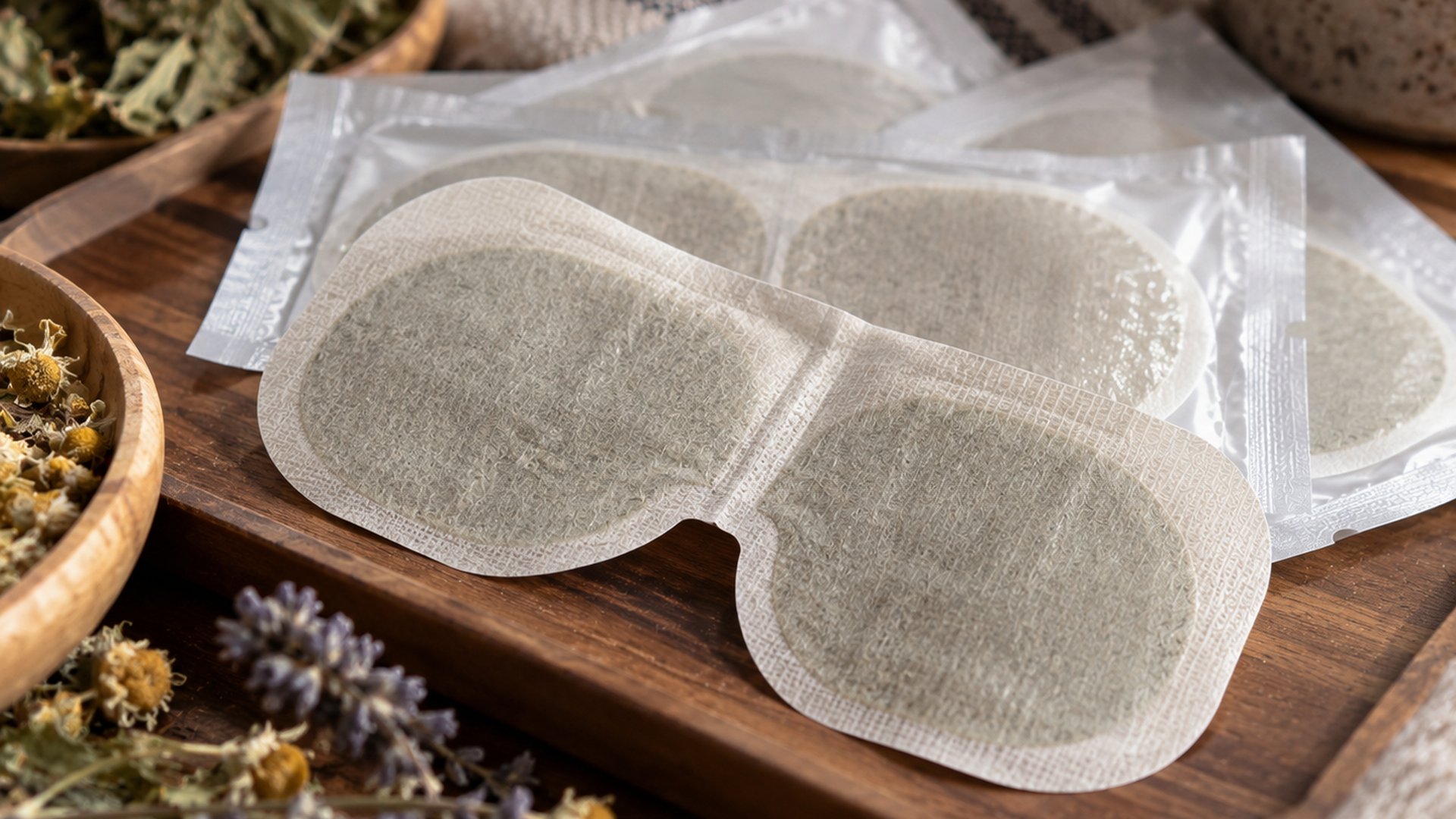
Start with the retail carton. A standard box structure may avoid some of the preparation costs associated with a custom shape. Using one carton design for the initial launch can also reduce artwork management and packaging material requirements.
Next, examine the number of product variations. Separate herbal formulations, patch dimensions, or retail pack configurations can require additional sampling, material procurement, and production arrangements. Concentrating the initial quantity on one approved configuration may simplify the quotation.
Patch dimensions are another possible cost variable, but changes must be evaluated against the intended application. A smaller patch may consume less material, yet it should not be approved solely because it produces a lower price.
Ask the manufacturer to quote alternative backing materials and pouch structures where appropriate. Any proposed substitution should be evaluated through sampling and relevant quality checks before it is accepted.
Custom sampling commonly requires approximately 7–14 days after the technical brief is confirmed. Additional formulation work, material availability, and testing can extend that period.
Do not negotiate away agreed skin-contact requirements, material specifications, packaging integrity, traceability, or applicable testing and documentation. Savings achieved by removing necessary controls can create more expensive problems after production.
Cost Comparison: Two Packaging Plans for the Same Patch
Consider a buyer preparing a 30,000-piece Herbal Eye Comfort Patch order. The patch formulation, dimensions, backing material, and adhesive system are identical in both options. Only the retail packaging plan changes.
The following figures are illustrative procurement assumptions, not published factory prices or completed-order data.
| Cost item | Standard retail carton | Custom retail carton |
|---|---|---|
| Order quantity | 30,000 patches | 30,000 patches |
| Patch and individual pouch | RMB 0.80/unit | RMB 0.80/unit |
| Retail packaging allocation | RMB 0.15/unit | RMB 0.35/unit |
| Setup and artwork charges | RMB 1,000 | RMB 3,000 |
| Calculated purchase subtotal | RMB 29,500 | RMB 37,500 |
| Calculated cost per patch | RMB 0.9833 | RMB 1.25 |
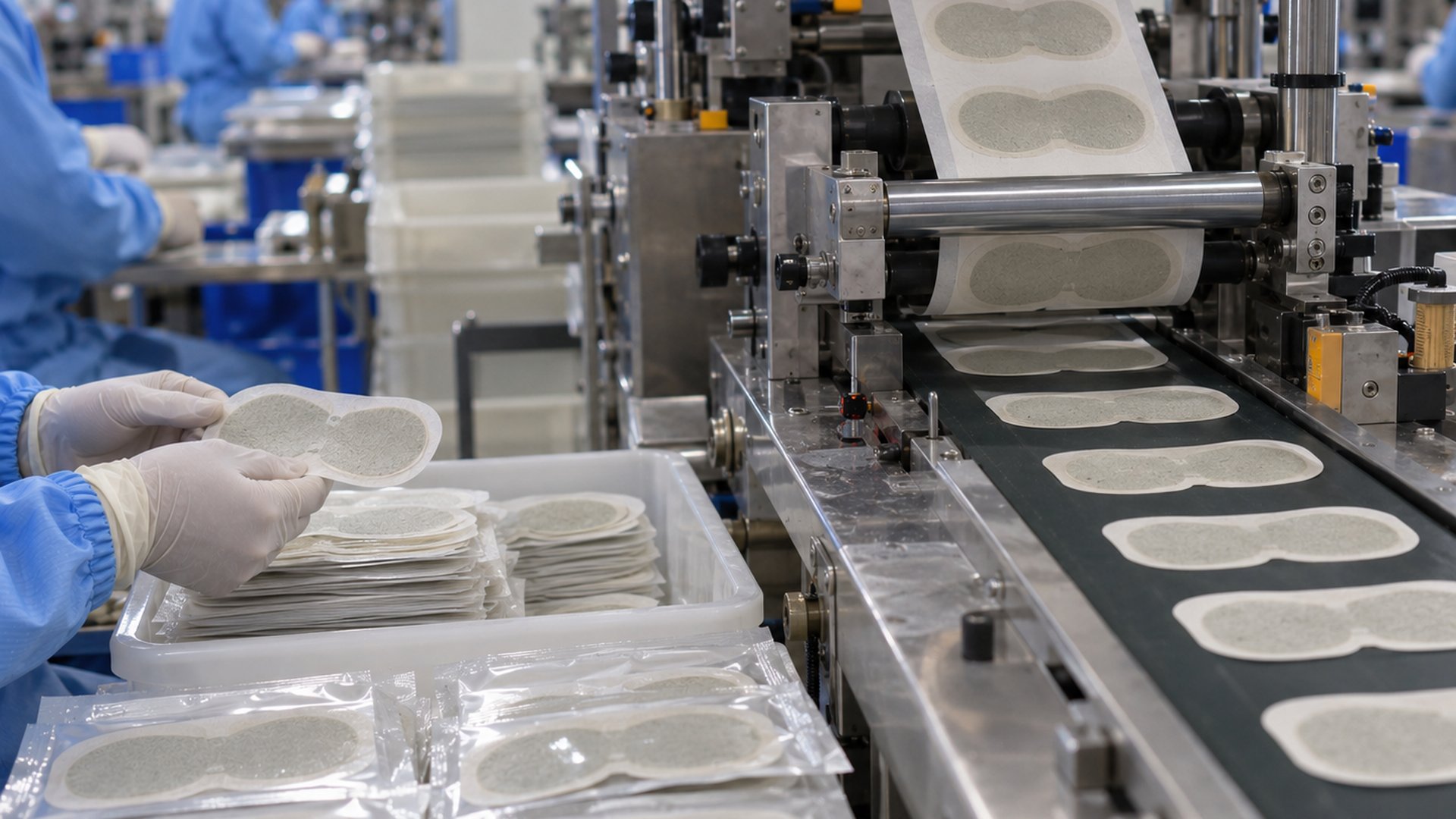
Under these assumptions, the custom packaging plan adds RMB 8,000 to the initial purchase.
That difference may be justified by a specific retail requirement, but it should be evaluated as a separate commercial decision rather than hidden inside the quoted patch price.
Neither option includes international freight, duties, taxes, storage, third-party testing, or other charges that may apply. The actual landed cost must be calculated using the manufacturer's confirmed quotation, shipment terms, destination-market requirements, and the finished retail pack quantity.
If the brand sells ten patches per carton, it should also calculate the total cost per ten-patch retail unit. A low price per individual patch does not automatically translate into a low cost per saleable pack.
The Purchasing Verdict: Protect the Specification, Simplify the First Order
For a first Herbal Eye Comfort Patch order, allocate the budget to a reproducible product specification, appropriate materials, an approved physical sample, reliable individual packaging, and the quality requirements applicable to the intended product and destination market.
Then examine optional costs. Multiple formulations, custom carton structures, additional decorative finishes, and small-volume SKU variations should each have a clear commercial purpose before they are included in the initial purchase.
Ask the manufacturer for an itemized quotation that identifies the patch specification, MOQ, individual packaging, retail packaging, sampling requirements, setup charges, production lead time, quality checks, and delivery terms.
Request separate prices for proposed alternatives so that the financial effect of each change remains visible.
The useful measure of herbal eye comfort patch OEM pricing is the complete cost of a finished, saleable product that meets the approved specification. A lower isolated unit price is not enough if the quotation leaves out packaging, necessary quality controls, or other expenses the buyer must eventually pay.
For an initial launch, controlling unnecessary variation while retaining the agreed product and quality requirements provides a clearer purchasing budget and a more dependable reference for future production.
CATEGORIES
LATEST NEWS
- Sinew-Bone Pain-Bi Patch Private Label Manufacturer Supply Agreements
- What Hand Mask Custom Packaging Supplier Quotes Overlook
- Kids Herbal Foot Patch Contract Manufacturer: Safety Specifications First
- Mugwort Steam Eye Mask Private Label Manufacturer Readiness Check
- Mugwort Essential Oil Custom Formula Supplier: Formulation Approval Milestones
CONTACT US
QQ: 396269538
Phone: 17796669065
Tel: 17796669065
Email: 396269538
Add: Room 001, 1st Floor, Building 1, Zhengzhou Hangmei International Smart City, Intersection of S102 and Nanquan Road, Xuedian Town, Xinzheng City, Zhengzhou, Henan Province, China