Industry news
Why Essential Oil Patch Contract Manufacturer Quotes Vary
Industry news 2026-09-23 13:48:02 67 views admin
Three Manufacturing Options, Three Different Cost Structures
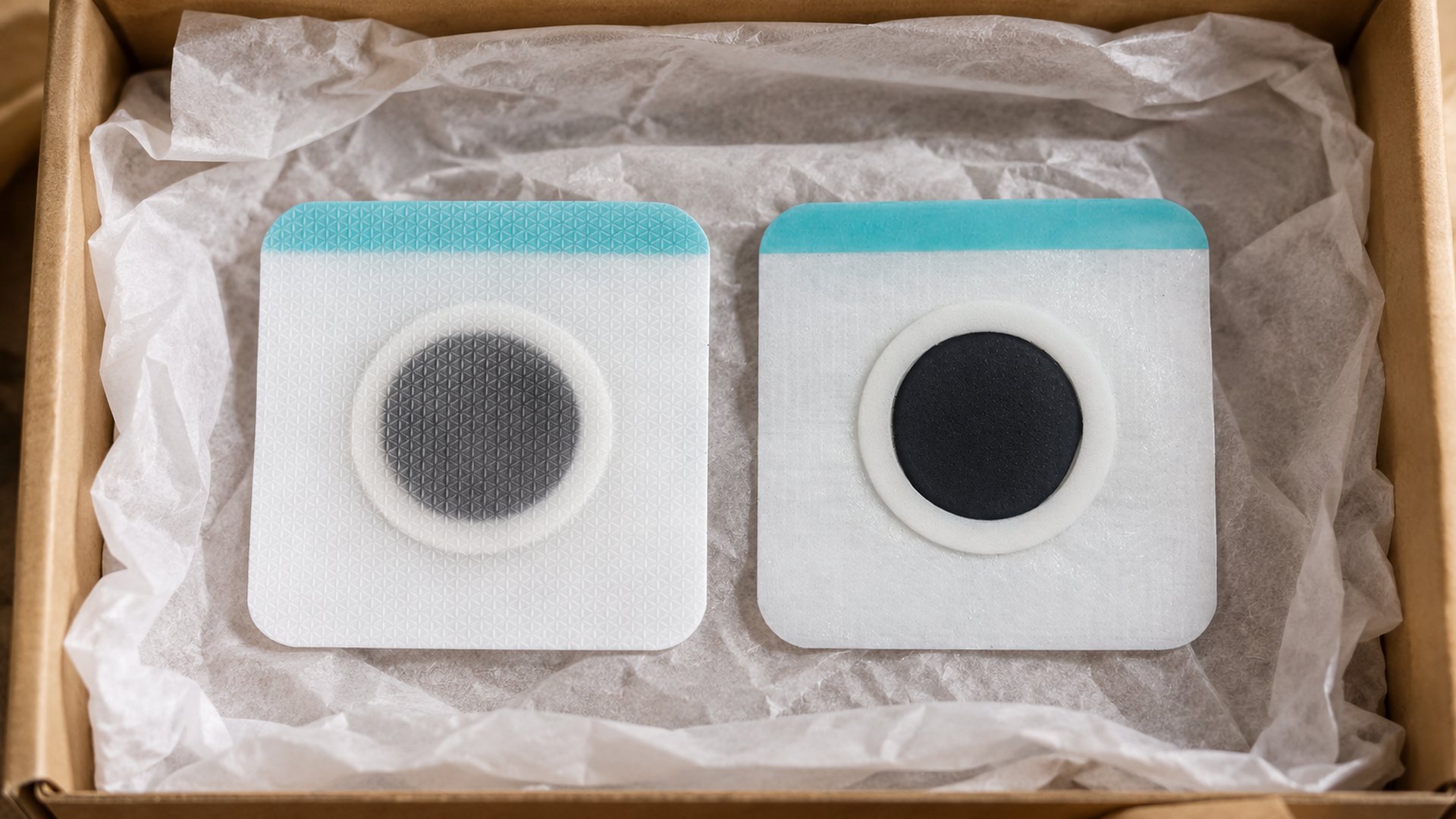
The options look similar but the differences cost real money. A buyer sourcing Mugwort Essential Oil Patch may receive three quotations that appear to cover the same product, yet each manufacturer could be offering a different level of formulation development, material customization, packaging support, and production responsibility.
For a brand preparing its first order, the useful comparison is between a standard private-label product, a customized OEM configuration, and a more extensive ODM development project. These are commercial models rather than fixed industry classifications. The actual scope depends on the manufacturer and the agreement.
The table below compares typical sourcing arrangements. It does not represent quotations from specific factories.
| Purchasing factor | Standard private label | Customized OEM | ODM development |
|---|---|---|---|
| Formulation | Existing formulation with limited changes | Agreed formulation adjustments | Broader formulation development |
| Backing and adhesive | Existing material configuration | Selected from available material options | Developed or evaluated against a detailed brief |
| Patch dimensions | Standard tooling and dimensions | Custom dimensions where supported | Dimensions defined during product development |
| Sampling | Existing sample plus packaging review | Custom samples and revision rounds | Development samples and potentially additional testing |
| Individual packaging | Existing pouch format | Selected or customized pouch | Packaging developed around the final product |
| Retail packaging | Private-label artwork on standard packaging | Custom artwork and carton specifications | Packaging structure and presentation developed with the product |
| MOQ considerations | May use an established production configuration | Depends on formulation, materials, and packaging | Depends on development scope and material requirements |
| Cost exposure | Fewer customization-related charges | Material, tooling, and packaging changes may add cost | Development, testing, and setup may add cost |
| Buyer involvement | Primarily branding and artwork approval | Product specification and sample approval | More extensive technical and commercial decisions |
For our Mugwort Essential Oil Patch projects, an initial production plan commonly starts around a 30,000-patch MOQ, subject to the final formulation and packaging specifications. A typical custom sampling window is approximately 7–14 days after the brief is confirmed, although additional development or testing may extend the schedule.
Neither figure should be treated as a universal promise across all three manufacturing arrangements.
Standard Private Label: Fewer Decisions, Less Product Control
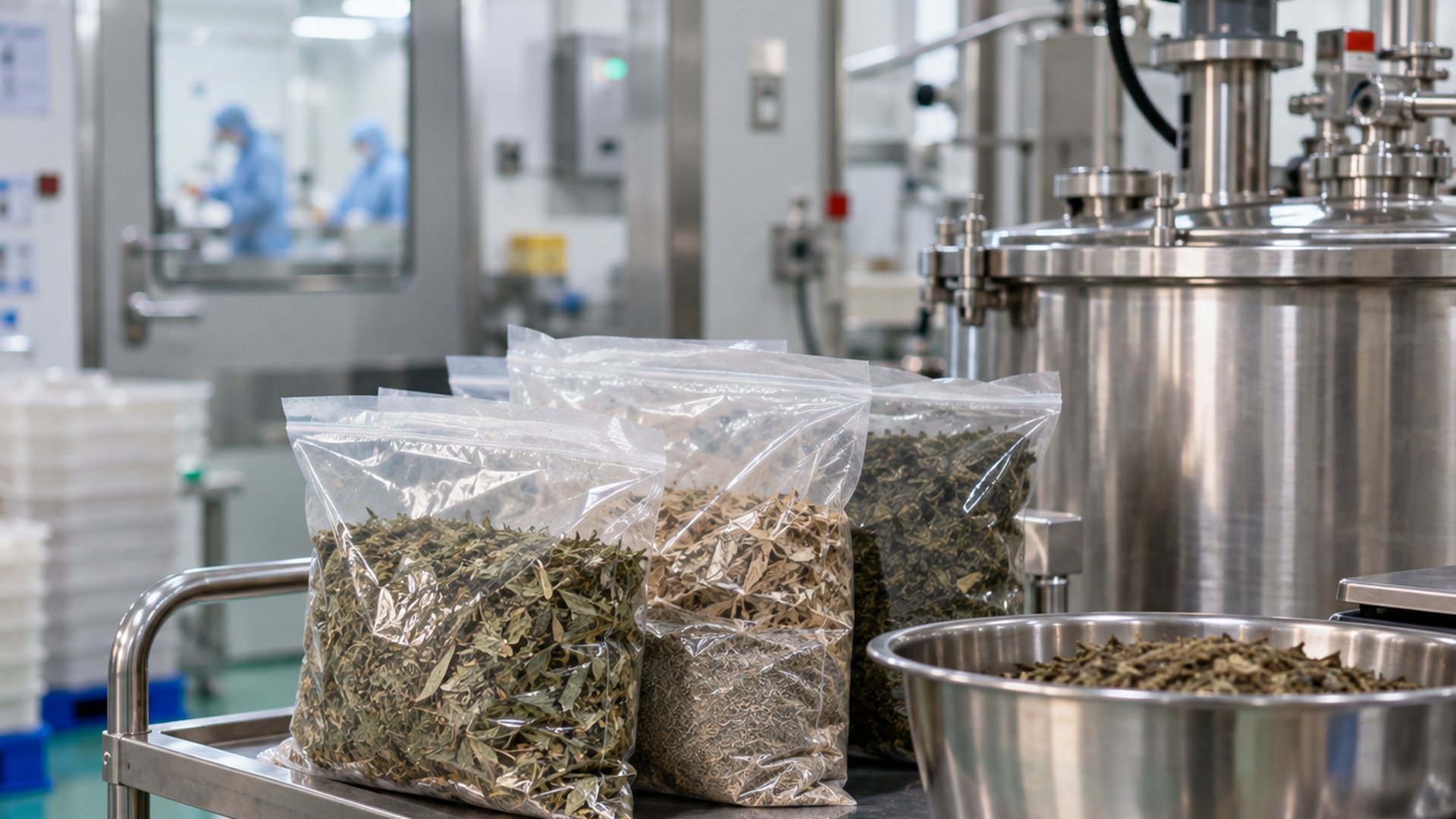
A standard private-label arrangement uses an established Mugwort Essential Oil Patch configuration and applies the buyer's approved branding and packaging within the manufacturer's available options.
This approach can reduce the number of development decisions. The manufacturer already has a defined formulation, backing material, adhesive system, patch dimensions, and production process. The buyer can focus on confirming whether the existing product matches the intended retail positioning.
There are limits. A brand may want a softer backing, a different aroma profile, or a particular patch shape that the standard configuration does not provide. Those requests can move the project into customized OEM work.
The purchasing team should also verify what the quoted price includes. An existing product sample may be supplied in a basic pouch, while the quotation excludes the buyer's retail carton or custom artwork preparation.
Standard private label is worth evaluating when the available product already meets the brand's documented requirements. It becomes less useful when the buyer must accept material or packaging characteristics that conflict with the intended product specification.
Customized OEM: More Control, More Specifications to Approve
Customized OEM gives the buyer greater influence over the finished Mugwort Essential Oil Patch while using the manufacturer's established production capabilities.
The project may involve selecting a backing material, adjusting the essential oil formulation, confirming the adhesive configuration, changing patch dimensions, or developing a custom individual pouch and retail carton.
Each change needs a corresponding specification and approval process.
A different backing can affect flexibility, thickness, material consumption, and adhesive behavior. A formulation adjustment may require compatibility or stability evaluation. A new pouch size can affect carton dimensions and packing efficiency.
These decisions explain why two customized OEM quotations may differ even when the products look similar in photographs.
For an initial order around 30,000 patches, buyers should also consider the number of variations. Dividing the quantity among several formulations or packaging designs can introduce separate material minimums, sampling requirements, and setup charges.
Customized OEM suits a project in which the brand has defined product requirements that an existing configuration cannot fully satisfy. The buyer should expect to spend more time reviewing samples, approving materials, and confirming the final production specification.
ODM Development: A Broader Brief With More Unresolved Variables
An ODM project begins with a more extensive product development brief. The buyer may have a concept for a Mugwort Essential Oil Patch but still need to determine the formulation, material construction, patch dimensions, and packaging format.
The manufacturer and buyer must establish which technical decisions are included in the development scope and which require separate approval or additional charges.
The initial quotation may cover only part of the work. Formulation revisions, specialized materials, new tooling, stability evaluation, packaging development, and market-specific documentation can affect both cost and schedule.
A buyer should not assume that the standard 7–14-day custom sampling window covers every ODM project. That range may be suitable for a relatively straightforward sample using available materials, while more extensive development can require additional time.
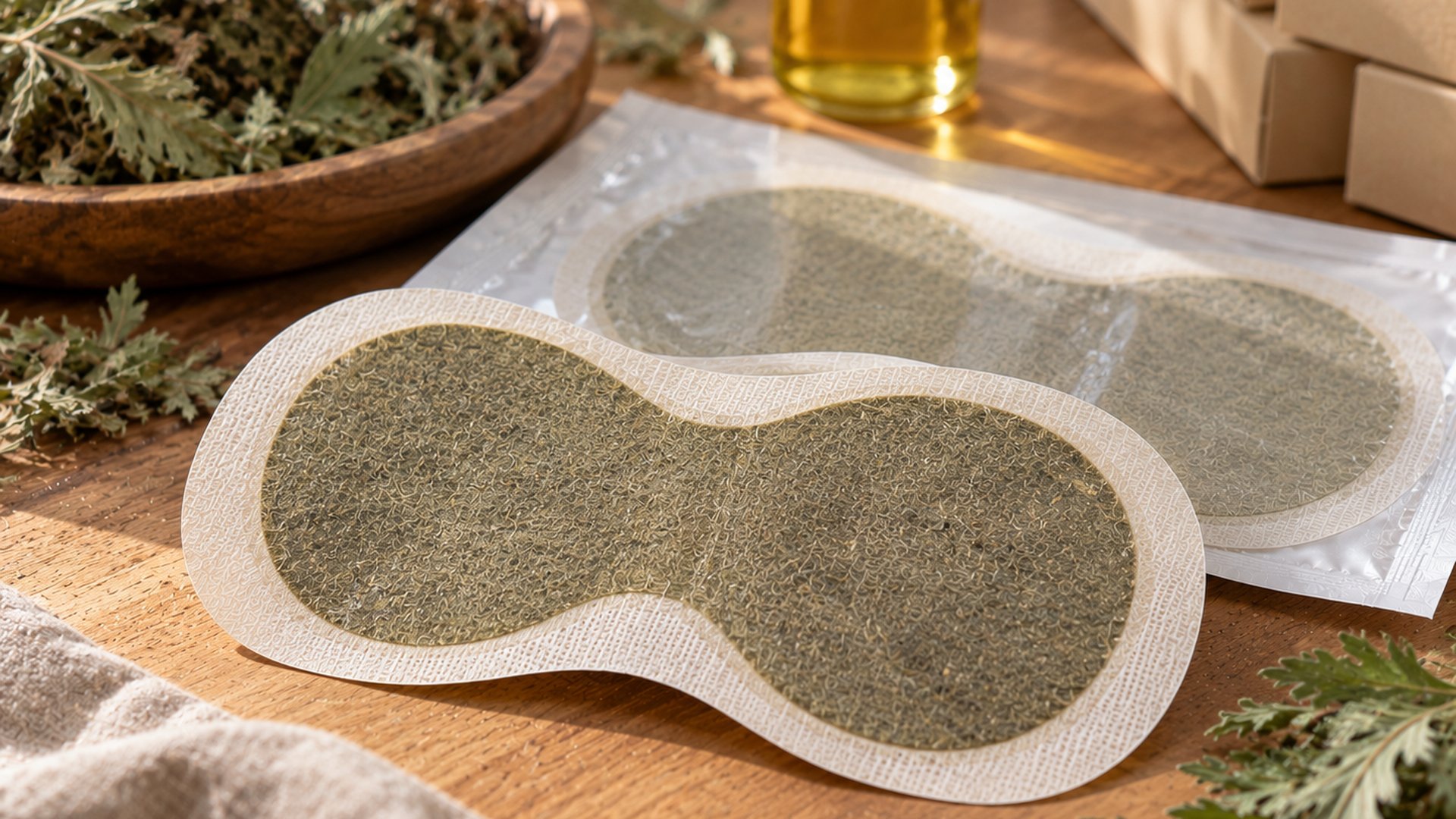
Ownership and permitted use of the resulting formulation, artwork, tooling, and technical documentation should also be addressed in the commercial agreement.
ODM can be appropriate when the brand's intended product cannot be produced from an existing configuration with limited modifications. The purchasing team needs a defined development scope, approval milestones, and a clear distinction between development charges and the eventual mass-production quotation.
How to Decide Without Comparing Different Products
Start with the product specification, not the manufacturer's headline unit price.
Ask whether an existing Mugwort Essential Oil Patch already meets the brand's intended application, material preferences, packaging requirements, and destination-market obligations. If it does, request a standard private-label quotation that includes the complete finished retail unit.
If the existing product falls short in specific areas, identify those differences and request a customized OEM quotation. Keep the requested changes limited to requirements that matter to the finished product or its commercial positioning.
When the formulation, material construction, and packaging all remain unresolved, ask the manufacturer to quote a defined ODM development stage before requesting a firm mass-production price.
For each option, require the same commercial information: product specification, MOQ, sampling scope, material and packaging inclusions, setup charges, applicable quality checks, production lead time, and delivery terms.
The intended sales market also matters. Ingredient documentation, labeling, product classification, and the substantiation of wellness-related statements must be reviewed against the final product and applicable requirements.
An essential oil patch contract manufacturer should be able to explain which specifications are fixed, which can be changed, and what each proposed change means for cost and production planning.
Only compare unit prices after those differences are visible.
Common Misreads That Distort the Quotation
One common mistake is assuming that an attractive sample represents the product covered by the quotation. The sample may use a different backing, formulation, or individual pouch. Ask the manufacturer to identify the exact sample and specification associated with the quoted price.
Another mistake is treating the MOQ as a single quantity that can be divided freely among different SKUs. A 30,000-patch order containing multiple formulations, patch sizes, or retail packaging designs may have different commercial requirements from 30,000 identical patches.
Buyers also underestimate packaging costs. A quotation for loose patches or basic individual pouches cannot be compared directly with a quotation that includes finished retail cartons, artwork preparation, and packing.
A fourth misread is assuming that a more customized product automatically offers a commercial advantage. Customization adds value only when it serves a defined product, channel, or brand requirement. Otherwise, it can introduce development expense and inventory complexity without changing the buyer's actual needs.
Finally, a low unit price does not establish the complete landed cost. Freight, duties, taxes, testing, inspection, storage, and other applicable charges must be considered alongside the factory quotation.
For a first Mugwort Essential Oil Patch order, the practical approach is to identify the minimum customization needed to meet the approved product brief, then compare manufacturers against that same specification.
That gives the purchasing team a defensible cost comparison and a clearer reference for sampling, production, quality control, and future repeat orders.
CATEGORIES
LATEST NEWS
- Sinew-Bone Pain-Bi Patch Private Label Manufacturer Supply Agreements
- What Hand Mask Custom Packaging Supplier Quotes Overlook
- Kids Herbal Foot Patch Contract Manufacturer: Safety Specifications First
- Mugwort Steam Eye Mask Private Label Manufacturer Readiness Check
- Mugwort Essential Oil Custom Formula Supplier: Formulation Approval Milestones
CONTACT US
QQ: 396269538
Phone: 17796669065
Tel: 17796669065
Email: 396269538
Add: Room 001, 1st Floor, Building 1, Zhengzhou Hangmei International Smart City, Intersection of S102 and Nanquan Road, Xuedian Town, Xinzheng City, Zhengzhou, Henan Province, China