Industry news
pain relief patches for knees
Industry news 2026-08-17 10:00:47 236 views admin
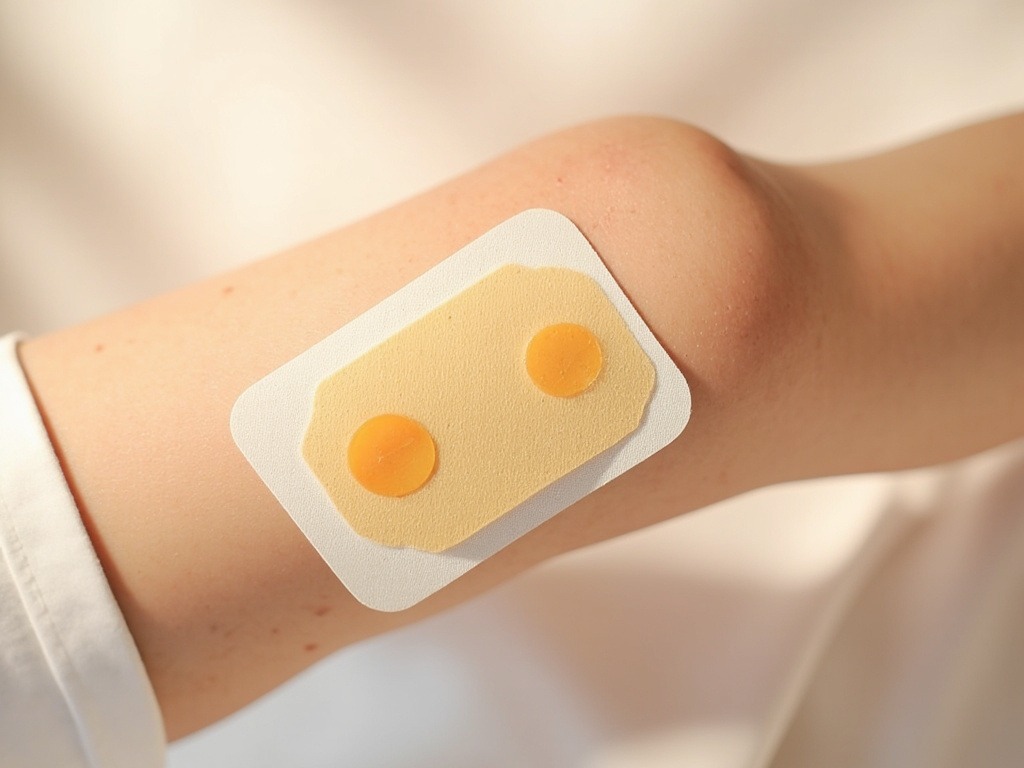
Best for: adults with intermittent or chronic knee discomfort from overuse, older shoppers comparing OTC topical options, athletes returning to training after a minor strain, and people who cannot tolerate oral NSAIDs.
If you only have a minute: a knee patch works by holding an active ingredient against the skin over the joint, so the choice that matters most is matching the active (menthol, capsaicin, lidocaine, or a non-drug hydrogel) to the kind of pain you actually feel, then checking that the patch stays put through a full work day or training session. Priced between roughly $6 and $25 for a small pack, most OTC options are worth a two-week trial before committing to a larger box.
Why the knee is harder to patch than the neck or shoulder
The knee is a hinge joint wrapped in a sleeve of skin that bends90° or more with every squat, and it sits directly over a thin soft-tissue layer rather than a flat muscle bed. That geometry creates three practical problems for any topical patch.
First, the patch has to flex. A stiff backing that survives eight hours on a lower back will lift at the edges after two steps on a stair. Second, the active ingredient has to penetrate a thicker epidermis over the patella and a thinner, more permeable zone behind the knee (the popliteal fossa), so a single dose is rarely felt uniformly across the joint. Third, sweat and clothing friction at the knee wear through adhesives faster than they do on, say, the shoulder blade, which is why most OTC patches list a 4–8 hour wear window even when the drug reservoir could in theory last12 hours.
If you have ever had a patch slide down your leg within an hour of applying it, the cause is almost always one of those three issues, not the active ingredient.
How the four main OTC actives actually feel on a knee
Menthol and methyl salicylate create a cooling-then-warming sensation by activating TRPM8 cold receptors on sensory nerves; the effect is felt within2–5 minutes and is strongest in the first 30 minutes, then fades. Capsaicin works in the opposite direction, depleting substance P from local nerve endings and producing a mild burning sensation for the first 10–20 minutes before numbness sets in over 3–7 days of repeated use, which is why capsaicin patches are usually sold for daily wear rather than one-off relief. Lidocaine blocks sodium channels along the same nerve fibres and tends to feel like a quiet, almost neutral numbness rather than hot or cold, which some shoppers prefer and others find unsettling. Non-drug hydrogel patches do not deliver any pharmacologic active at all; they rely on a moist, occlusive layer that some users describe as a mild cushioning or placebo warmth.
The four overlap in marketing copy more than they do in lived experience. A shopper who wants a sensation will end up with menthol or capsaicin; a shopper who wants quiet will end up with lidocaine; a shopper who wants a drug-free option will end up with hydrogel.
Matching the active to the kind of knee pain you actually have
Before comparing brands, it helps to separate the pain into rough buckets, because the same active behaves differently across them. A dull, diffuse ache that worsens after long sitting usually points to the patellofemoral joint or the quadriceps tendon, and a menthol or lidocaine patch tends to read as "enough" because the pain is low-grade. A sharp, point-sensitive spot on the side of the knee often traces to the iliotibial band or a single ligament point, and capsaicin or a stronger menthol concentration tends to outperform quiet lidocaine there because the sensation overrides the localised signal. A radiating ache behind the knee, especially after a long walk, frequently comes from the popliteal area or referred tension in the calf, and a smaller, more flexible patch placed slightly below the joint crease usually beats a large square patch centred on the kneecap.
The same rule applies when shoppers compare to other joints. A patch sized for alower back is usually too large for a knee, a patch sized for a neck is usually too narrow, and a patch sold for a shoulder often has the right flexibility but the wrong curvature. The knee sits between those geometries and is poorly served by anything marketed as a generic "joint" patch without a knee-specific cut.
Comparison table: four actives side by side
| Active | Onset | Typical wear | Sensation | Best knee fit |
|---|---|---|---|---|
| Menthol / methyl salicylate | 2–5 min | 4–8 h | Cool, then warm | Diffuse post-exercise ache |
| Capsaicin | 10–20 min burning, then 3–7 days | Daily, multi-day | Warmth, mild burn | Point-tender IT band or tendon |
| Lidocaine | 15–30 min | Up to 8 h per patch, max 3 patches / 24 h | Quiet numbness | Low-grade patellofemoral ache |
| Non-drug hydrogel | Minutes (placebo) | 6–12 h | Neutral cool / cushion | Drug-sensitive users, sleep use |
Note: wear times and daily-use caps follow the labelling printed on US OTC patches in the menthol and lidocaine categories; local equivalents (EU, UK, AU, JP) typically mirror those limits but the actual text on the box should be the final word.
Application rules that decide whether a knee patch actually works
- Shave or clip dense hair 12–24 h before applying; pulling a patch off a hairy knee damages the epidermis and discourages daily use.
- Clean the skin with plain soap and water, then dry for at least 60 seconds; an alcohol wipe leaves residue that weakens most acrylic adhesives.
- Place the patch slightly off-centre from the worst spot — about 2–3 cm to either side — because the active diffuses inward and a directly-over-the-spot placement wastes adhesive real estate on the highest-flex zone.
- Press from the centre outward for 30 seconds; trapped air at the edges is the most common cause of mid-day lift.
- Remove slowly, parallel to the skin, after warming the patch with a damp warm cloth for 30 seconds; a fast rip on a flexed knee can shear the stratum corneum.
- Rotate sites (medial, lateral, suprapatellar, popliteal) across days so no single patch footprint is loaded twice in 48 hours.
Safety, side effects, and who should skip patches entirely
Topical patches deliver a lower systemic dose than oral NSAIDs, but they are not side-effect-free. Menthol and methyl salicylate can irritate broken or freshly shaved skin, and methyl salicylate in particular has produced measurable systemic salicylate levels when over-applied; the US labelling on methyl salicylate-containing patches caps daily use at roughly1.2% salicylic-acid-equivalent exposure across no more than two patches per day. Lidocaine patches carry a labelled maximum of three patches in24 hours, and exceeding that has been linked in case reports to CNS side effects; the underlying data is summarised in the FDA's lidocaine topical review at fda.gov. Capsaicin produces a transient burning sensation that is the mechanism, not an allergy, but it should not be applied over damaged skin or near mucous membranes. Anyone on anticoagulants, pregnant in the third trimester, or with active dermatitis over the knee should ask a clinician before regular use; for general OTC use, sticking to the on-pack dose and rotation rules above is the most reliable way to stay within the safe range.
Buyer checklist before you commit to a multi-pack
A two-pack is a trial, not a commitment. Use the first patch on a rest day so you can judge sensation and adhesion without athletic variables, and use the second on a normal workday to test lift and visibility under trousers. If both patches stay put for at least 6 hours and the active matches the pain type from the table above, a10–20 count box is usually cheaper per dose than repeating the trial. If the first patch lifts within 2 hours, the problem is almost always the patch geometry, not the active, and a different shape or a knee-specific cut is the right next step rather than a stronger concentration of the same drug.
Where a private-label knee patch fits in this picture
Shoppers who already know which active they want sometimes look beyond branded boxes for a private-label option, especially when a particular active concentration or a knee-shaped cut is hard to find on the shelf. Henan's Hanmeng Bio-Tech operates an OEM service that can produce patch shapes and active combinations to buyer specification, including knee-shaped cuts and hydrogel or drug-loaded formats; the company's OEM capability page is at patchbiohn.com/oem/pharmaceutical-patch-oem.html. For a consumer, the relevant takeaway is that knee-specific cuts and lower-menthol daily-wear formats do exist outside the three or four brands that dominate retail, and a private-label option is one route to them. For a buyer comparing private-label to retail, the practical questions remain the same: which active, which wear time, and whether the adhesive survives a real workday, not a lab bench. Standard regulatory and quality claims for any specific OEM batch should be checked against the applicable local requirements rather than assumed from the marketing page.
CATEGORIES
LATEST NEWS
- Sinew-Bone Pain-Bi Patch Private Label Manufacturer Supply Agreements
- What Hand Mask Custom Packaging Supplier Quotes Overlook
- Kids Herbal Foot Patch Contract Manufacturer: Safety Specifications First
- Mugwort Steam Eye Mask Private Label Manufacturer Readiness Check
- Mugwort Essential Oil Custom Formula Supplier: Formulation Approval Milestones
CONTACT US
QQ: 396269538
Phone: 17796669065
Tel: 17796669065
Email: 396269538
Add: Room 001, 1st Floor, Building 1, Zhengzhou Hangmei International Smart City, Intersection of S102 and Nanquan Road, Xuedian Town, Xinzheng City, Zhengzhou, Henan Province, China