Industry news
patch for neck pain
Industry news 2026-08-11 10:30:00 91 views admin
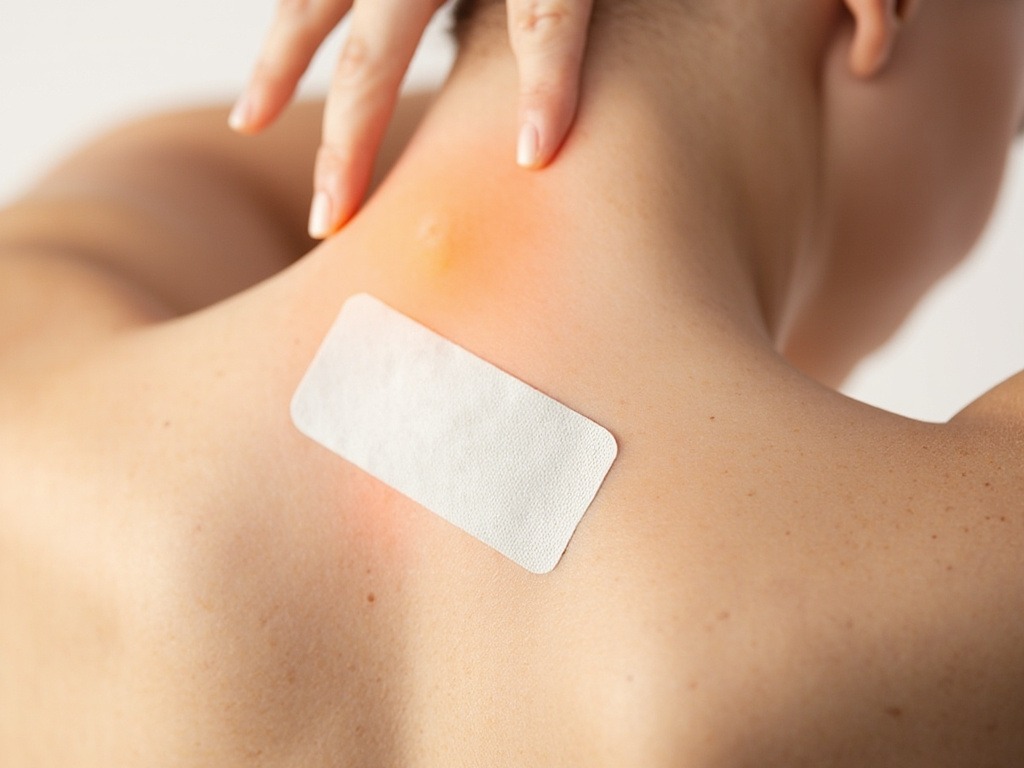
Best for: adult shoppers comparing over-the-counter topical patches, office workers with screen-related neck tension, and adults recovering from minor muscle strain who want a non-oral option before booking a clinical appointment.
A patch for neck pain is a topical adhesive product that releases an active ingredient — usually a counterirritant such as menthol or capsaicin, a non-steroidal anti-inflammatory drug (NSAID) like diclofenac, or a warming compound — through the skin over the cervical trapezius and upper shoulder area. Consumers reach for these patches when oral analgesics feel excessive for the situation, when the soreness is localized to one side of the neck, or when a wearable format suits a workday. This page gives a shopper-oriented comparison: what the patch actually does, how it differs from shoulder and lower back products, what to expect during wear, and where the safety boundaries sit.
What a Neck Patch Actually Does to the Tissue
Three delivery mechanisms dominate the consumer shelf, and each targets a different layer of the soft tissue.
Counterirritant cooling or warming. Menthol at 3–10% concentration and methyl salicylate create a sensation that overrides the neck's ache signal at the spinal cord level — a process called gate control. Warming ingredients such as capsaicin (0.025–0.075%) or capsicum extract instead deplete substance P, a neurotransmitter that carries pain signals from the cervical muscles. The effect is sensory, not anti-inflammatory, so it suits muscle stiffness rather than joint degeneration.
Local NSAID delivery. Diclofenac patches and gels deliver a measured NSAID dose — typically 1–3% — through the epidermis into the underlying fascia. Tissue-level drug concentration can be high while blood concentration stays low, which is the reason this format is sold over the counter in some markets and by prescription in others. For a stiff neck after sleeping awkwardly, a diclofenac patch gives a more pharmacologic response than a menthol one.
Heat retention. Some patches work by simple insulation: an iron powder layer oxidizes on exposure to air and holds a steady 38–42°C for 6–8 hours. That temperature band raises local blood flow, which can loosen a knotted upper trapezius but adds heat load to inflamed tissue.
How a Neck Patch Compares to Shoulder, Lower Back, and Knee Patches
Patch geometry is not interchangeable. The neck is curved, hairy in places, and sits over sensitive structures (the carotid sheath, cervical lymph nodes, the thyroid). A patch engineered for the lower back assumes a flat 15×10 cm landing zone and tolerates heavier adhesive; the same product on the neck will lift at the corners within an hour.
| Body area | Typical patch size | Skin challenges | Common active formats | Average wear time |
|---|---|---|---|---|
| Neck (cervical trapezius) | 7×10 cm to 8×12 cm | Curvature, hair, sweat under collars | Menthol, diclofenac, low-heat | 4–8 hours |
| Shoulder (deltoid / upper trap) | 10×14 cm | Joint motion, friction under bag straps | Menthol, capsaicin, diclofenac | 6–12 hours |
| Lower back (lumbar paraspinal) | 10×14 cm to 13×18 cm | Hair, bending stress, sweat | Diclofenac, capsaicin, lidocaine | 8–12 hours |
| Knee (peri-patellar) | Round or contoured, 10×15 cm | Flexion, occlusion behind the joint | Diclofenac, menthol, lidocaine | 6–10 hours |
The knee is the easiest engineering target because the application site is flat and rarely moves once the knee is at rest. The neck is the hardest. If a generic "body pain" patch is the only option on the shelf, expect to trim the corners before applying it to the cervical area so it conforms to the curve.
When a Neck Patch Fits — and When It Does Not
The shopper decision rule is short: a patch for neck pain fits when the discomfort sits in the muscle, stays under 2 weeks, and does not radiate past the shoulder blade. It does not fit when numbness, dizziness, or arm weakness is present, or when pain follows a fall, whiplash, or a fever.
- Neck stiffness from screen posture or a cold pillow — menthol or low-heat patch, 6–8 hours overnight.
- One-sided trapezius soreness after heavy lifting — diclofenac patch if available without prescription in your market, otherwise a capsaicin option for 8–12 hours.
- Aging cervical discomfort without nerve symptoms — warming patch during the day, diclofenac at night under medical guidance.
- Post-dental or post-procedure soreness radiating up the neck — menthol patch only; NSAIDs and heat need a clinician's sign-off.
Worth noting: shoulder, lower back, and knee patches all use similar actives, but the adhesive strength is tuned to flatter skin. Wearing a lower back patch on the neck is technically possible but rarely comfortable past the second hour.
How to Wear It Without Skin Damage
Application discipline matters more than brand choice on the neck. The cervical skin is thinner than the lumbar area, and adhesive irritation shows up here first.
Rotate the site — alternate between the left and right trapezius rather than re-sticking to the same patch of skin. Stop use at the first sign of redness that does not fade within an hour of removal. Do not stack a heating patch on top of a diclofenac patch; combining two delivery mechanisms raises the risk of chemical irritation and skin burns without adding proportional relief. Keep the patch away from the front of the neck, where the thyroid and carotid structures sit, and from any area where a cream, lotion, or oil has been applied in the last 12 hours — that residue blocks even adhesion.
Avoid wearing a neck patch under a tight collar or scarf during the first 30 minutes. Occlusion raises skin temperature and increases systemic absorption of any drug present.
Buyer Checklist Before You Click "Add to Cart"
The difference between a useful patch and a wasted one usually comes down to five small questions.
- Is the active listed on the outer carton in plain language, with concentration in percent or mg?
- Is the patch size between 7×10 cm and 10×14 cm — small enough to fit the cervical curve but large enough to cover the sore area?
- Does the wear time on the label match your schedule — 4–6 hours for a workday, 8–12 hours for overnight?
- Does the package list a single-use sachet, since re-sealing a half-used patch dries the active layer out?
- Is there a printed lot number and expiry date, which is the only honest signal that the active has not degraded?
Skip the purchase if any of these answers are missing. The label is the contract.
Limitations and Safety Boundaries
A patch for neck pain is a symptomatic tool, not a diagnosis or a cure. Do not use one on broken skin, over moles, or near the throat and carotid triangle. Stop use and seek a clinician if pain persists beyond 14 days, radiates down the arm, is accompanied by numbness, tingling, or fever, follows a recent fall or whiplash, or appears with unexplained weight loss or night sweats. Do not combine two patches, do not layer a patch over heating pads, and do not apply a diclofenac patch in the last trimester of pregnancy. Keep patches away from children; the menthol and capsaicin doses that feel mild to an adult can irritate a child's airways and skin. For any product making therapeutic claims, check the applicable local requirements — consumer-medicine classifications vary between the United States, the United Kingdom, the European Union, Australia, and Asian markets, and the same brand may sit in different regulatory categories in each region.
Side Effects Worth Watching For
The most common reactions are local: redness, itching, a burning sensation that outlasts the intended relief, and a contact rash where the adhesive meets the skin. Less commonly, diclofenac patches can produce photosensitivity on the treated area for a couple of days after removal. Heat-retention patches occasionally cause first-degree burns when worn during sleep, particularly if the wearer is on medication that affects sweating or temperature regulation. Any blistering, peeling, or swelling that spreads beyond the patch edges is a reason to stop and consult a clinician, not a reason to switch brands.
Price, Quantity, and Cost-per-Day Math
The consumer-relevant number is rarely the box price; it is the cost per wear. A box of five single-use sachets at a higher unit price usually works out cheaper per day than a box of two large patches, because the smaller format is harder to misuse. Menthol and warming patches tend to sit at the lower end, diclofenac and lidocaine at the higher end, and the gap widens further if the diclofenac product requires a prescription in your market. Multi-pack subscription pricing reduces cost roughly 15–25% over single boxes for repeat buyers, but only commit to a subscription if you have already confirmed that the specific brand tolerates your skin — return shipping rarely covers opened patches.
Where Hanmeng Fits for Shoppers and Buyers
For shoppers, a patch for neck pain is a personal-care purchase, and the brand decision rests on label clarity, fit, and skin tolerance. For buyers evaluating private-label or OEM options at a higher volume, Hanmeng (Henan Hanmeng Bio-Tech) works with pharmaceutical-patch formulations across the counterirritant, NSAID, and warming categories. A starting point for technical capability and category coverage is the company's pharmaceutical patch OEM page at https://www.patchbiohn.com/oem/pharmaceutical-patch-oem.html. Specification sheets, lead times, and minimum order quantities are typical supplier-target ranges rather than validated product data and should be confirmed against the buyer's own regulatory and clinical requirements before any order is placed.
CATEGORIES
LATEST NEWS
- Sinew-Bone Pain-Bi Patch Private Label Manufacturer Supply Agreements
- What Hand Mask Custom Packaging Supplier Quotes Overlook
- Kids Herbal Foot Patch Contract Manufacturer: Safety Specifications First
- Mugwort Steam Eye Mask Private Label Manufacturer Readiness Check
- Mugwort Essential Oil Custom Formula Supplier: Formulation Approval Milestones
CONTACT US
QQ: 396269538
Phone: 17796669065
Tel: 17796669065
Email: 396269538
Add: Room 001, 1st Floor, Building 1, Zhengzhou Hangmei International Smart City, Intersection of S102 and Nanquan Road, Xuedian Town, Xinzheng City, Zhengzhou, Henan Province, China