Industry news
patches for tens unit: how to pick electrode pads that actually fit your sessions
Industry news 2026-08-12 09:30:48 71 views admin
 Best for: at-home TENS/EMS users, chronic pain self-managers, athletes doing recovery work, physical therapy graduates buying their own gear
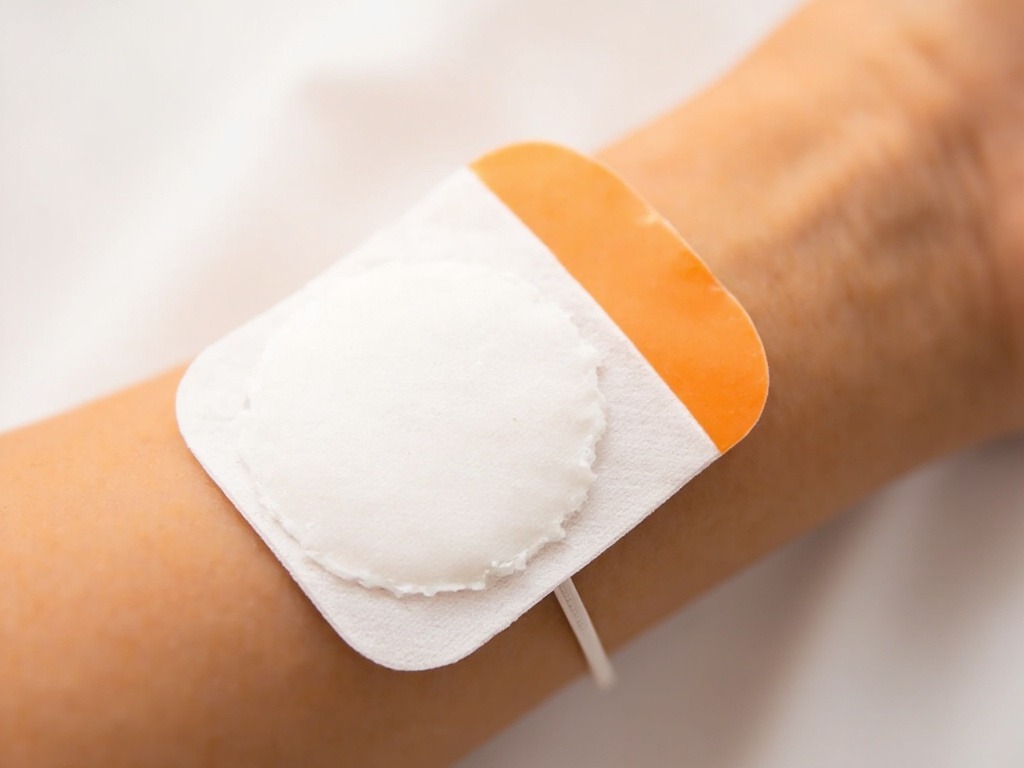
A TENS unit is only as good as the pads stuck to your skin. The plastic rectangle you press "start" on does nothing if the electrode underneath has lost tack, sits crooked, or won't survive a second use. Most replacement headaches — peeling corners, a faint tingle that fades, that hot spot behind the shoulder blade — trace back to the pad, not the device. Picking patches for tens unit work means matching connector, size, gel chemistry, and your skin to the program you actually run.
Best for: at-home TENS/EMS users, chronic pain self-managers, athletes doing recovery work, physical therapy graduates buying their own gear
A TENS unit is only as good as the pads stuck to your skin. The plastic rectangle you press "start" on does nothing if the electrode underneath has lost tack, sits crooked, or won't survive a second use. Most replacement headaches — peeling corners, a faint tingle that fades, that hot spot behind the shoulder blade — trace back to the pad, not the device. Picking patches for tens unit work means matching connector, size, gel chemistry, and your skin to the program you actually run.
TENS and EMS pads are not the same part
TENS units target sensory nerves for pain gating. EMS units drive motor fibers for contraction. The waveform shapes differ, and so does the current density per square centimeter a pad must pass without heating the epidermis. A pad rated for TENS at 40 Hz can still get warm on an EMS channel pushing 80 Hz with a 300 µs pulse. If your device does both — most combo units sold for home use do — confirm the pad's stated max current density, not just "compatible with TENS/EMS".
Two connector styles dominate the consumer market. The 3.5 mm mono plug (sometimes called TENS pin) slides into a lead wire on about 70% of units sold before 2020. The 2 mm pin-style socket is rarer and usually proprietary. A third option, the snap (a small metal stud pressed into the pad), shows up on units that want you to swap pads without unplugging the lead wire. None of these is electrically superior; they just have to match your lead wire's termination.
What the spec sheet actually tells you
Marketing pages bury the numbers. Here's what to pull out and compare:
| Spec | What it means | Typical supplier target | Validated spec (when a maker publishes) |
|---|---|---|---|
| Pad size (mm) | Contact area on the skin | 40×40, 50×50, 50×80, 50×100, 100×130 | Manufacturer datasheet (e.g. "50×80 mm ±2 mm") |
| Connector | How the pad joins the lead wire | 3.5 mm mono, 2 mm pin, snap stud | Drawing + part number on datasheet |
| Substrate | Backing film the gel sits on | Non-woven fabric, PET film, foam laminate | Material callout (e.g. "PET 75 µm") |
| Gel type | Adhesive and conductive layer | Hydrogel (acrylic or polymer blend) | Generic "hydrogel" without chemistry is supplier-level only |
| Impedance at 1 kHz | Electrical resistance the device sees | ~50–200 Ω per pad | Datasheet graph; otherwise treat as generic |
| Re-use cycles | Applications before tack drops | 10–30 cycles | Maker's validated cycle count under a defined skin-prep protocol |
| Shelf life (sealed) | Time before the gel dries out | 12–24 months | Lot number + expiry printed on the pouch |
The left two columns are what nearly every consumer listing will publish. The right column is what separates a real spec sheet from a product card — if the maker doesn't publish a measured impedance curve or a cycle count under a stated protocol, treat the number as supplier-typical, not validated.
Re-use cycles and gel care in plain language
Re-use is the one thing pads actually save money on. A 30-cycle pad used twice a week lasts about four months; a 10-cycle pad used the same way lasts six weeks. The hydrogel absorbs skin oils, lotion, and dead cells every session, and each absorption slightly degrades conductivity. When the gel surface looks cloudy instead of glossy, or the pad no longer lies flat without air bubbles, that's the replacement cue — not a calendar.
Between sessions, stick the pad back on its plastic liner, seal it in the original pouch or a zip bag, and refrigerate. Cold storage slows water loss in the hydrogel. Do not rinse the gel side under a tap, and do not wipe it with alcohol; both strip the conductive polymer and shorten cycle life. If a pad lifts at one corner mid-session, stop the unit, reseat the pad, and reduce intensity on the next ramp-up — a partial-lift pad concentrates current at the contact edge and can sting.
Skin prep rules most people skip
The pad is only half the interface. The skin is the other half.
- Clean the spot with mild soap and water. Pat dry. Lotions, sunscreen, and natural skin oils raise impedance, so the unit pushes more current through a smaller conductive path — that's the recipe for a hot spot.
- Shave dense hair rather than skipping it. Hair lifts the pad off the epidermis and produces uneven current; plucking is fine for sparse hair, but heavy growth wants a foil razor the day before.
- Avoid broken skin, moles, varicose veins, and the front of the neck. The carotid sinus sits in the neck and the baroreceptor reflex can drop blood pressure from a stray current.
- Wait 30–60 minutes after a hot shower. Hyperemic skin reads lower impedance, and the unit will feel stronger than the dial number suggests.
- Rotate placement. Two consecutive sessions on the exact same square inch inflames the epidermis and shortens both pad and skin life.
Snap vs pin: which connector fits your unit
The connector question is mechanical, not electrical, but it determines whether you can actually use a pad today. Snap pads click onto a lead wire with a metal stud; pin pads slide onto a 2 mm or 3.5 mm male plug. A mismatch means the lead wire just falls off mid-session, and most combo units don't ship adapters.
| Connector | Lead wire you need | Pads you'll find most often | Reason to pick it |
|---|---|---|---|
| Snap stud (4 mm) | Wire with snap receptacle | Premium pads from makers like Compex, Chattanooga | Fast pad swap without unplugging the wire |
| 3.5 mm mono pin | Standard TENS lead wire | Bulk of consumer pads on Amazon and pharmacy shelves | Universal fit, cheapest replacement |
| 2 mm pin | Proprietary wire | Some Powertrain, some older EMS-only units | Tighter socket, less wiggle |
| Wire lead (lead wire integral to pad) | None — plug goes straight to unit | Niche, mostly older clinical pads | No lead-wire clutter |
If you own one unit and one set of leads, the pad choice is already made for you. If you own two units or want a backup, the snap-to-pin adapter exists but adds a second contact point, which raises the chance of a loose connection under load.
When to replace a pad even if it still sticks
Tack is a deceptive indicator. A pad can still stick to the forearm after 30 sessions but no longer pass current evenly because the gel has equilibrated with skin salts. Replace the pad when any of the following shows up:
- You feel the "bite" of the current concentrate at one edge instead of under the whole pad.
- The gel side looks matte, dry, or has visible salt crystals around the perimeter.
- The unit's intensity knob needs to climb higher each week to reach the same sensation.
- The pad leaves a sticky residue on the skin even after a clean peel — that's polymer breakdown, not healthy adhesion.
Common mistakes that shorten pad life
Three failure modes account for most consumer complaints. First, peeling the pad off the liner by the corner and stretching the substrate — that warps the gel and creates a permanent air channel. Peel from one edge and let the pad fall flat. Second, leaving the pad uncovered between sessions — water evaporates from the hydrogel within hours, and a dried pad is a dead pad. Third, stacking two pads directly on top of each other to "double the strength" — current will find the path of least resistance through the gel interface and skip your skin entirely.
Limitations and safety notes
Home TENS and EMS are not appropriate during pregnancy (especially over the trunk), across the chest if you have a pacemaker or implanted defibrillator, over areas of active malignancy, or on numb skin where you can't feel a hot spot forming. Stop a session if the skin under the pad turns red and stays red for more than 30 minutes, or if you feel a burning sensation rather than a tingle. Pad makers and device makers publish contraindications in their manuals; if yours is missing, ask for a current copy before you use it. No specific clinical guideline is cited here because home-use protocols vary by country — check the applicable local requirements and your clinician's advice.
Decision rules before you click "buy"
Run this checklist against any listing:
- Does the connector match your lead wire without an adapter?
- Is the pad size appropriate for the body part — 40×40 for fingers and forearms, 50×80 or larger for quadriceps and lower back?
- Does the listing state impedance at 1 kHz, or only a generic "low impedance" claim?
- Is the cycle count given as a single number with a stated skin-prep protocol, or as a range ("10–30 uses") with no protocol?
- Is the gel described only as "hydrogel", or as a specific polymer system?
If at least three of those are answered with concrete numbers, you're looking at a real datasheet. If none are answered, you're looking at a marketing card with a price.
Buying context: makers and OEM supply
Most consumer pads come from a handful of OEM lines that white-label for retailers. If you want to understand the manufacturing side — substrate lamination, hydrogel casting, snap insertion, clean-room packaging — and what an OEM partner can and can't customize at low minimums, a reference overview from a transdermal patch manufacturer is published at Henan Hanmeng Bio-Tech's pharmaceutical patch OEM page. Treat that link as a generic capability overview rather than a catalog; specific specs, MOQ, and lead times are project-dependent and not stated here.
CATEGORIES
LATEST NEWS
- Sinew-Bone Pain-Bi Patch Private Label Manufacturer Supply Agreements
- What Hand Mask Custom Packaging Supplier Quotes Overlook
- Kids Herbal Foot Patch Contract Manufacturer: Safety Specifications First
- Mugwort Steam Eye Mask Private Label Manufacturer Readiness Check
- Mugwort Essential Oil Custom Formula Supplier: Formulation Approval Milestones
CONTACT US
QQ: 396269538
Phone: 17796669065
Tel: 17796669065
Email: 396269538
Add: Room 001, 1st Floor, Building 1, Zhengzhou Hangmei International Smart City, Intersection of S102 and Nanquan Road, Xuedian Town, Xinzheng City, Zhengzhou, Henan Province, China