Industry news
Cool patches for fever: a parent's decision guide
Industry news 2026-08-11 09:00:55 89 views admin
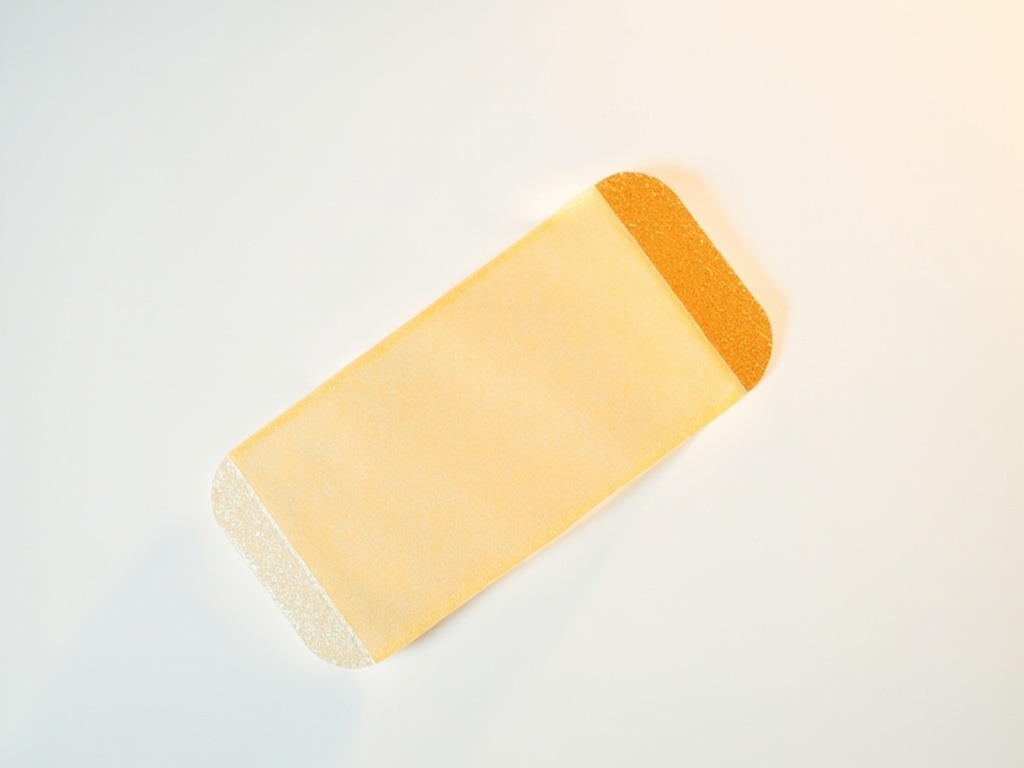
Best for: parents of infants and toddlers under 10, first-time caregivers, babysitters and grandparents, daycare staff managing mild fevers at home
A cooling patch is a hydrogel or polymer sticker you place on the forehead, sometimes the underarm or neck, to give a child a sensation of cooling while a mild fever runs its course. It does not treat the underlying infection. It does not lower core body temperature in a measurable, lasting way. What it does well is buy you 6–12 hours of comfort between doses of oral medicine, distract a cranky toddler who hates a wet washcloth, and give a working parent something concrete to do during the long watch of a sick night.
Below is a decision-first checklist built around the question most parents actually ask: is this safe, and is it the right move for my child right now?
What the patch is actually doing on the skin
Most retail "fever patches" or "cooling gel sheets" use a hydrogel matrix — roughly 70–85% water held in a polymer web — laminated to a non-woven backing. Evaporation from the gel pulls a small amount of heat away from the epidermis, the outermost ~0.1 mm of skin. The effect is local and surface-level. A 2012 randomized crossover study in PubMed (PMID 22487657) found no significant change in axillary (underarm) temperature in children using hydrogel sheets compared with no treatment, though parents in the study reported that their child seemed more comfortable. Treat the patch as comfort care, not therapy.
Three practical limits worth naming:
- Surface cooling only. The patch cannot reach core temperature. If a rectal reading is 39.5°C / 103.1°F, the sticker is not addressing the cause.
- Wear time is finite. As the gel saturates, evaporation slows. Most sheets are designed for 6–8 hours; some claim up to 12, but the active cooling curve flattens by hour 8 in real use.
- Single-use. The polymer does not recharge in a fridge effectively. A damp washcloth does the same job for the cost of tap water.
Age cutoffs: who can safely use one
Age is the single most useful filter for this product. The skin of a newborn behaves differently from that of a 4-year-old, and so does the threshold at which a fever becomes an emergency.
| Age | Fever threshold (rectal where possible) | Patch appropriate? | Action |
|---|---|---|---|
| Under 3 months | 38.0°C / 100.4°F or higher | No — and the fever itself is the emergency | Call the pediatrician or go to ER immediately, even with no other symptoms |
| 3–12 months | 38.0°C / 100.4°F or higher | Only after a clinician has seen the baby | Phone call first; patch is comfort, not treatment |
| 1–3 years | 38.0°C / 100.4°F or higher | Yes, as comfort care alongside fluids and rest | Watch for lethargy, rash, or breathing changes |
| 3+ years | 38.0°C / 100.4°F or higher | Yes, widely used | Follow standard sick-child rules for school and dosing |
The 38°C / 100.4°F line is the one most pediatric offices use. It is not a marketing number — it appears in CDC and AAP guidance for "fever in infants under 3 months: see a doctor right away." If your child is on the borderline of that line, the patch is not what protects them. A phone call is.
When to skip the patch and call the doctor
Cooling patches are a comfort tool. They are not a reason to delay care. Skip the patch — and pick up the phone — if any of these apply:
- Any fever in a baby under 3 months (see the table above).
- A fever above 40°C / 104°F at any age.
- A fever that has lasted more than 24 hours in a child under 2, or more than 3 days in an older child.
- A febrile seizure, stiff neck, rash that does not blanch when pressed, trouble breathing, severe headache, or vomiting that won't stop.
- A child who is unusually floppy, hard to wake, or not making eye contact — the "just not right" signal pediatricians ask about.
- Confirm the age fits the table above before opening the box.
- Confirm the reading: rectal or underarm for under 3, oral or ear for 3+.
- Pick fragrance-free, menthol-free, pediatric size when possible.
- Apply to a dry forehead, replace every 8 hours or when warm.
- Use alongside fluids, rest, and weight-based acetaminophen or ibuprofen when indicated.
- Call the clinician for any red flag in the list above — the patch never replaces that call.
Use the patch for the hours between doses of acetaminophen or ibuprofen, not as a substitute for either. The dose-by-weight instructions on the bottle (or from your clinician) outrank anything on the patch box.
Product selection rules that actually matter
Retail shelves in 2026 carry dozens of brands, and the price spread (about $0.20 to $2.50 per sheet in the U.S., higher in EU pharmacies) is wider than the formulation spread. Most products on the same shelf are mechanically similar: hydrogel, water, a thin polymer film, sometimes menthol or a small fragrance dose. Here is the decision tree that survives that.
First, check the ingredient list for menthol, eucalyptus, or "natural cooling" claims. These can sting the eyes if a toddler rubs the patch and then touches their face, and menthol has been linked to infant respiratory distress in case reports — avoid it under age 2, and use a fragrance-free variant for any child with eczema or reactive skin.
Second, measure the patch. Adult forehead patches are typically 5 × 11 cm. Toddler heads are smaller, and a too-large sheet slips, peels off, and ends up in the child's mouth. Look for a pediatric size around 4 × 8 cm, or trim a larger sheet with clean scissors before applying.
Third, check adhesion. A patch that lifts after 30 minutes is comfort theater. A patch that bonds so tightly it reddens the skin on removal is also wrong — adhesives on sick, sweaty skin can cause contact dermatitis within a single night.
Fourth, buy the smallest unopened box you can find. Unused hydrogel sheets dry out within 12–18 months of manufacture. A 2-sheet trial pack is more honest than a 20-sheet "value pack" you'll forget about until the next fever two years from now.
How to apply it without a midnight argument
The trick with a feverish, miserable child is to make application feel like a sticker, not a procedure. Dry the forehead first — a damp surface defeats the adhesive within minutes. Press the patch on, not rub, and tell the child it is "a cool superhero sticker." Replace it once it feels warm to the touch, or after 8 hours, whichever comes first. Never re-use a sheet, and never put one on broken skin, a recent vaccination site, or the underarm if the child is sweating heavily — the underarm stays wetter, the patch falls off faster, and there is no published evidence that underarm placement adds any cooling benefit over the forehead.
Store unopened sheets in a cool, dry drawer, not the bathroom. Humidity ages the polymer and shortens shelf life.
Limitations and safety notes
A cooling patch is a single tool among many. It does not shorten illness. It does not replace fever-reducing medicine when the child is in pain or unable to drink. It does not diagnose anything. If your child looks worse an hour after the patch goes on, the patch did not fail — the illness progressed, and the next step is a clinician, not a second sheet.
Stop use and wash the area with mild soap and water if you see redness, hives, or blistering under the patch. Discontinue the brand; the next episode deserves a fragrance-free, menthol-free variant or a damp washcloth instead.
Check the applicable local requirements for any product marketed as "medical" or "antipyretic." In the U.S., most retail cooling sheets are classified as cosmetics or general wellness devices, not drugs — which is one reason the boxes do not list clinical efficacy data. In the EU, the same products are usually classed as Class I medical devices under MDR 2017/745. Read the symbol on the box.
A short parent checklist
If you are evaluating cooling patches as a category for a private-label line rather than for home use, a manufacturer working to pharmaceutical-grade specifications can discuss hydrogel composition, patch dimensions, packaging formats, and labeling for your target market. See pharmaceutical patch OEM options for a general overview of capabilities. Specifications, MOQs, and regulatory classifications vary by region and should be confirmed against your own market's rules before any sourcing commitment.
CATEGORIES
LATEST NEWS
- Sinew-Bone Pain-Bi Patch Private Label Manufacturer Supply Agreements
- What Hand Mask Custom Packaging Supplier Quotes Overlook
- Kids Herbal Foot Patch Contract Manufacturer: Safety Specifications First
- Mugwort Steam Eye Mask Private Label Manufacturer Readiness Check
- Mugwort Essential Oil Custom Formula Supplier: Formulation Approval Milestones
CONTACT US
QQ: 396269538
Phone: 17796669065
Tel: 17796669065
Email: 396269538
Add: Room 001, 1st Floor, Building 1, Zhengzhou Hangmei International Smart City, Intersection of S102 and Nanquan Road, Xuedian Town, Xinzheng City, Zhengzhou, Henan Province, China