Industry news
patches for tens unit
Industry news 2026-07-28 09:30:51 106 views admin
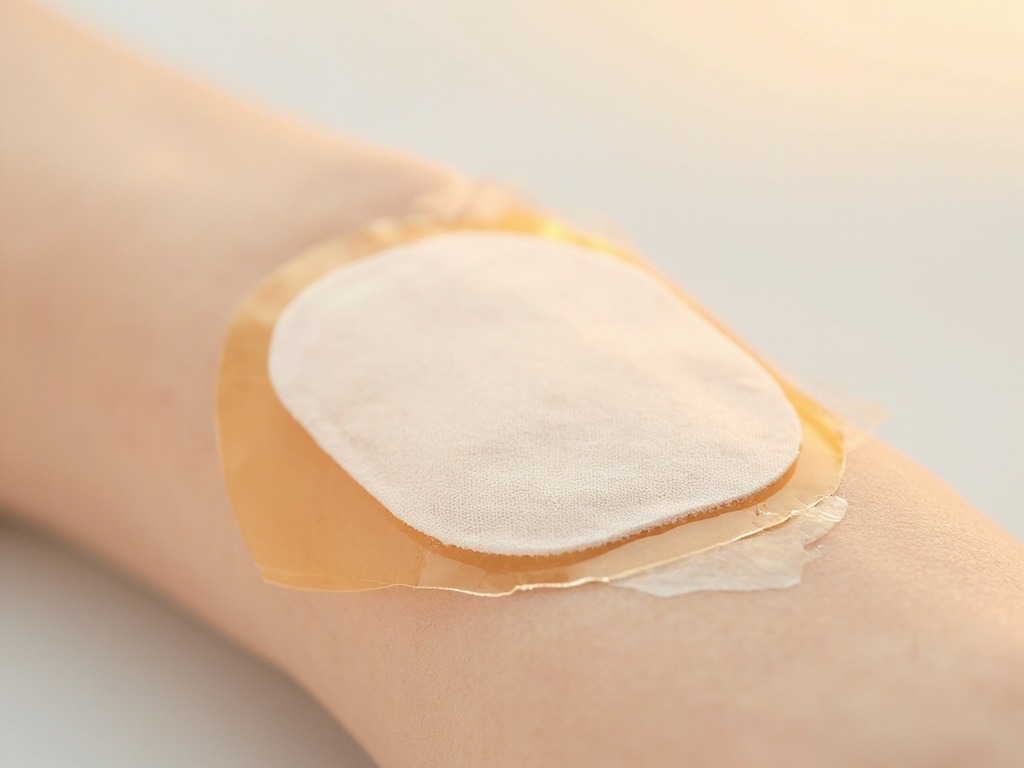
Self-adhesive patches for tens unit electrodes are the replaceable interface between a transcutaneous electrical nerve stimulation (TENS) device and the skin. They typically combine a conductive gel layer, a current-spreading element, and a skin-contact adhesive on a textile or foam backing, and they are sized to fit the snap-on lead wires that ship with most clinical and consumer TENS units.
Best for: medical device sourcing teams, private-label brand managers, physiotherapy clinic procurement leads, home-care distributor buyers
1. Why electrode design matters for TENS delivery
When a TENS unit fires a pulse, the current must pass from the lead-wire stud, through the patch, and into the skin with even density. A poorly designed patch concentrates current at the edges of the conductive area, which the user perceives as a stinging or pinching sensation rather than the dull tingling that TENS protocols are tuned for. Two structural choices drive that behaviour:
- Conductive layer geometry. A solid carbon film spreads current more evenly than a sparse printed grid, especially on curved body sites like the lower back or behind the knee.
- Hydrogel chemistry. The gel carries the ionic charge; its ionic conductivity, pH window, and adhesion strength determine both comfort and reusability.
For B2B buyers, these are the levers that separate a generic pharmacy-shelf patch from one a private-label brand can put its name on.
2. Material selection, step by step
Most commercial TENS patches share the same five-layer construction, but the material at each layer is where supplier differentiation lives.
- Substrate. Non-woven fabric gives flexibility and breathability; closed-cell foam gives a firmer hand-feel that some clinicians prefer for placement precision.
- Adhesive hydrogel. Polyacrylate- or CMC-based gels dominate the market. Adhesion force, measured in N/cm on a stainless-steel test panel, is the headline specification procurement teams ask for first.
- Conductive element. Carbon-filled silicone, printed silver/silver-chloride traces, or pure carbon film. The choice affects both cost per patch and the evenness of current distribution.
- Connector. A snap stud (typically 3.5 mm or 4 mm) compatible with the universal TENS lead-wire pin. Pin diameter tolerance is one of the most common causes of returns.
- Release liner. A clean-peel PET or paper liner that does not tear when the user removes it before application.
3. Pilot QC: what a short validation run looks like
A two-week pilot before committing to a production run usually catches the issues that a data-sheet comparison cannot. A practical sequence:
- Day 1–2: incoming inspection. Measure gel weight per patch, confirm snap pull-off force, and check that the visual lot is free of gel bleed at the edges.
- Day 3–7: bench electrical test. Apply a 50 kHz AC signal across the patch on a saline-soaked test pad and record impedance; a batch with more than ~15% spread should be flagged.
- Day 8–12: skin-contact simulation. Use a controlled-temperature plate at body-surface temperature and cycle the patch through repeated attach/remove cycles to estimate reuse life.
- Day 13–14: wear trial on a small panel. A handful of staff volunteers wearing patches during normal work hours, scoring comfort and adhesion every two hours.
Pilot failures cluster around three issues: gel drying at the edges, snap stud loosening after a few cycles, and adhesive leaving residue on skin. Each one maps to a specific material or process change rather than a complete supplier switch.
4. Trade-off table: buyer-facing comparison
| Attribute | Generic retail patch | Professional/private-label patch | What to verify in the spec sheet |
|---|---|---|---|
| Gel chemistry | Polyacrylate, single formula | Tunable ionic content | Adhesion N/cm, pH range, shelf-life data |
| Conductive layer | Printed grid | Solid carbon film or Ag/AgCl | Surface resistivity, uniformity claim |
| Connector | 3.5 mm pin | 3.5 mm or 4 mm, branded | Pull-off force, mating cycle rating |
| Backing | Foam | Foam, non-woven, or hybrid | Conformability on curved sites |
| Packaging | Multi-language retail pouch | Plain bulk or white-label | MOQ, lead time, label area |
5. Decision rule for the buyer
Use the following three-question filter before issuing a PO:
- Will the patch be sold under your own brand? If yes, require a private-label MOQ and label-area proof, not just a low unit price.
- Does the end-application demand a clinical-grade conductive layer (e.g. clinic-supplied devices) or is comfort the primary metric (home-use consumer channels)? Match the conductive-layer spec to that answer.
- Does the supplier publish a documented pilot protocol, or only a finished-product data sheet? A documented pilot is the strongest signal that the supplier can iterate with you rather than ship-and-forget.
These three answers usually distinguish a transactional supplier from a partner.
6. Limitations and safety notes
TENS devices and their patches are intended for symptomatic relief of certain types of musculoskeletal pain in adults; they are not a substitute for diagnosis. Standard contraindications include use across the chest in patients with implanted cardiac devices, over broken or irritated skin, and during pregnancy except under clinician supervision. Patches are single-user or limited-reuse items; sharing a patch between people without cleaning risks cross-contamination. Always check the device manufacturer's manual for the recommended patch size and placement map, and check the applicable local requirements for any regulated claims before marketing.
7. Buyer FAQ
How many reuse cycles is realistic? Most hydrogel patches are rated for 20–30 applications on a single user when stored on the release liner between uses; aggressive skin types or hot climates shorten this.
What is the typical supplier target vs. a validated specification? Suppliers will quote a "typical" adhesion value (for example, around 1.5–2.5 N/cm on stainless steel) as a marketing figure. A validated specification is one your own incoming-QC team can reproduce on a calibrated test rig and accept against a documented AQL.
Can a TENS patch be co-developed with custom shape or branding? Usually yes, with tooling for the die-cut shape and label print plates. Expect a tooling fee and a higher MOQ for the first production batch.
What is the smallest sensible pilot order? Enough patches for two weeks of bench testing plus 30–50 patches for a small wear trial, typically a few thousand units depending on the supplier.
Which standards should the supplier be able to reference? Ask for the exact clause-level compliance they claim rather than a generic certificate number, and verify any cited standard against a primary public source before repeating it in your own marketing.
For buyers comparing OEM/private-label options, a supplier that documents each of the layers above and supports a short pilot protocol is the practical starting point. Manufacturers working in transdermal and topical patch formats, including the team behind pharmaceutical patch OEM services, typically handle hydrogel, conductive-layer, and die-cut shape customisation for brand owners evaluating a private-label TENS electrode line. Confirm capability, capacity, and documentation directly with any shortlisted manufacturer before issuing a purchase order.
CATEGORIES
LATEST NEWS
- Sinew-Bone Pain-Bi Patch Private Label Manufacturer Supply Agreements
- What Hand Mask Custom Packaging Supplier Quotes Overlook
- Kids Herbal Foot Patch Contract Manufacturer: Safety Specifications First
- Mugwort Steam Eye Mask Private Label Manufacturer Readiness Check
- Mugwort Essential Oil Custom Formula Supplier: Formulation Approval Milestones
CONTACT US
QQ: 396269538
Phone: 17796669065
Tel: 17796669065
Email: 396269538
Add: Room 001, 1st Floor, Building 1, Zhengzhou Hangmei International Smart City, Intersection of S102 and Nanquan Road, Xuedian Town, Xinzheng City, Zhengzhou, Henan Province, China