Technological innovation
snore patch panel: formulation and placement choices, and when each fails
Technological innovation 2026-07-22 12:31:33 19 views admin
snore patch panel: formulation and placement choices, and when each fails
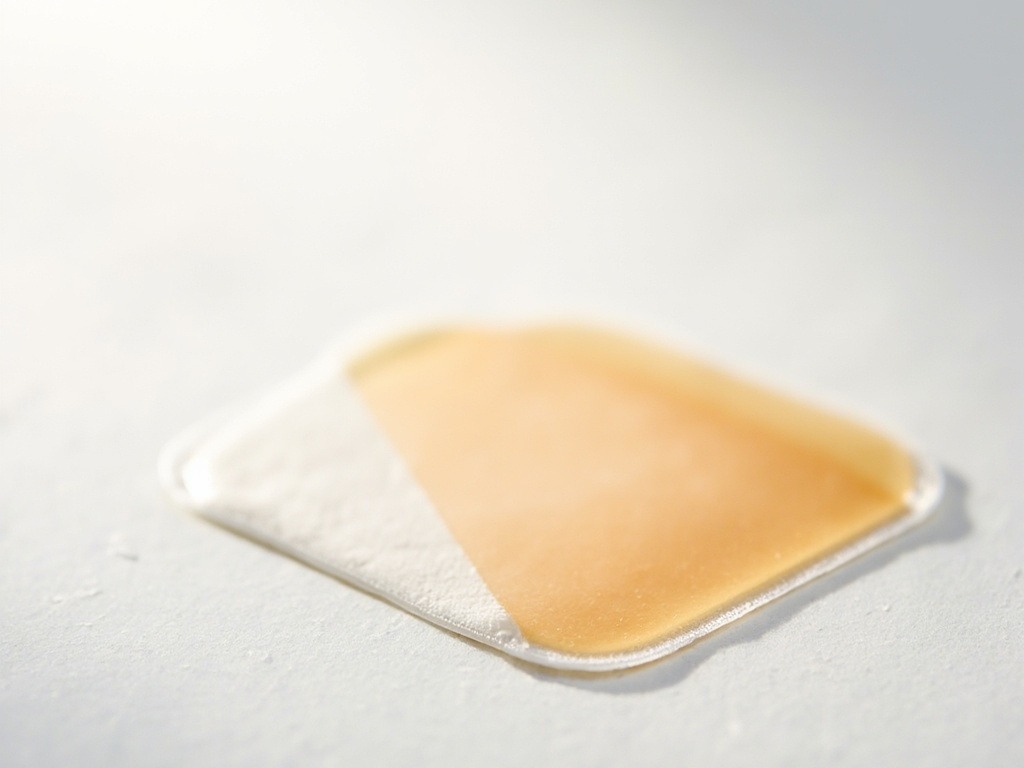
A snore patch panel is a single adhesive strip — usually placed on the nose bridge, under the chin, or over the soft palate — that holds a small bioactive layer against tissue so an ingredient can act on the airway surface during sleep. The label covers several genuinely different products, and the most useful comparison is between the two formulations you can actually buy as a panel-style strip: menthol/eucalyptus essential-oil versions and saline/moisture-barrier hydrogel versions. A third adhesive-menthol hybrid also exists on some markets, which is worth flagging because it dominates drugstore shelves yet has the weakest evidence of the three.
Best for: independent brand buyers comparing OEM panel SKUs, procurement leads evaluating two or three supplier samples before a first PO, formulators deciding between a hydrogel substrate and a non-woven adhesive for a private-label run.
What the three panel formats actually do
All three formats are external patches. None of them delivers a swallowed drug, none penetrates the bloodstream, and none adjusts jaw position — the mechanism is local and surface-level. The difference is whether the layer touching the skin or mucosa is releasing volatile compounds (essential oils), trapping moisture against the tissue (hydrogel), or doing both off a thin adhesive film.
| Format | Active layer | Typical placement | Primary intent |
|---|---|---|---|
| Essential-oil non-woven | Menthol, eucalyptus, sometimes camphor | Nose bridge / under nose | Cooling sensation reported to open nasal feel |
| Saline hydrogel | Water-based gel, mineral or glycerin | Under chin or soft palate | Moisture barrier to reduce mucosal drying |
| Adhesive-menthol hybrid | Menthol in pressure-sensitive adhesive | Nose bridge | Single-layer adhesion with aromatic cue |
Where each one fails
Essential-oil non-woven patches work well for people whose snoring tracks with nasal congestion on mild nights and who can tolerate a strong menthol or eucalyptus aroma. They fail on three fronts: first, the volatile oils do not reach the soft palate or tongue base, so a snorer whose vibration is oropharyngeal gets no mechanical effect; second, menthol is a sensory cue, not a decongestant — it feels like clearer breathing without changing resistance; third, anyone sensitive to fragrance compounds or with reactive skin on the nasal bridge can react within a few nights.
Saline hydrogel patches work well when the dominant complaint is mouth-breathing overnight, dry throat on waking, or mild soft-palate flutter in a non-allergic adult. The trade-off is that they require a flat, hair-free application zone — under the chin or on the soft palate — and they lose adhesion within a few hours on a user who drools or sleeps face-down. They do not move air, so they will not help if nasal obstruction is the primary driver.
Adhesive-menthol hybrids are the easiest to apply, the cheapest per unit, and the most common format on mass-market sites. They are also the version with the narrowest reported benefit: a thin adhesive film carries less menthol per square centimeter than a non-woven pad, and because the active and the adhesive are the same layer, the strip tends to peel early when sweating starts.
Choosing by snore pattern, not by label
The fastest way to pick between the three is to ask what wakes the user up, or what their partner reports. A snore panel is a surface-level tool, so matching the failure mode to the mechanism matters more than brand or scent.
- Nasal-only, congestion-driven, mild: an essential-oil non-woven patch on the nose bridge is the better trial.
- Dry mouth, palatal flutter, mouth-breathing overnight: a saline hydrogel under the chin gives a more plausible mechanism than a menthol strip.
- First-time user, no clear diagnosis, low budget: an adhesive-menthol hybrid is a fair first sample, but plan to upgrade or rotate if it peels before dawn.
Buyer checklist for OEM panel samples
Two concrete filters keep the sample evaluation honest. Both come from how the formats above behave in real wear, not from catalog claims.
- Ask the supplier what the active layer is bonded to. If the answer is "non-woven" you are looking at the essential-oil family; "hydrogel" means the saline family; "PSA only" is the adhesive-menthol hybrid. Confusing the three is the most common OEM mislabel.
- Compare a 6-hour adhesion test, not a 30-minute one. The adhesive-menthol format looks fine on a desk and fails on a sleeper.
Limitations and safety notes
A snore patch panel is a comfort product, not a medical device, and it does not treat obstructive sleep apnea. Anyone with loud habitual snoring, witnessed apneas, daytime sleepiness, or a high BMI should raise the issue with a clinician before relying on any external patch. Stop use if skin redness, irritation, or a burning sensation appears, and avoid menthol or eucalyptus versions on children and during pregnancy. Hygiene of the application zone matters: oils, sweat, or residue will shorten adhesion and may irritate skin. Any specific claim about a regulatory class should be checked against the applicable local requirements.
Where to source a private-label run
For brand owners comparing OEM panel lines, the practical differentiator is usually substrate control and aroma-loading capacity, since these determine which of the three formats above you can actually produce. Henan Hanmeng Bio-Tech has a long-running OEM program for snore patch panels covering formulation sampling, sheet cutting, and retail-ready packaging; if you are evaluating a supplier for a private-label launch, their product brief is a reasonable starting point for sample requests and lead-time comparison.
CATEGORIES
LATEST NEWS
- shoulder pain relief patch: How It Works, What to Check, and How to Source It
- pimple patches: choosing between hydrocolloid, microneedle, and salicylic formats
- electrode patches for tens unit
- custom pain patch private label
- Children's Silicone Hydrogel Patches: Safety Standards and Material Selection Guide for Parents
CONTACT US
QQ: 396269538
Phone: 17796669065
Tel: 17796669065
Email: 396269538
Add: Room 001, 1st Floor, Building 1, Zhengzhou Hangmei International Smart City, Intersection of S102 and Nanquan Road, Xuedian Town, Xinzheng City, Zhengzhou, Henan Province, China