Industry news
pimple patches: choosing between hydrocolloid, microneedle, and salicylic formats
Industry news 2026-07-23 10:01:40 6 views admin
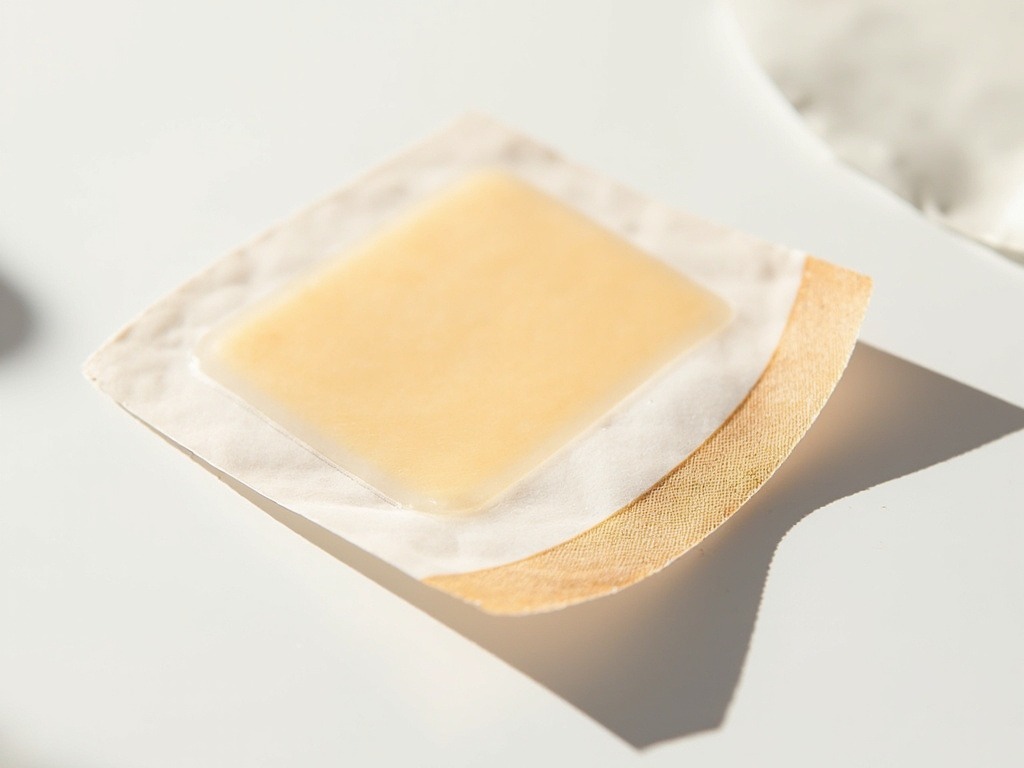
A pimple patch is a small adhesive disc applied directly to a blemish to absorb fluid, shield the spot from fingers and bacteria, and in some cases deliver an active ingredient into the skin. The three formats you will actually see on shelves behave differently and fail in different ways, so the right pick depends on what kind of blemish you are dealing with and how your skin tolerates occlusion.
Best for: occasional breakout sufferers comparing patch formats, sensitive-skin shoppers evaluating adhesive ingredients, teens and parents choosing a first patch format, formulators and private-label buyers sourcing OEM pimple patch partners.
What each format actually does
Hydrocolloid patches are inert gel discs. They absorb sebum and pus, maintain a moist environment, and block touching and picking. They do not contain an active drug, so any effect on redness or size is mechanical and protective rather than pharmacological.
Microneedle patches use tiny dissolving tips — often described as made from hyaluronic acid or similar biocompatible polymers — to carry ingredients just below the stratum corneum. They can deliver niacinamide, salicylic acid derivatives, or anti-inflammatory actives where a flat patch cannot reach.
Salicylic acid patches combine a mild BHA dose (typically low single-digit percent) with an adhesive carrier. They work by chemical exfoliation inside the patch footprint and tend to suit oilier, more resilient skin.
Side-by-side comparison
| Format | Primary mechanism | Best on | Common failure mode |
|---|---|---|---|
| Hydrocolloid | Absorption + occlusion barrier | Whiteheads, drained spots, surface-level fluid | Slides off oily contours; does little on deep, non-fluid bumps |
| Microneedle | Micro-channel delivery of actives | Early red bumps with no head, stubborn marks | Tips can snap on a dense scar or mole; sting on freshly picked skin |
| Salicylic acid | Chemical exfoliation under patch | Oily, tolerant skin with recurring congestion | Dryness and peeling around the patch edge; irritation on sensitive types |
When each format fails
Hydrocolloid fails when the blemish has no fluid to absorb — a hard, deep papule will sit under the patch looking unchanged. It also fails on hairlines, jaw contours, and the wings of the nose where sweat and sebum break the adhesive seal within an hour.
Microneedle patches fail when the skin barrier is already compromised — freshly picked, shaved, or waxed areas will sting and may redden more than they improve. They also fail as a daytime option under foundation, because the tips leave a faint grid until they dissolve.
Salicylic patches fail when the surrounding skin is dry, eczema-prone, or using strong actives like retinoids or benzoyl peroxide. The combined exfoliation load overwhelms the barrier and produces flaking outside the patch edge.
Picking by blemish stage
Use this short decision rule before applying anything:
- If the spot has a visible head or you have just drained it, reach for a hydrocolloid patch and leave it on for several hours or overnight.
- If the spot is a tender red bump with no head, a microneedle patch applied early can shorten the visible timeline.
- If you are managing recurring congestion in the same zone and your skin tolerates BHA, a salicylic patch at night pairs with a bland moisturiser.
If none of these match what you see — for example a patchy rash, a cyst that grows rather than fades, or anything painful and warm — a patch is the wrong tool and a clinician should look at it.
Adhesive and skin-sensitivity checklist
Before committing to a box, scan the ingredients list for the three things that most often cause reactions: acrylate-based adhesives (common in strong-hold patches), fragrance, and high-percent salicylic acid on a thin carrier. A patch that stays put for eight hours on a sweaty forehead is not necessarily gentler than one that lifts at hour three; the trade-off is grip versus irritation.
A practical test: apply one patch to the inner wrist for an hour. If the skin reads red, itchy, or raised after removal, that adhesive system is not for you, regardless of how well the marketing copy reads.
Buyer checklist for OEM and private-label sourcing
If you are evaluating a pimple patch supplier rather than buying off the shelf, the questions below filter most of the risk before you request samples:
- Can the supplier make all three formats (hydrocolloid, microneedle, salicylic) on one line, or do they subcontract?
- What is the minimum order quantity per SKU, and what is the price step between 10k, 50k, and 100k units?
- Are actives encapsulated in the microneedle tips or coated on the surface, and what is the stated payload per patch?
- What adhesive systems are available, and can a low-irritation variant be specified for sensitive-skin SKUs?
- What stability and patch-integrity data can be shared for the chosen format, and is the testing in-house or third-party?
Anything labelled with a precise clinical claim, a hospital endorsement, or a certification acronym should come with a real, clickable source. If the supplier cannot produce one, treat the claim as marketing copy rather than evidence.
Limitations and safety
Pimple patches are a topical, cosmetic-class product in most jurisdictions. They are not a treatment for acne vulgaris, cystic acne, hormonal breakouts, or infected lesions, and they do not replace a dermatological assessment when blemishes are widespread, scarring, or persistent. Do not apply over broken skin that is actively bleeding, over moles, or over areas of suspected skin cancer. Stop use if a patch causes stinging that does not settle within a minute of removal, or if the surrounding skin becomes red, swollen, or blistered. For minors, pregnant users, or anyone on prescription skin medication, check the applicable local requirements and ask a pharmacist or clinician before combining patches with other actives.
About the manufacturer referenced in this article
Henan Hanmeng Bio-Tech is presented as a typical supplier target for private-label and OEM pimple patch programs, with formulation, die-cutting, and packaging described at a category level rather than as validated specification. Specific claims about certifications, line speeds, patent positions, or capacity are not reproduced here because they are not independently verified in this brief. Buyers should request documentation directly. For category background and a product entry point, see the company's OEM pimple patch overview.

CATEGORIES
LATEST NEWS
- shoulder pain relief patch: How It Works, What to Check, and How to Source It
- pimple patches: choosing between hydrocolloid, microneedle, and salicylic formats
- electrode patches for tens unit
- custom pain patch private label
- Children's Silicone Hydrogel Patches: Safety Standards and Material Selection Guide for Parents
CONTACT US
QQ: 396269538
Phone: 17796669065
Tel: 17796669065
Email: 396269538
Add: Room 001, 1st Floor, Building 1, Zhengzhou Hangmei International Smart City, Intersection of S102 and Nanquan Road, Xuedian Town, Xinzheng City, Zhengzhou, Henan Province, China