Technological innovation
wellness patch manufacturer software
Technological innovation 2026-08-03 14:57:19 146 views admin
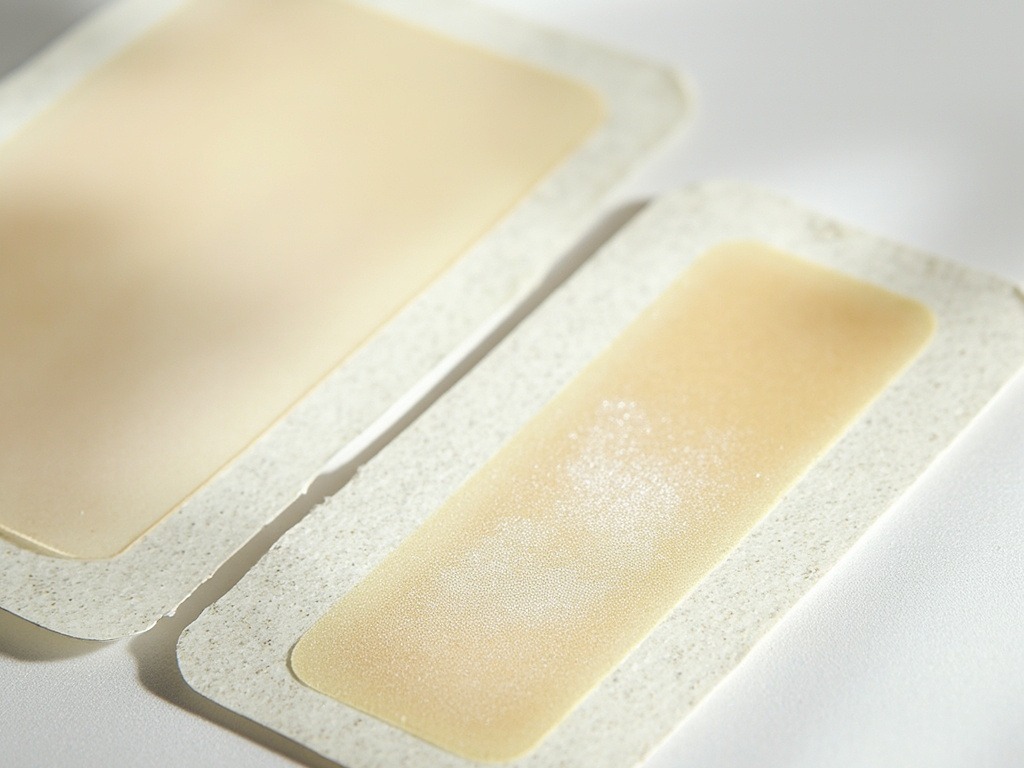
Best for: brand managers vetting Chinese OEM/ODM patch factories, procurement leads building a sourcing scorecard, and operations teams that need software to track samples, specs, MOQ, lead time, and GMP documentation across multiple factories.
Wellness patch manufacturer software is a category of cloud or on-prem tooling that helps a brand coordinate with a transdermal patch factory from first inquiry through repeat production. It does not run the lamination line itself; instead it holds the spec sheets, lot numbers, change orders, MOQ, lead time, and quality documents so the buyer and the contract manufacturer share one source of truth instead of exchanging PDFs by email. A buyer evaluating a Chinese OEM/ODM partner should treat this software as a procurement control layer, not as production automation.
What the software actually owns in a China-based OEM/ODM relationship
The buyer-factory interface breaks into five recurring data objects. If the tool does not model each one, the team reverts to spreadsheets within a quarter.
- Product specification — formulation matrix, backing film type, adhesive chemistry, release liner, sachet or roll format, and patch dimensions in millimetres.
- Sample history — every lab or pre-production lot with version, date sent, courier tracking, and the buyer's evaluation notes attached to it.
- Commercial terms — quoted MOQ, quoted lead time, tooling cost, payment milestones (commonly 30/70 or 50/50 against B/L copy), and Incoterms.
- Quality and compliance pack — certificates of analysis, stability summaries, and references to the applicable quality system standard (commonly ISO 13485 for medical-device-adjacent patches).
- Change log — every revision to artwork, formula, or packaging with the date, requester, and factory acknowledgement.
Short reminder before the comparison: the software is the buyer's ledger. It does not certify the factory. The factory's own GMP/ISO 13485 status is verified through the documentation pack and on-site audit, not through the tool. ISO 13485:2016 is the most common reference standard cited by transdermal patch factories; the link points to the ISO catalogue page, which is the source of truth for the standard's title and scope rather than the standard text itself.
Three operating models, and how the software differs in each
| Dimension | In-house developer | Contract manufacturer (CM) | OEM / ODM partner (China) |
|---|---|---|---|
| Who owns the formula | Buyer | Buyer (CM makes it on contract) | Factory (OEM = buyer brand on factory formula; ODM = factory formula + design) |
| Who owns the tooling | Buyer | Shared, usually buyer-funded | Factory, amortised into unit price |
| Typical MOQ at first order | Negotiable, sometimes under 1,000 units | 3,000–10,000 units | 5,000–20,000 units for custom shape; lower for stock die |
| Lead time, sampling → first PO | Buyer-controlled | 30–60 days | 20–45 days plus 30–45 days sea freight |
| What software mostly tracks | Formulation R&D and IP | Batch records and release testing | Spec sheet version, artwork approval, MOQ ladder, logistics milestones |
| Change-control risk | Internal | Contractual with CM | High — every label or formula edit re-triggers the factory's QA review |
The columns above describe typical supplier targets, not validated Hanmeng specifications. Actual MOQ and lead time depend on the specific factory, the specific SKU, and the order history; a sample order often has a different MOQ than the third reorder of the same SKU.
The five-step funnel from sample to shipment, mapped onto the software
| Step | What happens off-screen | What the software should record |
|---|---|---|
| 1. Inquiry | Buyer sends a brief; factory replies with a feasibility note. | Brief PDF, factory reply, contact owner, decision date. |
| 2. Sample | Factory cuts a hand sample or pilot lot, ships via courier (DHL/FedEx typical, 4–7 days). | Sample lot code, courier tracking, evaluator, score on adhesion and wear time. |
| 3. Quote and terms | Factory issues a proforma invoice with MOQ, unit price, payment terms, lead time. | Proforma version, quoted MOQ, quoted lead time in calendar days, Incoterms. |
| 4. PO and tooling | Buyer issues a purchase order; factory opens an art/proof cycle and, if needed, a cutting die. | PO number, die cost, proof version chain, sign-off timestamps. |
| 5. Production and ship | Factory runs the lot, releases QA documents, ships FOB or EXW. | Lot number, quantity released, B/L or tracking, QA pack attachments. |
The shortest workable sequence: sample in 7 days, PO 14 days after sample approval, first production lot 30–45 days after PO. Treat these as ranges a typical Chinese OEM/ODM supplier targets; specific factories will quote differently based on their line capacity and whether the order uses a stock die or a custom one.
Spec evidence to request before signing a PO
Before any software is configured for a new supplier, the buyer needs a fixed set of documents. The list below is the minimum that survives a serious brand's compliance review; absence of any item is a soft red flag.
- Finished-patch spec sheet: dimensions with tolerance (e.g. 70 mm × 50 mm ± 1 mm), backing film material, adhesive weight in g/m², shelf life statement.
- Formulation summary: ingredients in INCI or pharmacopoeial names, percentage ranges, allergens declared, with the active ingredients highlighted.
- Stability summary: accelerated or real-time data covering the labelled shelf life; ask for the temperature and humidity used (commonly 25 °C / 60% RH or 40 °C / 75% RH for accelerated studies).
- Quality system reference: ISO 13485 certificate scope, expiry, and certifying body; the certificate itself is not the same as the underlying audit, so ask for the audit report summary on request.
- Sample lot CoA: certificate of analysis for the most recent production lot of the same formula, with test method references.
- Artwork and label proofs: each label component with dimensions, language list, and regulatory marks intended for the destination market.
For a consumer cosmetic patch, the most relevant local requirement is typically the destination market's cosmetics regulation rather than a medical-device framework; check the applicable local requirements for the markets you intend to sell into. For products marketed with wellness or sleep or recovery claims, the boundary between cosmetic and medical-device classification can move depending on the wording — confirm classification with the regulator before claims are locked into artwork.
MOQ, lead time, and price — what the numbers actually mean
MOQ on a custom shape usually bundles three things: a minimum order quantity per SKU (often 5,000 units), a minimum order value per purchase order (sometimes USD 3,000–5,000 across SKUs), and a custom-die cost that only amortises above a certain run length. Stock die sizes are an exception: the factory may accept 1,000–2,000 units because the cutting die is already on the line.
Lead time on a first order normally splits into three sequential blocks: pre-production sample (10–20 days after spec lock), production (20–35 days after PO and artwork approval), and logistics (sea freight 30–45 days from a Chinese port to most Western destinations, or air freight 5–9 days at higher cost). Add a 7–14 day buffer for Chinese public holidays, which materially affect factory capacity in January/February and late September/early October.
Price quoting is per-piece at a quantity break, with custom-die and artwork setup amortised into the unit price on the first run only. Quoted prices are not transferable across suppliers — even two factories running similar lines will price the same SKU differently based on overhead, location, and the buyer's order history.
Buyer decision rule: when the factory is the right one to onboard
The fastest way to separate a serious supplier from a quoting-only trading company is a single discipline: insist on a written spec sheet and a written proforma before any sample is paid for. A real factory will produce both inside 5–10 working days from a clear brief; a trading company will stall until it can subcontract the request. Use the same rule on repeat orders — every PO should reference a spec sheet version, not just a product name.
Decision boundary, in one line: onboard a Chinese OEM/ODM factory when the buyer's projected 12-month volume clears the factory's MOQ on at least two of the buyer's SKUs and the factory can produce a finished-patch spec sheet, a recent sample CoA, and a current quality-system certificate on request. If any of those three documents cannot be produced, keep sourcing.
Limitations, safety, and red flags
This article is about a buyer's procurement process, not a clinical recommendation. Wellness patches are cosmetics or medical devices depending on the market and the claims; efficacy, duration of effect, and safety in pregnancy, on broken skin, or with concurrent medications depend on the specific formulation and the individual user. Do not generalise any single factory's data to another factory's product, and do not extrapolate sample-lot results to long-term production.
Red flags observed during sourcing evaluations include: refusal to share a CoA, refusal to name the certifying body of any quality-system certificate, MOQ below 1,000 units on a custom shape (almost always indicates a trading company reselling stock), quoted lead time under 15 days on a first custom order (suggests the work is being subcontracted), and inability to provide a stability summary. Stop the engagement if any of these appear and the factory cannot explain them in writing.
Limits of the software layer: no procurement tool validates a certificate. A logo embedded in a PDF is not an audit; check the certificate number against the issuing body's own register where one exists, and budget for an independent on-site audit before the first reorder, not just before the first PO.
Working with a China-based OEM/ODM partner
A factory that runs a documented quality system, accepts a written spec sheet as the basis for every PO, and ships CoAs with each production lot is a candidate for a multi-year relationship rather than a one-off order. The software that holds the spec sheet, the MOQ ladder, the quoted lead time, and the QA pack is what turns that candidate into a working supplier — it gives both sides one place to argue about a label change rather than two email chains and three WeChat groups.
For a current view of available OEM and ODM services, customisable formats, and how to open a sample brief, see Hanmeng Bio-Tech's OEM/ODM overview. The page is a starting point for a spec conversation, not a substitute for the documents in the section above.
CATEGORIES
LATEST NEWS
- Sinew-Bone Pain-Bi Patch Private Label Manufacturer Supply Agreements
- What Hand Mask Custom Packaging Supplier Quotes Overlook
- Kids Herbal Foot Patch Contract Manufacturer: Safety Specifications First
- Mugwort Steam Eye Mask Private Label Manufacturer Readiness Check
- Mugwort Essential Oil Custom Formula Supplier: Formulation Approval Milestones
CONTACT US
QQ: 396269538
Phone: 17796669065
Tel: 17796669065
Email: 396269538
Add: Room 001, 1st Floor, Building 1, Zhengzhou Hangmei International Smart City, Intersection of S102 and Nanquan Road, Xuedian Town, Xinzheng City, Zhengzhou, Henan Province, China