Technological innovation
do heat patches work for back pain
Technological innovation 2026-07-31 17:13:57 104 views admin
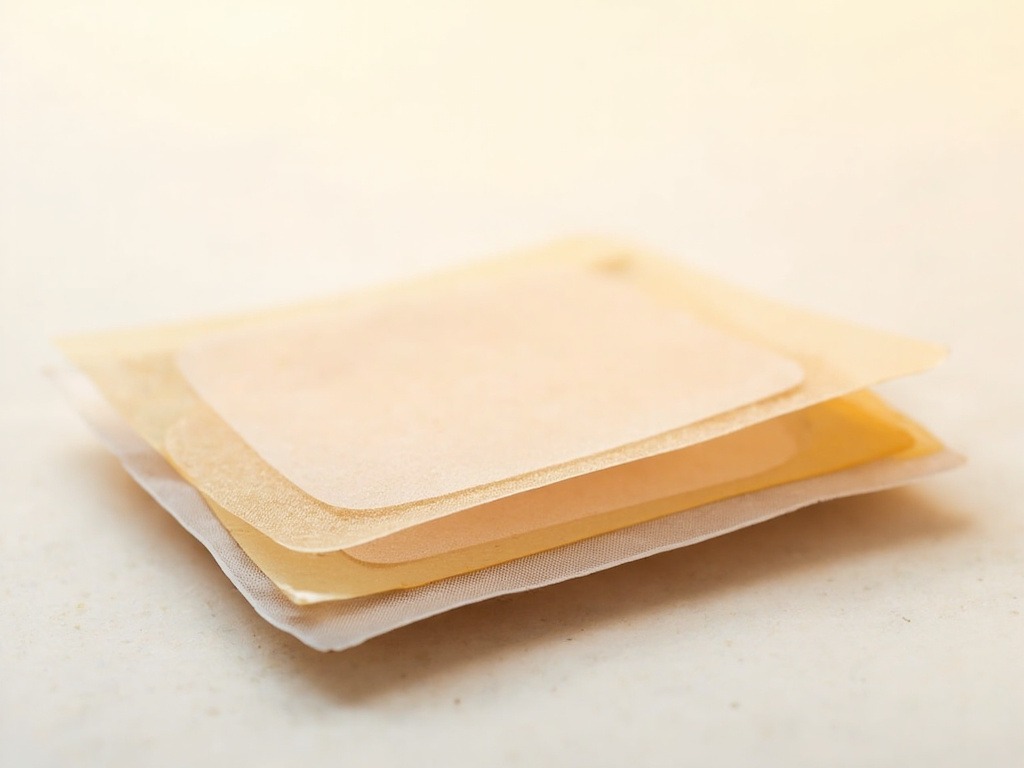
Best for: first-time heat patch buyers, chronic lower-back sufferers, athletes managing post-workout soreness, older adults with non-specific back stiffness, curious shoppers comparing patches to creams and pills.
The short answer: yes, but mostly by heat, not by drug delivery
For most over-the-counter heat patches sold for back pain, the relief is delivered almost entirely by surface heat acting on muscle and skin nerve endings. The patch warms the local tissue, raises local blood flow, and changes how the pain signal feels — the "medicine" part, if any, plays a much smaller role than the heating element itself. A small minority of patches do carry an active pharmaceutical ingredient across the skin, and that pathway is real, but it requires the right chemistry, the right skin condition, and several hours to do anything meaningful.
So when people ask "do heat patches work for back pain", the honest two-part reply is: the warming effect usually provides modest, short-term relief of muscle-driven back discomfort, and the transdermal drug pathway can deliver actives into deeper tissue when the formula is correctly designed — but the two routes should not be confused.
What the skin actually does to a patch
Skin is not a passive sponge. The outermost layer, the stratum corneum, is a 10–20 µm wall of dead, flattened cells cemented together by lipid bilayers. For anything on top of the skin to reach living tissue below, those lipids have to be crossed. Most molecules simply bounce back or sit on the surface; only a narrow band of small, lipophilic, low-melting-point compounds makes it through in any meaningful amount.
Below the stratum corneum sits the viable epidermis, a few cell layers thick and still keratinocyte-dominated, then the dermis with its capillary loops, sweat glands, and hair follicles. Drug or volatile actives that clear the stratum corneum can enter the systemic circulation through those capillaries, or stay in the dermis and act locally on nociceptors and sensory nerves. Hair follicles and sweat ducts offer a parallel "shunt" route that bypasses the lipid matrix entirely — important for some peptides and ions, but a minor channel for typical pain-patch actives.
From molecule to muscle in three rough steps
- Release. The active ingredient dissolves out of the adhesive or reservoir matrix, driven by the concentration gradient between patch and skin.
- Permeation. It partitions from the adhesive into the stratum corneum lipids, diffuses through the corneum, then crosses the epidermis into the dermis. Steady-state flux through intact skin typically falls in the low micrograms per cm² per hour range for most drug-like molecules.
- Distribution. Once in the dermis, the compound reaches local nociceptors, free nerve endings, and capillaries. Local action on sensory nerve terminals tends to dominate; systemic blood levels from a single patch remain low for common OTC actives.
Each step has a rate-limiting bottleneck. Release is governed by saturation solubility in the matrix. Permeation is governed by the compound's log P (lipophilicity around 1–3 is usually a sweet spot), molecular weight (under about 500 Da is the practical ceiling for passive permeation), and skin condition. Distribution is governed by local blood flow and tissue binding. Heat patches tilt all three toward "more" — temperature increases diffusivity, softens the stratum corneum lipids, and raises perfusion at the application site.
Why concentration on the label doesn't equal effect on the back
"5% lidocaine" tells you almost nothing about how much reaches your lumbar muscle. What matters is the flux at the skin–patch interface, and flux depends on the compound's diffusion coefficient in the stratum corneum, its partition into the matrix, and how long the patch stays on. Doubling the loading dose in the reservoir does not double the delivered dose, because the skin — not the patch — is the rate-limiting barrier for most molecules. That is why two patches with the same nominal active can produce quite different real-world relief: one uses permeation enhancers, a reservoir design, or warming to push more of the active through, while the other is essentially a placebo with a claim.
A second nuance: heat itself produces analgesic effects that are independent of any drug. Local temperatures around 40°C modulate TRPV1 channels, blunt nociceptor firing, and reduce muscle spindle sensitivity. So the warming element and the drug pathway are not redundant — they are stacked. Disentangling which mechanism gave you relief is genuinely hard, which is why plain heated pads without actives often feel similar to "capsaicin 0.1%" patches in head-to-head wear tests.
How patches compare to creams and oral tablets
| Route | Onset | Duration per dose | Whole-body exposure | Typical role in back pain |
|---|---|---|---|---|
| Heat patch (no active) | 5–15 min | 6–12 h of warmth | Negligible | Soothe muscle tension, reduce stiffness |
| Drug-in-adhesive patch | 30–60 min | Up to 12 h wear | Low, local skin depot | Local analgesic for mild–moderate backache |
| Topical cream/gel | 10–30 min | 2–4 h, reapply often | Minimal, mostly on skin | Targeted spot relief, easy to titrate |
| Oral tablet | 20–45 min | 4–8 h per dose | Full systemic distribution | Wider pain coverage, more GI/renal risk |
The comparison makes the practical trade-off visible. Patches are not the fastest option, but they hold a steady local dose for hours without forcing a full-body dose of an NSAID onto the stomach and kidneys.
Buyer's decision rule: when a heat patch makes sense
Use this quick filter before you buy or apply one.
- Your back pain is muscular, mechanical, or post-exercise — not a fracture, infection, or neurological symptom.
- You want relief while you stay active (commuting, at a desk, gardening) rather than lying down with a hot water bottle.
- You prefer to avoid oral NSAIDs because of stomach, kidney, or blood-thinning concerns.
- You have at least 30–60 minutes for the active to take effect, or you want heat-only comfort within minutes.
- Your skin at the application site is intact — no rash, sunburn, broken skin, or recent shaving irritation.
If three or more of those fit, a heat patch is a reasonable low-risk option to try. If none fit, the patch will probably disappoint, and the problem is the match, not the product.
Limitations, safety, and who should skip
Heat patches are not for everyone, and a few failure modes deserve explicit mention.
- Do not use on numb skin, on people who cannot communicate clearly (infants, certain cognitive conditions), or while sleeping on top of the patch — prolonged low-level heat above roughly 45°C can cause erythema ab igne or even partial-thickness burns.
- Do not layer a patch under an electric blanket or heating pad; stacked heat sources push skin temperature above safe limits quickly.
- If the active is a counterirritant (menthol, methyl salicylate, capsaicin) or a local anaesthetic, do not combine with oral NSAIDs or other topical pain products at the same site without checking compatibility.
- Pregnancy, peripheral neuropathy, and active skin disease change the risk calculus enough that a clinician's input is worth getting.
- Back pain with red-flag features — unexplained weight loss, fever, bowel or bladder changes, saddle numbness, leg weakness, or pain after a fall — needs medical review, not a patch.
If a patch leaves persistent redness, blistering, itching, or a rash beyond the application area, stop using it and switch to a different formulation; adhesive or active-sensitisation does happen.
A practical boundary: drug-loaded patches versus heating pads
Use this as a parting rule of thumb. If the package says "warming," "heat," or lists iron powder as the working ingredient, treat it as a thermal device first and a drug product second. Expect gradual warmth within 10 minutes and a wear time of roughly 6–12 hours; expect any "ingredient" below iron and salt on the label to be present in tiny amounts that do not contribute meaningful transdermal dosing. If the package lists an active drug (menthol, lidocaine, methyl salicylate, capsaicin, or similar) above a stated percentage with a clear reservoir or matrix design and a tested permeation claim, treat it as a pharmaceutical patch first, with heat as a possible add-on. The two product types look almost identical on the shelf, but the expectations you should bring to each are very different.
About the manufacturer reference
For readers curious about how transdermal back-pain patches are designed and produced at scale — including matrix selection, permeation enhancers, and wear-time testing — a working example of a dedicated OEM pharmaceutical patch program is documented at pharmaceutical patch OEM capabilities. Always verify any clinical, regulatory, or efficacy claims against the manufacturer's own documentation and the local regulator before purchase.
CATEGORIES
LATEST NEWS
- Sinew-Bone Pain-Bi Patch Private Label Manufacturer Supply Agreements
- What Hand Mask Custom Packaging Supplier Quotes Overlook
- Kids Herbal Foot Patch Contract Manufacturer: Safety Specifications First
- Mugwort Steam Eye Mask Private Label Manufacturer Readiness Check
- Mugwort Essential Oil Custom Formula Supplier: Formulation Approval Milestones
CONTACT US
QQ: 396269538
Phone: 17796669065
Tel: 17796669065
Email: 396269538
Add: Room 001, 1st Floor, Building 1, Zhengzhou Hangmei International Smart City, Intersection of S102 and Nanquan Road, Xuedian Town, Xinzheng City, Zhengzhou, Henan Province, China