Industry news
Choosing Your Digestive Comfort Patch Contract Manufacturer Wisely
Industry news 2026-09-27 15:02:51 47 views admin
RFQ alignment: 1–3 working days → custom sampling: 7–14 days → sample and packaging approval: 2–7 days → material preparation and mass production: about 20–30 days → final QC and packing: 2–4 days → shipment handover: 1–3 working days. For a Digestive Comfort Patch project, the schedule works best when each milestone is approved before the next one starts.
Step 1 RFQ and Specification Alignment: 1–3 Working Days
The first 1–3 working days are for turning an inquiry into a specification that a digestive comfort patch contract manufacturer can actually price. The buyer should define patch dimensions, shape, substrate, adhesive configuration, formulation direction, intended skin-contact conditions, pieces per retail pack, packaging format, target quantity, destination market, and required delivery window. Keep the positioning around digestive comfort, abdominal wellness, and everyday wellness rather than unsupported product claims.
MOQ needs to be clarified at the same time. Around 30,000 patches can be a practical starting quantity for a conventional customized project, depending on formulation, material, dimensions, packaging, and production requirements. Ask whether that quantity applies per SKU or across the complete order. Three designs of 10,000 pieces each may require different planning from one 30,000-piece design.
Before moving forward, get the quotation scope in writing. Confirm whether the price covers only the Digestive Comfort Patch or also includes the individual pouch, printed retail carton, master carton, sampling, printing setup, and other customization. The RFQ stage is finished when both sides can describe the same product without filling gaps with assumptions.
Step 2 Custom Sampling: Usually 7–14 Days
Once the specification is sufficiently clear, custom sampling commonly takes around 7–14 days. A project using established substrates, standard patch dimensions, and a straightforward formulation direction can usually move through this stage more smoothly. Unusual materials, special shapes, new formulation requirements, or repeated revisions can extend the sampling schedule.
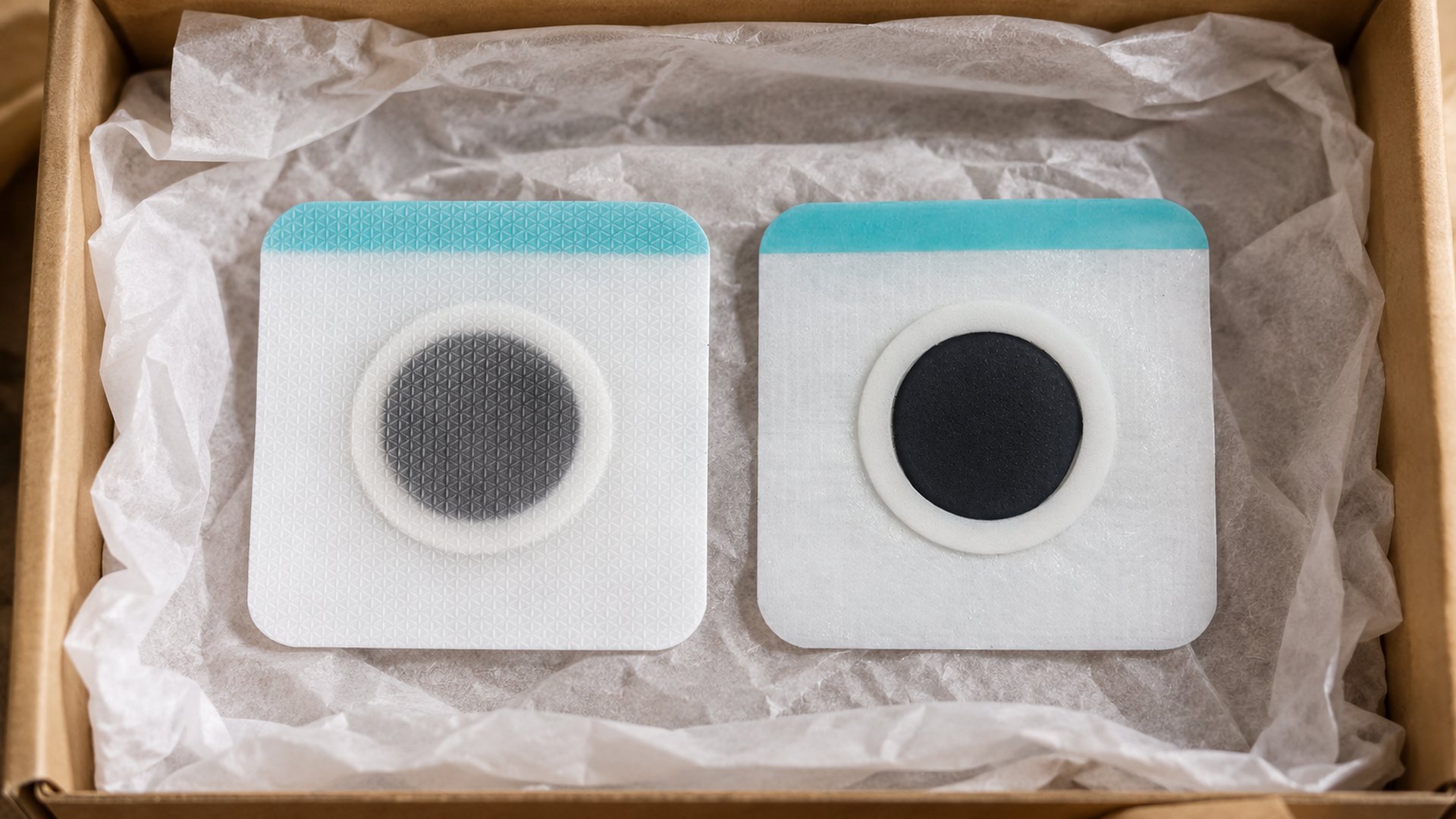
Use this period to control variables. When the first Digestive Comfort Patch samples arrive, compare their dimensions, backing material, flexibility, surface condition, adhesive configuration, formulation appearance, and overall construction against the RFQ. Write revisions as specific production instructions. “Use the softer non-woven material from Sample B” is more useful than “make the next sample more premium.”
When comparing alternatives, change one important variable at a time where practical. If substrate, formulation, dimensions, and adhesive structure all change between Sample A and Sample B, the purchasing team cannot easily identify which difference matters.
Sampling should finish with one clearly approved reference. If the preferred formulation comes from one version while the preferred dimensions come from another, request a consolidated final sample. The digestive comfort patch contract manufacturer should not have to reconstruct the final specification from several partially approved samples and old email threads.
Step 3 Final Approval and Packaging Lock: 2–7 Days
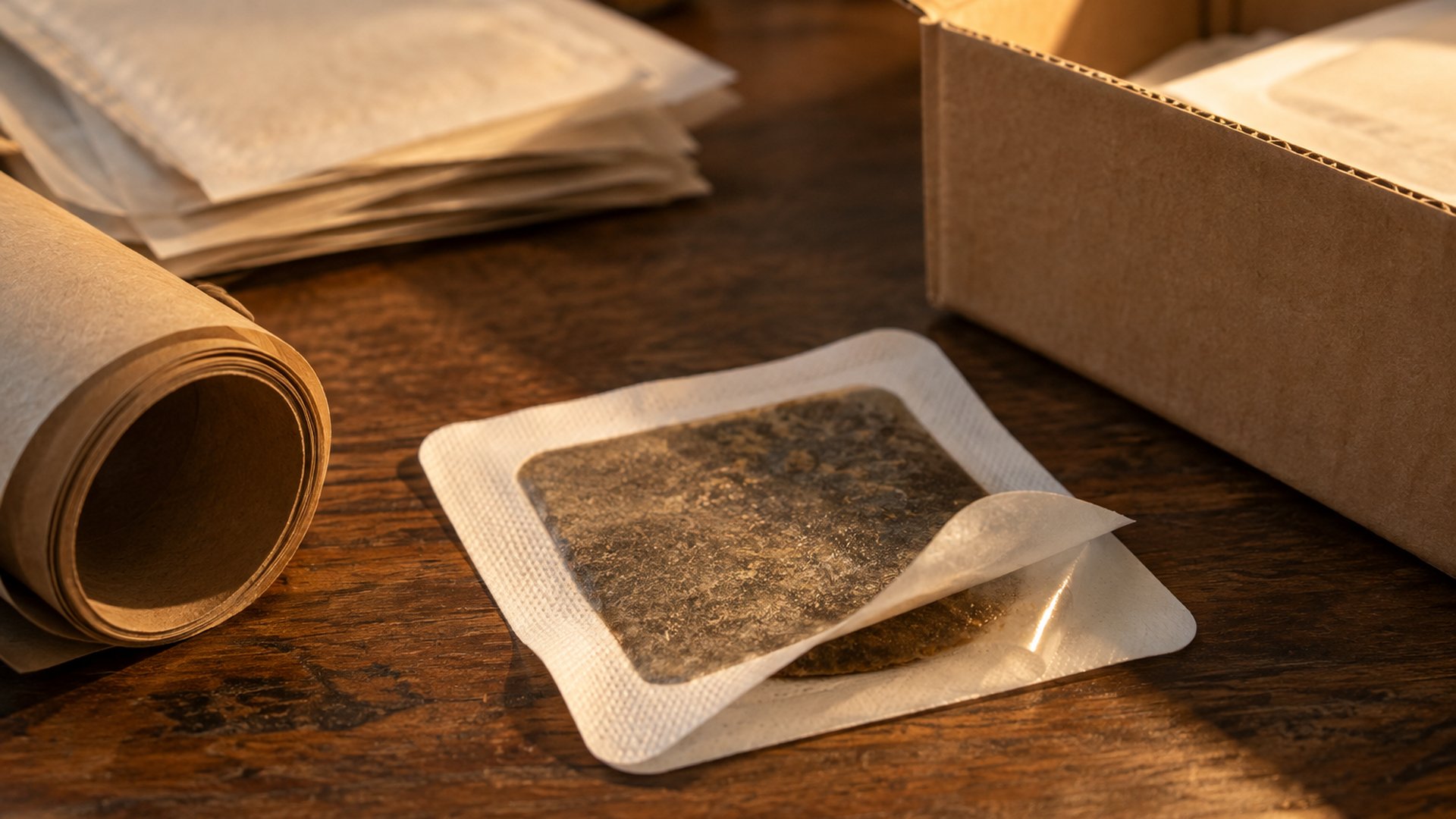
After the physical sample is approved, allow approximately 2–7 days to lock the final specification, artwork, and packaging. The shorter end is realistic when artwork is ready and the buyer uses a conventional packaging structure. More time may be needed when retail copy, pouch dimensions, pack count, carton construction, or artwork is still being revised.
Follow the packaging sequence in physical order: Digestive Comfort Patch first, individual pouch second, retail carton third, and master carton last. The approved patch dimensions and thickness determine the pouch space and sealing area. The finished pouch then provides the dimensions needed to calculate the retail carton. This sequence reduces the chance of printing cartons that no longer match the approved product.
Before approval, cross-check the formulation reference, patch dimensions, substrate, adhesive configuration, pouch specification, pieces per retail box, artwork version, carton configuration, and agreed quality checkpoints. Packaging statements should correspond to the actual product specification and intended use.
Also define what starts the production clock. It may be final sample approval, artwork approval, packaging confirmation, an agreed payment milestone, or completion of several conditions. A quoted 25-day production period means little unless both parties use the same starting date.
Step 4 Material Preparation and Mass Production: About 20–30 Days
After approval, approximately 20–30 days can be used as a planning range for conventional customized mass production. The actual period depends on raw-material availability, formulation, order quantity, packaging complexity, number of SKUs, and the confirmed production schedule. This range should be treated as planning guidance rather than a fixed promise for every Digestive Comfort Patch order.
Part of the production period happens before finished patches appear on the line. The manufacturer needs the approved substrate, formulation materials, adhesive-related components, individual pouches, cartons, and other required packaging. Custom printed pouches can become a scheduling dependency even when the physical patch itself is relatively straightforward to manufacture.
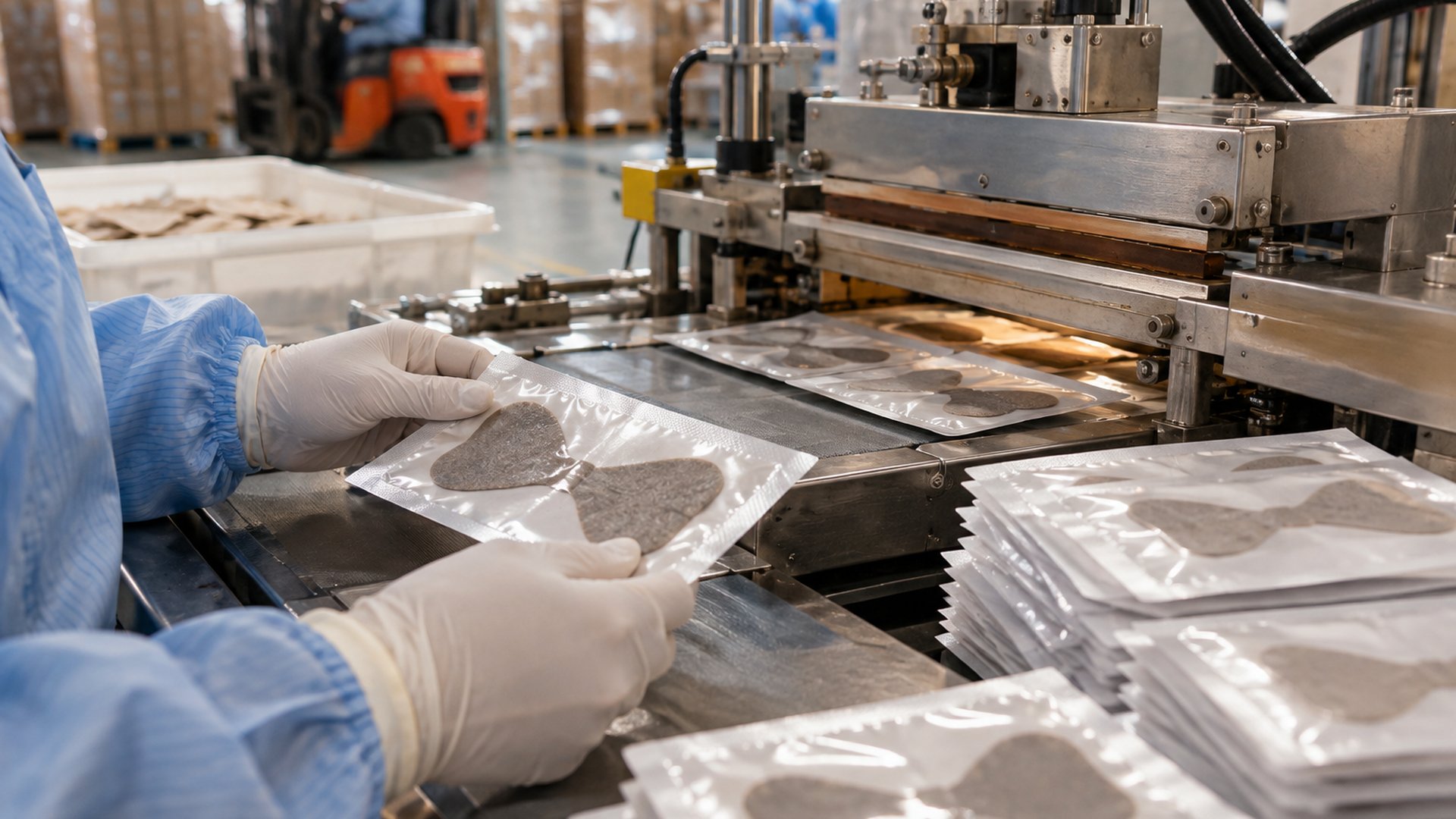
Production then moves through the relevant material preparation, converting, forming, assembly, individual packaging, and retail packing stages. Specification changes become more disruptive here. Changing patch dimensions may require a new pouch; changing the pouch may affect the carton; changing pieces per box can alter packing and master-carton calculations.
For repeat orders, send the previous approved specification and current artwork with the new purchase order. Do not rely only on “same as last time.” Identify any changes in formulation, material, dimensions, artwork, or packaging before production is scheduled.
Step 5 Final QC and Packing: About 2–4 Days
After mass production, reserve approximately 2–4 days for final QC and packing, depending on order size and the agreed inspection plan. Quality checks should compare the finished Digestive Comfort Patch with measurable requirements established before production. Typical checkpoints can include dimensions, appearance, material construction, pouch sealing, retail packaging configuration, quantity, and other agreed characteristics.
Define important acceptance criteria early. If a characteristic can determine whether a batch is accepted, both buyer and digestive comfort patch contract manufacturer should know how it will be checked before the production run begins. Descriptions such as “premium quality” are difficult to inspect unless they are connected to a material specification, approved reference, or defined method.
Buyers arranging third-party inspection should reserve additional scheduling room for booking, inspection, report preparation, and any follow-up. Do not remove the QC window simply because an earlier milestone ran late. A few saved days before shipment may not justify discovering packaging or specification issues after the cargo has entered international logistics.
Step 6 Shipment Handover: Usually 1–3 Working Days
After QC release, shipment handover commonly requires another 1–3 working days. The factory may need to complete carton counting, pallet preparation where applicable, shipping marks, freight coordination, pickup arrangements, and export or logistics documentation. Requirements vary with destination, Incoterm, freight method, and the responsibilities agreed between the buyer, factory, and forwarder.
Keep factory production time separate from international transit time. Express, air, rail, and sea freight have very different schedules. Port availability, freight bookings, customs procedures, holidays, and destination logistics can also affect the final arrival date even when manufacturing finishes on schedule.
Where possible, send estimated carton quantity, dimensions, gross weight, pickup location, and cargo-ready date to the forwarder before the final QC day. Freight planning can then run alongside the final production stages instead of beginning after the goods are released.
For planning purposes, build the project from its individual milestones: 1–3 working days for RFQ alignment, 7–14 days for sampling, 2–7 days for approval, about 20–30 days for production, 2–4 days for QC and packing, and 1–3 working days for shipment handover. A digestive comfort patch contract manufacturer can schedule more reliably when the Digestive Comfort Patch specification and packaging are frozen before mass production starts.
CATEGORIES
LATEST NEWS
- Sinew-Bone Pain-Bi Patch Private Label Manufacturer Supply Agreements
- What Hand Mask Custom Packaging Supplier Quotes Overlook
- Kids Herbal Foot Patch Contract Manufacturer: Safety Specifications First
- Mugwort Steam Eye Mask Private Label Manufacturer Readiness Check
- Mugwort Essential Oil Custom Formula Supplier: Formulation Approval Milestones
CONTACT US
QQ: 396269538
Phone: 17796669065
Tel: 17796669065
Email: 396269538
Add: Room 001, 1st Floor, Building 1, Zhengzhou Hangmei International Smart City, Intersection of S102 and Nanquan Road, Xuedian Town, Xinzheng City, Zhengzhou, Henan Province, China