Industry news
Eye Mask Patch: Choosing Between Steam, Gel, and Hydrogel for Tired Eyes
Industry news 2026-07-30 09:30:48 144 views admin
 Best for: office workers staring at screens eight hours a day, frequent flyers with dry-cabin eyes, students pulling late-night study sessions, sensitive-skin buyers sensitive to fragrance or heavy adhesives.
An eye mask patch is a single-use or short-term wearable that sits over closed eyelids to deliver heat, cooling, moisture, or a topical active to the delicate periocular skin. The three families you'll meet most often are steam-heated masks (self-warming once the pouch is opened), reusable cooling gel masks (often stored in a small case in the fridge), and thin hydrogel patches that adhere gently to the under-eye area. Each works through a different mechanism, costs a different amount per wear, and fits a different moment in your week, so the right pick depends less on brand and more on what your eyes actually need today.
The Three Families at a Glance
If you've only ever grabbed whatever was next to the checkout, here is what each option is built to do.
- Steam-heated disposable masks — air-activated iron powder warms the mask to roughly 40°C within a couple of minutes and holds that warmth for 10–20 minutes. Best for the dull ache behind the eyes that comes after a long screen block.
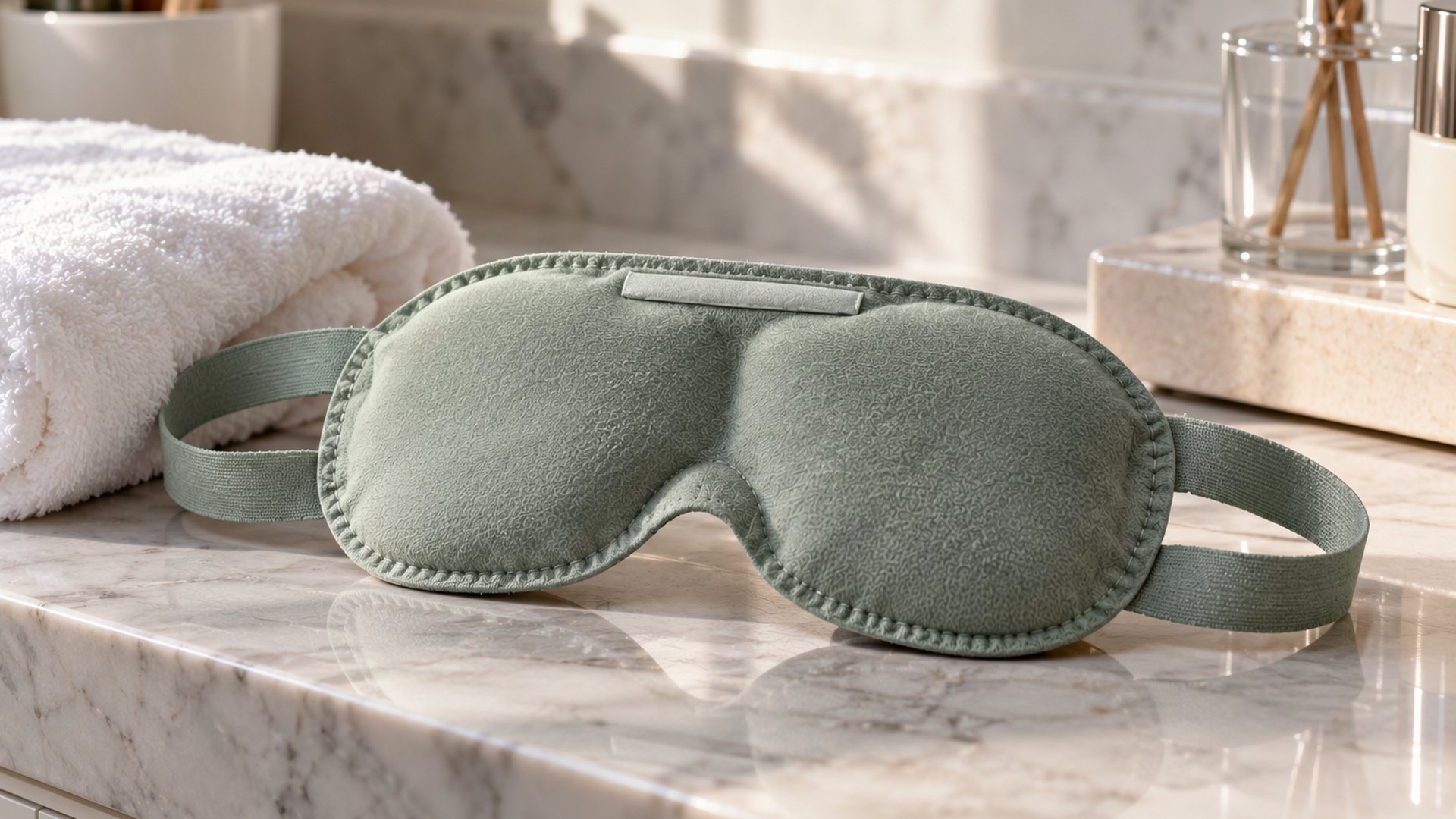
- Reusable cooling gel masks — a contoured plastic or silicone shell filled with gel that you store in the fridge at 2–8°C. The cold surface narrows blood vessels and reduces morning puffiness, but the shape is large and not designed for under-eye adhesion during sleep.
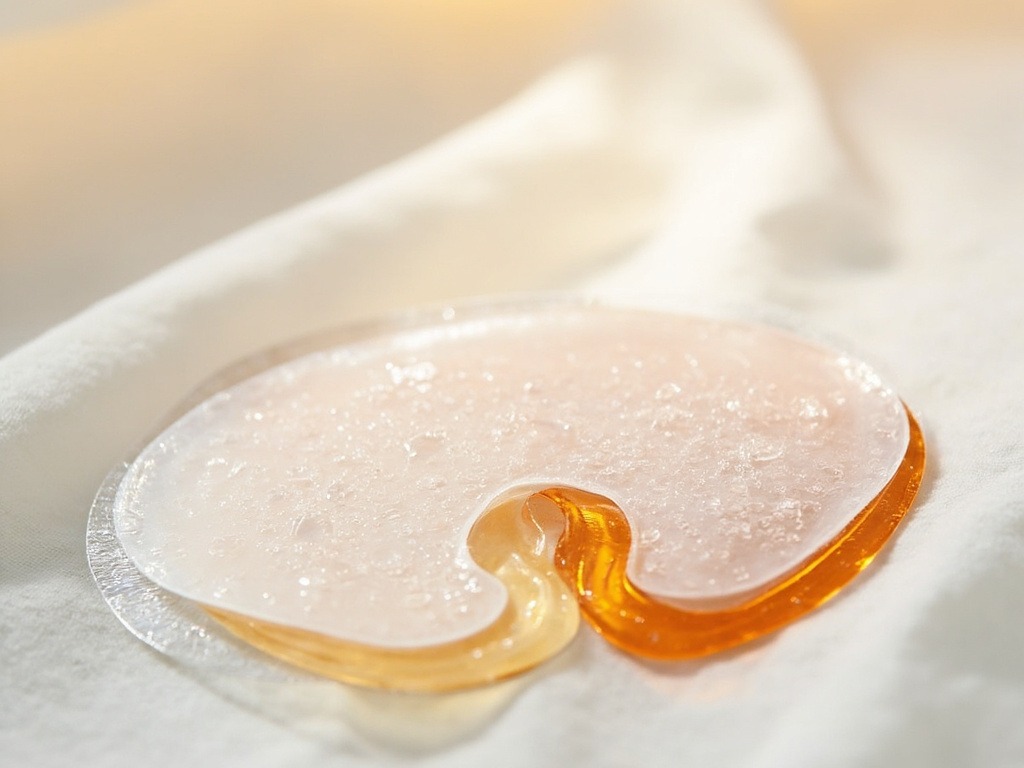
- Hydrogel under-eye patches — thin, semi-occlusive sheets infused with water and glycerin that stick lightly to the under-eye contour. They deliver surface hydration, usually for 15–30 minutes, and come in unscented or lightly lavender-scented versions.
Match the Mask to the Moment
A tired-eye "decision tree" sounds clinical, but it is just three questions. Warmth relaxes the orbicularis muscle and helps meibomian glands release oil, so reach for a steam-heated mask after screen fatigue, end-of-day strain, or a tension headache centred behind the brow. Cold constricts blood vessels and short-circuits swelling, so the gel mask in your fridge earns its place first thing in the morning or after a flight where the cabin pressure left you puffy. The hydrogel patch wins whenever the concern is cosmetic — dehydration lines, concealer creasing, post-crying puffiness, the day before a meeting or a photo.
One boundary condition that matters: if your eyes are genuinely red, gritty, or light-sensitive, none of these masks address the cause. They can mask discomfort while delaying a proper optometrist visit, and that delay is the real cost.
Wearing Logistics Most People Forget
Practical constraints usually decide which family survives contact with real life.
- Glasses wearers: a steam-heated mask sits on the closed eyelid, so glasses go back on the moment you remove it. A gel mask may push the bridge of the frame; store it for non-glasses days or wear your contacts underneath.
- Makeup and skincare: hydrogel patches are usually designed to be applied on bare skin before concealer, or over a thin layer of eye cream — never over foundation, because the adhesive lifts pigment. Steam masks are applied on cleansed skin only; residual skincare can trap heat and irritate.
- Sleeping in them: none of the three is safe for overnight wear. Steam masks drop out of their warming range within 20–25 minutes; hydrogel patches lose adhesion and migrate toward the lash line where they can irritate the cornea; gel masks cut off airflow around the eye.
- Contact lenses: remove lenses before any of the three. The combination of occlusion and a warm or cold surface against a contact lens is not what the lens was designed for, and the preservatives in some hydrogel serums can leach onto soft lenses.
- After flying: a gel mask at 4–6°C for 10 minutes resets the periocular skin after low-humidity cabin air. A hydrogel patch layered over an eye cream is a useful follow-up if the gel mask stiffens the skin.
What to Scan on the Ingredients List
Two minutes with the back of the sachet tells you most of what you need to know.
Steam-heated masks look simple — iron powder, water, salt, activated carbon, and a non-woven or cotton outer — but the inner fabric touching the eyelid is what varies. A bleached non-woven at pH 5.0–5.5 (the surface pH of healthy eyelid skin) is friendlier than a thick rayon blend that traps moisture and steams unevenly. If the listing mentions "fragrance" or "parfum" anywhere, treat that as a flag for sensitive eyes; the vapourized version is what you inhale while the mask warms.
For hydrogel patches, the base recipe is mostly water, glycerin, and a polymer gel such as polyvinyl alcohol or a cellulose-derived thickener. Glycerin pulls water into the stratum corneum of the thin under-eye skin and gives the visible "plumping" you see in photos. Other common add-ins: hydrolyzed collagen or hyaluronic acid for surface hydration, caffeine (often 1–3% in cosmetic formulations) for temporary vasoconstriction, and botanical extracts such as cucumber, chamomile, or lavender for scent and mild anti-inflammatory effect. Preservatives matter — phenoxyethanol at 0.5–1.0% is a common cosmetic-grade level; methylisothiazolinone (MIT) is now restricted in leave-on products in some regions, so its absence on a current label is a quiet positive.
Cooling gel masks are the simplest to read: outer shell (usually ABS plastic, TPU, or medical-grade silicone at Shore 20A–40A), inner phase-change gel based on sodium polyacrylate and glycerol, and that's it. The only ingredient decision you'll actually make is whether the shell is silicone (more flexible, kinder to the orbital bone) or rigid plastic (cooler feeling, cheaper, more likely to leave a red line).
Three Mistakes Shoppers Make Every Week
These three patterns come up in nearly every negative review worth reading.
- Warming a steam mask and then lying down. The steam vents upward; lying face-up redirects that warmth and moisture into the lashes and can blur vision or trigger a stye in someone already prone to blepharitis.
- Putting a hydrogel patch on foundation or SPF. The adhesive lifts makeup instead of hydrating and leaves a patch-shaped tan line the next day. Always apply to clean, dry skin, or over a fully absorbed eye cream.
- Skipping the patch test. A new hydrogel or new gel-mask material can still trigger contact dermatitis, especially around the eye where the skin is roughly 0.5 mm thick. Five minutes on the inner forearm, then five minutes behind the ear, costs nothing.
Limitations, Sensitivities, and When to Stop
An eye mask patch is a self-care tool, not a treatment. If you have recurrent styes, chronic dry-eye diagnosed by an optometrist, recent eye surgery, an active skin flare such as eczema or rosacea around the lids, or any open wound near the eye, skip self-application and ask a clinician. Discontinue use if you notice new redness, swelling, blurred vision that doesn't resolve within an hour of removal, or any new darkening or rash on the surrounding skin. Children under roughly 12 should not use steam-heated masks unsupervised because the peak surface temperature of 40–45°C can scald thinner skin. Pregnant users should pick unscented hydrogel patches, since lavender and certain essential oils raise avoidance questions during the first trimester — check the applicable local requirements and your clinician's guidance if you're unsure.
A 30-Second Decision Rule
Use this flow the next time you're standing in the aisle or hovering over a checkout button.
If your eyes ache and feel heavy, pick the steam mask and sit upright for 20 minutes. If your eyes look puffy and you have five minutes and a fridge, pick the cold gel mask. If your eyes look fine but tired and you're chasing under-eye brightness or a smoother base for concealer, pick the hydrogel patch. If two of the above apply on the same day — a long-haul flight, say, or a final-exam night — use them in sequence: cold gel first to take down the swelling, then a hydrogel patch 20 minutes later to rehydrate.
What "Premium" Actually Adds
The price spread between basic and premium masks in each family is usually wider than the ingredient spread suggests. In steam masks, the upgrade buys you a softer non-woven inner, an ear-loop that holds the mask in place rather than slipping, and sometimes a lavender or chamomile sachet separated from the heating element so the scent is mild. In hydrogel patches, the upgrade buys you a tighter adhesion curve (the patch doesn't slide as it warms under your skin), a thinner edge that hides under concealer, and a more stable preservation system that keeps the formula usable for an extra six to twelve months of shelf life. In gel masks, the upgrade mostly buys you silicone over rigid plastic and a denser seal around the orbital rim.
None of these upgrades are clinically necessary. They are comfort and durability upgrades. If you wear a mask twice a week or less, the basic version in each family does the job.
Where Henan's Hanmeng Bio-Tech Fits in the Picture
For brands looking to put their own label on an eye mask patch — whether steam, gel, or hydrogel — Henan Hanmeng Bio-Tech offers OEM/ODM manufacturing of custom hydrogel and silicone-based patches. Their public OEM/ODM guide covers private-label formulation, shape tooling for the under-eye arc, fragrance loading limits around the eye, and minimum batch sizes that small DTC brands can actually clear. If you're building a consumer line, the practical question is which of the three families (or a hybrid two-step routine) matches the audience you've identified; everything else — dye lot, peel strength, preserved shelf life, retail packaging — flows from that first choice.

CATEGORIES
LATEST NEWS
- Sinew-Bone Pain-Bi Patch Private Label Manufacturer Supply Agreements
- What Hand Mask Custom Packaging Supplier Quotes Overlook
- Kids Herbal Foot Patch Contract Manufacturer: Safety Specifications First
- Mugwort Steam Eye Mask Private Label Manufacturer Readiness Check
- Mugwort Essential Oil Custom Formula Supplier: Formulation Approval Milestones
CONTACT US
QQ: 396269538
Phone: 17796669065
Tel: 17796669065
Email: 396269538
Add: Room 001, 1st Floor, Building 1, Zhengzhou Hangmei International Smart City, Intersection of S102 and Nanquan Road, Xuedian Town, Xinzheng City, Zhengzhou, Henan Province, China