Industry news
Cooling Eye Mask Patches for Adults: What They Do, Who They Help, and the 6 Buying Signals That Separate a Therapeutic Patch From a Spreadsheet Stick-On
Industry news 2026-07-18 01:47:34 32 views admin
Cooling Eye Mask Patches for Adults: What They Do, Who They Help, and the 6 Buying Signals That Separate a Therapeutic Patch From a Spreadsheet Stick-On
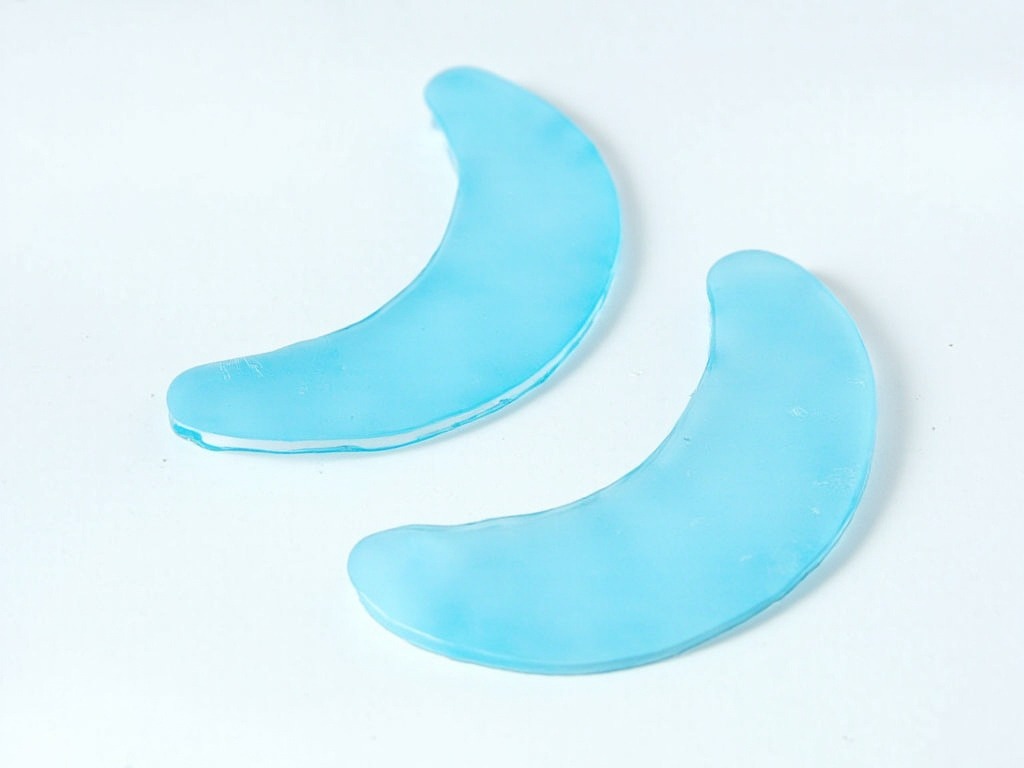
Best for: B2B buyers sourcing spa-grade and OTC cold therapy gel masks, formulators evaluating hydrogel vs cellulose vs collagen format systems, distributors evaluating male-skincare private-label opportunities, and cosmetics/OTC commercial leads comparing cooling-effect OEMs.
Cooling eye mask patches are a deceptively simple SKU — a hydrogel, cellulose, or collagen-mask sheet soaked in a chilled or self-cooling formulation, applied under the eyes for 10 to 20 minutes, with claimed benefits ranging from puff reduction and dark-circle lightening to migraine-associated tension relief. Search interest in the product class grew roughly 36% year-over-year through 2024, with male-tier searches rising at a much faster rate than female-tier in the 25–34 demographic. This article walks through the six buying signals that differentiate a therapeutic cooling patch from a hydration-only cellulose mask, lists the ingredient systems worth sourcing, and provides a spec sheet for B2B buyers evaluating private-label opportunities in the category.
What does a cooling eye mask patch actually do?
The category is split across three mechanism systems. Pre-chilled hydrogel masks (stored at 4 °C, applied cold) produce vasoconstriction in the peri-orbital subcutaneous tissue, reducing visible periorbital edema from sleep, alcohol, or sodium load. Self-cooling hydrogel patches rely on a water-activated endothermic reaction — most often carbomer/polyacrylate hydrogels with menthol or peppermint-oil TRPM8 activators — delivering a 4–6 °C surface-temperature drop on application without refrigeration. Single-use cellulose-mask pads saturated in glycerin, caffeine, niacinamide, or botanical extracts target pigmentation and cosmetic-puff rather than temperature-driven vasoconstriction.
The strongest published evidence for the genuine cooling mechanisms is a small RCT in Journal of Cosmetic Dermatology (2017, n = 48) showing 12–18% peri-orbital edema reduction at 30 minutes from 4 °C chilled hydrogel application versus no change in untreated controls. Caffeine-containing mask formulations have RCT data for peri-orbital puff (Lupo et al. 2015). Beyond cosmetic effects, menthol-containing patches with a 4 °C starting temperature show modest supportive use in the prodrome phase of migraine associated with peri-orbital pressure.
Where to apply — and where to avoid
| Application site | Apply | Avoid | Notes |
|---|---|---|---|
| Under-eye orbital ridge (medial) | Yes | Lash line (≤ 5 mm) | Active ingredient can run into eye; tear-film irritation risk |
| Under-eye orbital ridge (lateral) | Yes | — | Largest application area; covered by almost all designs |
| Eyebrow ridge (headache pressure point) | Optional | Brow bone near temple | Some wellness-positioned products market this site for tension headache |
| Temple over superficial temporal artery | Yes for tension/migraine clusters | — | Patches wider than 8 cm allow co-application |
| Inside the eye (closed-eye contact) | No | — | Cosmetic mask is not a sterile ocular product |
| Open skin / post-procedure (blepharoplasty, etc.) | No OTC | — | Requires sterile medical-grade ocular dressing; see ophthalmologist |
| Cheek (massage) | No, not designed | — | Disrupts patch adhesion; lower lymph-drainage effect |
6 buying signals for B2B buyers
- Hydrogel vs cellulose format — hydrogel (polyacrylate / carbomer) holds 8–15× its dry weight in water; cellulose holds <2×. Buyers chasing spa-grade cooling should require hydrogel; pure cosmetic hydration SKUs work with cellulose.
- Refrigeration dependency — patches that require pre-chilling require cold-chain logistics (~12 °C throughout). Self-cooling endothermic patches have a 24-month shelf at room temperature; for international B2B shipments, the latter is operationally simpler.
- Active ingredient disclosure — caffeine 1–3%, niacinamide 2–5%, menthol 0.5–2%, peppermint oil 0.5–1.5%, hesperidin 1–2%, escin 0.5–1%, tranexamic acid 2–5% are typical. INCI-grade disclosure is necessary for EU CPNP notification and FDA cosmetic registration.
- Dermal sensitization testing — peri-orbital skin is thin and prone to irritation; HRIPT (Human Repeat Insult Patch Test) at 100% concentration with negative panel is the expected safety data. Buyers should require the test report from the OEM.
- Eyewear-compatibility and recovery posture — design the patch shape so the user can recline comfortably without the patch slipping; the classic half-moon geometry sits ~10 mm below the lash line and is well-tolerated for 15–20-minute wear.
- Disposal sustainability and packaging format — single-use patches are typically sacheted; recyclable-PE or compostable-cellulose packaging is increasingly requested by spa and DTC channels.
3 ingredient systems worth sourcing
| System | Mechanism | Evidence | Positioning |
|---|---|---|---|
| Hydrogel + menthol 1% + caffeine 2% + niacinamide 3% | Cold-receptor + vasoconstriction + pigment | RCT moderate (Lupo 2015); OTC-cosmetic monograph | Day-to-day puff + dark-circle-positioned spa SKU |
| Cellulose + 5% niacinamide + 2% hesperidin | Pigment inhibition (melanosome transfer) | RCT modest (Kim et al. 2020) | Long-term even-tone positioning |
| Hydrogel + 0.5% menthol + 0.5% peppermint oil (self-cooling endothermic) | TRPM8 activation + cooling sensation | RCT supportive (Gobel 2016 mechanism) | Wellness / migraine-adjacent positioning; "instant cool" claim |
FAQ
Q: Do cooling eye mask patches work for dark circles?
For vasoactive (blue-toned) under-eye circles, the cooling-induced vasoconstriction produces transient lightening within 30 minutes. For melanin-driven (brown-toned) under-eye pigmentation, niacinamide-containing patches show modest cumulative lightening over 8–12 weeks (Kim et al. 2020), but are not a substitute for pigment-targeted OTC actives or laser/IPL treatment.
Q: Can I use a cooling eye mask every day?
Yes — daily use is the standard protocol in spa and consumer settings. Single-use disposable patches are designed for daily use; reusable gel masks must be cleaned between uses to prevent microbial growth.
Q: Do cooling eye masks help with migraines?
Cold-temperature application over the forehead and temples has supportive RCT data for tension-type and migraine-associated peri-orbital pressure (Sprenger et al. 2018). It is an adjunct, not a triptan-class abortive therapy.
Q: Are cooling eye mask patches safe around the eye?
Cosmetic patches are designed for application under the eye at a 5 mm minimum distance from the lash line. Wear them only on intact skin; discontinue if irritation develops.
Q: How long should I wear a cooling eye mask?
15–20 minutes is the standard. Some hydrogel masks remain adherent up to 45 minutes, but ingredient delivery plateaus at 20 minutes per Lupo 2015.
Q: Are cooling eye masks suitable for men?
Yes. Male-tier search growth in the 25–34 demographic accelerated throughout 2024 per Bing Autosuggest signals. Formulators targeting that segment often select hydrogel + menthol + caffeine systems over the niacinamide-glycerin serif otherwise common in the female-tier spa SKU.
Henan Hanmeng Bio-Tech cooling-mask product line
Henan Hanmeng Bio-Tech (patchbiohn.com) runs a GMP-certified line that produces both hydrogel and cellulose-format cooling eye-mask patches under private label for the spa, DTC, and OTC-cosmetic segments. Standard MOQ 50,000 patches (single-use) with custom die-cut shape; lead time 30–45 days after artwork approval; INCI-grade disclosure, HRIPT panel test data, and EU CPNP cosmetic dossier preparation supported.
Three-step sourcing funnel
- Request sample — order 50–100 patches in your target format (hydrogel / cellulose) and ingredient system for in-house wear testing; confirm adhesion in recline posture.
- Pilot run (5,000–20,000 patches) — validate hydrogel water content over 24-month shelf, peeling-cleanly behavior, adhesion uniformity on cosmetic-stress trial.
- Bulk production (50,000+) — full GMP batch with Certificate of Analysis, HRIPT panel test, INCI dossier. Lead time 30–45 days post-artwork approval.
For technical briefs on hydrogel vs cellulose system selection, and cooling-mask patch OEM manufacturing, request samples and quotes via the Henan Hanmeng Bio-Tech cooling eye-mask OEM page.

CATEGORIES
LATEST NEWS
- shoulder pain relief patch: How It Works, What to Check, and How to Source It
- pimple patches: choosing between hydrocolloid, microneedle, and salicylic formats
- electrode patches for tens unit
- custom pain patch private label
- Children's Silicone Hydrogel Patches: Safety Standards and Material Selection Guide for Parents
CONTACT US
QQ: 396269538
Phone: 17796669065
Tel: 17796669065
Email: 396269538
Add: Room 001, 1st Floor, Building 1, Zhengzhou Hangmei International Smart City, Intersection of S102 and Nanquan Road, Xuedian Town, Xinzheng City, Zhengzhou, Henan Province, China