Industry news
Hydrocolloid Pimple Patches: What They Absorb, What They Do Not, and When to Use One
Industry news 2026-07-16 09:38:34 56 views admin
Hydrocolloid Pimple Patches: What They Absorb, What They Do Not, and When to Use One
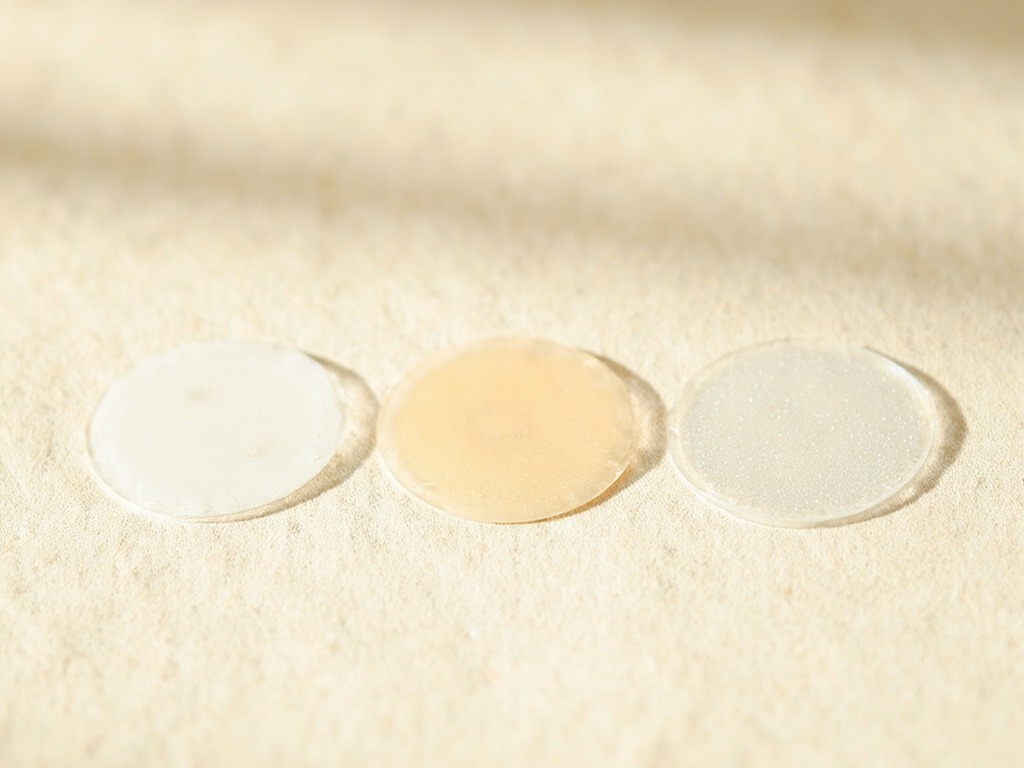
What Is a Hydrocolloid Pimple Patch, Really?
A hydrocolloid pimple patch is a small adhesive dressing originally developed for wound care. The active layer is a hydrophilic polymer matrix — most commonly a blend of sodium carboxymethyl cellulose, pectin, gelatin, and a synthetic elastomer — that absorbs fluid and turns into a soft gel when it contacts wound exudate. When placed over a pimple, the gel absorbs the liquid that would otherwise form a visible whitehead, while the occlusive cover prevents the user from touching or picking the lesion.
The hydrocolloid itself does not "kill acne." It is a moisture-and-pressure management dressing. The marketing claims that conflate hydrocolloid with active acne treatment are misleading. The patch's actual benefits are mechanical and behavioral.
What Does the Patch Actually Absorb?
The gel matrix absorbs water, oil, and small-molecule wound fluid. It does not absorb:
- Hardened sebum plugs under closed comedones.
- Bacteria already inside the follicle (Cutibacterium acnes lives below the patch).
- Inflammatory mediators already released into the dermis.
So the patch is genuinely useful for pimples that have come to a head — papules with visible fluid, post-extraction wounds, and shallow erosions from picking. It is not useful for deep cystic acne, blind pimples, or closed comedones.
When Should You Use One — and When Should You Skip It?
Use a hydrocolloid patch:
- On a pimple that has a visible white or yellow center (fluid is reachable from the surface).
- After you have gently lanced a whitehead with a sterilized needle.
- On a shallow wound from accidental picking, to keep it moist and covered.
- Overnight for 6-8 hours, then replace if exudate is still seeping.
Skip a hydrocolloid patch:
- On a deep cystic nodule — nothing to absorb at the surface.
- On closed comedones (small flesh-colored bumps) — no fluid to draw.
- Over a fresh, open extraction wound with active bleeding — adhesive can disrupt clot formation.
- On a patch of skin with active dermatitis or eczema — occlusive dressing worsens it.
Why Some Patches Add Salicylic Acid or Tea Tree
You will see two product categories. Pure hydrocolloid patches (clear or near-clear, no added actives) and "active" patches with salicylic acid 0.5-2%, niacinamide, or tea tree oil added to the adhesive layer.
The actives do add some benefit on inflamed papules. Salicylic acid at 1-2% gently exfoliates the pore opening and may help the hydrocolloid reach the fluid faster. Tea tree oil at low concentration (under 5%) adds antimicrobial activity, though evidence for acne specifically is mixed. The trade-off: added actives raise the risk of irritation in users with sensitive skin.
How Long Should You Leave One On?
Standard guidance: 6-8 hours overnight, or until the patch turns white/opaque from absorbed exudate. Replace with a fresh patch if more drainage is visible. Do not reuse a patch. Do not leave a single patch on for more than 12 hours — the occlusive cover can over-hydrate the surrounding skin and trigger contact dermatitis.
Does It Work Better Than Just Leaving the Pimple Alone?
Yes, primarily because of behavior modification. The patch physically blocks the user from touching, squeezing, or picking the lesion. Picking is the most common reason a small pimple turns into a week-long red mark. The patch's secondary benefit is the gentle absorption of surface fluid, which shortens the visible whitehead stage.
For deep cystic acne, isotretinoin or hormonal therapy prescribed by a dermatologist will outperform any topical patch by orders of magnitude.
Are There Side Effects?
Hydrocolloid patches are among the lowest-irritation acne products on the market. Possible side effects:
- Mild erythema after removal — usually resolves within an hour.
- Contact dermatitis from the adhesive, particularly in users allergic to acrylic adhesives.
- Over-hydration of surrounding skin if worn too long or on already-compromised skin.
- Folliculitis if reused without replacement — bacterial load on the back of a used patch is high.
Practical Buying and Usage Tips
For first-time users:
- Pick a thickness between 0.3-0.5 mm. Thinner patches are more discreet; thicker patches absorb more fluid but are more visible.
- Cut larger patches into smaller shapes if the pimple is small — less adhesive contact area, less irritation around healthy skin.
- Do not apply serums, toners, or moisturizer over the area before applying the patch. Adhesion drops sharply on oily skin.
- Replace the patch rather than repositioning it once touched.
Brand Owner and OEM Perspective
For private-label hydrocolloid acne patches, the differentiating decisions are:
- Active or non-active formulation (pure hydrocolloid vs. hydrocolloid + salicylic acid or tea tree).
- Patch shape inventory — round 8 mm, 10 mm, 12 mm plus a hydrocolloid-only "blank" 24 mm large patch for jawline and chin clusters.
- Packaging — opaque individual pouches (sterility) vs. resealable multi-packs (convenience).
- Compliance — hydrocolloid dressings are regulated as medical devices (Class I in US, Class IIa in EU under MDR) and require ISO 13485 manufacturing.
References
- U.S. FDA 21 CFR 880.5240 — Medical device classification for adhesive bandage.
- European MDR 2017/745, Rule 4 — Non-invasive devices in contact with injured skin.
- PubMed indexed review: "Hydrocolloid dressings in dermatology" — multiple clinical reviews since 2010.
- ISO 13485:2016 — Medical devices quality management systems.
Looking for an Hydrocolloid Pimple Patch Manufacturer?
Henan Hanmeng Bio-Tech produces private-label hydrocolloid acne patches on our certified cleanroom production line. FDA, EU CE, and ISO 13485 documentation included. Samples shipped in 7 days; bulk MOQ negotiable.
View Our Hydrocolloid Pimple Patch Options Request a Quote
Henan Hanmeng Bio-Tech · Henan, China · +86 17796669065 · 396269538@qq.com

CATEGORIES
LATEST NEWS
- shoulder pain relief patch: How It Works, What to Check, and How to Source It
- pimple patches: choosing between hydrocolloid, microneedle, and salicylic formats
- electrode patches for tens unit
- custom pain patch private label
- Children's Silicone Hydrogel Patches: Safety Standards and Material Selection Guide for Parents
CONTACT US
QQ: 396269538
Phone: 17796669065
Tel: 17796669065
Email: 396269538
Add: Room 001, 1st Floor, Building 1, Zhengzhou Hangmei International Smart City, Intersection of S102 and Nanquan Road, Xuedian Town, Xinzheng City, Zhengzhou, Henan Province, China