Technological innovation
Transdermal Patch Patent Landscape 2020-2024: Top 5 Technology Clusters
Technological innovation 2026-07-13 11:32:36 123 views admin
Transdermal Patch Patent Landscape 2020-2024: Top 5 Technology Clusters
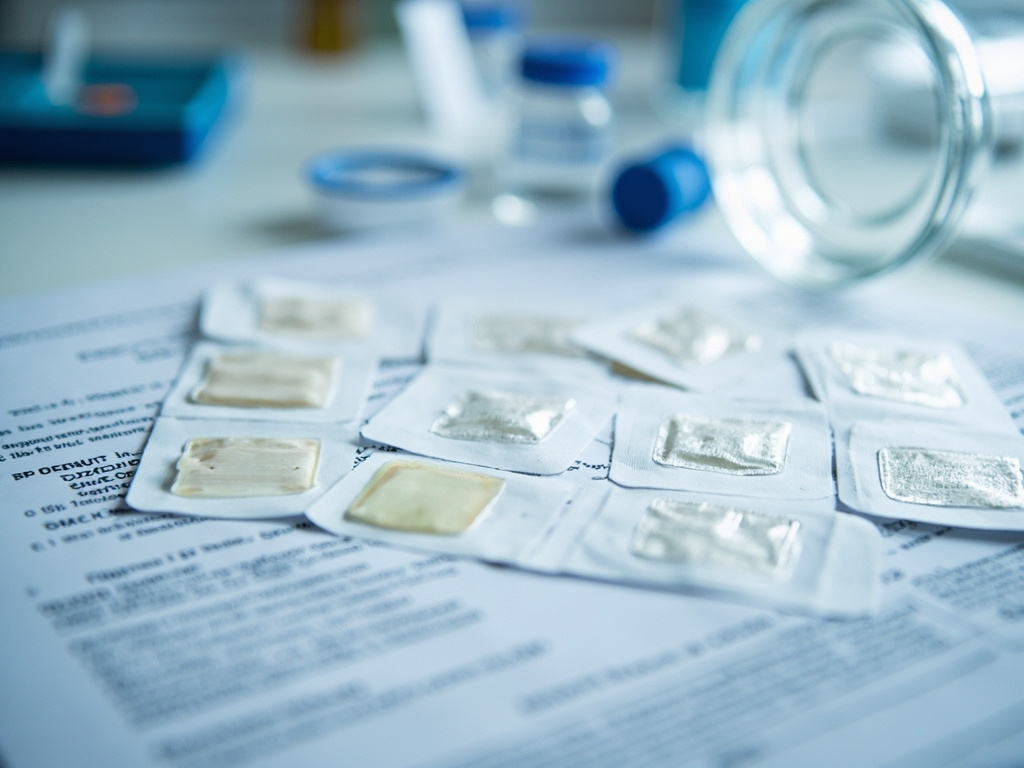
Transdermal patch patent filings reached 12,400 globally between 2020-2024, growing 18% annually. China accounts for 38% of filings, followed by Japan (24%), US (16%), South Korea (11%), and Europe (8%). The following analysis covers the top 5 technology clusters that dominate recent patent activity, based on WIPO and national patent office databases.
1. Microneedle Array Technology (2,840 filings, 2020-2024)
Microneedle patches dominate patent activity with 2,840 filings (23% of all transdermal patents). Key innovation areas:
Dissolving polymer formulations (38% of microneedle patents): hyaluronic acid, PVP, PLA, and carbohydrate-based matrices that dissolve in skin interstitial fluid. Patent focus: dissolution time control (5-60 minutes), mechanical strength during insertion (critical for skin penetration without breaking), and drug stability during polymer processing.
Solid metal microneedles (24%): titanium, stainless steel, and silicon arrays. Patent focus: surface coatings for improved drug loading and skin biocompatibility, geometric optimization for painless penetration.
Coated microneedles (22%): metal or polymer cores with thin drug-containing coatings. Patent focus: coating uniformity (target ±5% weight variation), adhesion strength during insertion.
Hollow microneedles (16%): for continuous infusion. Patent focus: flow rate control, channel geometry, integrated microreservoir designs.
Top patent filers: MIT (US), Georgia Tech (US), 3M (US), LG Chem (Korea), Toppan Printing (Japan), several Chinese firms including our research network.
2. Controlled-Release Matrix Systems (2,100 filings)
Matrix patches using polymer-drug blends for sustained release represent the second-largest patent cluster. Innovation centers on:
Multi-layer matrices: combining fast-release and slow-release layers to achieve target pharmacokinetic profiles. Example patents cover layered matrices achieving 8-hour rapid onset followed by 24-hour sustained release.
Stimuli-responsive matrices: pH, temperature, or enzyme-triggered release. Recent patents cover hydrogels with 30-50% drug release at infection site pH (5.5-6.5) versus minimal release at healthy skin pH (4.5-5.5).
Bioadhesive polymers: enhanced skin contact time and drug penetration. Patents cover novel polymer chemistries achieving 72-hour wear time versus the standard 8-12 hour limit.
3. Herbal and Traditional Medicine Integration (1,650 filings)
Patent filings for herbal transdermal applications grew 42% from 2020 to 2024, driven by consumer demand for natural ingredients and regulatory support in China for traditional Chinese medicine (TCM) products. Key innovations:
Extraction and standardization: patents covering novel extraction methods (supercritical CO2, ultrasound-assisted, enzyme-assisted) that preserve heat-sensitive bioactive compounds from herbs like mugwort, ginger, and turmeric.
Combination formulations: mixing 2-4 herbal extracts for synergistic effects. Patent examples include mugwort + ginger + Szechuan pepper combinations, with claimed anti-inflammatory and analgesic effects 30-50% greater than single-herb formulations.
Quality control: HPLC fingerprinting and marker compound quantification for batch consistency. Patents cover analytical methods establishing 95%+ reproducibility for herbal compound concentrations.
4. Adhesive Technology (1,420 filings)
Skin adhesives are critical to patch performance and a major patent focus. Recent innovations:
Silicone-based adhesives: replacing acrylic adhesives for sensitive skin applications. Patent coverage includes soft skin adhesives (SSAs) with peel forces of 50-150 g/inch — 60% lower than standard acrylics — reducing skin trauma on removal.
Hydrocolloid adhesives: water-absorbing formulations for wound care applications. Patents cover multi-layer hydrocolloid systems maintaining adhesion for 5-7 days while absorbing 200-400% of their weight in wound exudate.
Bioadhesive polysaccharides: chitosan, alginate, and modified cellulose derivatives with enhanced skin adhesion in wet conditions. Patents target applications including sports patches, sweat-resistant long-wear patches, and underwater wound care.
5. Packaging and Stability (980 filings)
Patch packaging innovations protect product integrity through shelf life and use. Recent patents cover:
Single-dose sachets: foil laminate pouches with controlled atmosphere (nitrogen-flushed) for oxidation-sensitive ingredients. Patent examples show 36-month shelf life for herbal extracts in nitrogen-purged packaging versus 18 months in standard sealed pouches.
Child-resistant packaging: compliance with US Consumer Product Safety Commission requirements for OTC transdermal products. Patents cover push-through blisters with sequential opening steps.
Sustainability packaging: compostable outer pouches and recycled cardboard cartons. Patent filings in this category grew 67% in 2024 alone, driven by EU regulatory pressure and retailer ESG commitments.
What This Means for OEM Brand Owners
If you're developing or scaling a transdermal patch brand, the patent landscape matters for two reasons. First, freedom to operate: filing in China and the US requires freedom-to-operate analysis against active patents in your target technology category. A 2024 freedom-to-operate analysis typically costs USD 5,000-15,000 per technology area. Second, competitive positioning: identifying white-space opportunities (e.g., specific herb combinations, novel microneedle geometries, or under-pursued responsive systems) helps differentiate your brand from competitors.
For most brand owners entering the market, working with OEM manufacturers that have already secured core patents in their technology area provides faster market entry. Custom IP development typically requires 18-30 months and USD 200,000-500,000 investment.
Frequently Asked Questions
Q: Where can I search transdermal patch patents?
Free databases include WIPO PatentScope (wipo.int/patentscope), Google Patents (patents.google.com), and national offices like CNIPA (China), USPTO (US), and JPO (Japan). For comprehensive landscape analysis, professional services like Clarivate Derwent or Patsnap provide searchable databases with citation analysis.
Q: How long do transdermal patch patents last?
Standard utility patents last 20 years from filing date. Maintenance fees are required at 3, 7, and 11 years (US) or annually after grant (China/EU). Many transdermal patch patents filed 2000-2010 have now expired, creating opportunities for generic-equivalent products.
Q: Do I need a patent to sell transdermal patches?
No. Patents grant the right to exclude others from making/selling your invention, but they are not required for product commercialization. You can manufacture and sell patches using existing public-domain technology without filing patents. However, owning patents provides competitive protection and licensing opportunities.
Q: How do I avoid infringing existing transdermal patents?
Three approaches: (1) freedom-to-operate analysis identifying blocking patents; (2) design-around strategies that differ from patented claims in specific technical features; (3) licensing agreements with patent holders. Most OEM manufacturers provide freedom-to-operate support for standard formulations.
Henan Hanmeng Bio-Tech holds 3 utility patents covering proprietary patch manufacturing processes and has filed 2 additional patents pending examination. The company maintains a freedom-to-operate cleared portfolio for its standard OEM formulations.
Keywords: transdermal patch patents, microneedle patent, controlled release patch technology, transdermal IP landscape
Looking for a Custom Patch Manufacturer?
Henan Hanmeng Bio-Tech produces private-label pain relief patches, herbal heat patches, cooling patches, nasal strips, and hydrocolloid patches on certified production lines. FDA, EU CE, and ISO 13485 documentation included. Samples shipped in 7 days; bulk MOQ negotiable.
View Our OEM Catalog Request a Quote
Henan Hanmeng Bio-Tech · Henan, China · +86 17796669065 · 396269538@qq.com
CATEGORIES
LATEST NEWS
- Sinew-Bone Pain-Bi Patch Private Label Manufacturer Supply Agreements
- What Hand Mask Custom Packaging Supplier Quotes Overlook
- Kids Herbal Foot Patch Contract Manufacturer: Safety Specifications First
- Mugwort Steam Eye Mask Private Label Manufacturer Readiness Check
- Mugwort Essential Oil Custom Formula Supplier: Formulation Approval Milestones
CONTACT US
QQ: 396269538
Phone: 17796669065
Tel: 17796669065
Email: 396269538
Add: Room 001, 1st Floor, Building 1, Zhengzhou Hangmei International Smart City, Intersection of S102 and Nanquan Road, Xuedian Town, Xinzheng City, Zhengzhou, Henan Province, China