Industry news
Inside an Old Beijing Foot Patch Custom Formula Supplier
Industry news 2026-10-21 08:18:04 2 views admin
The Strongest-Smelling Foot Patch Is Usually the Wrong Choice
A buyer opens an Old Beijing Foot Patch sample, smells the herbal aroma, and asks the factory to make it stronger. That request sounds reasonable. A noticeable scent helps distinguish the product, and some brands associate a powerful herbal smell with a traditional formulation.
I disagree with that approach. Fragrance strength is one of the easiest specifications to exaggerate and one of the hardest to correct after production.
An Old Beijing Foot Patch typically combines a fabric-based adhesive component with a separate herbal filling or pad, depending on its construction. Fragrance can interact with the filling, backing, adhesive, and individual packaging. A stronger fragrance does not automatically create a better consumer experience.
For an old beijing foot patch custom formula supplier, the right question is whether the finished patch delivers a consistent, acceptable scent throughout its intended use and storage.
Buyers should specify fragrance concentration, perceived intensity, ingredient disclosure, and testing conditions separately. Those four decisions determine whether a fragrance can move from an attractive sample to a repeatable private-label product.
Four Fragrance Intensity Levels, and Where Each Belongs
I would offer four development levels, but I would not encourage a first-time buyer to select the strongest one.
The following percentages are illustrative fragrance-compound loads relative to the total formulated herbal filling, not universal safety limits or guaranteed sensory results. Actual allowable concentrations depend on the fragrance composition, exposure conditions, product classification, and applicable safety assessment.
| Level | Illustrative fragrance load | Sensory target | Typical brand positioning |
|---|---|---|---|
| 0 — Unfragranced | 0% added fragrance | Natural material odor | Minimalist, fragrance-free positioning |
| 1 — Light | 0.05–0.15% | Subtle aroma close to the patch | Conservative first launch |
| 2 — Moderate | 0.20–0.40% | Clearly noticeable when opened | Traditional herbal sensory positioning |
| 3 — Strong | 0.50–0.80% | Pronounced aroma during handling | Specialist products after validation |
These are development examples, not a recommendation to use the upper ranges without testing.
The biggest mistake is treating fragrance load and perceived intensity as interchangeable. They are not.
A small amount of a high-impact aromatic ingredient may smell stronger than a larger quantity of a milder blend. The herbal carrier can absorb volatile components, while the pouch can concentrate aroma in the headspace.
Two Old Beijing Foot Patch formulas with the same fragrance percentage may therefore smell completely different after packaging.
My preference is to establish a sensory scale from 0 to 5, where 0 means no detectable added scent and 5 means overpowering. The factory should evaluate the finished product against that scale rather than promising that a particular percentage will deliver a particular impression.
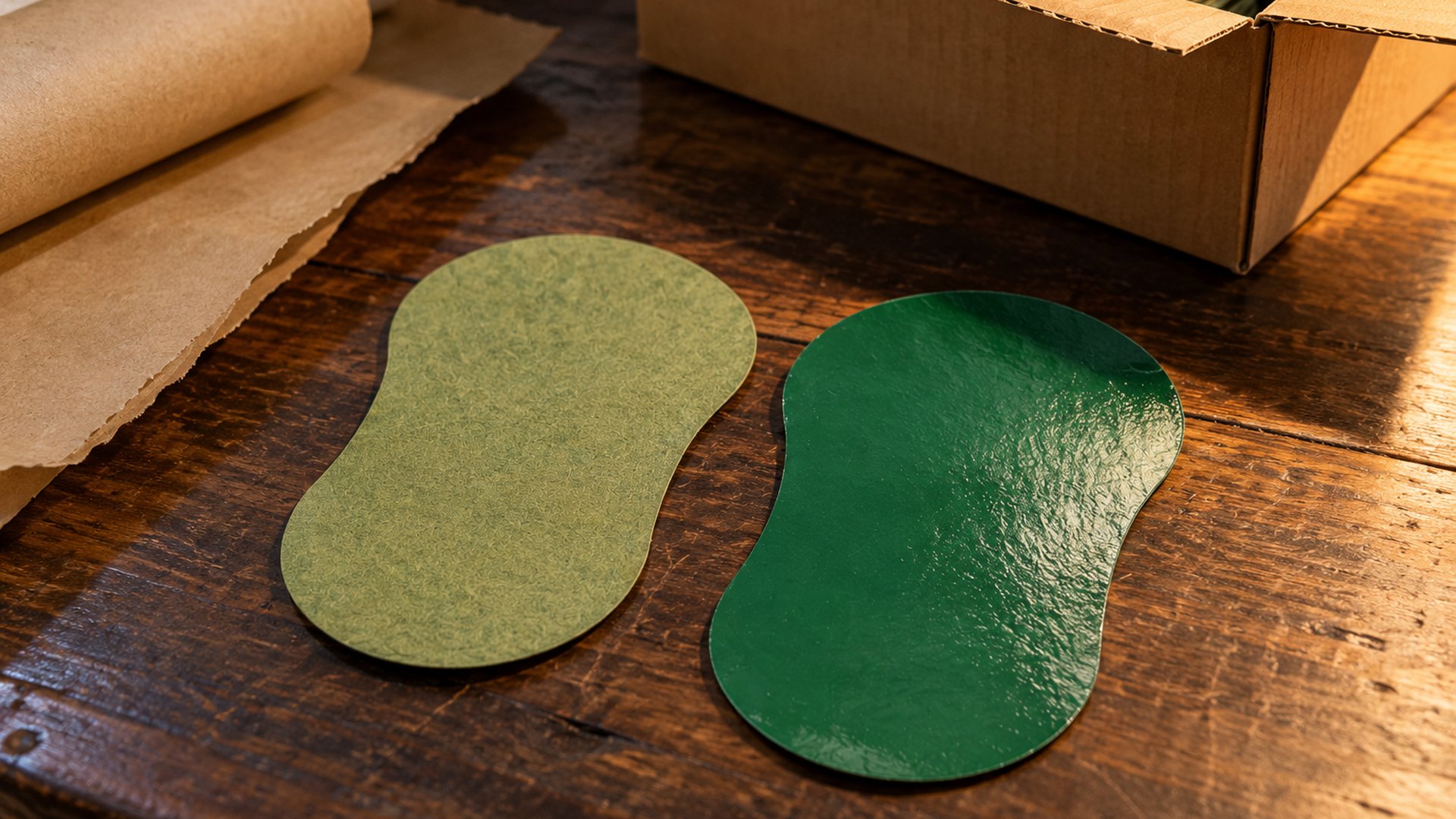
For mainstream private-label positioning, I would initially target a perceived intensity of 1–2 out of 5.
A stronger version should earn its place through actual user and material-compatibility testing, not through a buyer's first reaction to an opened fragrance bottle.
The Allergen Declaration Is More Important Than the Fragrance Name
Buyers often ask whether a formula contains lavender, mugwort, ginger, or another recognizable botanical ingredient. That is useful for product positioning, but it does not establish the fragrance's complete allergen profile.
A fragrance described as "herbal" can contain numerous aromatic substances. Some may require specific disclosure depending on the destination market, product classification, concentration, and exposure route.
I would not approve a custom fragrance without a supplier declaration covering the fragrance mixture and relevant constituents.
At minimum, the technical file should identify the fragrance supplier, mixture reference, ingredient names where disclosure is required, relevant CAS numbers, concentration information, identified fragrance allergens, and applicable safety or use restrictions.
A practical declaration record should contain these fields:
- Ingredient or allergen name, including applicable INCI terminology
- CAS number where available
- Concentration in the fragrance mixture
- Calculated concentration in the finished Old Beijing Foot Patch
- Applicable destination-market disclosure requirement
- Supporting safety assessment or supplier documentation
A supplier's IFRA conformity statement may be useful, but it is not a substitute for a product-specific safety assessment or regulatory classification.
That distinction matters. The European Union, United States, and other markets do not apply identical labeling frameworks to every externally applied product. A foot patch classified as a cosmetic in one jurisdiction may require a different assessment elsewhere.
The factory and brand owner must establish the product's legal classification before deciding which allergen declarations are mandatory.
I also advise against using "hypoallergenic" as an easy marketing shortcut. A pleasant botanical fragrance can still contain sensitizing substances, and a reduced fragrance load does not establish that a finished product is suitable for everyone.
Test the Finished Patch, Not a Fragrance Strip
A fragrance strip tells you how a scent smells on paper. It does not tell you how the same mixture behaves inside an Old Beijing Foot Patch.
This is where I would spend the development budget.
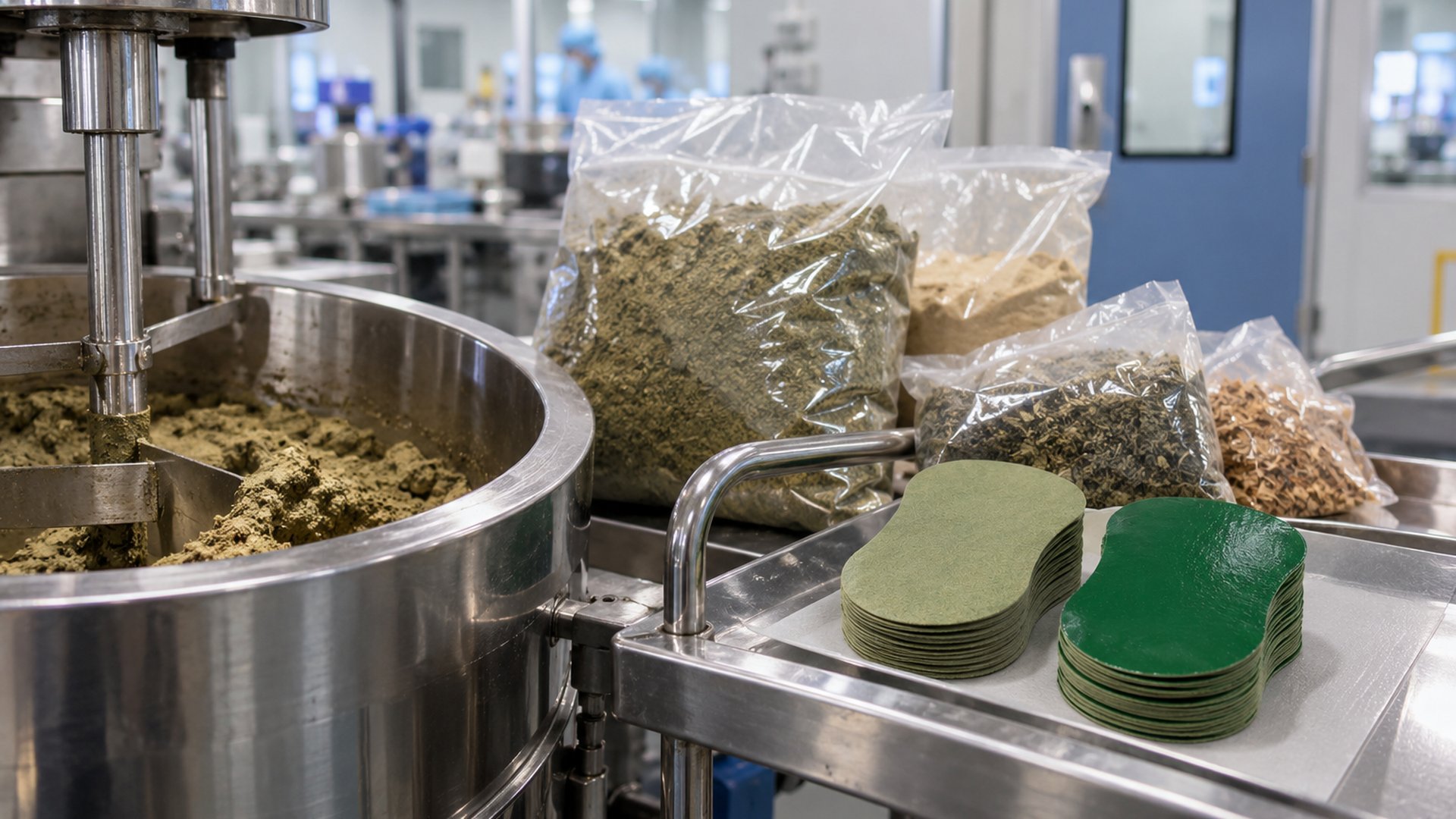
Prepare representative finished patches using the intended herbal carrier, adhesive construction, and packaging materials. Keep the base formulation consistent while comparing fragrance variants.
Assess aroma immediately after opening, after the intended wearing period, and following the proposed storage conditions. Record perceived intensity, odor changes, visible oil migration, adhesive changes, and packaging interaction.
The evaluation should include blinded sensory comparisons where practical. Otherwise, the person who knows which sample contains more fragrance may unconsciously score it higher.
For removal and cleanup, a proposed development protocol could use three standardized wash-off cycles on an appropriate test substrate, with each cycle consisting of application, removal, and a defined cleaning procedure.
That is a comparative laboratory protocol, not a validated skin-safety test. Its purpose is to observe whether aromatic residue persists or whether the fragrance mixture changes cleanup behavior.
Do not substitute this procedure for appropriate irritation, sensitization, or material-compatibility testing when such evidence is required.
A patch that smells excellent when opened but leaves excessive residue, alters adhesive performance, or develops an unpleasant odor during storage is not ready for approval.
The fragrance specification should also address oxidation and stability. Certain aromatic components can change during storage, particularly when exposed to heat, light, or oxygen.
A good initial smell is only the beginning of the evaluation.
My Default Specification for a First Private-Label Launch
For a new Old Beijing Foot Patch brand, I would begin with either an unfragranced version or a light herbal fragrance.
If the buyer specifically wants an aromatic product, my starting development target would be approximately 0.10% added fragrance in the herbal filling, subject to ingredient-specific safety and compatibility review.
I would then set the finished-patch sensory target at 1–2 on the agreed five-point scale.
This gives the brand a recognizable aroma without making fragrance the dominant product characteristic.
The approval package should include the fragrance mixture reference, calculated finished-product composition, allergen declaration, safety documentation, finished-patch sensory results, packaging-compatibility findings, and an approved reference sample.
Any later change to the fragrance supplier or mixture should trigger a documented change review. Matching the fragrance name alone is insufficient because different suppliers may use different compositions.
For an old beijing foot patch custom formula supplier, this is a straightforward manufacturing discipline: lock the actual mixture, verify the finished product, and control changes.
The same principle applies to optional botanical extracts, essential oils, and other aromatic additives. Each addition needs a defined technical purpose and evidence appropriate to the intended skin-contact conditions.
I would reject a proposal that increases fragrance merely to make a sample smell more impressive.
The better first launch is a controlled formula that consumers can recognize, the factory can reproduce, and the brand can document.
Fragrance should support the Old Beijing Foot Patch experience. It should never become the variable that makes the product difficult to manufacture consistently.
CATEGORIES
LATEST NEWS
- Inside an Old Beijing Foot Patch Custom Formula Supplier
- Sinew-Bone Pain-Bi Patch Private Label Manufacturer Supply Agreements
- What Hand Mask Custom Packaging Supplier Quotes Overlook
- Kids Herbal Foot Patch Contract Manufacturer: Safety Specifications First
- Mugwort Steam Eye Mask Private Label Manufacturer Readiness Check
CONTACT US
QQ: 396269538
Phone: 17796669065
Tel: 17796669065
Email: 396269538
Add: Room 001, 1st Floor, Building 1, Zhengzhou Hangmei International Smart City, Intersection of S102 and Nanquan Road, Xuedian Town, Xinzheng City, Zhengzhou, Henan Province, China