Industry news
Cooling Eye Mask Patches: Who They Help, What to Look For in a Quality One
Industry news 2026-07-15 06:52:00 147 views admin
Cooling Eye Mask Patches: Who They Help, What to Look For in a Quality One
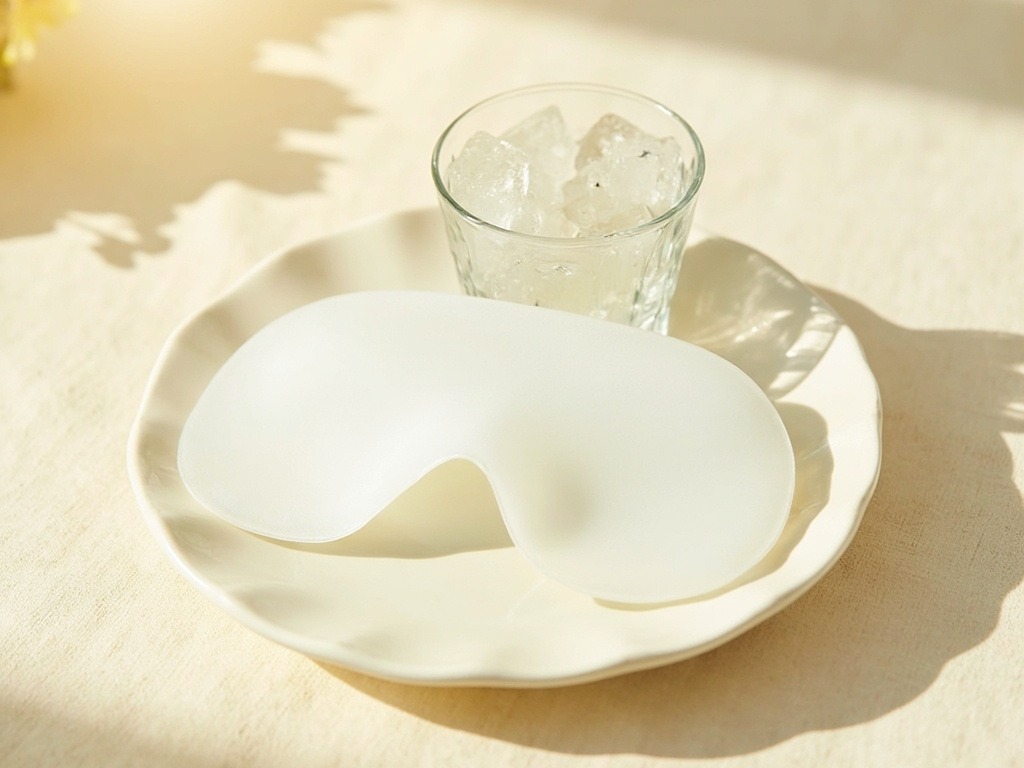
A quality cooling eye mask patch is a hydrogel or non-woven adhesive patch saturated with a water-based gel and a small amount of skin-safe humectant; it works by holding a cool temperature against the periorbital skin, restricting superficial blood vessels briefly, and re-warming slowly as the gel loses its cooling reserve to the skin.
What cooling eye mask patches actually do
Three physiological effects happen simultaneously. First, the cool surface temperature of the gel constricts superficial blood vessels, which reduces the appearance of puffiness and the sensation of swelling around the lower eyelid. Second, the cool sensation suppresses the local nerve signal that carries the feeling of "tired eyes" or "heavy eyelids" to the brain. Third, the moisture from the hydrogel migrates into the stratum corneum over 15-20 minutes, giving a temporary plumping effect that can soften the look of fine dehydration lines.
None of these effects are permanent. The vessel constriction reverses within an hour. The nerve adaptation reverses immediately when the patch is removed. The hydration plumping fades over the next two hours. The takeaway: a cooling eye mask patch delivers short-term refresh, not treatment for chronic skin or eye conditions.
What to check on the package or product page
The label of a quality product should disclose enough information for a buyer to make an informed choice. If any of the items below cannot be confirmed from the package, the product page, or the manufacturer, the safer default is to choose another option.
- Ingredient list, in descending order of concentration. A reasonable formulation leads with water, includes a humectant such as glycerin or hyaluronic acid, lists a gelling agent, and discloses any preservative system.
- pH range in contact with skin. Around 5.0 to 6.5 is typical for periorbital patches; values outside that range cause stinging in users with sensitive skin.
- Storage and transport temperature range. Patches that rely on a chilled gel reservoir are temperature-sensitive during shipping; a manufacturer that addresses this clearly has generally thought through supply-chain integrity.
- Hypoallergenic claim with supporting test method. The bare word "hypoallergenic" is not a regulated claim in most countries; a test method (HRIPT or similar) gives it actual meaning.
- Single-use indication. Most patches are single-use because the cooling reserve and moisture content drop sharply after one application; reusing a patch that is not labeled for multiple uses is unhygienic around the eye.
- Country of manufacture and brand contact information. Trivial indicator, but absence of this information from the packaging correlates strongly with undisclosed formulation shortcuts elsewhere.
What to avoid
- "Medical-grade" or "doctor-formulated" without a verifiable credential. These phrases are not regulated in most jurisdictions and are frequently used by importers who buy finished patches from contract manufacturers without changing the formulation.
- Caffeine or "active" ingredients marketed for dark circles without a concentration or test data. Topical caffeine at concentrations that work in eye creams rarely transfers at effective concentrations through a hydrogel patch.
- "24-hour effect" or "long-lasting hydration" claims. Patches are sealed single-use items; hydration they deliver is measured in tens of minutes, not hours.
- Fragranced patches. Fragrance in an adhesive or hydrogel patch near the eye substantially increases the rate of contact dermatitis with no benefit. Skip them.
- "Detox" claims. There is no plausible mechanism by which a periorbital hydrogel patch supports systemic detoxification. Marketing language like this signals that the formulation was designed for the marketing claim rather than the user's benefit.
How to use a cooling eye mask patch safely
- Refrigerate the unopened sachet for 15-30 minutes before use, if the product label allows; do not freeze.
- Wash the face, especially the periorbital area, with a mild cleanser and water; pat dry.
- Remove the protective film and apply the patch across the closed eye, centered on the under-eye area or extending from temple to temple.
- Leave on for the labeled duration, typically 15-20 minutes.
- Remove gently; do not tug. Discard the patch; do not reuse.
- Rinse any residual gel with lukewarm water if it feels sticky.
When cooling eye mask patches are not appropriate
Eye patches are a cosmetic and sensory comfort item, not a treatment. Use should not replace clinical care for an actual eye or eyelid condition. Specifically, do not apply a patch over an infected eye (conjunctivitis, stye), over irritated or broken skin, or in the presence of undiagnosed vision changes. Stop use if the skin around the eye shows redness, swelling, or other signs of a reaction.
Looking for a Custom Patch Manufacturer?
Henan Hanmeng Bio-Tech produces private-label pain relief patches, herbal heat patches, cooling patches, nasal strips, and hydrocolloid patches on certified production lines. FDA, EU CE, and ISO 13485 documentation included. Samples shipped in 7 days; bulk MOQ negotiable.
View Our OEM Catalog Request a Quote
Henan Hanmeng Bio-Tech · Henan, China · +86 17796669065 · 396269538@qq.com

CATEGORIES
LATEST NEWS
- Sinew-Bone Pain-Bi Patch Private Label Manufacturer Supply Agreements
- What Hand Mask Custom Packaging Supplier Quotes Overlook
- Kids Herbal Foot Patch Contract Manufacturer: Safety Specifications First
- Mugwort Steam Eye Mask Private Label Manufacturer Readiness Check
- Mugwort Essential Oil Custom Formula Supplier: Formulation Approval Milestones
CONTACT US
QQ: 396269538
Phone: 17796669065
Tel: 17796669065
Email: 396269538
Add: Room 001, 1st Floor, Building 1, Zhengzhou Hangmei International Smart City, Intersection of S102 and Nanquan Road, Xuedian Town, Xinzheng City, Zhengzhou, Henan Province, China