Industry news
patches for tens unit: how to choose electrode pads that actually fit your therapy routine
Industry news 2026-08-20 09:30:45 155 views admin
 Best for: home TENS users managing chronic pain, athletes using EMS for muscle recovery, older adults buying pads for a family member, first-time buyers comparing gel vs. pin connectors
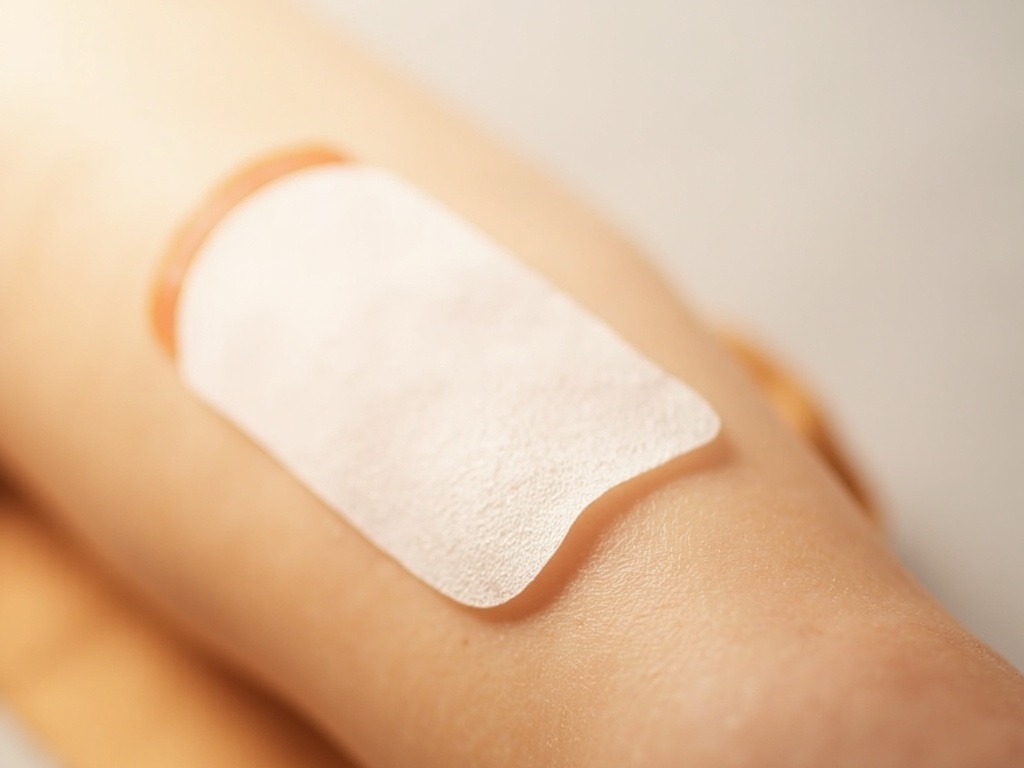
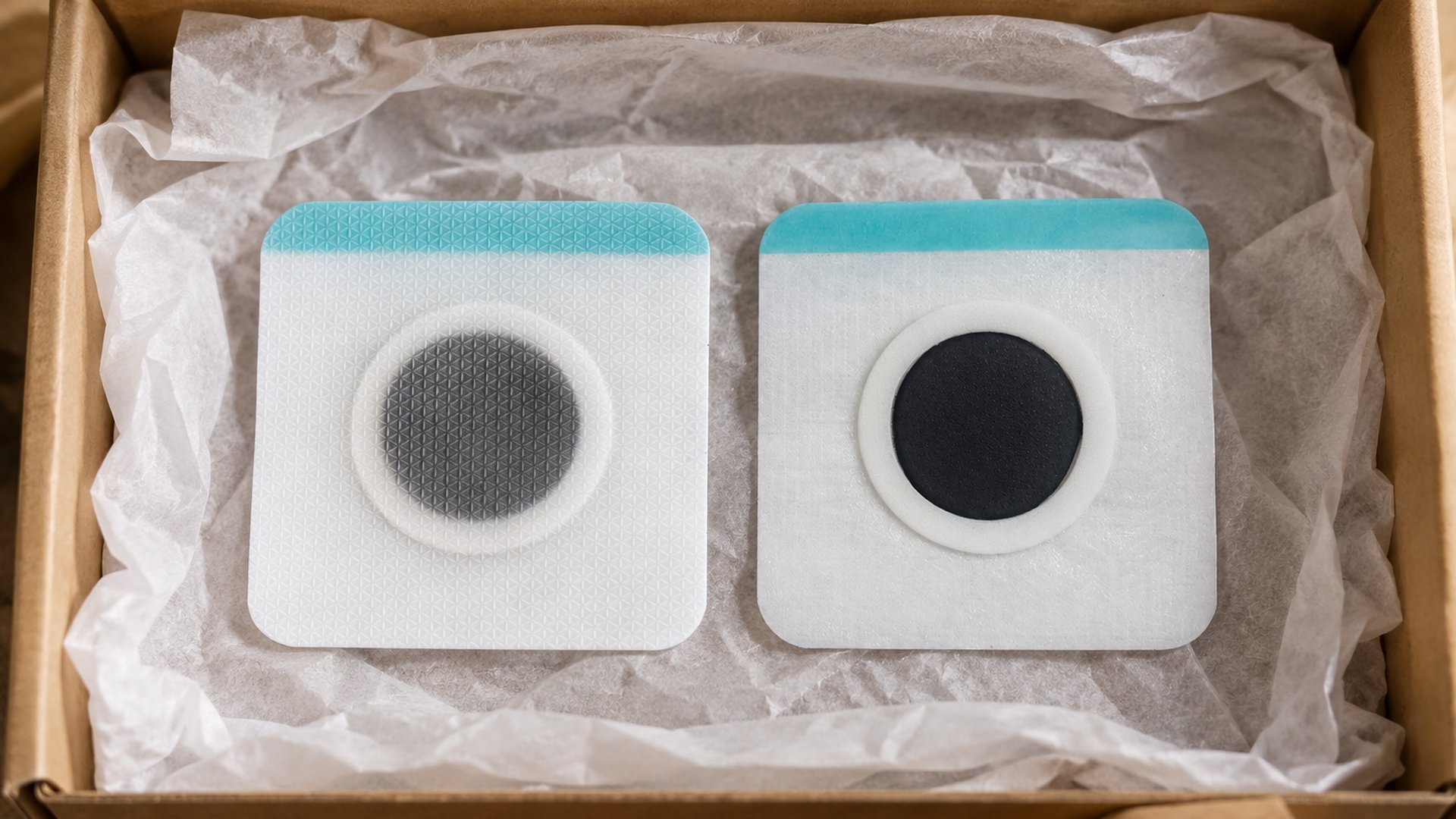
A patch for a TENS unit is a self-adhesive electrode that delivers a low-voltage current from the stimulator through your skin to the underlying nerve or muscle fibres. The pad itself is a layered sandwich: a conductive hydrogel on the skin side, a carbon film or silver-coated conductor in the middle, and either a snap (metal stud) or pin (small hole) connector on the lead-wire side. Most consumer pads sold today are 40 × 40 mm squares, 50 × 50 mm,50 × 100 mm rectangles, or 75 × 130 mm "butterfly" shapes for the lower back. If you use a TENS machine for back pain, knee rehabilitation, or post-workout recovery, the connector type, gel chemistry, and pad dimensions determine whether the stimulation feels clean or whether the current concentrates into a hot spot that irritates the skin.
Snap vs pin connector: what actually fits your lead wire
The connector on the back of the pad must match the plug on your lead wire. Two systems dominate the consumer market:
- Snap (also called "pig-tail" or "button"): a small metal stud, usually 3.5 mm or 4 mm, that the lead-wire plug pushes onto. Snap pads are common with units sold in the US, UK, and Australia. The mechanical click tells you the connection is seated.
- Pin (also called "female socket" or "pin-hole"): a 2 mm hole in the pad into which the lead-wire pin is inserted. Pin pads are common with European-made devices, including many German and Italian brands. They feel less secure than a snap when you pull on the wire.
Adapters exist in both directions, but each junction adds a small resistance and a possible drop-out point. If your unit takes a snap and you buy a pin pad by mistake, no amount of pushing will seat it. Check the back of an existing pad you have at home before you reorder.
Spec table: typical consumer electrode pad formats
| Pad shape | Common size | Typical use area | Connector style usually shipped |
|---|---|---|---|
| Square | 40 × 40 mm or 50 × 50 mm | Trigger points, forearms, calves | Snap or pin |
| Rectangle | 50 × 100 mm | Quadriceps, hamstrings, upper back | Snap |
| Oval | 50 × 90 mm | Shoulder, gluteal, around the kneecap | Snap or pin |
| Butterfly / figure-8 | 75 × 130 mm | Lumbar spine, large muscle groups | Snap |
| Mini round | 25–30 mm diameter | Facial TENS (with low-intensity units only), small joints | Snap |
This table reflects what's common on consumer shelves; it isn't a validated specification for any one brand. Manufacturers in the home-care segment typically ship pads in resealable pouches with a plastic liner that sits on top of the gel between uses — keep that liner, because it is the single biggest factor in gel longevity.
Gel chemistry and re-use cycles
Almost every reusable pad you'll find uses a hydrogel — a polymer mesh (often an acrylic or silicone matrix) that holds water and a dissolved salt, usually potassium chloride or a similar electrolyte. The gel does two jobs: it spreads the current over the pad surface so it doesn't concentrate at the connector, and it lowers the skin-electrode impedance so the unit can deliver a comfortable sensation at a lower voltage.
Re-use cycles depend on three things — skin oils, storage humidity, and how aggressively you peel the pad off.
- If you store a pad on its plastic liner inside a slightly damp pouch, a typical gel survives 20–40 sessions before you notice tingling, which is the first warning that the gel is drying out.
- If you store the pad dry on its liner, expect the upper end; if you store it in a hot bathroom, expect6–12 sessions before the gel starts to crust at the edges.
- If you stretch the pad sideways when removing it, you can tear the gel away from the carbon film in a single session — the pad will then deliver a "spark" sensation that means it's time to discard it.
Most pads lose adhesion long before they lose conductivity. A pad that still sticks but feels "tingly" or "pinchy" is usually past its useful life. Replacing on feel rather than on a calendar is the safer rule.
When to replace the pad
Five concrete signals tell you the pad is finished and the gel is no longer doing its job:
- The edges curl up within a minute of application, even after the skin has been cleaned.
- The pad no longer feels tacky when you touch it with a dry fingertip.
- The stimulation feels "sharper" than it did a week ago at the same intensity setting.
- The gel has visible dry patches, especially around the connector, where the carbon film shows through.
- The pad leaves a residue on your skin that doesn't wipe off with a damp cloth.
Two of those together is enough to discard. One by itself might just mean your skin prep was off that day.
Skin preparation rules that protect both you and the pad
The electrode sits on the stratum corneum — the outermost, dead-cell layer of the epidermis. Anything you leave on that layer sits between the gel and the conductive tissue underneath. A clean surface gives a more even current and dramatically extends pad life. The minimum routine:
- Wash the area with plain soap and warm water. Skip alcohol-based wipes; they dehydrate the gel.
- Dry thoroughly. Any moisture film makes the pad slip and concentrates current at the contact points.
- Shave dense body hair once every few sessions if the pad keeps peeling off — but shave at least 24 hours before, because freshly shaved skin is micro-abraded and will sting under stimulation.
- Don't apply lotion, oil, or cream to the area in the hour before use. Oils block the hydrogel's ionic contact.
- Rotate between two or three sites for the same muscle group; repeatedly placing the pad on exactly the same spot raises the local irritation risk.
The three mistakes that shorten pad life and irritate skin
These are the patterns we see most often when someone wonders why their pads "stopped working" after only a handful of uses.
- Storing the pad without its liner. Air exposure dehydrates the hydrogel in a day or two. A bare pad on a counter is a dead pad by the weekend.
- Re-using a pad that's already lost adhesion. If the corners lift, current crowds into the centre of the pad and you feel a sting that wasn't there before. Replace the pad rather than pressing it down harder.
- Running the unit at maximum intensity on a fresh pad. Start at the lowest intensity and ramp up over30–60 seconds. A fresh pad with full gel conducts more efficiently than a worn pad, so the same dial setting delivers more current.
Cost-per-session decision rule
Two simple calculations help a home user decide whether to buy a multi-pack or switch brands. First, divide the pack price by the realistic re-use count (20–40 sessions for a stored-liner pad, 6–12 for one kept in a bathroom). Anything under roughly the cost of a cup of coffee per session is in the normal consumer range; anything dramatically above that is being sold on a premium brand or specialty claim you may not need. Second, compare the cost per square centimetre of gel — a 50 × 100 mm rectangle gives you50 cm² of electrode contact, while a 40 × 40 mm square gives you 16 cm². A larger pad is not always a better pad; current density matters, and over-padding a small muscle just spreads the same stimulus thinner.
Limitations and safety notes
Self-adhesive electrode pads are external accessories, not medical devices in their own right; their safety depends on the stimulator they are paired with. Do not place pads over broken skin, varicose veins, the carotid sinus in the neck, or directly over the heart. Stop a session if the skin under the pad turns red and the redness does not fade within an hour, or if you feel any chest tightness, dizziness, or muscle twitching you cannot control. Pregnant users, people with implanted electronic devices (pacemakers, defibrillators, insulin pumps), and anyone with undiagnosed pain should speak with a clinician before starting TENS or EMS. This article is an accessory-buying guide, not a clinical reference; treat any specific therapy protocol as a conversation with a qualified practitioner.
Buyer checklist before you reorder
- Connector matches the lead wire (snap or pin, exact dimension).
- Pad size covers the target muscle without spilling over bone.
- Hydrogel is the gel type, not a dry carbon-rubber plate.
- Resealable pouch and a plastic liner are in the box.
- Manufacturer lists a re-use cycle range and a batch or lot code.
What to look for if you want pads made to a specification
If you are comparing off-the-shelf pads and want the option of custom sizes, custom gel adhesion levels, or private-label packaging, Henan Hanmeng Bio-Tech supplies self-adhesive hydrogel electrode pads with snap and pin connector options for consumer TENS and EMS use. The company works with hydrogel formulation, pad geometry, and packaging formats within its own manufacturing scope, so buyers looking for a private-label TENS accessory line can request samples against their own specification rather than choosing from a fixed catalogue.
CATEGORIES
LATEST NEWS
- Sinew-Bone Pain-Bi Patch Private Label Manufacturer Supply Agreements
- What Hand Mask Custom Packaging Supplier Quotes Overlook
- Kids Herbal Foot Patch Contract Manufacturer: Safety Specifications First
- Mugwort Steam Eye Mask Private Label Manufacturer Readiness Check
- Mugwort Essential Oil Custom Formula Supplier: Formulation Approval Milestones
CONTACT US
QQ: 396269538
Phone: 17796669065
Tel: 17796669065
Email: 396269538
Add: Room 001, 1st Floor, Building 1, Zhengzhou Hangmei International Smart City, Intersection of S102 and Nanquan Road, Xuedian Town, Xinzheng City, Zhengzhou, Henan Province, China