Industry news
lidocaine patch side effects
Industry news 2026-08-10 09:21:06 90 views admin
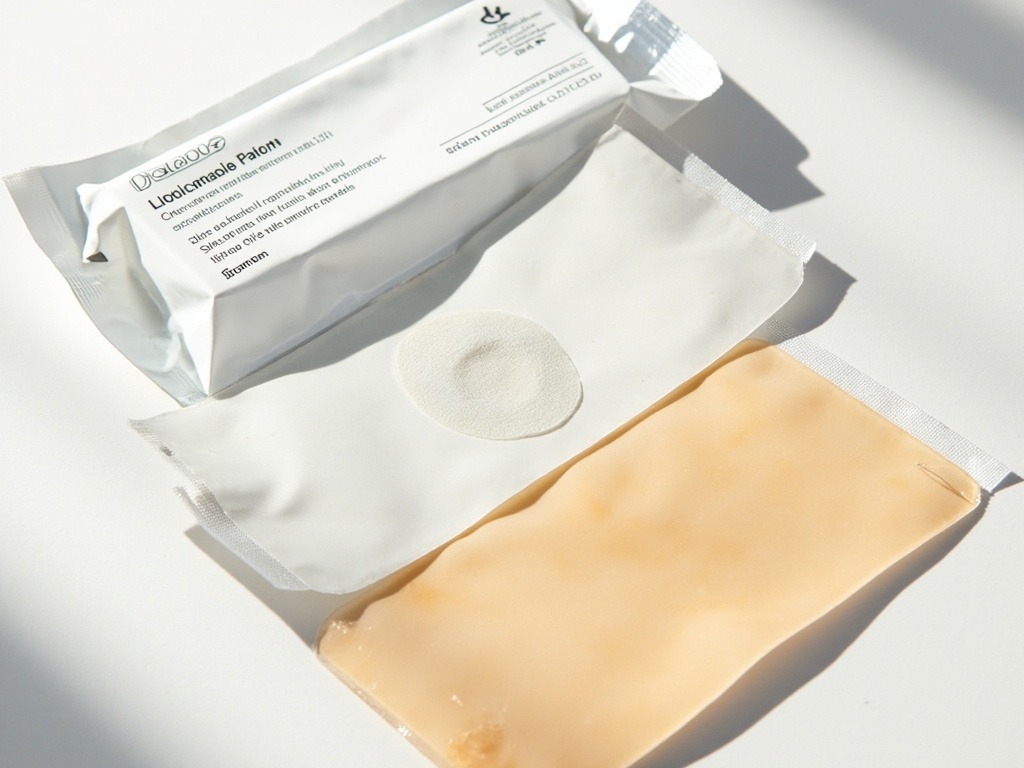
Best for: shoppers comparing OTC pain patches, first-time lidocaine patch users, people with sensitive or allergy-prone skin, caregivers buying for an older relative
Common lidocaine patch side effects are mild and skin-local: redness, itching, a burning or tingling sensation, and mild swelling where the patch sits. Systemic lidocaine absorption from an OTC 4% patch is low, but it can rise if you cover the patch with a heating pad, wear it longer than directed, or apply it on broken skin — that's when dizziness, drowsiness, or a numb mouth becomes more likely. Stop use and seek advice if you get a spreading rash, hives, wheezing, or a feeling like your heartbeat is off.
What a lidocaine patch actually does
Each OTC patch holds a thin reservoir of lidocaine (commonly 4% w/w in the US OTC monograph, applied for up to 12 hours on, 12 hours off). Lidocaine is a local amide anesthetic: it temporarily blocks voltage-gated sodium channels in the small nerve fibers under the skin, which dulls the pain signal traveling up to the spinal cord. The patch is a delivery vehicle, not a cure — it manages the signal, it doesn't fix the underlying tissue.
Mechanism matters when you compare patches. Menthol activates TRPM8 cold receptors and produces a cooling sensation that distracts the brain from deeper pain; capsaicin depletes substance P in C-fibers over hours to days and tends to feel warm or burning at first; methyl salicylate is a rubefacient related to aspirin that increases local blood flow. Lidocaine doesn't change temperature sensation — it just quiets the nerve.
Side effects, ranked by how often they actually show up
Most users feel nothing or only mild skin reactions. The roughly 1–5% reactions reported in OTC label data are local-site reactions: erythema, a papular rash where the adhesive sits, a brief stinging on application, and dryness or peeling after several days of repeated use. Allergic contact dermatitis to lidocaine itself is uncommon but documented in case reports; more often the culprit is the acrylic adhesive or a preservative such as methylparaben.
Less common effects worth knowing:
- Drowsiness or lightheadedness — usually a sign the patch has been overused or covered with heat.
- Mouth or tongue numbness — a fingerprint of measurable systemic lidocaine; remove the patch immediately.
- Methemoglobinemia — rare, but a real risk for infants under 1 year and patients on certain dapsone or benzocaine products. OTC label warnings explicitly exclude very young children.
- Skin discoloration or blanching — usually reverses within hours of removal.
- Burns — reported when patches are worn during MRI or combined with external heat sources.
Seek same-day care for chest tightness, throat swelling, fainting, or a fast/irregular pulse — those are signs of a true systemic reaction, not a skin issue.
Lidocaine vs menthol vs capsaicin vs methyl salicylate: what to expect
| Ingredient | How it feels on the skin | Wear time on label | Main side-effect profile | Best fit |
|---|---|---|---|---|
| Lidocaine (4%) | Numbing, no temperature change | Up to 12h on / 12h off | Local skin irritation, rare systemic effects | Shooting nerve pain, post-herpetic neuralgia, focal joint pain |
| Menthol (3–10%) | Cooling, tingly | Often 8–12h, reapply as needed | Mild burning, eye irritation if touched | Muscle soreness, mild back or neck ache |
| Capsaicin (0.025–0.1%) | Warm, sometimes hot for first 30–60 min | Often 8h, daily for 2–4 weeks for full effect | Burning, redness, sneezing on application | Chronic joint pain, neuropathy that has lasted months |
| Methyl salicylate (10–30%) | Warming, faint wintergreen scent | Usually reapply every 6–8h, max 3–4×/day | Skin redness, salicylate sensitivity reactions | Muscle stiffness, large muscle groups |
| Camphor (3–11%) | Cool-warm dual sensation | Reapply every 6–8h | Skin irritation, toxic if ingested (especially children) | Mild joint or back discomfort |
The practical decision rule: if the pain feels sharp, electric, or nerve-like, lidocaine tends to work faster than menthol. If the pain feels like a dull muscle ache after exercise, menthol or methyl salicylate is usually enough. If the pain is a long-standing arthritic joint, capsaicin beats all of them on duration — but you have to push through a week of burning first.
Skin sensitivity, allergies, and who should be careful
Patch adhesives cause more contact dermatitis than the active ingredient in most published case series. If you've reacted to tape, bandages, or adhesive bandages in the past, try a small 2-hour test on the inner forearm before committing to a 12-hour wear. People with a known amide local anesthetic allergy (extremely rare but possible) should avoid lidocaine entirely and stick with a menthol or capsaicin option.
Specific groups warrant caution:
Older adults have thinner epidermis and slower drug clearance — start with the shortest recommended wear time. Pregnant or breastfeeding users should clear any medicated patch with their clinician, because systemic absorption, while small, is not zero. Children under 12 are usually excluded from OTC lidocaine labels unless a clinician directs otherwise. Anyone on class I antiarrhythmics or with severe liver disease should avoid lidocaine because clearance depends on hepatic metabolism.
Never apply any of these patches over broken skin, active eczema, a fresh sunburn, or an area with deep-vein thrombosis. Heat is the other hidden variable: a heating pad over a lidocaine patch measurably raises plasma lidocaine and increases the chance of dizziness or arrhythmia.
Wear time, layering, and the heat mistake
The most common side-effect trigger is also the simplest to prevent: wearing the patch longer than the label says. Lidocaine plasma levels rise non-linearly after about 12 hours, so doubling the wear time doesn't double the relief — it just doubles the chance of systemic exposure. Stick to the on/off cycle printed on the carton.
Layering two patches of different ingredients is a frequent shopper question. It is generally not recommended because the second patch can occlude the first, raising skin temperature and drug absorption. If you want to combine effects, alternate hours: lidocaine during the workday, menthol in the evening, with at least an hour of bare skin between them.
Concrete thresholds worth remembering: do not use a heating pad over any patch; do not apply right after a hot shower (vasodilation speeds absorption); do not cover with an occlusive dressing such as cling film unless the label explicitly says so; do not use on the face or near the eyes.
When NOT to reach for a lidocaine patch
Skip it if the painful area is broken, infected, or freshly shaved. Skip it if you have a known allergy to local anesthetics of the amide class — that's lidocaine, bupivacaine, mepivacaine, and prilocaine. Skip it if you're scheduled for an MRI; the metallic backing layer in some patches can heat up during imaging. Skip it on children under the label's stated age minimum.
Skip lidocaine and choose something else if the pain is widespread and achy — a lidocaine patch only numbs the area directly under it, roughly 10×14 cm for a standard OTC size. For diffuse muscle soreness, menthol or methyl salicylate covers more ground with a single application.
Safety checklist before you buy
Before you commit to a lidocaine patch, run through this short consumer checklist:
- Confirm the active is lidocaine (not lidocaine + menthol, unless that's what you want) and the strength is 4% for OTC use.
- Check the wear-time instructions — 12 hours on / 12 hours off is the most common cycle.
- Read the inactive ingredients if you have a known adhesive or paraben sensitivity.
- Make sure the package is sealed; lidocaine patches dry out once opened and lose potency.
- Confirm a plain-text storage temperature if shown — many labels say store below 25°C or 30°C.
- Decide whether you actually need lidocaine, or whether menthol/capsaicin/methyl salicylate matches your pain pattern better.
Limitations and safety notes
This article is general consumer education, not a clinical recommendation. The percentages, wear times, and side-effect rates cited are drawn from publicly available OTC monograph language and widely reported case literature; your local regulator's label is the binding source. Always read the carton that ships with your specific product, because formulations, preservatives, and wear times vary by brand and country.
If symptoms persist beyond 7 days of OTC use, worsen, or are accompanied by fever, swelling, or neurological changes, stop self-treatment and consult a qualified clinician. Patch therapy manages symptoms — it does not replace assessment of the underlying cause.
About the manufacturer reference
For readers interested in how transdermal pain patches are developed and produced at scale, including ingredient selection across menthol, capsaicin, methyl salicylate, camphor, and lidocaine systems, a general overview of pharmaceutical patch OEM capabilities is available from Hanmeng Bio at https://www.patchbiohn.com/oem/pharmaceutical-patch-oem.html. Specific product claims, certifications, and validated specifications should be requested directly from the supplier and reviewed against your local regulatory requirements.

CATEGORIES
LATEST NEWS
- Sinew-Bone Pain-Bi Patch Private Label Manufacturer Supply Agreements
- What Hand Mask Custom Packaging Supplier Quotes Overlook
- Kids Herbal Foot Patch Contract Manufacturer: Safety Specifications First
- Mugwort Steam Eye Mask Private Label Manufacturer Readiness Check
- Mugwort Essential Oil Custom Formula Supplier: Formulation Approval Milestones
CONTACT US
QQ: 396269538
Phone: 17796669065
Tel: 17796669065
Email: 396269538
Add: Room 001, 1st Floor, Building 1, Zhengzhou Hangmei International Smart City, Intersection of S102 and Nanquan Road, Xuedian Town, Xinzheng City, Zhengzhou, Henan Province, China