Industry news
capsaicin transdermal patch: mechanism, specification boundaries, and sourcing decisions
Industry news 2026-07-24 10:30:25 115 views admin
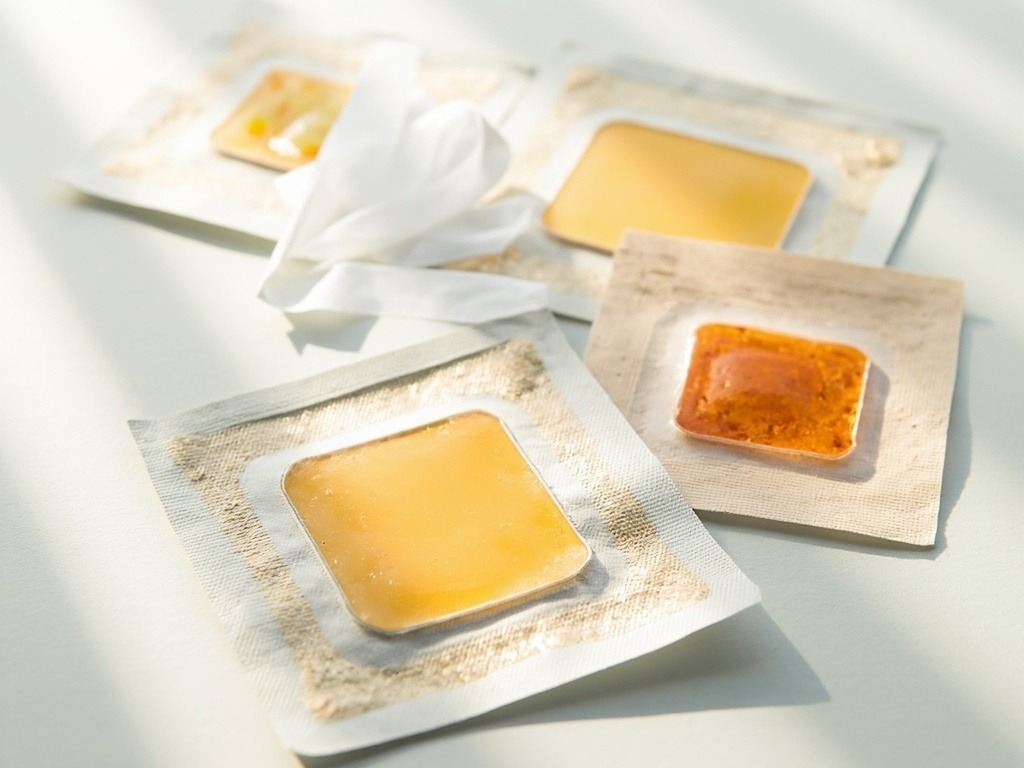
Best for: pharmaceutical procurement teams, private-label product managers, formulation developers, quality assurance specialists
A capsaicin transdermal patch is an adhesive delivery system that keeps a capsaicin-containing formulation in contact with the skin. Capsaicin activates TRPV1 receptors on sensory nerve endings, initially producing warmth, tingling, or burning; continued or sufficiently intense exposure can reduce the responsiveness of those nerve endings for a period of time. For professional buyers, however, the ingredient name alone is not a product specification. Concentration, delivered dose, release behavior, contact time, patch construction, adhesive performance, and intended use must all be defined separately.
What the patch is doing at the skin surface
Capsaicin is the pungent compound associated with chili peppers. When it reaches sensory nerve endings in the skin, it activates transient receptor potential vanilloid 1, commonly abbreviated TRPV1. This receptor responds to several potentially harmful stimuli, including heat. Its activation explains why capsaicin products can feel hot even though they do not physically raise the patch temperature in the way a heat pack does.
The response is not simply “more capsaicin equals more benefit.” Exposure conditions influence both the sensory response and the risk of unacceptable irritation. The result depends on the formulation, the amount available to the skin, contact duration, application site, skin condition, and user-to-user variability. A patch may also behave differently from a cream or gel because it holds the formulation against a defined area and can restrict evaporation or transfer.
A useful boundary condition
If a buyer cannot state whether the requested product is intended for local topical exposure or measured systemic delivery, the project is not ready for specification. The word transdermal is often used loosely in commercial searches, but technically it can imply delivery through the skin and into systemic circulation. Many capsaicin patches are instead designed for a local effect at or near the application area. The intended delivery destination should therefore be settled before discussing patch size, loading, or release targets.
Known mechanism versus supplier-dependent performance
| Item | What can be stated generally | What must be established for the actual product |
|---|---|---|
| Biological target | Capsaicin activates TRPV1 receptors on sensory nerve endings. | Whether the proposed exposure profile is suitable for the intended use and market. |
| Sensation | Warmth, stinging, redness, or burning can occur. | Acceptable irritation limits, test method, population, application site, and contact time. |
| Ingredient amount | Capsaicin may be declared as a concentration, mass per patch, or mass per unit area. | The validated assay result, uniformity criteria, analytical method, and release limits. |
| Delivery | Patch construction can influence ingredient availability at the skin. | Release profile, skin permeation data, residual content, and batch-to-batch consistency. |
| Wear performance | Backing, adhesive, patch geometry, and skin conditions affect adhesion. | Validated wear time, edge lift limit, removal characteristics, and test conditions. |
| Shelf life | Heat, light, oxygen, packaging, and material compatibility may affect stability. | Supported storage conditions, expiry period, package integrity, and stability protocol. |
Why concentration is not enough
Two patches carrying the same nominal capsaicin percentage may not be equivalent. One formulation may retain more capsaicin within its matrix, while another may make a greater fraction available at the skin interface. Patch area and coating weight can also change total loading even when the percentage remains unchanged.
Professional quotations should therefore distinguish at least four quantities:
- Formulation concentration: the proportion of capsaicin in the relevant mixture or dry matrix.
- Total loading: the nominal mass of capsaicin in one finished patch.
- Loading per area: the nominal mass distributed over a defined patch area.
- Delivered or released amount: the quantity demonstrated under a specified test method and time period.
These values are related, but they are not interchangeable. A supplier may offer a typical supplier target during development, such as a proposed coating weight or nominal loading. That target becomes a validated specification only after the finished design, manufacturing process, analytical method, sampling plan, acceptance criteria, and supporting data have been agreed and documented.
Patch architecture changes the sourcing question
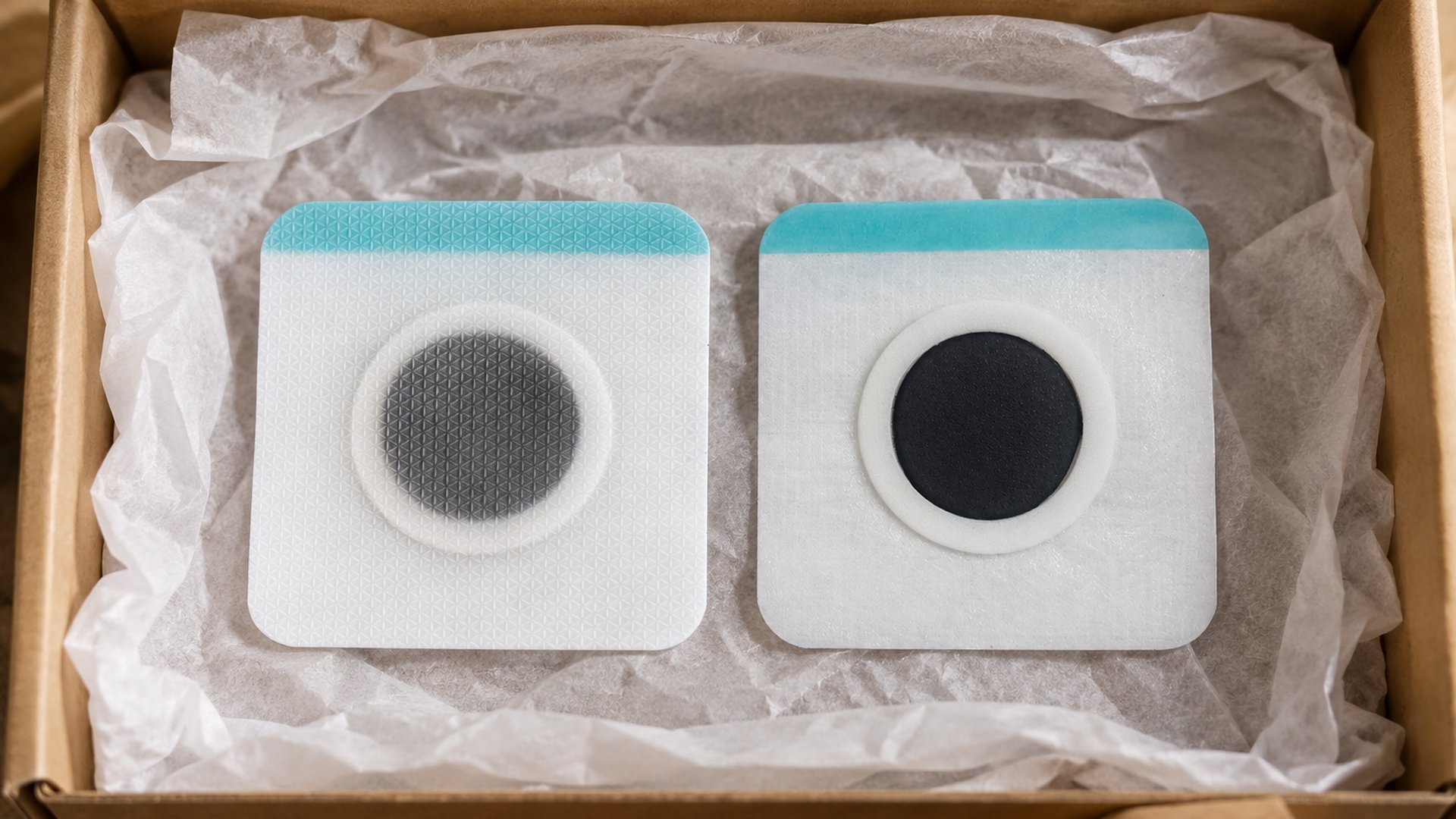
A capsaicin patch may use a drug-in-adhesive design, a separate formulation layer, or another matrix arrangement. The finished system can include a backing film, capsaicin-containing layer, pressure-sensitive adhesive, release liner, and individual pouch. Each component can affect manufacturability and use.
- Backing
- Influences flexibility, moisture transfer, handling, and protection of the formulation.
- Adhesive system
- Must balance secure wear with tolerable removal and compatibility with capsaicin and other formulation components.
- Release liner
- Protects the adhesive before use and must peel consistently without disrupting the coating.
- Pouch
- Helps protect the patch from environmental exposure and unintended contact during storage and distribution.
A practical decision rule is to freeze the layer structure before requesting final commercial tolerances. Changing the backing or adhesive after release and adhesion work has begun can alter more than appearance: it may change ingredient migration, wear behavior, peel force, residue, and stability.
Specification evidence buyers should request
A development target is useful for making samples; it is not evidence that routine production will meet the same result. Before treating any value as a purchasing specification, ask what test produced it, which finished construction was tested, how many batches were represented, and whether the method is suitable for release or only exploratory development.
The sourcing file should address:
- Product identity: intended use, target market, application site, single-use status, patch dimensions, and maximum wear instruction.
- Capsaicin definition: material identity, nominal concentration, loading basis, assay method, and how content uniformity will be evaluated.
- Formulation controls: relevant excipients, mixing controls, coating target, drying conditions, and criteria for visible defects.
- Adhesion: substrate used for testing, conditioning environment, dwell time, peel direction, wear simulation, edge lift, residue, and removal criteria.
- Release or permeation: method, membrane or skin model, medium, temperature, sampling times, calculation basis, and acceptance criteria where applicable.
- Packaging: pouch structure, seal criteria, coding, count configuration, and protection during transport.
- Stability: proposed storage condition, test intervals, monitored attributes, and the evidence supporting any shelf-life statement.
- Change control: notification requirements for capsaicin source, adhesive, backing, liner, pouch, formulation, process, or test-method changes.
Three questions that expose weak quotations
- Is the quoted capsaicin value a formulation input, a nominal finished-patch claim, or a tested release result?
- Does the adhesion claim apply to the final formulation and backing, or only to an unmedicated adhesive sample?
- Is the proposed shelf life supported by data from the final pouch and patch construction, or is it only a development target?
Limitations and safe handling
This article is a technical sourcing overview, not medical advice or a recommendation for a particular use. Capsaicin can cause substantial burning, redness, and irritation. Exposure to eyes, mucous membranes, damaged skin, and unintended body areas should be avoided. Handling controls, warnings, wear instructions, contraindications, removal procedures, and disposal language must match the final formulation, exposure level, intended user, and destination market. Buyers should check the applicable local requirements and obtain appropriate medical, toxicological, quality, and regulatory review before commercialization.
Moving from concept to a comparable supplier brief
Send every prospective manufacturer the same controlled brief rather than asking only for “a capsaicin patch.” At minimum, specify the intended local or systemic delivery objective, capsaicin loading basis, patch area, layer structure, wear condition, packaging format, target market, required evidence, and which values are still open for development. This creates quotations that can be compared on the same technical basis.
For manufacturing discussions, Hanmeng can be approached through its pharmaceutical patch OEM information page. Treat any proposed formulation, loading, adhesion value, release profile, storage condition, or shelf life as a supplier target until it is supported and accepted as a validated specification for the final product.

CATEGORIES
LATEST NEWS
- Sinew-Bone Pain-Bi Patch Private Label Manufacturer Supply Agreements
- What Hand Mask Custom Packaging Supplier Quotes Overlook
- Kids Herbal Foot Patch Contract Manufacturer: Safety Specifications First
- Mugwort Steam Eye Mask Private Label Manufacturer Readiness Check
- Mugwort Essential Oil Custom Formula Supplier: Formulation Approval Milestones
CONTACT US
QQ: 396269538
Phone: 17796669065
Tel: 17796669065
Email: 396269538
Add: Room 001, 1st Floor, Building 1, Zhengzhou Hangmei International Smart City, Intersection of S102 and Nanquan Road, Xuedian Town, Xinzheng City, Zhengzhou, Henan Province, China