Industry news
lidocaine patch 4% over the counter: a technical sourcing explainer
Industry news 2026-07-29 09:00:59 105 views admin
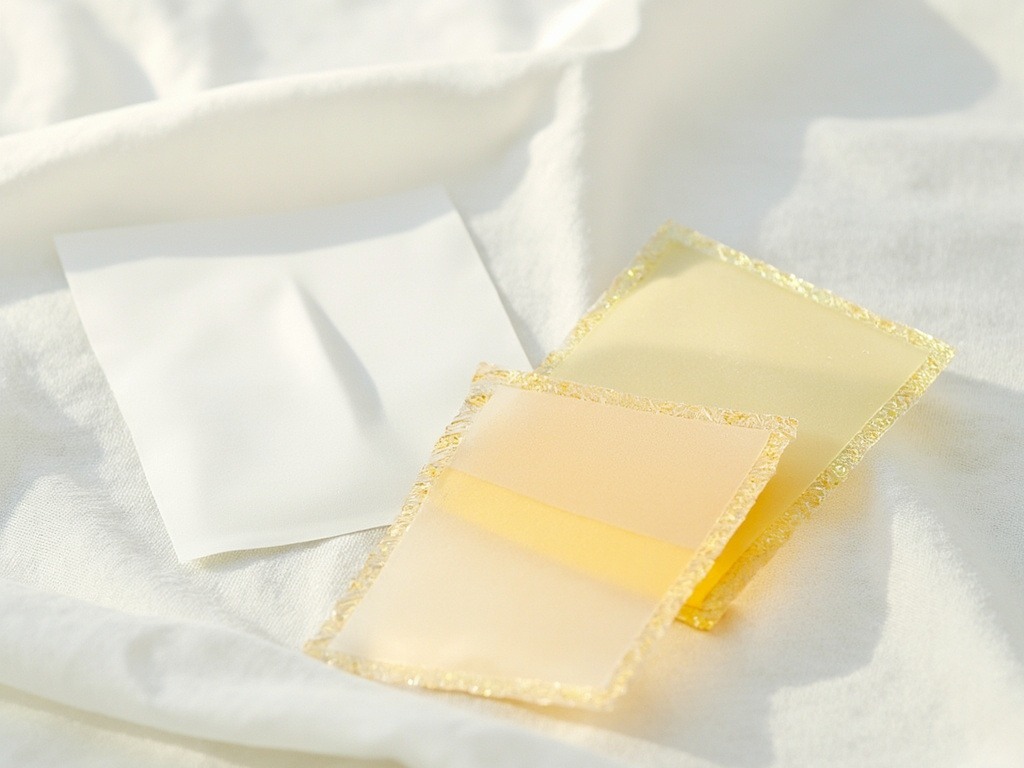
Best for: pharmacy procurement teams, healthcare distributors, private-label product managers, regulatory affairs specialists
A lidocaine patch 4% over the counter is a topical patch intended to deliver lidocaine locally through the skin without requiring removal of the product by mouth. For professional buyers, the “4%” claim alone is not enough to establish product equivalence. Patch size, drug loading, release behavior, adhesion, backing construction, wear instructions, labeling, and market-specific compliance can all differ by supplier. Buyers should therefore compare the validated specification and supporting documents—not only the front-label concentration.
How the patch works, in plain language
Lidocaine temporarily reduces the ability of nearby nerves to transmit pain signals by blocking voltage-gated sodium channels. In patch form, the drug is held in or on an adhesive layer and released toward the skin while the patch remains in place. The objective is localized exposure at the application area rather than the rapid systemic delivery associated with some other dosage forms.
Actual delivery is influenced by more than nominal concentration. The formulation of the adhesive matrix, the amount of lidocaine per patch, the exposed surface area, skin condition, contact time, temperature, and adhesion quality can all affect how the product behaves. A 4% concentration printed on two packages does not prove that the patches have the same total drug content or release profile.
Known facts versus supplier-dependent values
| Item | What can be understood generally | What the supplier must substantiate |
|---|---|---|
| Lidocaine concentration | “4%” describes a concentration claim under the product’s stated formulation basis. | The exact calculation basis, assay method, acceptance criteria, and batch results. |
| Total drug content | It depends on the formulation quantity and patch dimensions, not concentration alone. | Drug content per patch and uniformity across tested units. |
| Release and skin delivery | These depend on the complete patch system and conditions of use. | Validated test methods, release data, and any market-required performance evidence. |
| Adhesion | A patch must maintain suitable contact during its labeled wear period. | Test conditions, acceptance limits, results, and aging performance. |
| Wear duration | Instructions vary among products and markets. | The labeled duration supported by the product file; buyers should not infer it from another brand. |
| Shelf life | Packaging and storage conditions influence stability. | Validated shelf life, storage statement, packaging configuration, and supporting stability data. |
| OTC status | Nonprescription status is jurisdiction- and product-specific. | Evidence that the exact formulation, claims, labeling, and route to market meet applicable local requirements. |
A supplier’s “typical target” is a development or manufacturing goal. A validated specification is a documented acceptance criterion supported by an approved test method and actual results. Procurement documents should identify which figures belong to each category.
The practical equivalence rule
Use this decision rule when comparing quotations: treat two 4% patches as non-equivalent until concentration basis, total lidocaine per patch, active area, labeled wear time, release method, and adhesion criteria have all been reconciled.
This boundary condition prevents an easy purchasing error. Two products may display the same percentage while differing in patch area or matrix weight, resulting in different total drug loading. Likewise, matching dimensions do not prove matching delivery because the adhesive and formulation may differ.
Patch construction questions that affect purchasing
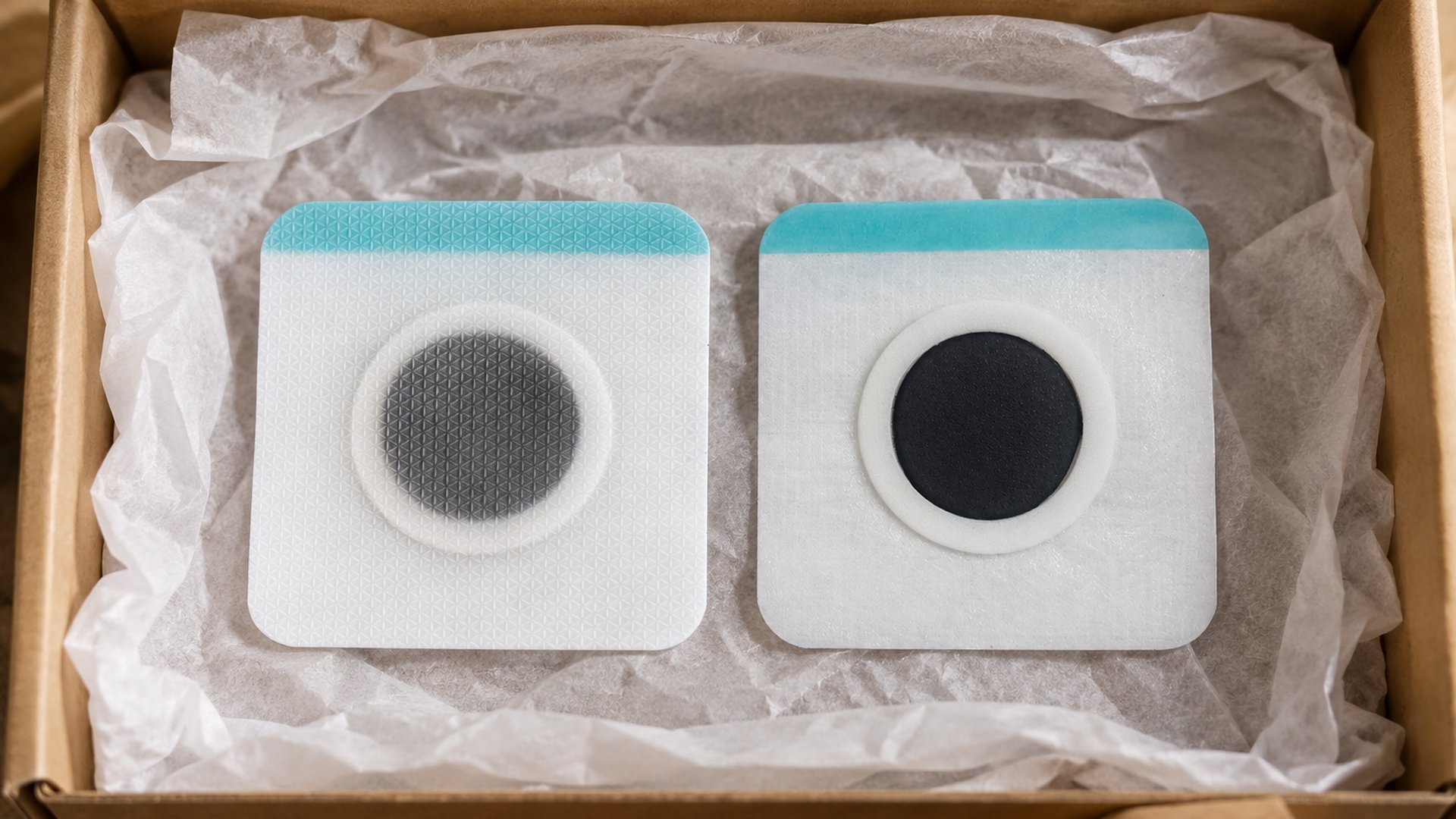
A typical topical patch may include a protective release liner, a drug-containing adhesive or matrix, and a backing layer. The exact architecture is supplier-dependent. Buyers should ask how each layer supports the intended use:
- Release liner: Is it easy to remove without damaging or contaminating the adhesive?
- Drug-containing layer: How are assay, content uniformity, impurities, and release behavior controlled?
- Adhesive system: What test method supports tack, peel, shear, or wear performance under defined conditions?
- Backing: Is it flexible and sufficiently protective for the labeled application and storage conditions?
- Primary pouch: Does the sealed material protect the patch against relevant moisture loss, ingress, or other stability risks?
Comfort descriptions such as “flexible” or “skin-friendly” are useful commercial targets, but they are not substitutes for an agreed specification or market-appropriate evaluation.
Sourcing checklist for professional buyers
- Define the destination market first. Confirm whether the proposed OTC route, claims, language, warnings, and pack format are acceptable there. Check the applicable local requirements rather than assuming that one country’s retail status transfers to another.
- Request an exact product specification. Include patch dimensions, active area, matrix or adhesive weight where relevant, concentration basis, total lidocaine per patch, assay limits, and physical appearance.
- Review test methods, not just a certificate summary. Determine whether the methods are suitable for assay, uniformity, impurities, release, adhesion, and other critical attributes.
- Match samples to documentation. Record sample lot numbers and confirm that samples, test reports, artwork, and quoted commercial configuration refer to the same formulation and construction.
- Separate prototype targets from release criteria. Mark every undecided value as a development target until it is supported and formally approved.
- Assess packaging as part of the dosage form. Confirm pouch material, seal integrity controls, count per carton, storage statement, lot coding, and evidence supporting the proposed shelf life.
- Control changes contractually. Require notification and evaluation before changes to active-material source, adhesive, backing, liner, pouch, process, test method, or manufacturing location.
- Verify scale-up comparability. Do not rely solely on hand-made or pilot samples when placing a commercial order; request evidence that production-scale batches meet the agreed critical attributes.
Limitations and safe-use boundaries
This article is a procurement explainer, not medical advice. Product labeling should address appropriate application sites, damaged or irritated skin, exposure to external heat, accidental ingestion, use in sensitive populations, allergies, interactions, disposal, and circumstances requiring professional advice, as applicable to the destination market. Buyers should avoid claims that promise diagnosis, cure, guaranteed pain relief, or performance beyond the supporting product file. The safety profile and directions of one lidocaine patch should not be transferred automatically to another formulation.
Manufacturer discussions
When approaching a manufacturer, send a market-specific brief covering formulation targets, patch dimensions, packaging, labeling language, expected documentation, order scale, and change-control expectations. Hanmeng provides a general contact point for discussing pharmaceutical patch OEM requirements. Any proposed lidocaine patch specification, performance value, compliance pathway, or commercial claim should be confirmed through product-specific technical and regulatory review before purchasing.

CATEGORIES
LATEST NEWS
- Sinew-Bone Pain-Bi Patch Private Label Manufacturer Supply Agreements
- What Hand Mask Custom Packaging Supplier Quotes Overlook
- Kids Herbal Foot Patch Contract Manufacturer: Safety Specifications First
- Mugwort Steam Eye Mask Private Label Manufacturer Readiness Check
- Mugwort Essential Oil Custom Formula Supplier: Formulation Approval Milestones
CONTACT US
QQ: 396269538
Phone: 17796669065
Tel: 17796669065
Email: 396269538
Add: Room 001, 1st Floor, Building 1, Zhengzhou Hangmei International Smart City, Intersection of S102 and Nanquan Road, Xuedian Town, Xinzheng City, Zhengzhou, Henan Province, China