Industry news
Pimple Patch for Chin: A Practical Guide to Fit, Skin Safety, and OEM Sourcing
Industry news 2026-07-20 05:30:58 31 views admin

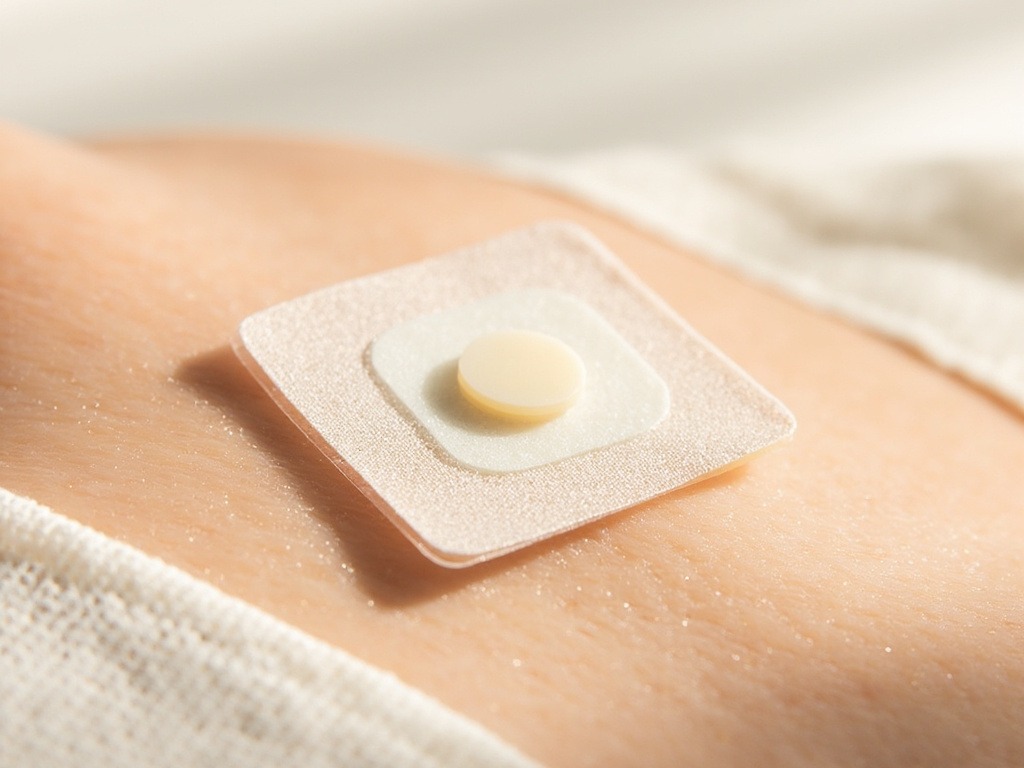
A pimple patch for chin is a small adhesive dressing designed to cover an individual blemish on one of the face’s most mobile and contoured areas. The chin is exposed to talking, eating, shaving, masks, saliva, cosmetics, and frequent hand contact. These conditions make patch fit more difficult than on a flatter area such as the forehead.
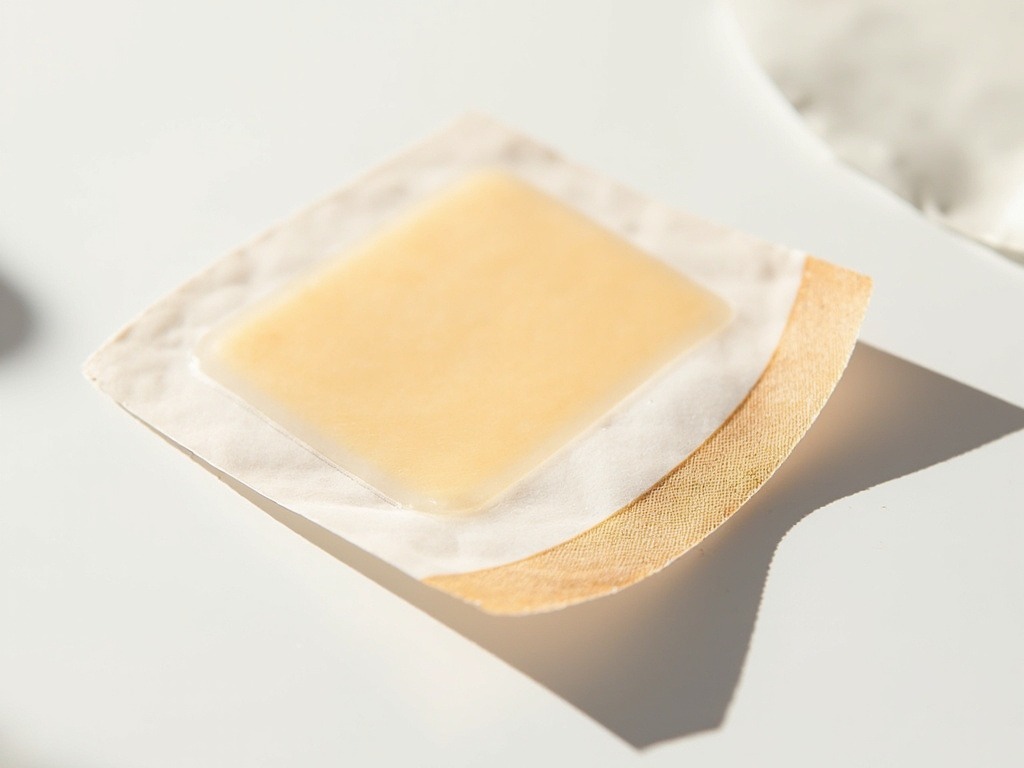
Most basic acne patches use hydrocolloid, an absorbent dressing material that can take up wound fluid while maintaining a moist interface. On a superficial pimple that has already opened or formed a visible fluid-filled head, this may reduce touching and create a protective barrier. However, hydrocolloid patches do not remove deep comedones, “detox” the skin, or cure cystic acne. Acne management should still follow evidence-based treatment principles. The American Academy of Dermatology’s peer-reviewed acne guideline recommends established therapies such as topical retinoids, benzoyl peroxide, salicylic acid, and appropriate systemic treatment according to acne type and severity.
Best for: skincare brands developing chin-specific patches; dermatology and aesthetic clinics seeking protective post-extraction covers; distributors evaluating private-label hydrocolloid products; and parents supervising occasional patch use by teenagers.
Why the Chin Requires a Different Patch Design
The chin combines curvature with repeated skin movement. A patch that looks secure when the mouth is relaxed may lift when the user smiles, speaks, or eats. Sebum, residual cleanser, beard stubble, and moisturizer can further weaken adhesion. For this reason, a chin patch should be evaluated as a complete system: film flexibility, hydrocolloid thickness, adhesive performance, shape, edge geometry, and pouch integrity all matter.
Small circular patches suit isolated spots on relatively flat parts of the chin. Oval, crescent, or tapered shapes may conform better near the labiomental crease or jaw transition. Very thick patches can absorb more material but may be visible and resist bending. Thinner patches are discreet and flexible, although their fluid capacity may be lower. The appropriate balance depends on whether the product is intended for daytime wear, overnight use, clinical aftercare, or mass-market retail.
What a Hydrocolloid Chin Patch Can and Cannot Do
Hydrocolloid dressings have a long history in moist wound care. A Cochrane review of dressings for diabetic foot ulcers found insufficient evidence that one dressing type was consistently superior to another, which is an important reminder not to exaggerate material claims. Evidence supporting hydrocolloids in wound management should not automatically be presented as proof that every cosmetic acne patch treats acne itself.
A chin patch is most useful as a temporary cover for a superficial, localized lesion, particularly when there is exudate to absorb. It can also discourage picking, reduce direct friction, and keep makeup or mask fabric from contacting the spot. It is less suitable for intact deep nodules, widespread inflammatory acne, unexplained facial swelling, infected wounds, or skin with a known adhesive allergy.
Consumers should seek medical advice when chin lesions are painful, recurrent, rapidly worsening, associated with scarring, or concentrated around the mouth in a pattern that may not be acne. The Global Burden of Disease analysis published in The Lancet identified acne vulgaris as a common condition with substantial worldwide impact, supporting timely, appropriate treatment rather than relying only on cosmetic cover products.
How to Apply a Pimple Patch on the Chin
- Clean and dry the site. Wash gently and pat the chin completely dry. Oils, sunscreen, moisturizer, facial hair moisture, and cleanser residue can reduce adhesion.
- Select the correct size and position. The absorbent center should cover the entire visible lesion, while the adhesive margin should contact intact, dry skin. Avoid placing an edge directly across a deep moving crease when possible.
- Press, wear, and remove gently. Hold the patch in place for about 10 to 20 seconds. Replace it if it becomes loose, visibly saturated, dirty, or uncomfortable. Peel slowly along the skin rather than pulling sharply upward.
Do not apply a patch over the lip, inside the mouth, or on actively bleeding skin. Stop use if burning, marked itching, blistering, or spreading redness develops. Products containing salicylic acid or other active ingredients require additional review because irritation risk, labeling, and regulatory positioning differ from those of a plain hydrocolloid cover.
Body-Part Placement Mini-Matrix
| Body area | Apply when | Avoid when | Placement note |
|---|---|---|---|
| Center of chin | Single superficial blemish on clean, dry skin | Deep painful nodule or broken, bleeding skin | Use a round or oval patch with a full adhesive margin |
| Chin crease | The patch is thin and flexible | The edge repeatedly folds during speech | Place the long axis parallel to the crease |
| Jawline | The lesion is isolated and easy to cover | Dense stubble prevents full contact | A tapered oval can reduce edge lift |
| Upper lip area | Skin is intact and outside the vermilion border | Patch could contact the lip or nostril | Choose a small patch and monitor movement |
| Cheek | There is a superficial spot away from the eye | Skin is irritated by recent procedures | Flat patches usually adhere well here |
| Forehead | Skin is oil-free and hair is kept away | The patch overlaps the eyebrow or hairline | Press edges firmly after application |
| Neck | A clinician has confirmed the lesion is acne | The cause is uncertain or shaving rash is present | Use cautiously because friction and motion are high |
B2B Specification Table for OEM Buyers
| Parameter | Typical specification | Buyer notes |
|---|---|---|
| Patch construction | Hydrocolloid layer with flexible carrier film and release liner | Request a full material declaration and skin-contact documentation |
| Shape and diameter | Round, oval, crescent, or custom die-cut; approximately 8–15 mm | Test several sizes on the center chin, crease, and jaw transition |
| Thickness | Thin daytime or higher-capacity overnight options | Measure actual finished-product thickness, not only film thickness |
| Adhesion | Balanced initial tack and wear-time retention | Evaluate after speaking, eating, mask use, and controlled perspiration |
| Absorption | Defined internal gravimetric test result | Require test conditions, sample size, and acceptance criteria |
| Biocompatibility | Risk-based testing for the intended skin contact | ISO 10993 information may be relevant depending on classification and market |
| Pouch barrier | Individual or multi-patch sealed pouch | Consider ASTM F88/F88M for seal strength and ASTM F1929 for dye-leak evaluation of porous packages |
| Shelf life | Supported by stability and packaging evidence | Do not accept an expiry period based solely on an unsupported estimate |
| Labeling | Ingredients/materials, lot code, expiry, directions, cautions, manufacturer data | Claims must match the intended regulatory category in each sales market |
Quality, Claims, and Regulatory Review
Procurement teams should separate cosmetic language from medical claims. In the United States, a product’s intended use and promotional claims influence whether it may be regulated as a cosmetic, drug, medical device, or combination product. The FDA’s OTC acne drug monograph framework addresses recognized acne active ingredients and labeling conditions; adding an active ingredient to a patch should therefore trigger formulation, safety, claims, and legal review rather than a simple packaging update.
Finished-product testing should include visual inspection, dimensions, adhesion consistency, absorbency, pouch seal integrity, lot traceability, and stability. ASTM methods can support packaging verification, but citing an ASTM standard is not equivalent to proving that a product passed it. Buyers should request the test report, method version, laboratory identity, sample quantity, conditions, and acceptance limits.
Three-Step Sourcing Funnel: Sample to Pilot to Bulk
- Sample: Compare two or more hydrocolloid thicknesses, shapes, and liner formats. Conduct controlled wear checks on different chin contours and skin types. Record edge lift, residue, comfort, visibility, and removal experience.
- Pilot: Produce a limited lot with final artwork, pouch material, patch count, carton configuration, and lot coding. Verify specifications, packaging seals, transport resistance, complaints workflow, and label compliance before approving scale-up.
- Bulk: Release mass production only after a signed specification, approved reference sample, quality agreement, inspection plan, and traceability process are in place. Retain samples from each lot and define procedures for deviation handling and corrective action.
OEM Pimple Patch for Chin Development
Brands can customize patch geometry, sheet layout, pouch count, carton design, wear-time positioning, and market-specific instructions. The development brief should define the target lesion, user group, intended wearing period, sales region, claim boundaries, and required quality documents before artwork begins.
For custom sampling, pilot production, packaging options, and bulk manufacturing support, visit OEM pimple patch for chin.
Medical and Industry References
- Tan J.K.L. and Bhate K. “A global perspective on the epidemiology of acne.” British Journal of Dermatology, 2015;172(Suppl 1):3–12. doi:10.1111/bjd.13462.
- Hay R.J. et al. “The global burden of skin disease in 2010.” The Lancet, 2014;383(9914):152–162. doi:10.1016/S0140-6736(13)60676-1.
- Chu D.H. et al. “Guidelines of care for the management of acne vulgaris.” Journal of the American Academy of Dermatology, 2024;90(5):1006.e1–1006.e30. doi:10.1016/j.jaad.2023.12.017.
- Dumville J.C. et al. “Hydrocolloid dressings for healing diabetic foot ulcers.” Cochrane Database of Systematic Reviews, 2013;(8):CD009099. doi:10.1002/14651858.CD009099.pub3.
- U.S. Food and Drug Administration. OTC Monograph M006: Topical Acne Drug Products for Over-the-Counter Human Use.
- ASTM International. ASTM F88/F88M, Standard Test Method for Seal Strength of Flexible Barrier Materials; and ASTM F1929, Standard Test Method for Detecting Seal Leaks in Porous Medical Packaging by Dye Penetration.

CATEGORIES
LATEST NEWS
- shoulder pain relief patch: How It Works, What to Check, and How to Source It
- pimple patches: choosing between hydrocolloid, microneedle, and salicylic formats
- electrode patches for tens unit
- custom pain patch private label
- Children's Silicone Hydrogel Patches: Safety Standards and Material Selection Guide for Parents
CONTACT US
QQ: 396269538
Phone: 17796669065
Tel: 17796669065
Email: 396269538
Add: Room 001, 1st Floor, Building 1, Zhengzhou Hangmei International Smart City, Intersection of S102 and Nanquan Road, Xuedian Town, Xinzheng City, Zhengzhou, Henan Province, China