Technological innovation
From Sample to Production: A 90-Day Patch OEM Timeline, Phase by Phase
Technological innovation 2026-07-14 19:37:40 129 views admin
From Sample to Production: A 90-Day Patch OEM Timeline, Phase by Phase
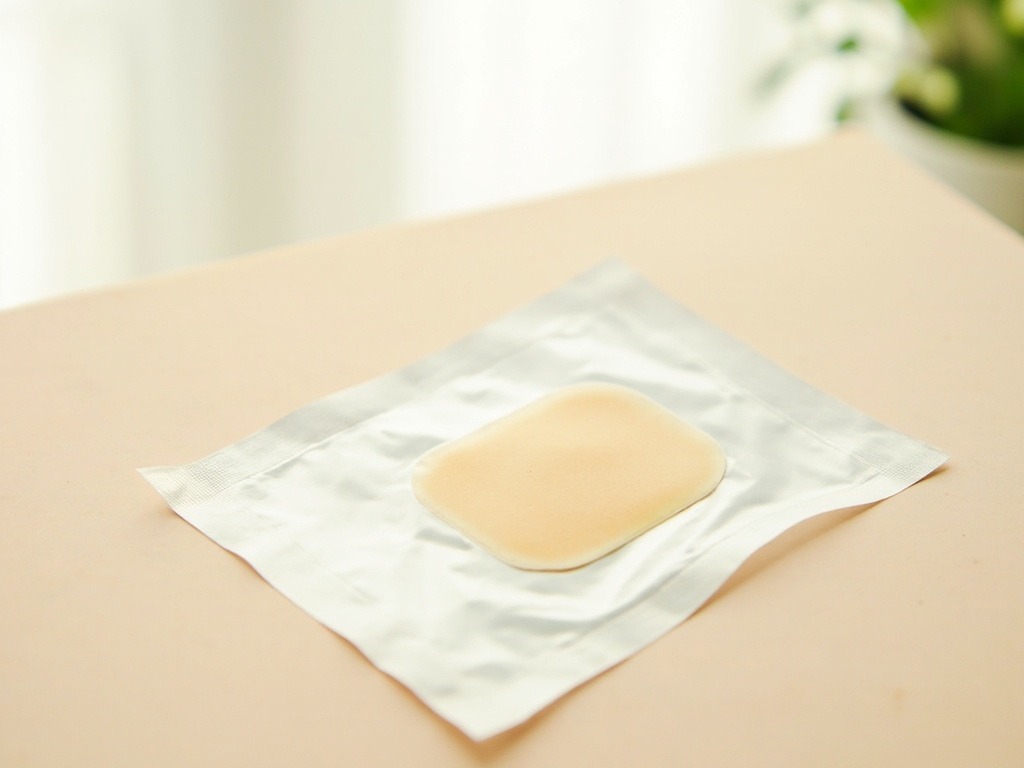
A first patch project that goes from signed formulation to first commercial production in under 90 days is fast but not unrealistic. The 90 days come from the underlying work — feasibility, pilot, scale-up, validation, and the regulatory file — and they assume the brand owner is in position on classification, route, and claims. The 90 days are not an estimate of how long the project should take; they are an estimate of how long it can take when each step is properly resourced.
The 90-day timeline below is a working assumption for a representative pain-relief patch with a 24-hour wear time. The actual timeline for any product is set by the development data, the regulatory route, and the converting-line capacity.
Days 1-20: Feasibility and pilot planning
Day 1 to 5: the brand owner and the OEM agree on classification, intended claims, target market, and route. The classification sets the safety file, the route sets the dossier, and the claims set the labelling and clinical evidence. The output of this stage is a one-page brief signed by both sides.
Day 6 to 20: the OEM runs feasibility batches, typically 50-200 hand-laid patches. The output is a sample set, an in-vitro permeation report, and a one-page human panel report. The brand owner signs off on the matrix, the active, and the wear profile at the end of this stage.
Days 21-50: Pilot run and stability start
Day 21 to 30: the OEM schedules the pilot run on the bench-scale coating line. The output is 1,000-5,000 finished patches in the final primary packaging. The pilot run is run on a converted bench-scale line, not the commercial line, and the goal is to confirm the formulation behaves the same on a line as it did in the lab.
Day 31 to 40: the pilot patches are pulled into the stability program. The time zero sample is tested for full specification. The accelerated and intermediate time points are placed on the stability schedule. The ICH Q1A(R2) long-term program starts at this point and continues for at least 12 months.
Day 41 to 50: the OEM runs the release-rate study, the irritation panel, and the photo-stability study. The release-rate study is the basis of the 510(k) substantial-equivalence claim or the MDR clinical-evaluation claim.
Days 51-80: Scale-up and validation
Day 51 to 65: the OEM schedules the scale-up runs on the commercial coating line. Three consecutive production batches are run under the validated process. The output is 30,000-300,000 finished patches across the three runs.
Day 66 to 75: the three scale-up batches are tested against the same specification as the pilot run. The release-rate, the stability initial time point, and the packaging integrity are all on the table. Any deviation triggers a repeat.
Day 76 to 80: the OEM produces the process validation report covering the three runs. The brand owner signs off on the report. This is the document that supports the regulatory submission.
Days 81-90: Regulatory and first commercial run
Day 81 to 90: the brand owner finalises the regulatory file (510(k) for US, technical file for EU), files it, and the OEM prepares the first commercial production run. The first commercial run uses the validated process, and the resulting patches are tested against the same specification as the scale-up batches. The output of the first commercial run is the product that goes to the customer.
Where the 90 days go wrong
Three stages are where the timeline slips:
Day 1 to 5: classification. The brand owner has not decided whether the product is a medical device, a cosmetic, or a general-wellness article, and the OEM cannot move until this is settled. This stage often eats two to three weeks.
Day 21 to 30: pilot line. The first time a new matrix is coated on a pilot line, the output is rarely within specification on the first pass. Plan at least one revision cycle.
Day 81 to 90: regulatory. The regulatory file is rarely complete by day 80. The brand owner should expect to file with available long-term stability data and update the file as data continues to accumulate.
What the brand owner needs to be ready with on day 1
Intended use, claims, target market
Classification decision or, at minimum, a list of questions to settle it
Target shelf life and storage conditions
Regulatory route (FDA 510(k) submission type, EU MDR class and route)
Brand visual identity for the label and outer carton
Henan Hanmeng Bio-Tech runs feasibility, pilot, and scale-up phases for OEM projects. The development program and the regulatory submission belong to the brand owner.
Sources
ICH Q1A(R2), Stability Testing of New Drug Substances and Products.
U.S. Food and Drug Administration, 21 CFR Part 820, Quality System Regulation (QMSR final rule, effective 2 February 2026).
Looking for a Custom Patch Manufacturer?
Henan Hanmeng Bio-Tech produces private-label pain relief patches, herbal heat patches, cooling patches, nasal strips, and hydrocolloid patches on certified production lines. FDA, EU CE, and ISO 13485 documentation included. Samples shipped in 7 days; bulk MOQ negotiable.
View Our OEM Catalog Request a Quote
Henan Hanmeng Bio-Tech · Henan, China · +86 17796669065 · 396269538@qq.com
CATEGORIES
LATEST NEWS
- Sinew-Bone Pain-Bi Patch Private Label Manufacturer Supply Agreements
- What Hand Mask Custom Packaging Supplier Quotes Overlook
- Kids Herbal Foot Patch Contract Manufacturer: Safety Specifications First
- Mugwort Steam Eye Mask Private Label Manufacturer Readiness Check
- Mugwort Essential Oil Custom Formula Supplier: Formulation Approval Milestones
CONTACT US
QQ: 396269538
Phone: 17796669065
Tel: 17796669065
Email: 396269538
Add: Room 001, 1st Floor, Building 1, Zhengzhou Hangmei International Smart City, Intersection of S102 and Nanquan Road, Xuedian Town, Xinzheng City, Zhengzhou, Henan Province, China