Industry news
How to Choose a Patch Manufacturer in China: 10 Practical Checks for a First Audit
Industry news 2026-07-14 12:00:00 153 views admin
How to Choose a Patch Manufacturer in China: 10 Practical Checks for a First Audit
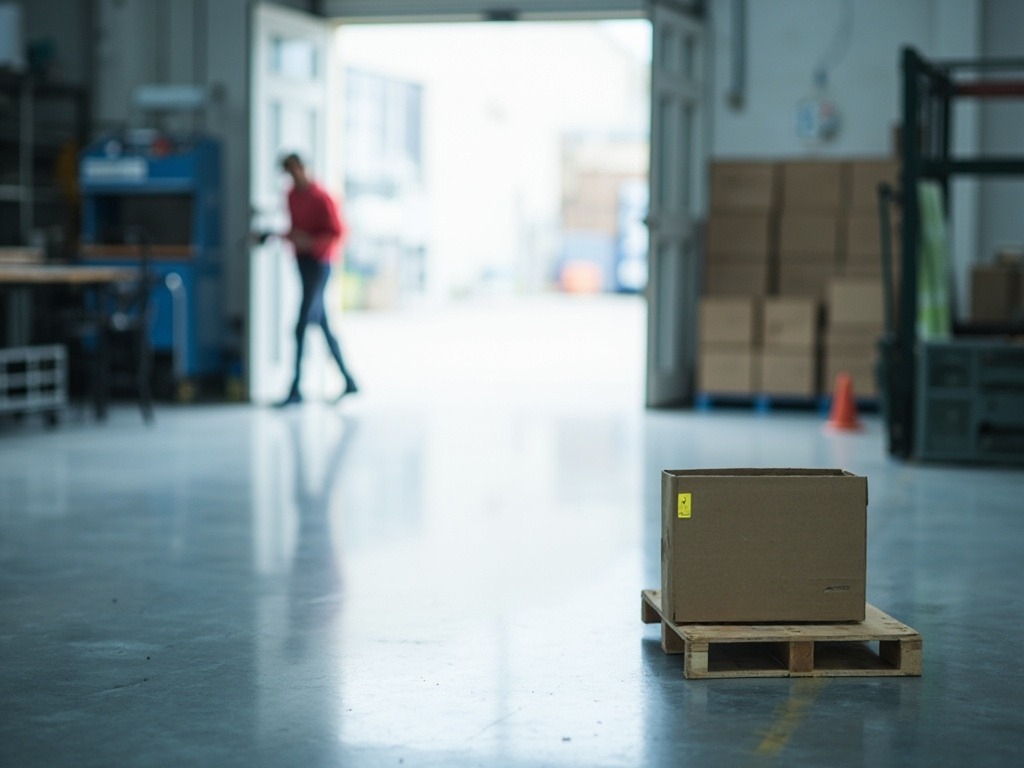
Choosing a patch manufacturer in China is a 10-check field audit, not a 10-page quotation. The 10 checks below come from what a brand owner should be able to see on a one-day facility visit, not from a marketing deck. Each check is something the factory can show on the day, and each is a point at which a buyer can ask follow-up questions.
Scope note. The checks below assume an adhesive transdermal or topical patch line. Herbal heat patches and cooling eye masks have lighter process steps (less chemistry, more converting); a few checks below are less relevant and are marked.
The 10 checks, by area of the facility
- Quality system certificate on the wall. Ask for the current ISO 13485:2016 certificate. Note the issuing body, the scope statement, and the expiry. A general "ISO certified" claim is not enough — the certificate should name the site address you are visiting.
- Two recent quality data packages. Ask the factory to show release-rate and stability data for a recently released product with the same kind of matrix. The data should be on the brand owner's template, not on a generic one.
- The pilot line in operation. Watch a pilot batch run for 30 minutes. The line should be running at a deliberate, reproducible speed, not at a speed the team only set up for the visit. Ask for the batch record of the run you are watching.
- The validation line in operation. Watch a scale-up batch run for 30 minutes. The line should run with three operators at fixed stations, and the operators should call out deviations.
- Raw material storage. Walk the raw-material warehouse. Active ingredients, excipients, backing film and pouch laminate should be stored by batch number, by expiry, and behind locked doors. The most controlled area should be the active ingredient.
- Complaint handling process. Ask for the complaint SOP and the complaint log for the last 12 months. The log should record root cause, action, and the close-out. A blank log is a red flag.
- Documentation practice. Open three random batch records. The records should have complete signatures, dates, in-process checks, and deviations. Incomplete records usually mean incomplete practice.
- Equipment qualification. Ask for the installation qualification, operational qualification, and performance qualification records for the pilot line and the scale-up line. A line that has been in place for years should still have these records.
- Personnel training. Ask for the training records of the three operators you saw. The training should be role-specific and dated. Generic "trained" answers are a red flag.
- Recall and post-market plan. Ask the factory to walk you through a simulated recall. The simulation should reach the brand owner, the regulator, and the customer within 24 hours. The simulation should be repeated at least annually.
Three things to do before the visit
- Ask the factory for its last two client audit reports (anonymised) and the response. The response is more important than the audit itself.
- Ask for the list of regulatory submissions the factory has supported in the last 24 months. For an EU MDR project, look for class IIa experience; for FDA 510(k), look for one of the same product code.
- Ask for the names of the regulatory consultants the factory has worked with. Cross-check at least one of them before the visit.
Two things to do after the visit
- Compare the visit with the audit report the factory sent before. If there is a meaningful gap, the audit report is suspect.
- Ask the factory to send the corrective-action plan for the issues raised in your visit, with a deadline. A factory that does not commit to a deadline is unlikely to commit to a fix.
When to walk away
There are three situations in which a brand owner should walk away, regardless of the price:
- The factory will not show a current ISO 13485 certificate. This is non-negotiable for any medical-device class II patch.
- The factory will not let you see the validation line in operation. This is the line that will make your commercial product. If they will not show it, the line does not exist or does not run.
- The factory cannot produce three signed and dated batch records on the spot. This means the documentation system is not in place.
Henan Hanmeng Bio-Tech supports first-visit audits for OEM projects in Henan, China. The 10 checks above are the minimum framework a brand owner should use; the actual decision rests on the visit and the corrective-action plan.
Sources
- ISO 13485:2016, Medical devices — Quality management systems — Requirements for regulatory purposes.
- U.S. Food and Drug Administration, 21 CFR Part 820, Quality System Regulation (QMSR final rule, effective 2 February 2026).
Looking for a Custom Patch Manufacturer?
Henan Hanmeng Bio-Tech produces private-label pain relief patches, herbal heat patches, cooling patches, nasal strips, and hydrocolloid patches on certified production lines. FDA, EU CE, and ISO 13485 documentation included. Samples shipped in 7 days; bulk MOQ negotiable.
View Our OEM Catalog Request a Quote
Henan Hanmeng Bio-Tech · Henan, China · +86 17796669065 · 396269538@qq.com

CATEGORIES
LATEST NEWS
- Sinew-Bone Pain-Bi Patch Private Label Manufacturer Supply Agreements
- What Hand Mask Custom Packaging Supplier Quotes Overlook
- Kids Herbal Foot Patch Contract Manufacturer: Safety Specifications First
- Mugwort Steam Eye Mask Private Label Manufacturer Readiness Check
- Mugwort Essential Oil Custom Formula Supplier: Formulation Approval Milestones
CONTACT US
QQ: 396269538
Phone: 17796669065
Tel: 17796669065
Email: 396269538
Add: Room 001, 1st Floor, Building 1, Zhengzhou Hangmei International Smart City, Intersection of S102 and Nanquan Road, Xuedian Town, Xinzheng City, Zhengzhou, Henan Province, China